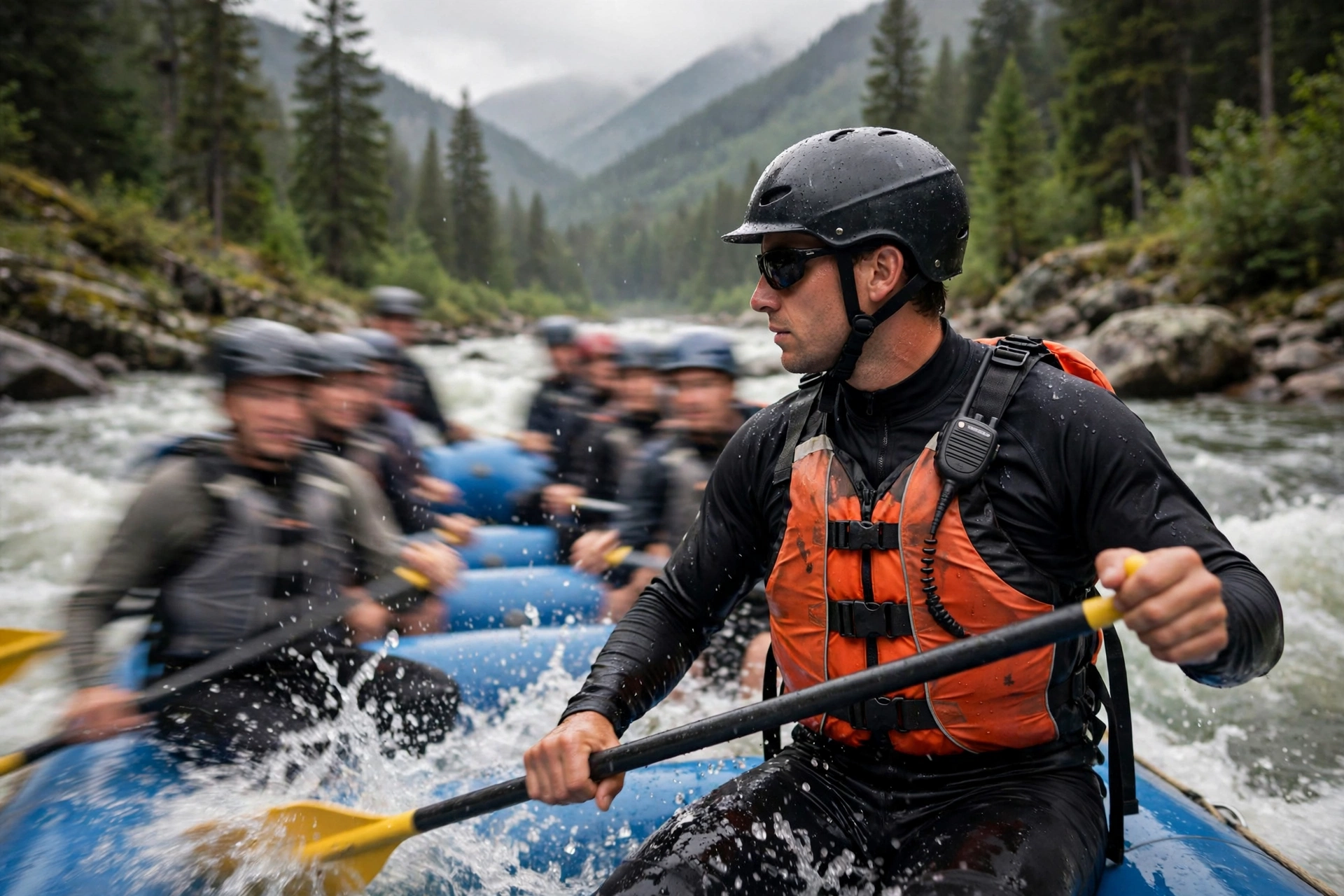
Rafting guides in general terms wear helmets made specifically for whitewater: close-fitting, full-coverage paddling helmets with strong chin straps, ear protection, and fast drainage, chosen to stay on during swims, rescues, and long days of repeated impacts and immersion. A rafting guide helmet is work equipment, not a casual extra.
Here is what guides choose, and the practical reasons behind those choices.
What Type of Helmet Do Most Rafting Guides Wear?
Most guides wear a dedicated whitewater helmet rather than a bike, ski, or climbing helmet. The typical shape covers the forehead, temples, ears, and the back of the head, sits low rather than perched on top, and uses a shell and liner made to tolerate constant water, sun, grit, and knocks against rocks, oars, and raft frames.
Some guides choose fuller coverage, including styles with more protection around the face on steep, rocky, or creek-style work. Others guiding gentler commercial raft trips choose a lighter coverage helmet that is cooler over a long day. In general terms, the harder and rockier the water, and the more rescue work expected, the more coverage guides tend to favour.
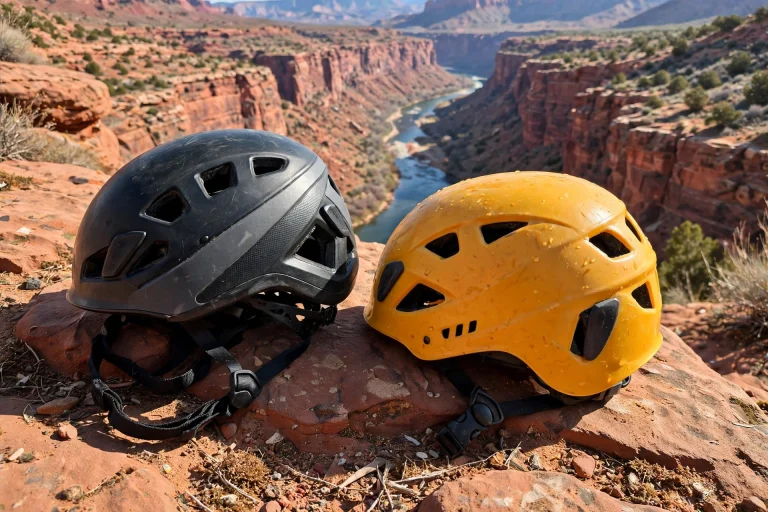
Guides also wear helmets that guests can recognise quickly. Bright colours are common on commercial rivers because a guide needs to be visible to the crew, to other boats, and to anyone watching from shore during a rescue. Looks come second; visibility is a working feature.
Why Do Guides Choose Helmets Built for Whitewater?
A guide’s day includes much more than sitting in a raft. Guides swim rapids during training, scramble over wet rocks, haul boats, work throw lines from shore, and re-enter rafts from the water. Each of those tasks puts the head near rock, metal frames, and other people’s paddles, often when hands are busy and balance is poor.
A whitewater helmet is built for that mix. Its retention system is made to resist current trying to lift or roll it, its materials tolerate immersion without falling apart, and its shape drains instead of scooping water. A dry-land helmet can fail that job quietly, feeling fine at the put-in and shifting in the first real swim.
- Swims: the helmet must stay in place in current, not just in a fall
- Rescues: guides work close to rocks, boats, and moving water with their hands full
- Repetition: the same helmet is worn, soaked, and dried day after day all season
Outfitters in general terms set their own equipment rules for staff, and those rules normally specify paddling helmets for guides as well as guests.
How Do Guides Fit and Adjust Their Helmets for Long Days?
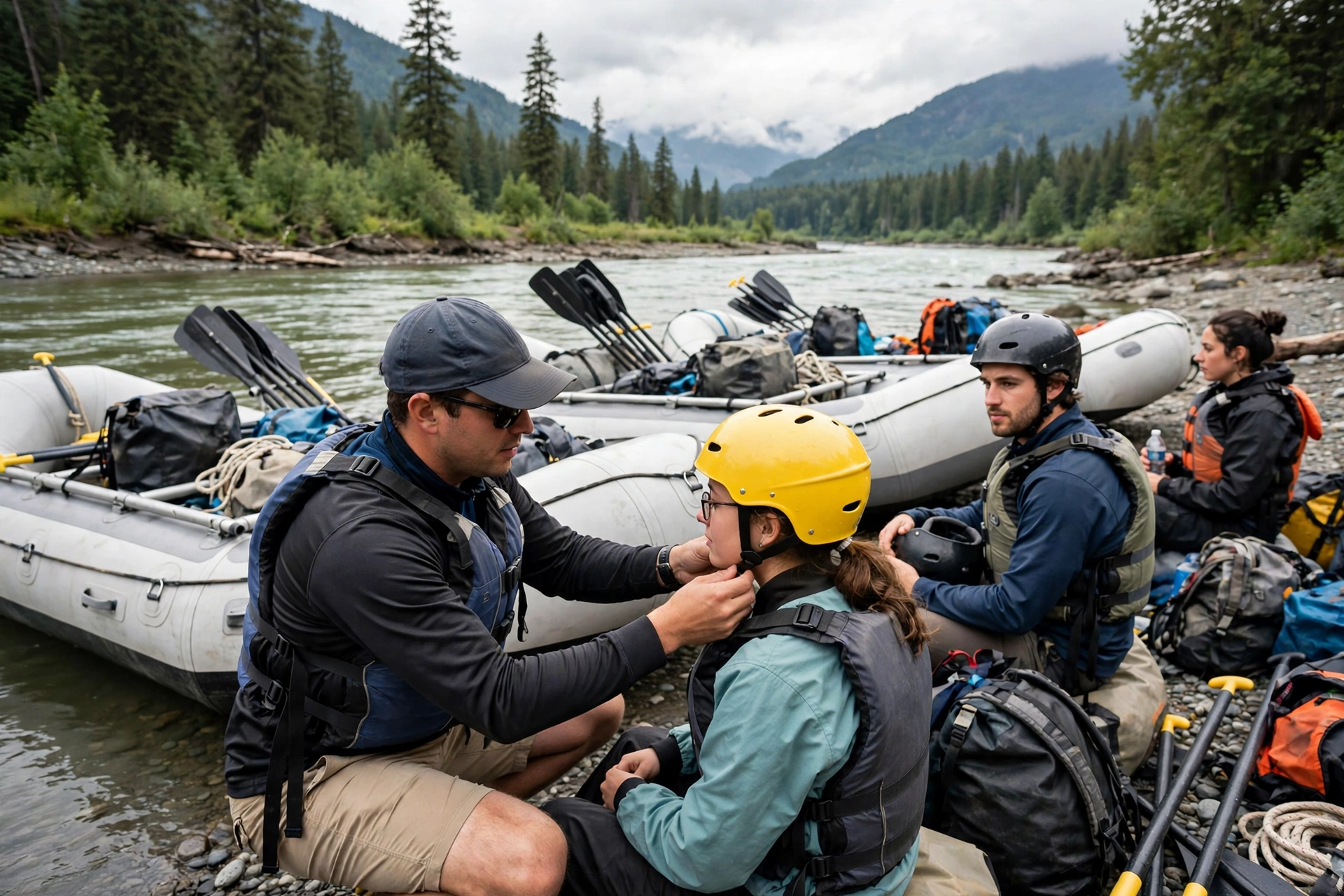
Guides fit a helmet the way they check any safety kit: carefully, and before the trip. The helmet sits level and low, feels evenly snug with no single pressure point, and does not move when the head is shaken hard with the strap fastened. If it needs constant pushing back into place, it does not go on the river.
Adjustment is ongoing. Pads are swapped or added to fine-tune fit, straps are checked for fraying and buckles for grit, and the fit is rechecked with a cap or hood in cold conditions. A guide may be in the helmet for many hours, in sun, wind, and spray, so small fit problems become big distractions by mid-afternoon.
Guides also keep the strap fastened properly, every time, including on calm stretches. Rivers change quickly, a guide sets the example for guests, and a helmet hanging open or pushed back on the head protects very little when a boat flips without warning.
What Do Guides Look for in Durability, Drainage and Ear Coverage?
Durability is a daily concern, not a theoretical one. A guide’s helmet is dropped on rock, stepped around in boat yards, baked in sun between trips, and soaked repeatedly. Guides look for shells, liners, straps, and fittings that tolerate that treatment, and they inspect them often because wear that would take a season for a casual paddler can happen far faster in commercial use.
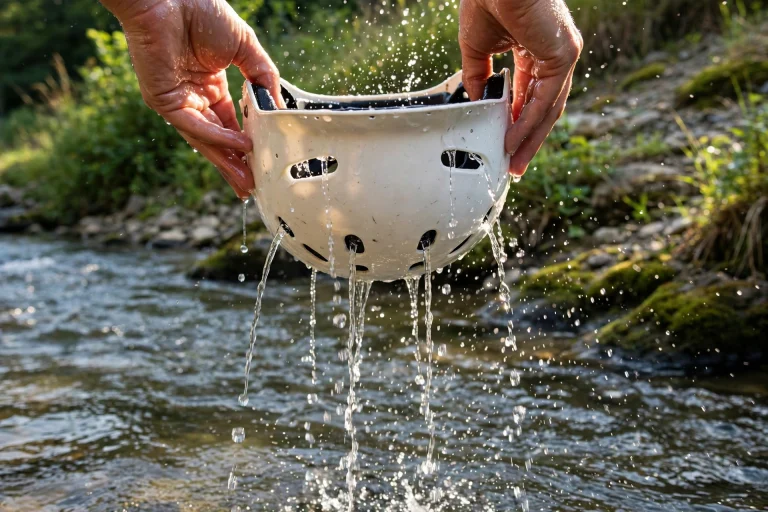
Drainage matters for comfort and for safety. A helmet that holds water feels heavy, pulls at the neck, and distracts the wearer. Fast-draining designs shed water quickly after a swim or a wave, so the guide can hear instructions, see clearly, and get straight back to work.
Ear coverage protects against rock contact, cold water, and repeated pressure surges, and it helps keep a guide comfortable and alert in cold conditions. Guides balance that against hearing: they still need to hear crew commands, whistles, and other boats, so coverage that muffles sound too much is a problem to solve, not ignore.
What Happens When a Guide’s Helmet Takes a Hard Hit?
A hard hit is treated seriously. The guide checks the paddler first, then the helmet: cracks, dents, compressed foam, torn straps, or a fit that suddenly feels different are all reasons to take that helmet out of service and follow the maker’s guidance on inspection and replacement. In general terms, a helmet that has absorbed a major impact should not simply be trusted again because it looks mostly intact.
River hits are rarely neat and straight. A guide swept into a rock usually strikes at an angle while twisting, which is why rotational force matters in helmet design, as this overview of what MIPS is for helmets explains. Guides cannot control the angle of a swim, so they control what they can: correct helmet type, close fit, fastened strap, and honest inspection afterwards.
That discipline is the real lesson for guests. Professional helmets are not magic; they are ordinary protective equipment chosen well, checked often, and retired when damaged. Copying the checking habit matters more than copying a particular brand or colour.
Frequently Asked Questions
Q: Do rafting guides have to wear a helmet on every trip?
A: In general terms, commercial outfitters normally require guides and guests to wear paddling helmets on whitewater trips, and guides wear them throughout, including during rescues and shore work. Exact rules are set by the outfitter and the place, so follow the trip’s own briefing.
Q: Can guests wear the same helmet a guide wears?
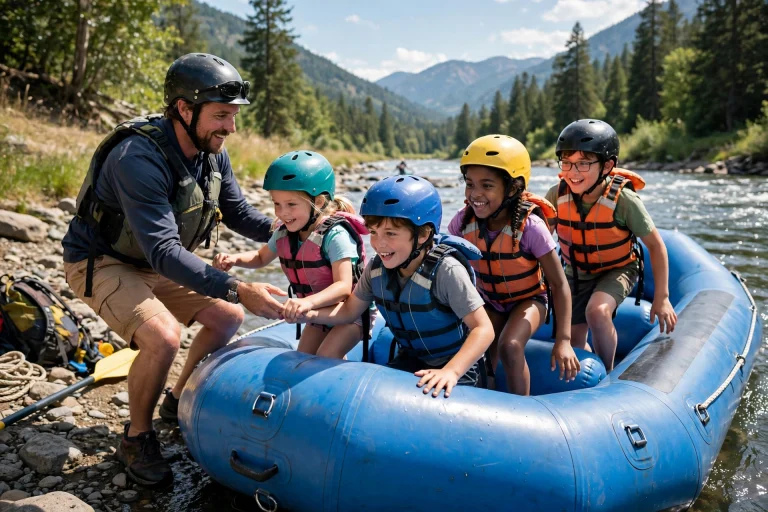
A: Yes, in principle: guests are usually issued the same type of dedicated whitewater helmet, adjusted to fit each person. The important part is individual fit, not the model name, so a guest helmet should be sized and strapped for that guest, not handed over as a one-size guess.
Q: Why is a guide’s helmet often a bright colour?
A: Visibility. A bright helmet helps the crew, other boats, and shore watchers spot the guide quickly in white water, spray, and low light, which matters during instructions and rescues. It is a practical safety choice, not just a style one.

Olivia
Writer at Helmet Today, covering helmet reviews, fit and riding safety.