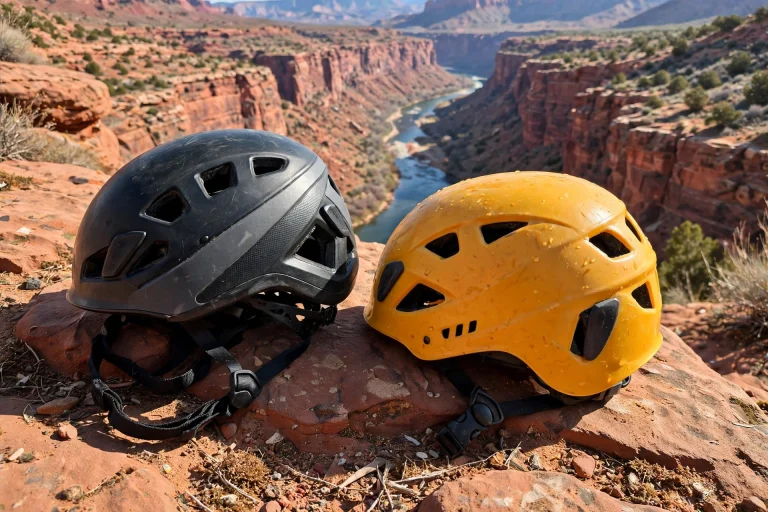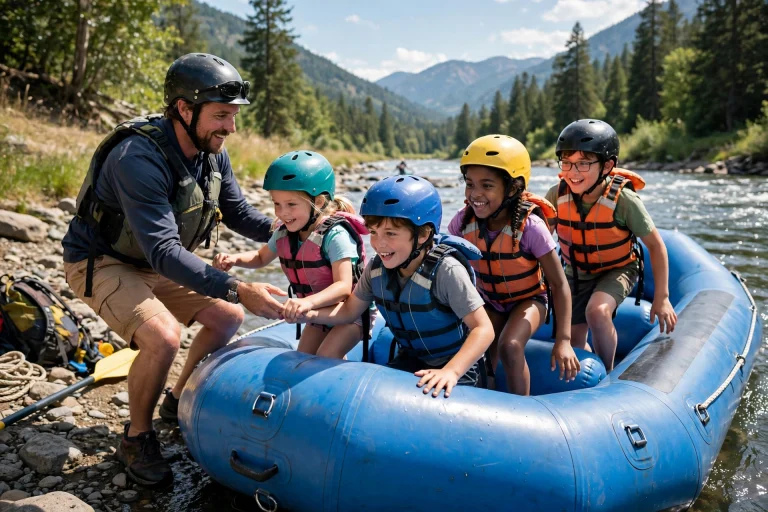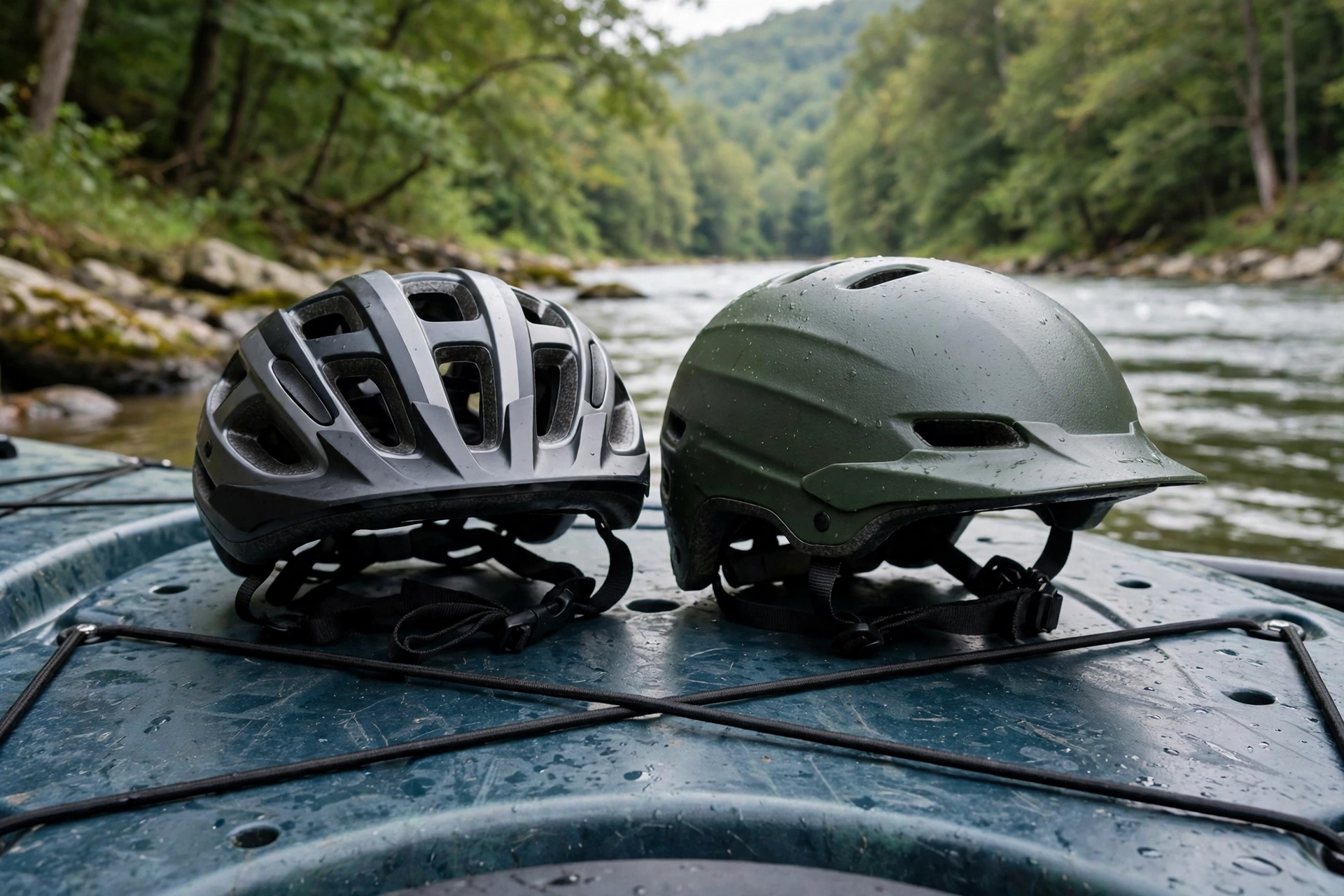
No, in general terms you should not wear a bike helmet for kayaking: a bike helmet is made for dry-land falls, not for repeated soaking, river current, and rocks in moving water, so use a helmet made and tested for whitewater or paddling instead. The two helmets may look similar on a shelf, but they are built for different jobs.
This guide explains the differences that matter, and the narrow situations where people ask the question most often.
Why Do Bike and Kayak Helmets Look Similar but Work Differently?
Both helmets put a hard shell over impact foam, and both fasten with a chin strap, so the family resemblance is real. The difference is what happens around that basic idea. A kayak helmet is shaped to stay on in current, cover the forehead, temples, ears, and back of the head, and keep working after getting wet again and again.
A bike helmet is shaped for airflow and a fall onto a road or trail. Its vents are large, its coverage is often higher and lighter, and its retention system is designed for a head that stays mostly upright and dry. In a swim, those same vents and that lighter coverage can let water push the helmet around and leave vulnerable areas exposed to rock contact.
Standards reflect that split. In general terms, bike and paddling helmets are tested against different standards for different impact and retention conditions, so a helmet approved for cycling is not automatically approved, or suitable, for whitewater use.
What Happens to a Bike Helmet in Water?
Water changes everything a bike helmet was designed for. Foam, pads, straps, and adhesives that tolerate rain and sweat may not tolerate full immersion, repeated dunking, and strong current. Pads can shift or degrade faster, straps can loosen when soaked, and large vents can let moving water catch the helmet and try to lift or twist it.
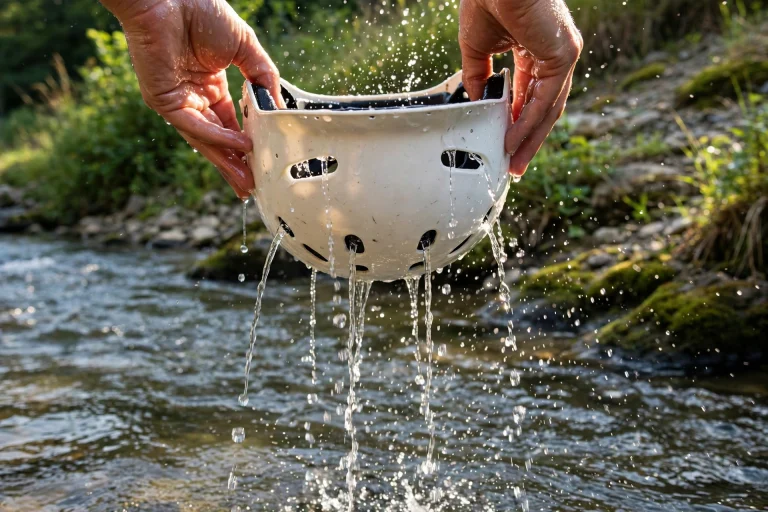
Buoyancy and drag are also problems. A helmet that traps air or presents a broad, vented shape to the current can pull at your head and neck in a swim, exactly when you need your head stable and your airway clear. A paddling helmet is made to drain, sit close, and present a smoother profile to moving water.
- In a capsize: current can push a loose, high-coverage bike helmet back off the forehead
- In a swim: drag and trapped water add strain and distraction
- Over a season: soaking, sun, and river grit age materials that were not chosen for immersion
None of this means a bike helmet offers zero protection against a single knock. It means it is the wrong tool, untested for the conditions, and unreliable in the moments that define river accidents.
When, If Ever, Is a Bike Helmet Acceptable for Kayaking?
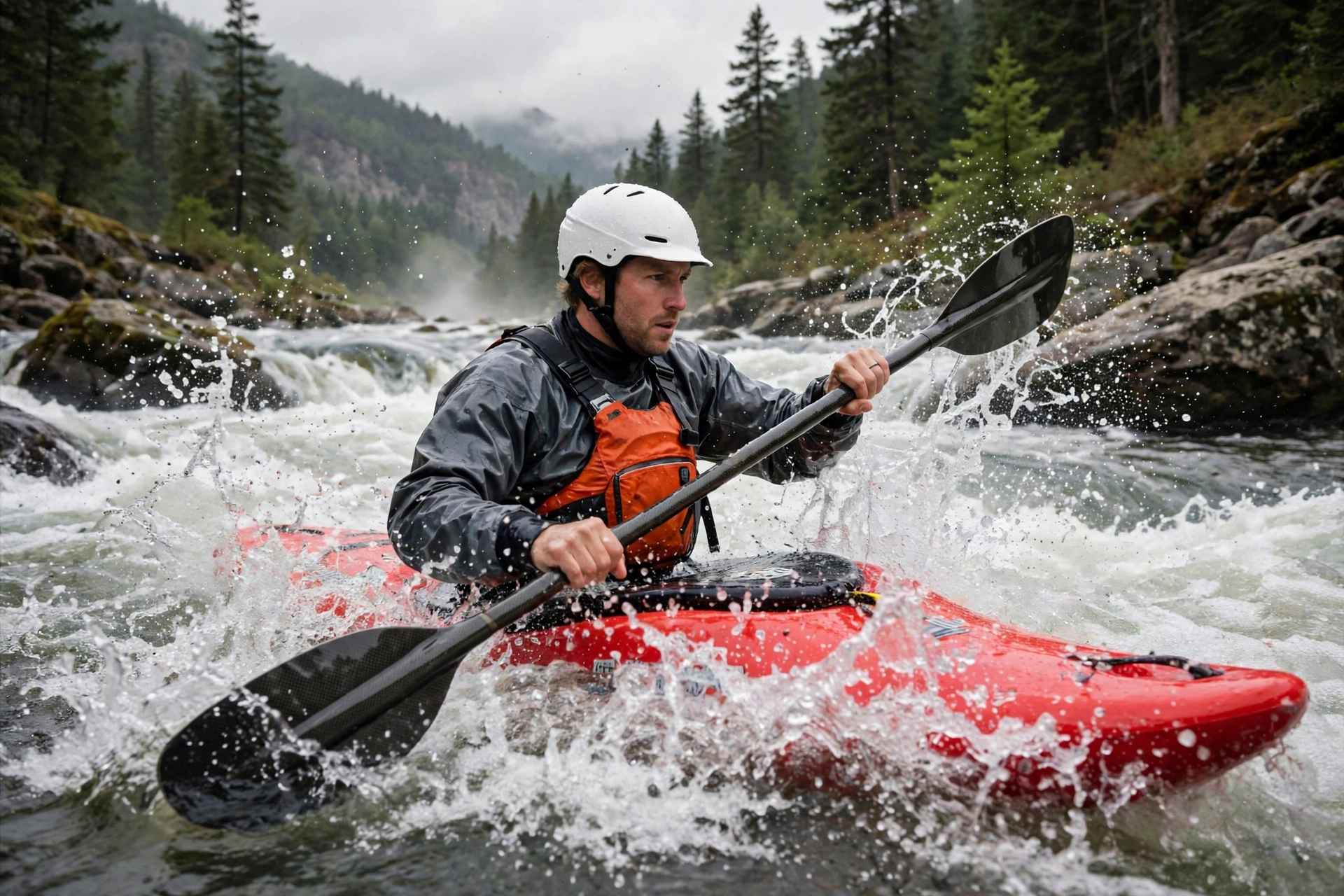
For whitewater, rocky rivers, surf, and any water where your head could strike rock, the answer stays no: use a proper paddling helmet. That is also the expectation in general terms for organised trips, clubs, lessons, and rental operations, which normally specify helmets made for the activity.
Flat, calm water raises a softer version of the question. On a gentle lake with no rocks, no current, and no requirement from an organiser, some paddlers choose no helmet at all, and the main head risks are sun, a dock edge, or a paddle strike rather than river impact. Even there, if you decide a helmet is needed, that decision itself points to a paddling helmet, not a bike helmet pressed into service.
Do not lend a bike helmet to a child for kayaking to save buying the right one. Children are lighter, less able to manage a shifting helmet in a swim, and more likely to be in lessons where a correct helmet is expected. If head protection is worth wearing, it is worth wearing correctly.
What Should You Look for in a Proper Kayak Helmet Instead?
Look for a helmet made specifically for kayaking or whitewater, in your measured size, with coverage that sits low over the forehead and protects the sides and back of the head. It should feel evenly snug, stay in place when you shake your head with the strap fastened, and drain water rather than holding it.
Check the details you will live with: a strap and buckle you can work with cold, wet hands, ear coverage that suits your water temperature, and padding that can be adjusted or replaced. In general terms, helmets for paddling use materials and fittings chosen to tolerate immersion, grit, and sun better than road helmets do.
Try it with anything you wear on the water, such as a cap, hood, or sunglasses. If you paddle different seasons, check the fit in both summer and cold-water kit, because a helmet that only fits one setup will be left behind for the other.
How Does Rotational Protection Differ Between Bike and Kayak Helmets?
Cycling helped popularise rotational protection, because road and trail falls often involve angled impacts that twist the head. River impacts can twist the head too: a glancing blow on a rock, a sudden stop against a strainer, or a tumble in a hole. That shared concern is why the ideas behind what MIPS is for helmets are discussed in paddling helmets as well.
The difference is context. A rotational system in a bike helmet is tested and fitted inside a helmet built for dry use, while a paddling version must keep working when wet, cold, and full of grit, in a shell shaped for water. Borrowing the bike helmet does not safely borrow the protection, because fit, coverage, retention, and condition in water all change the result.
In general terms, treat rotational features as one part of choosing a proper kayak helmet, after correct type, correct size, and a secure strap. A well-fitted paddling helmet worn on every run beats an advanced bike helmet worn in the wrong environment.
Frequently Asked Questions
Q: Is a bike helmet better than no helmet for kayaking?
A: On flat, calm water it may cover the head against a minor bump, but it is not made or tested for paddling and can shift or drag in water. For any moving water or rocky setting, choose a proper kayak helmet instead of relying on a bike helmet.
Q: Can I use a skate or multi-sport helmet for kayaking?
A: Only if the maker specifically rates that exact model for paddling or whitewater use. A general multi-sport label does not automatically cover river use, immersion, and current, so check the stated activities and standard on the helmet itself.
Q: Can a kayak helmet be used on a bike instead?
A: In general terms, no. The same logic works in reverse: a kayak helmet is not tested as a bike helmet for road or trail falls. Use each helmet for the activity it was made and approved for.

Olivia
Writer at Helmet Today, covering helmet reviews, fit and riding safety.