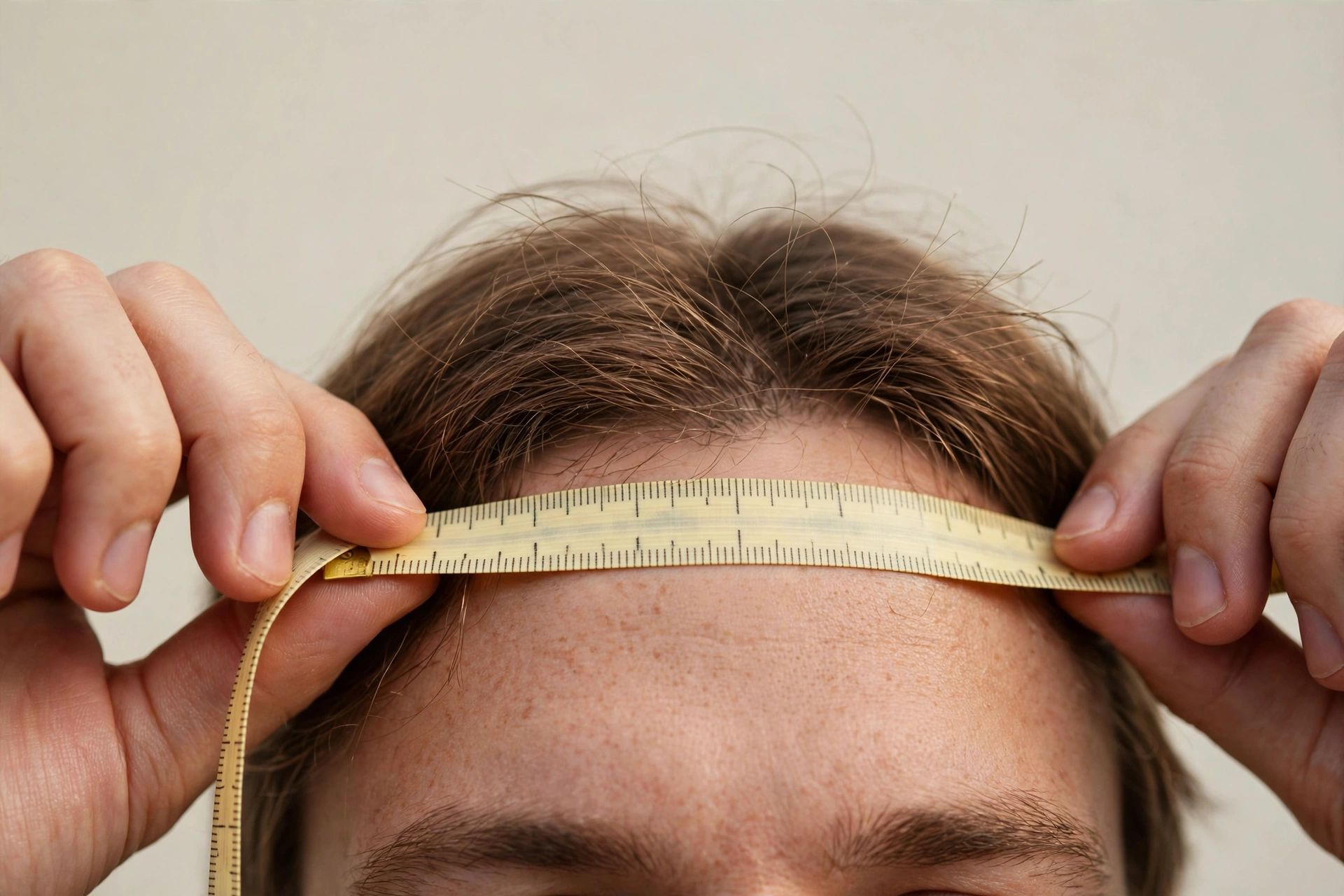
To measure for a whitewater helmet, wrap a soft tape measure around the widest part of your head, just above your eyebrows and ears, keep it level and snug, and use that circumference in centimetres or inches to pick the size on the maker’s chart for whitewater helmet sizing. Measure twice, and try the helmet on before you trust the number.
A tape number gets you to the right shelf. Fit checks on your actual head decide whether that helmet is safe to paddle in.
Why Does Head Measurement Matter for a Whitewater Helmet?
A whitewater helmet only protects you if it stays in place during a swim, a roll, or a knock against a rock. Too large, and water can lift, tilt, or pull it back so the forehead and temples lose coverage. Too small, and it creates pressure points that give you a headache, distract you on the river, and tempt you to loosen the straps or leave it behind.
Head shape matters as much as head size. Two paddlers with the same circumference can need different models because one head is rounder and the other is longer from front to back. That is why measuring is the starting point, not the finish. In general terms, makers size whitewater helmets by circumference ranges, and those ranges differ between brands, so never assume your bike or ski helmet size transfers directly.
Good sizing also protects comfort over a full day. A helmet that is right in the shop should still feel right after hours of paddling, with a wet strap, cold water on your face, and a cap or hood underneath in cooler weather.
How Do You Measure Your Head for a Whitewater Helmet Step by Step?
Use a flexible tailor’s tape if you have one. If not, wrap a non-stretch cord, shoelace, or strip of paper around your head, mark where it meets, and lay it flat against a ruler. Stand in front of a mirror, or ask a friend to help, because keeping the tape level is harder than it looks.
- Place the tape just above your eyebrows at the front, above the tops of your ears at the sides, and around the widest bulge at the back of your head.
- Keep it level all the way round, snug against the hair but not pulled tight enough to dent the skin.
- Read the measurement, then repeat it twice more and use the largest consistent reading.
- Measure with the headwear you actually paddle in, such as a thin skull cap, if you wear one often.
Write the number down in both centimetres and inches if the chart uses both. A small reading error at this stage becomes a whole size error later, so take your time. If your hair is thick, braided, or usually tied up under the helmet, measure with it arranged the way you will paddle.
What If You Fall Between Two Whitewater Helmet Sizes?
Being between sizes is common, and it does not mean you should simply guess. In general terms, start with the size the maker recommends for between-size heads, then use the fit system, pads, or dial the model provides to fine-tune it. Many whitewater helmets come with extra foam pads of different thicknesses so you can adjust the fit without forcing your head into the wrong shell.
Never solve a between-size problem by wearing a helmet that rocks side to side. Movement is the warning sign, whatever the chart says. A slightly snug helmet with even pressure and adjustable padding is usually easier to fine-tune than a loose helmet padded out until it feels stuffed and unstable.
Try both sizes if you can, each for several minutes. Shake your head, look up and down as if scanning a rapid, and simulate a roll by tilting your head. The right size stays put without a strap pulled painfully tight, and it does not creep upward when you push gently on the front edge.
How Should a Measure Size Feel When You Try the Helmet On?
The helmet should sit low and level, covering the forehead rather than perching on top of the head. Pressure should feel even around the whole head, with no hard spot on the forehead, temples, or crown. A firm, even snugness is normal for a new helmet; sharp pain, numbness, or a red pressure line after a short try-on is not.
- Stability: it should not roll forward, back, or sideways when you shake your head
- Strap: the chin strap should be snug, centred, and comfortable enough to keep fastened all day
- Ears and vision: ear coverage should not crush your ears, and your view ahead and to the sides should stay clear
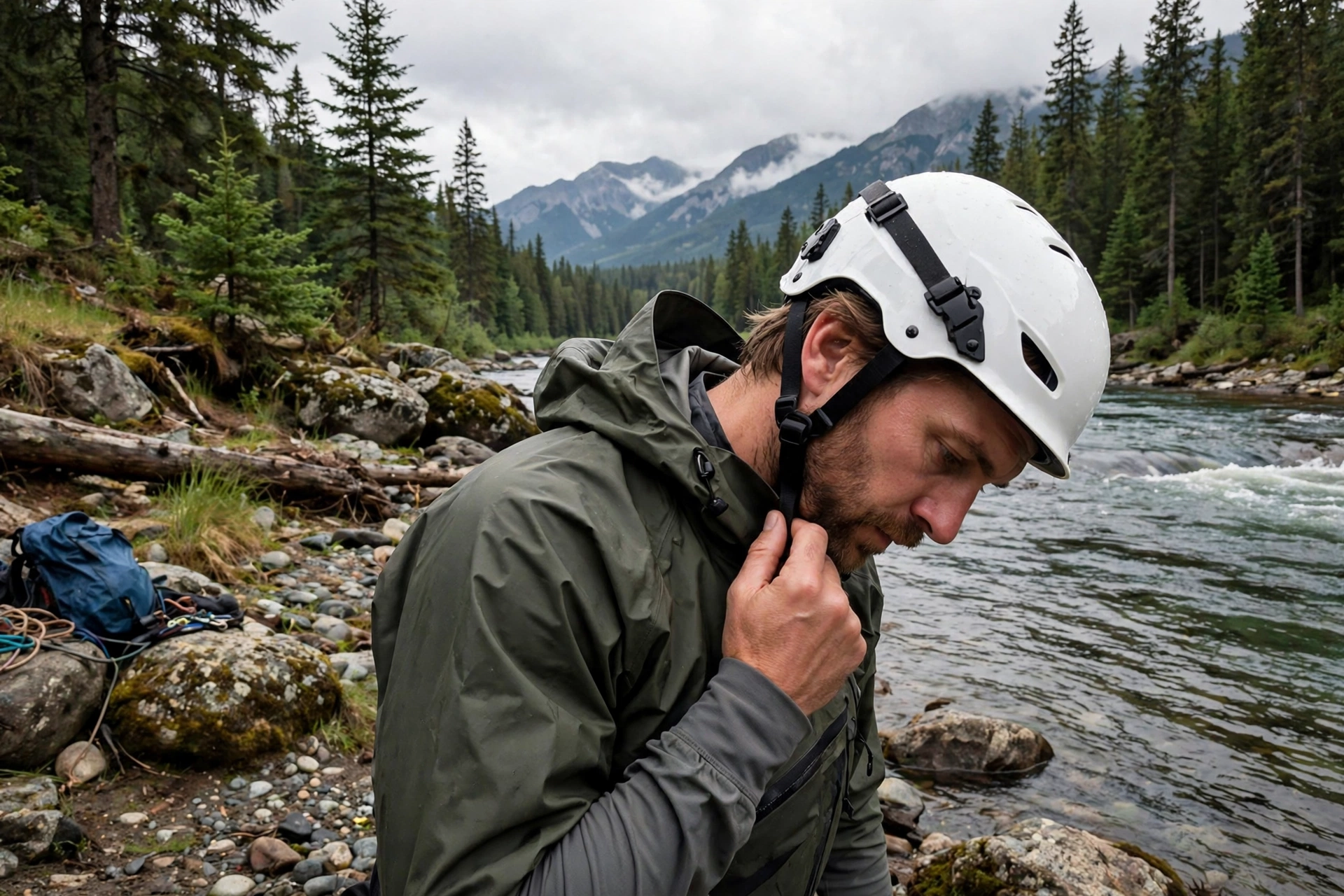
Fasten the strap exactly as you would on the river and test again. Many helmets feel secure unstrapped in a shop and then move once the strap reveals they are sitting too high or too loose. If you wear sunglasses or a hood, try those too before deciding.
How Does Rotational Protection Fit Into Whitewater Helmet Sizing?
Sizing is not only about stopping a direct knock. River impacts are often glancing: you tip into a rock, get pushed sideways by current, or surface under a raft. Those angled hits can twist the head, which is why rotational force is part of modern helmet design, as explained in this guide to what MIPS is for helmets. A rotational system can only do its intended job if the helmet fits closely and does not already slide around on its own.
That is the practical link between protection and measurement. A loose helmet moves before any liner or slip system can work as designed, and an overly tight helmet may sit too high to cover the areas at risk. In general terms, no feature replaces correct size, intact foam, and a fastened strap.
After any hard hit, recheck fit and inspect the shell and liner. Damage is not always obvious from outside, and a helmet that has absorbed a major impact should be treated with caution and replaced in line with the maker’s guidance.
Frequently Asked Questions
Q: Should I measure in centimetres or inches for a whitewater helmet?
A: Use whichever unit the maker’s size chart uses, and check the conversion carefully if you switch between them. Centimetres often give a more precise reading, which helps when you are close to the edge of a size range.
Q: How tight should a whitewater helmet be after sizing?
A: Snug and even, with no rocking or sliding, but not painful. You should be able to shake your head firmly without the helmet shifting, while still wearing it comfortably for a full session with the strap fastened.
Q: Can I size a whitewater helmet for a hood or cap underneath?
A: Yes, if you regularly paddle in cold water with a hood or cap, measure and try the helmet on with it. A layer underneath changes the fit, so a helmet sized for a bare head may feel too tight in winter conditions.

Olivia
Writer at Helmet Today, covering helmet reviews, fit and riding safety.