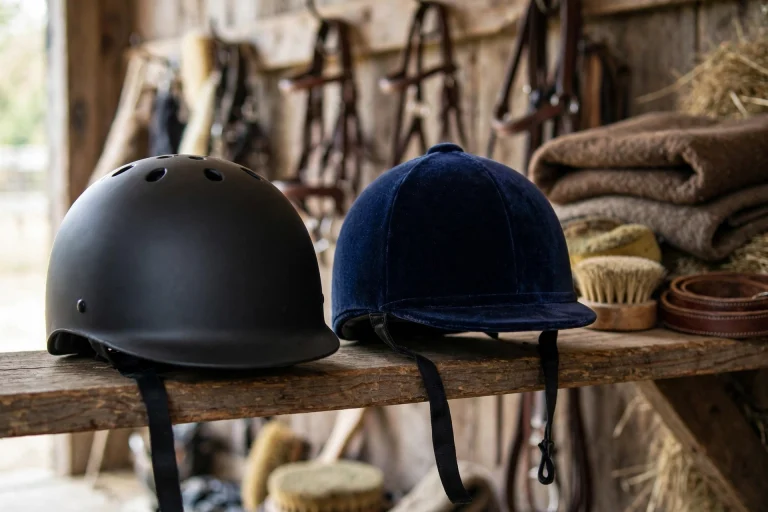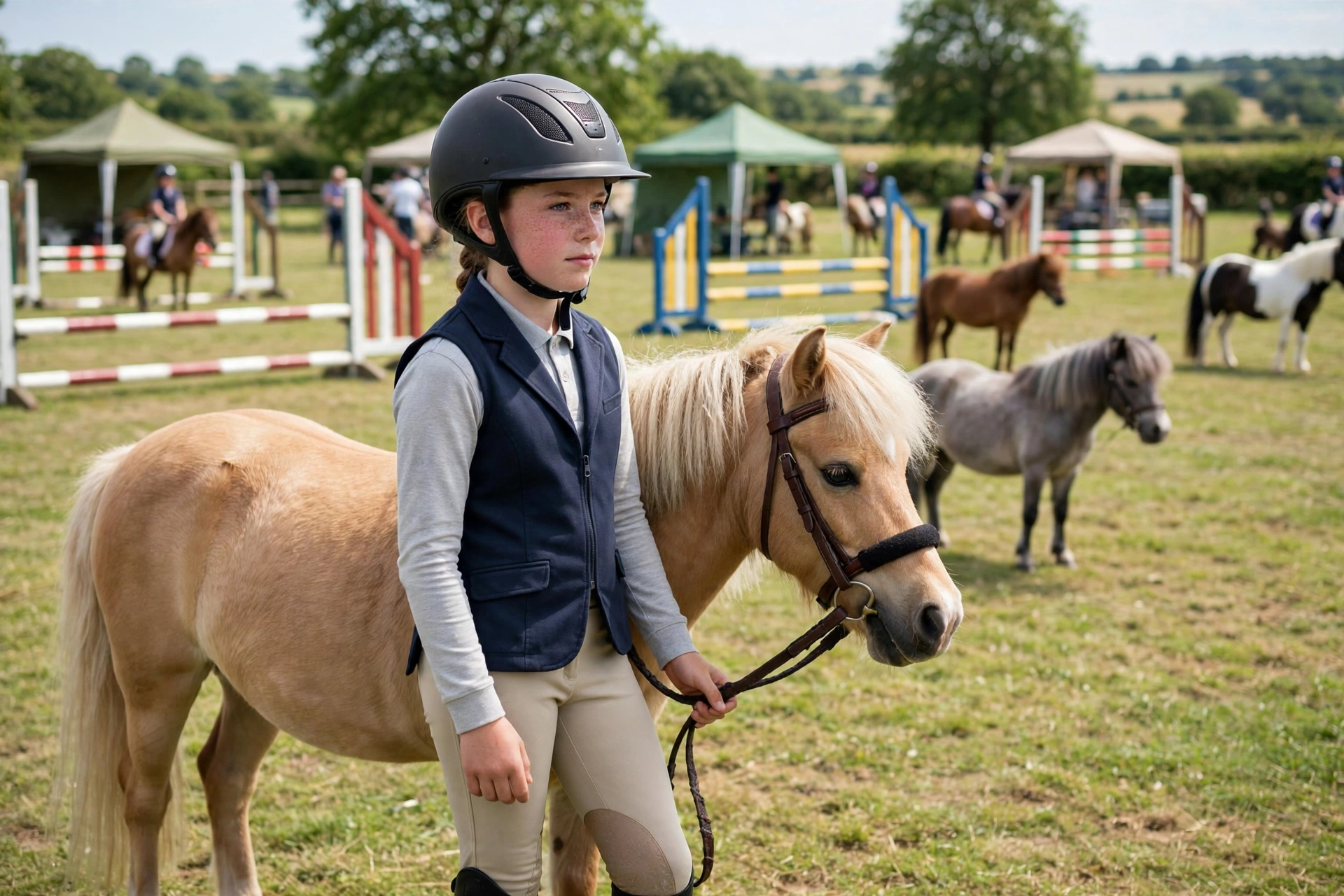
In general terms, pony club and youth competition helmet rules require a properly fitted, safety-certified riding helmet with the harness fastened correctly whenever a young rider is mounted, and many organisations extend that expectation to handling and warm-up areas too. The exact rule book depends on the club and discipline, so parents should always check the current rules for that event before the day.
This overview explains what the rules usually cover, why checks happen, and how to prepare a helmet that passes without stress at the gate.
What Do Pony Club Helmet Rules Usually Require?
In general terms, the core requirement is certification. Organisers typically expect a helmet that meets a recognised equestrian safety standard, such as ASTM/SEI in North America or PAS 015 in Britain, named here in general terms only. A fashion hat, a bike helmet, or an uncertified novelty helmet does not meet that expectation, however smart it looks.
The second requirement is condition and fit. The helmet should be undamaged, sit level on the head, and be worn with the chinstrap or harness fastened and adjusted so the helmet cannot tip forward, back, or side to side. Rules also commonly require the helmet to be worn whenever mounted, including in warm-up areas, not just in the competition ring itself.
Many rule books also address tags, stickers, or markings that show a helmet has been checked. Some organisations use a tagging system to show a helmet met the required standard at inspection. If your club uses tags, keep the tag intact and do not swap it between helmets.
Why Are Helmets Checked at Youth Competitions?
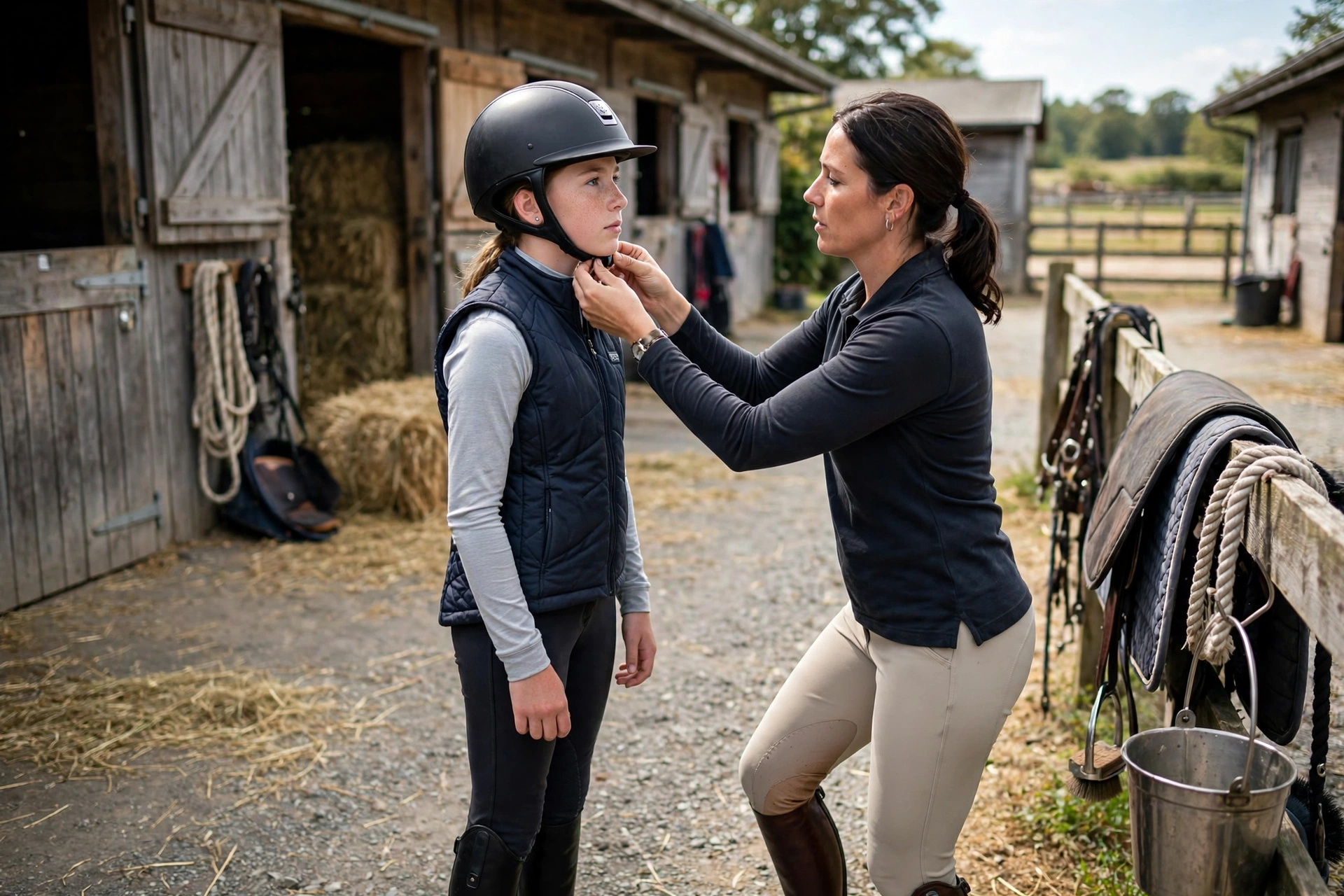
Checks protect children who may not notice a problem themselves. A helmet can look fine while hiding a cracked shell, worn harness, or an outdated certification label. A steward or coach doing a quick visual and fit check can spot a loose strap, a helmet perched too high, or damage that a busy parent missed at home.
Checks also make the rule fair. If every rider is held to the same standard, no child gains a supposed advantage by wearing a lighter, uncertified hat, and no family is left guessing what is acceptable. A consistent check at the gate sets the tone for the whole day: safety equipment is part of competing, not an optional extra.
Finally, checks teach good habits. Young riders learn to present their helmet, fasten it themselves, and understand why it matters. That routine carries over to lessons and home schooling long after the rosettes are forgotten.
What Should Parents Check Before Competition Day?
Start a week early, not the night before. Read the current rule book or event schedule for your club, branch, or federation, because requirements can differ between disciplines such as dressage, show jumping, mounted games, and cross-country. In general terms, cross-country often has stricter expectations about helmet type, including a skull cap style without a fixed peak for that phase in some rule sets.
- Confirm the certification label inside the helmet matches a standard the rules accept.
- Check the shell for cracks, dents, and sun or heat damage, and the harness for fraying.
- Refit the helmet with the hairstyle and any hairnet your child will actually compete in.
- Replace any helmet that has taken a fall or impact, even if it looks undamaged.
Bring a spare plan. If a helmet fails a check on the day, borrowing is risky because fit is personal, and buying at a show is rushed. Knowing a local tack shop, or carrying a second certified helmet that truly fits your child, prevents a disappointing withdrawal.
How Should a Competition Helmet Fit a Child?
It should sit level, about a finger’s width above the eyebrows, and feel snug and even all around without causing pain. With the harness unfastened, a gentle shake and nod should not make it rock or slip. With the harness fastened, you should be able to fit only a small amount of slack under the chin, in general terms, and the straps should form a neat, balanced fit around the ears.
Children grow, and fit changes faster than parents expect. Re-check size at the start of each season, after a growth spurt, and after a haircut or a change in how the hair is worn up. A helmet bought to grow into is a helmet that does not protect now, because a loose helmet can shift in the first moment of a fall.
Fit also affects how well the protective systems inside can work. In a fall, much of the force can be rotational as well as straight-on, which is why some parents ask about what MIPS is for helmets when choosing a new model. Whatever technology a helmet has, it can only do its job if the helmet is the right size and stays in place.
What Happens If a Helmet Does Not Meet the Rules?
In general terms, a rider whose helmet fails a check may not be allowed to mount until the problem is fixed or a compliant helmet is found. That can mean adjusting a harness, removing an unapproved cover or attachment, or, in the case of damage or wrong certification, replacing the helmet entirely. Officials are not being difficult; they are applying the rule that keeps insurance, fairness, and safety intact.
Attachments deserve care. Helmet cameras, decorative items, and covers are treated differently by different organisations, and some events restrict anything that could change how a helmet behaves in a fall or hide damage underneath. Ask before the day rather than arguing at the gate, and never drill, glue, or modify a shell to add an accessory.
Treat a failed check as useful information. Note what failed, fix it properly at home, and add it to your pre-season checklist. The aim is not just to pass once, but to arrive at every lesson, rally, and competition with a helmet that is certified, undamaged, and fitted as if a check were about to happen.
Frequently Asked Questions
Q: Can my child compete in a bike helmet or a ski helmet?
A: In general terms, no. Pony club and youth competition rules normally require a helmet certified for equestrian use. Bike and ski helmets are designed and tested for different sports, so they do not meet the usual requirement even if they feel sturdy.
Q: Does a helmet need replacing after a fall at a competition?
A: Yes, in general terms a helmet that has taken an impact in a fall should be replaced, even if it looks fine. The inner foam is designed to absorb force once and can be damaged in ways you cannot see from the outside.
Q: Where do I find the exact rules for our event?
A: Check the current rule book or event schedule from your pony club, branch, or federation, and ask the organiser or coach if anything is unclear. Rules vary by organisation and discipline and can change, so the event’s own document is the source to trust.

Olivia
Writer at Helmet Today, covering helmet reviews, fit and riding safety.