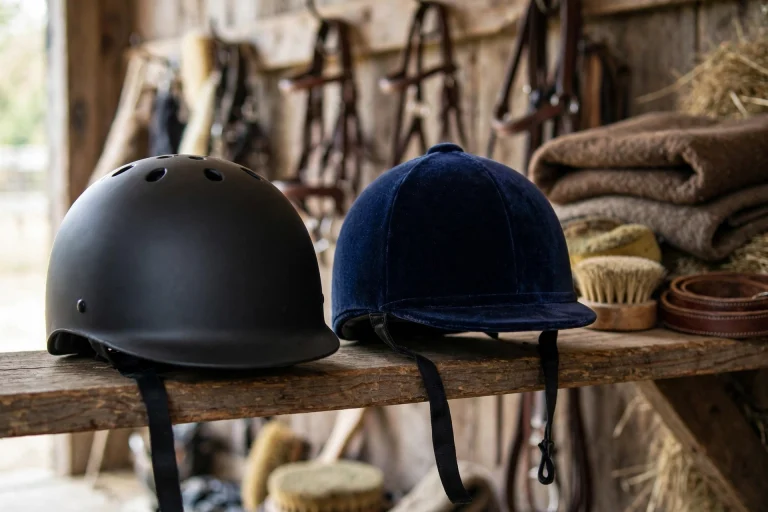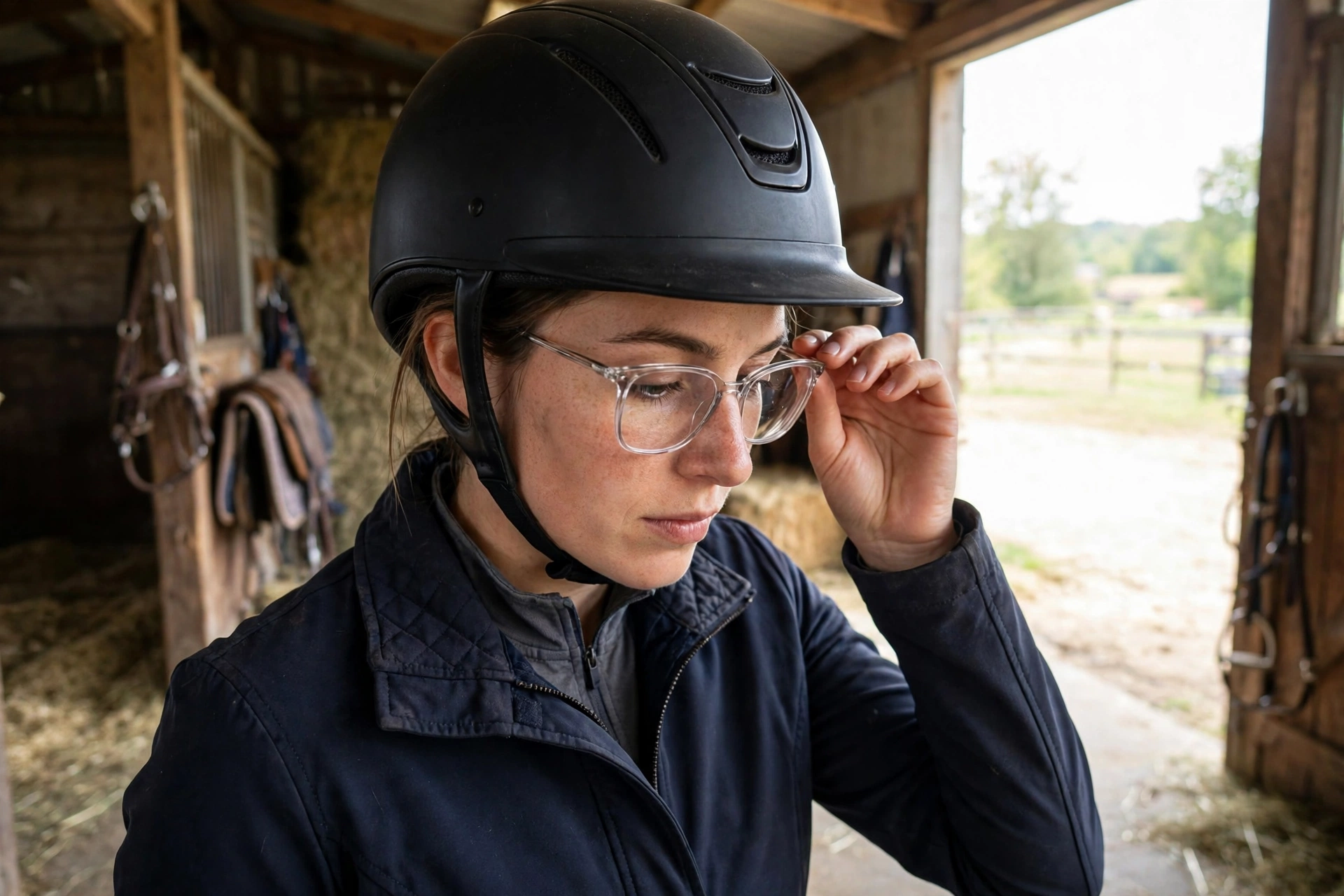
You can wear glasses with a riding helmet by choosing slim, straight arms that slide on after the helmet is in place, sit flat against your head without lifting the helmet, and stay secure when you move, look down, and ride at speed. The helmet must still fit correctly on its own, and the glasses should never be forced under padding in a way that bends the frames or creates pressure.
This guide covers frame choice, the right order for putting everything on, and fixes for slipping, fogging, and sore ears.
What Kind of Glasses Work Best Under a Riding Helmet?
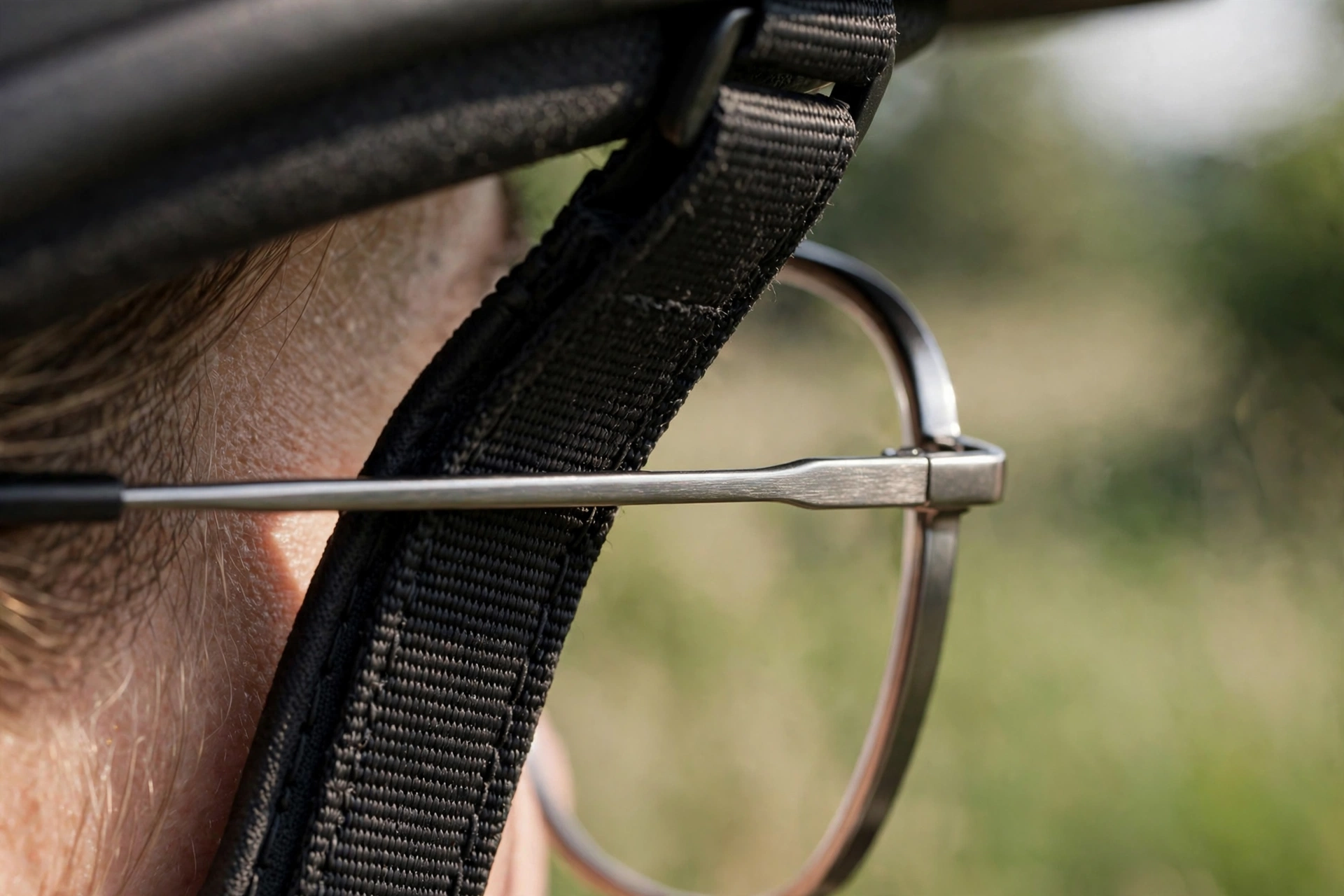
Look for thin, flat temple arms. In general terms, straight arms that run close to the head slide more easily into place and press less against the skull than thick, curved, or heavily wrapped arms. Flexible hinges and lightweight frames also help, because the helmet will hold the glasses closer than they sit in everyday wear.
Avoid oversized fashion frames for riding. Large lenses can touch the helmet brim, wide arms can lift the helmet at the sides, and loose frames slide when you sweat or look down. A smaller, sportier frame with adjustable nose pads usually stays centred and gives a clearer field of view in the saddle.
If you ride most days, consider a dedicated riding pair. Keeping one sturdy, well-fitting pair for the yard protects your best everyday glasses from drops, dust, and arena grit, and it means the fit with your helmet is tested and settled rather than rediscovered each ride.
Should You Put Glasses On Before or After the Helmet?
Put the helmet on first. Set it level on your head, fasten and adjust the harness, and check the fit feels normal. Then slide the glasses on straight from the front, guiding each arm over the ear and along the head so the frames sit in their natural position rather than being trapped under a strap.
Check the strap layout as you do this. In general terms, harness straps should sit as the maker intended, and glasses arms usually rest against the head with the straps lying naturally over or beside them without forcing either out of place. If an arm pushes a strap away from the head, or a strap bends an arm, something needs adjusting before you mount.
Finish with a movement test. Nod, shake gently, look down as if checking a diagonal, and bend as if adjusting a girth. The glasses should not slide down your nose, tilt, or lift the helmet, and the helmet should not rock. Test at home first, not halfway through a lesson.
How Do You Stop Glasses Slipping or Hurting When You Ride?
Pressure pain usually comes from a point, not from snugness. If the arms dig in above the ears, the helmet may be too small, the wrong shape for your head, or simply sitting too low at the sides. Try a different frame with thinner arms before you try a bigger helmet, because upsizing a correctly fitted helmet trades a pressure point for a loose, unsafe fit.
For slipping, start with the frame itself. Nose pads adjusted by an optician, arms correctly bent behind the ears, and a clean, oil-free fit on the nose make more difference than gadgets. A slim glasses retainer or sports strap can help for jumping or cross-country, provided it sits flat, does not interfere with the harness, and releases safely rather than tying the glasses rigidly to your head.
- Clean lenses and nose pads before riding so sweat does not start the slide.
- Refit glasses and helmet together whenever you change frames or helmet model.
- Stop and fix slipping at once; riding one-handed to push glasses up is its own risk.
Never modify the helmet to make room. Do not cut padding, crush foam, or remove parts of the liner to fit arms. That removes protection where you need it and can affect how the helmet manages impact and rotational force, the same area covered in this explanation of what MIPS is for helmets. Change the frames or the helmet model instead.
What About Sunglasses, Prescription Inserts, and Contact Lenses?
Prescription sunglasses follow the same fit rules as clear glasses: flat arms, secure fit, helmet on first. Check that a tinted lens still gives you enough contrast to read ground, poles, and shadows, especially in an indoor arena or on a dull day. Very dark lenses that suit a beach can hide a spooky corner or a change in footing.
Some riders prefer contact lenses under a plain helmet, sometimes with non-prescription sunglasses over the top for wind and dust. Contacts remove the frame problem entirely, but they bring their own issues on a yard: dust, hay, and wind can dry or irritate eyes, and a lost lens mid-ride leaves you worse off than slipping glasses. Many riders carry a spare pair and their glasses as backup.
Goggles and inserts made for other sports do not automatically suit riding helmets. Anything worn with the helmet must not lift it, break its seal on the head, or interfere with the harness. If you are considering an insert or an alternative system, fit it in the shop with your actual helmet and do the movement test before buying.
How Do You Deal With Fogging and Rain?
Fogging happens when warm, moist air from your face meets a cooler lens, most often when you stop working and the airflow drops. Anti-fog treatments made for glasses can help, as can a helmet with good ventilation, but the simplest fix is air: keep moving air flowing where you can, and lift the glasses slightly off your face for a moment when you halt, if it is safe to do so.
In rain, a helmet brim or peak already keeps some water off the top of the lenses. A quick wipe with a clean, soft cloth at a halt is better than a glove, which smears grit across the lens. Water-repellent lens treatments exist; check with your optician that any product is safe for your lens coatings before using it.
Plan for the worst day, not the best. If you compete, test your glasses and helmet together in cold, wet, and indoor conditions before an event. Fogging that is a nuisance on a hack becomes a real problem in a jump-off, and the time to discover it is at home, with spare lenses, a cloth, and a backup plan in your grooming kit.
Frequently Asked Questions
Q: Can wearing glasses make a riding helmet unsafe?
A: Not if the fit is right. Glasses become a problem only when they lift the helmet, bend under pressure, or force you to loosen the fit. If the helmet still sits level and snug with the glasses on, and the arms lie flat without pain, the combination is fine.
Q: Should I buy a bigger helmet to fit my glasses?
A: Usually no. A bigger helmet that rocks or gaps is less protective, and most glasses problems are solved by thinner, straighter arms or a different helmet shape. Always fit the helmet correctly first, then choose frames that work with it.
Q: Are contact lenses better than glasses for riding?
A: They suit some riders and not others. Contacts remove frame pressure and fogging, but dust, hay, and wind can irritate eyes, and a lost lens is hard to fix at a yard. Many riders use contacts for competing and glasses for everyday schooling.

Olivia
Writer at Helmet Today, covering helmet reviews, fit and riding safety.