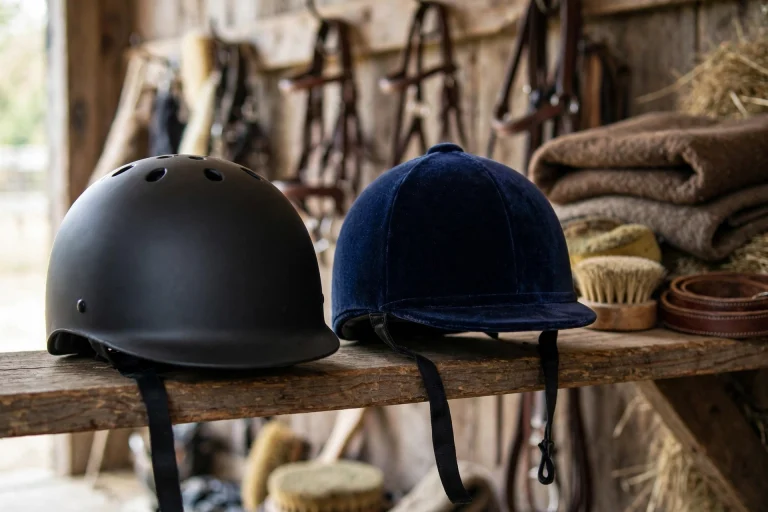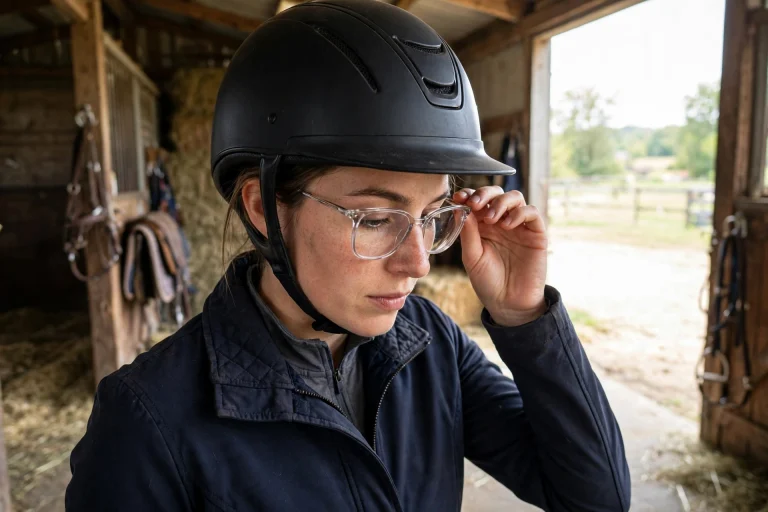
To stay warm in a riding helmet in winter, add warmth around the helmet rather than bulk under it: use only a thin, helmet-compatible liner if the maker allows one, cover your ears and neck outside the helmet, and keep the helmet sitting level with its harness correctly fastened. Thick hats under a helmet lift it, loosen the fit, and reduce protection, so warmth must never come at the cost of how the helmet sits.
This guide shows how to stay comfortable on cold rides without changing the fit you rely on in a fall.
Can You Wear a Hat Under a Riding Helmet in Winter?
In general terms, a thick hat, fleece beanie, or hood should not go under a riding helmet. A helmet is fitted to your head, and adding bulky fabric raises it, creates gaps at the sides, and lets it rock. In a fall, a helmet that starts out of position cannot do its job as designed, and the hat can also make the helmet slide more easily.
A thin liner is a different matter. Some helmet makers offer or allow a slim winter liner or ear-cover system designed for that model, which adds warmth with minimal change to fit. If you use one, it should be made for helmets, lie completely flat with no seams or knots over pressure points, and be included when you check the fit, every time.
Whatever you wear, redo the fit test with it on. The helmet should still sit level about a finger’s width above the eyebrows, feel snug and even, and stay put when you shake and nod with the harness undone. If the liner changes any of that, it is too thick, however warm it feels.
What Is the Best Way to Keep Your Ears and Neck Warm?
Work outside the helmet. Ear covers that attach over the helmet or fasten around the harness, where the maker or your instructor considers them suitable, warm the ears without adding bulk underneath. A fleece or softshell headband worn over the helmet’s lower edge can also cut the wind, provided it does not cover vents you need or interfere with the straps.
Protect the neck and the gap below the helmet. Much of the chill on a ride comes from wind down the neck rather than through the helmet itself. A neck warmer or gaiter pulled up to the jaw, a high-collared jacket zipped fully, and a scarf kept short and tucked safely away all help. Avoid long, loose ends near reins, tack, or machinery.
Do not forget the rest of you. Warm gloves, layered clothing, and proper winter riding boots keep overall body heat up, which makes your head feel warmer too. Riders often blame the helmet for cold that is really a whole-body heat problem on a slow, exposed hack.
How Does Cold Weather Change How a Helmet Fits and Feels?
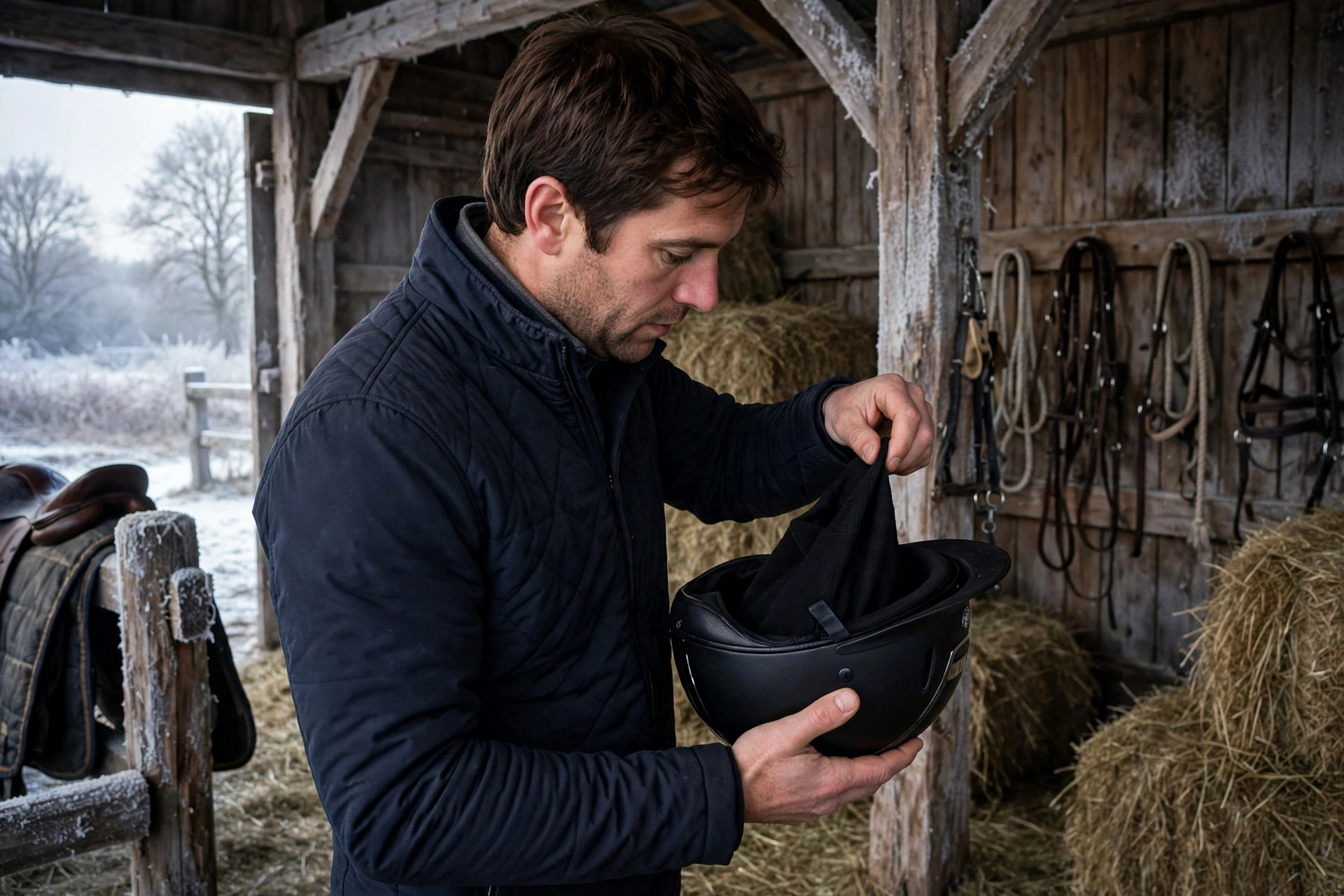
Cold stiffens materials and changes comfort. Padding can feel firmer on a freezing morning, straps can feel less flexible, and a helmet stored in a cold tack room will feel colder and harder when you first put it on. Give it a few minutes against your head heat before you judge the fit, and check that buckles and adjusters still move and click as they should.
Your hairstyle and layers change too. Hair worn down for warmth, a hood from a jacket pushed up, or a thick collar can all push a helmet out of position from below or behind. Set your hair and collar first, then put the helmet on, then check the position in a mirror or with a friend before you mount.
Cold also matters in an impact. A helmet manages a fall by crushing foam in a controlled way, including protection against rotational force, which is part of what MIPS is for helmets and similar systems. Keeping the helmet stored sensibly, not left in freezing or overheated places for long periods, and worn in its correct position is what lets those systems work as intended in general terms.
What Should You Wear for Winter Schooling and Hacking?
Build a simple, repeatable system. Start with the thin, flat liner if your helmet maker allows one, add ear warmth over the helmet, a neck gaiter below it, and layers you can open as you warm up working in. Schooling generates heat surprisingly fast, and a rider who overheats, sweats, and then cools on the walk home can end up colder than one who dressed slightly light.
- Helmet with thin approved liner, fitted and checked before mounting.
- Ear covers or a band over the helmet, not a thick hat under it.
- Neck warmer tucked in, thermal layers, winter gloves, and warm socks.
- A waterproof outer layer for sleet or snow, with vents opened as you warm up.
For long, slow hacking, dress warmer than for schooling, because you generate less heat and sit exposed to wind for longer. For a short, active lesson, dress lighter and add a rug or quarter sheet routine for your horse’s warm-up while you keep moving. Matching your layers to the work, rather than to the temperature in the yard, is the real skill.
How Do You Care for a Helmet in Winter?
Bring it indoors. In general terms, helmets are best stored in a dry, temperate place, not in a freezing car boot or a damp tack room all winter. Repeated deep cold, damp, and condensation are unkind to foams, glues, fabrics, and harness webbing, and a helmet that lives in harsh conditions should be inspected more often.
Dry it properly after wet rides. Let the liner air-dry at room temperature, away from direct heat such as radiators or heaters, which can damage materials. Remove a washable liner only as the maker directs, wash it as instructed, and make sure everything is fully dry and correctly refitted before the next ride, because a damp, bunched liner changes fit as surely as a hat does.
Inspect through the season. Check straps for stiffness or fraying, look for cracks after any knock or drop onto frozen ground, and watch for a helmet that suddenly feels different. Winter yards are slippery for people as well as horses, and a helmet dropped on concrete in the cold deserves the same suspicion as one worn in a fall.
Frequently Asked Questions
Q: Is a thin skull cap or liner under a helmet really safe?
A: A very thin, flat liner made for use with helmets, ideally offered or approved by the helmet maker, is generally the accepted option. The test is fit: if the helmet still sits level, snug, and stable with it on, it is fine. If it lifts or rocks, it is too thick.
Q: My ears get painfully cold. What helps most?
A: Warm them from outside the helmet. Ear covers that fit over the helmet or around the harness, a band over the helmet’s lower edge, and a neck warmer pulled up to meet it usually solve the problem without adding anything under the helmet at all.
Q: Can cold weather damage my helmet?
A: Prolonged storage in deep cold and damp is not ideal, in general terms, and direct heat used to dry a helmet can also harm it. Store the helmet indoors in a dry, temperate place, dry it at room temperature, and inspect it regularly through winter.

Olivia
Writer at Helmet Today, covering helmet reviews, fit and riding safety.