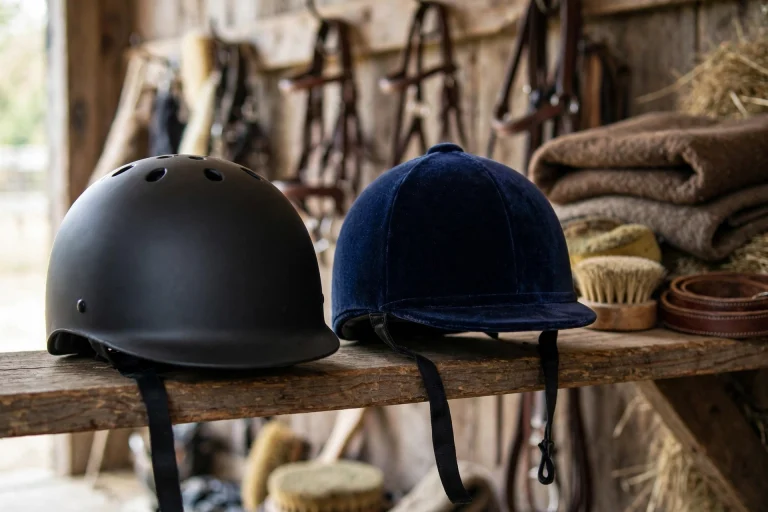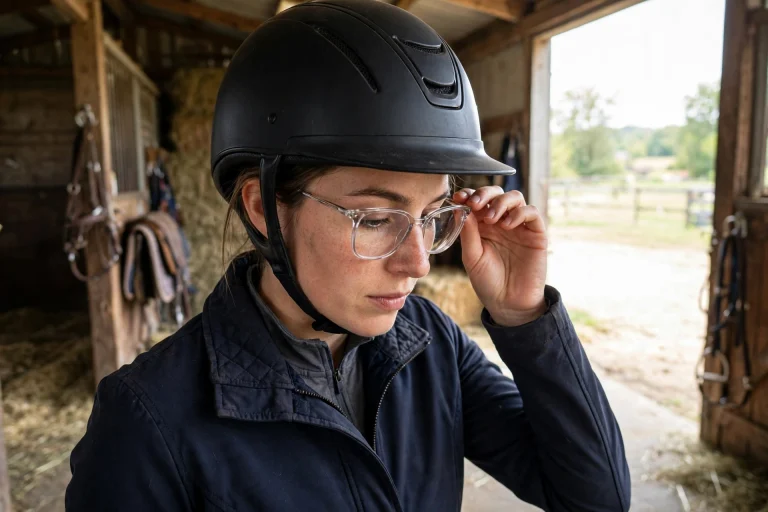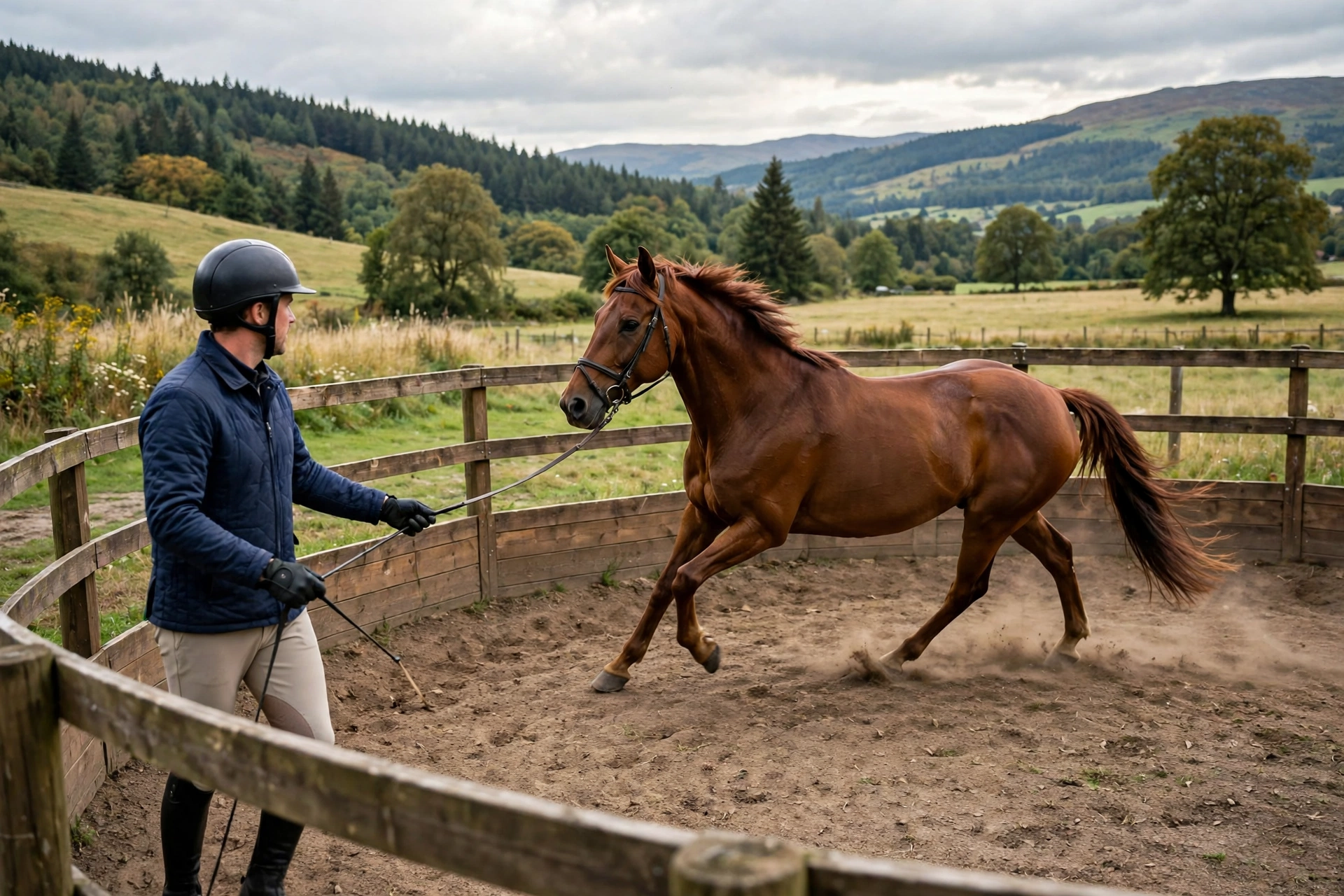
You do not have to be riding to be hurt by a horse, so in general terms wearing a helmet for groundwork and lunging is a sensible choice, especially with young, fresh, unfamiliar, or reactive horses, even though many rules only require helmets when mounted. On the ground you are within reach of hooves, a swinging head, and a horse that can pull you off balance, and a helmet is a simple layer of protection for work you do every day.
This guide looks honestly at the risks on the ground, when a helmet matters most, and how to make the habit easy.
What Are the Risks of Groundwork and Lunging Without a Helmet?
The most obvious risk is a kick. Groundwork puts you close to the horse’s legs by design: picking up feet, working around the quarters, loading, clipping, and teaching a horse to move away from pressure all happen inside kicking range, at least briefly. Even a kind horse can kick out at a fly, a fright, or a sudden noise behind it.
The second risk is being knocked or dragged. A horse that spooks on a lunge line can pull a handler off their feet, and a horse that barges through a gateway or rears in hand can strike with a front leg or a head swung in panic. Falls on concrete yards and frozen or rutted ground are a common pattern in ground accidents, and the head is often what hits first or hardest.
The third risk is complacency. Groundwork feels safer than riding because your feet are on the ground, so people do it without gloves and without a helmet, often with a familiar horse they trust completely.
When Does a Helmet Matter Most on the Ground?
It matters most whenever the horse is unpredictable. Young horses still learning boundaries, horses on box rest or returning to work, fresh horses on a windy day, and horses you do not know yet all react faster and bigger than a settled schoolmaster. The first sessions of any new exercise, from loading practice to clipping, also belong in this higher-risk group.
It also matters most in risky settings. Lunging a strong horse on a long line, working in a crowded warm-up area, leading in from a field with loose horses moving around you, and handling stallions or youngsters at a show all raise the chance of being knocked, pulled, or caught by another horse’s reaction as well as your own horse’s.
- Young, fresh, green, or unfamiliar horses, and first-time exercises.
- Lunging, long-reining, loading practice, and work around the hindquarters.
- Busy yards, shows, slippery or hard surfaces, and turning out or bringing in groups.
Children deserve a special mention. Many yards and pony clubs already expect children to wear helmets for handling as well as riding, in general terms, because children are smaller, closer to hoof and head height, and slower to read a horse’s warning signs.
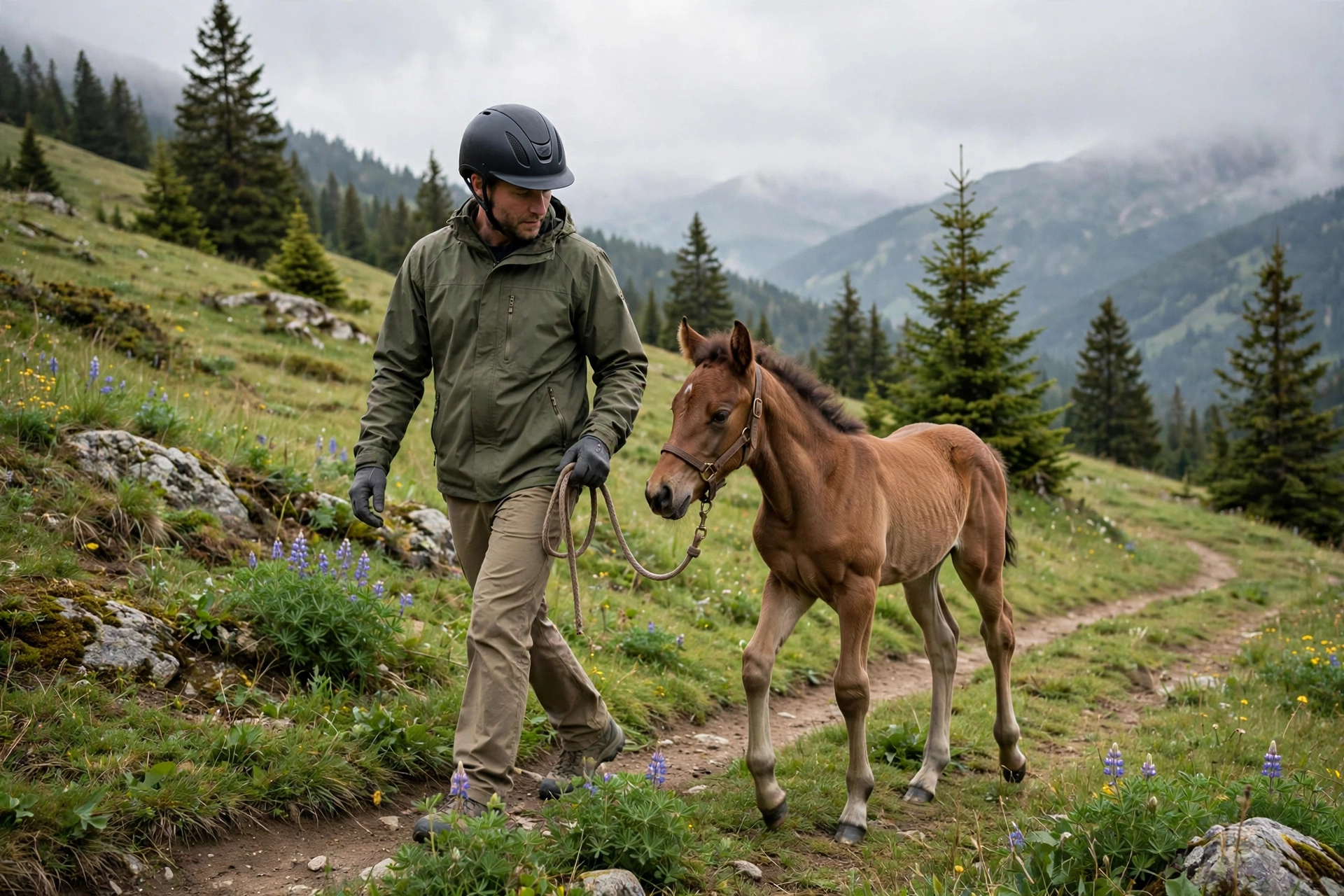
What Helmet Should You Wear for Groundwork?
Your normal riding helmet is the obvious choice. It is already fitted to you, certified for equestrian use in general terms, and designed for exactly the kinds of knocks and falls that happen around horses. There is no need for a separate groundwork helmet unless your riding helmet is a delicate show model you want to keep clean, in which case a plain schooling helmet makes a good yard helmet.
Fit matters on the ground just as it does in the saddle. Wear it properly, level on your head with the harness fastened, not pushed back like a cap and not unbuckled for a quick job. A loose helmet worn for show offers little if you are pulled over, and the quick jobs, a single hoof to pick out or one horse to lead in, are exactly where casual accidents happen.
The protective design is the same one that works in a ridden fall, including foam that manages direct impact and, in some models, systems that help with rotational force, as described in this guide to what MIPS is for helmets. A kick, a strike, or a fall onto concrete rarely arrives as a neat straight-on force, which is why a proper riding helmet beats improvised head coverings of any kind.
What Do Rules and Yards Usually Say About Helmets on the Ground?
In general terms, most competition rules focus on mounted riders, so a helmet for groundwork is often a personal or yard decision rather than a competition requirement. That is slowly changing in places: some yards, riding schools, colleges, and youth organisations set their own rules requiring helmets for handling, lunging, or working with young horses, and staff may be required to wear one as part of workplace safety practice.
Insurance and responsibility play a part too. A yard that sets a clear helmet rule for groundwork is fairer to enforce than one that leaves it to mood. If you keep horses at home, set your rule deliberately and apply it to visitors and helpers too.
Whatever the written rule, modelling matters. Instructors, grooms, and parents who put a helmet on for groundwork teach everyone watching that protection is about the horse’s nature, not about a rider’s skill or courage. The handler who wears one for the quiet old pony is the handler a nervous beginner will copy without embarrassment.
How Do You Make Wearing a Helmet on the Ground a Habit?
Remove friction. Keep your helmet where the groundwork starts, on a hook by the stable or arena gate, not in a distant tack room. If putting it on takes ten seconds on your way to catch a horse, you will do it. If it means a trip back across the yard, you will tell yourself this one time does not count.
Pair it with gloves. Lunging and leading call for gloves anyway, to protect your hands if a rope or rein pulls through them. Helmet and gloves together become a single groundwork uniform: both go on before the horse comes out, both come off when the horse is settled. A routine beats a decision, because decisions get skipped on busy days.
Be honest about the trade-off, which is small. A helmet costs a little warmth in summer, and in return it protects you during the hours you spend closest to hooves, heads, and hard ground. Most riders spend far more time handling horses than sitting on them, so protecting that time is simply consistent.
Frequently Asked Questions
Q: Is a helmet legally required for lunging or groundwork?
A: In general terms, most rules require helmets when mounted rather than on the ground, but individual yards, schools, employers, and youth organisations may require them for handling and lunging. Check your yard’s own rules, and consider wearing one regardless of the minimum requirement.
Q: Can I wear a bike helmet for groundwork instead?
A: A certified riding helmet is the better choice, because it is designed and tested for falls and knocks around horses and covers the head in the pattern riding requires. If a riding helmet is available, use it, properly fitted and fastened, rather than substituting a helmet made for another sport.
Q: My horse is quiet and I have handled him for years. Do I still need one?
A: That is exactly the situation where accidents catch people out. Quiet, familiar horses still spook at sudden noises, kick at flies, and slip on bad ground. A helmet will not be needed on most days, but it only has to matter once to be worth the habit.

Olivia
Writer at Helmet Today, covering helmet reviews, fit and riding safety.