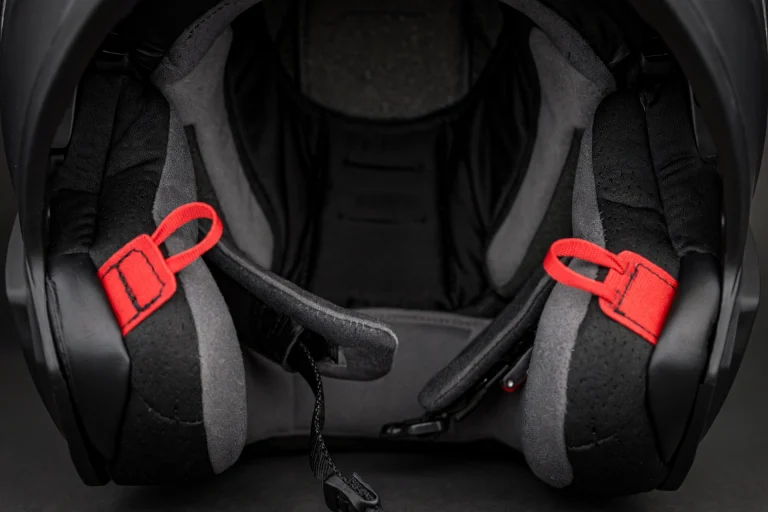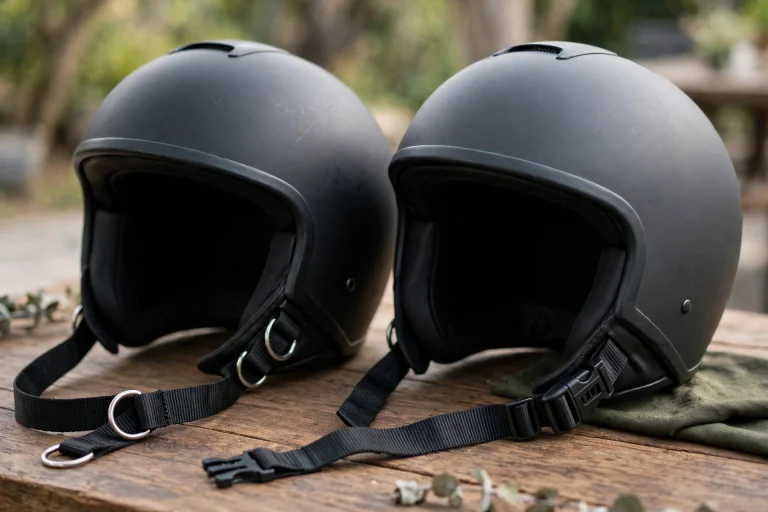
You reduce neck strain from motorcycle helmet weight mainly by choosing a lighter, well-fitting helmet that sits balanced on your head, keeping good posture with the screen or fairing taking the wind load, and building up ride time gradually — because in general terms it is the combination of weight, wind pressure, and hours that tires a neck, not weight alone. A helmet that feels fine in the shop can become a burden at hour three on a motorway.
This guide explains what actually loads your neck, how to pick and set up a helmet that minimises it, and the riding habits that help.
What Actually Causes Neck Strain When You Ride?
Weight is only the starting point. A helmet’s mass sits high and slightly forward, and your neck muscles hold it steady against every acceleration, bump, and head check. The heavier the helmet and the further its balance sits from your head’s natural centre, the harder those small muscles work — which is why two helmets of similar weight can feel completely different by the end of a ride.
Wind is the bigger multiplier. At open-road speeds the airflow pushes your head back and buffets it, and your neck works constantly against that load, fighting to keep your eyes level. A naked bike at motorway pace can tire a neck more in an hour than a heavy helmet does all day in town.
Time and posture finish the picture. A tucked sport posture loads the neck differently from an upright tourer stance, long unbroken stints deny muscles any recovery, and a tense rider gripping hard will fatigue everywhere — neck included — far sooner.
How Much Does Helmet Weight Really Matter?
It matters, but as a range rather than a magic number. In general terms, full-face helmets span a broad band of weights depending on size, shell material, and features, and the difference between the light and heavy ends of that band is genuinely noticeable over a long day. Smaller shell sizes tend to weigh less than the largest, which is one more reason to buy your true size rather than sizing up.
Balance matters as much as the scale reading. A helmet whose weight sits evenly around your head, close to its centre, feels lighter in use than a slightly lighter helmet that hangs its mass at the front or carries heavy accessories high up. When you try helmets on, do not just weigh them in your hand — wear each for several minutes, turn your head, look down at imaginary clocks, and judge where the load sits.
Construction explains much of the spread. Composite shells can achieve their strength at lower weight than basic polycarbonate ones in general terms, and internal features — sun visors, speaker pockets, thick comfort liners — quietly add grams. Features are worth having; just know you are spending neck endurance on them.

How Do Fit and Setup Reduce the Load?
A correct fit removes wasted work. A helmet that is too loose shifts with every bump and head movement, and your neck spends the ride making thousands of tiny corrections to stabilise it; a helmet that grips evenly and stays where it sits asks far less of you. Too tight is no answer either — pressure points make you tense your jaw, shoulders, and neck, which is its own route to aching.
Setup details add up. Keep add-ons honest: cameras, lights, and intercom units mounted high on the shell add weight exactly where leverage is worst, so mount them low and central where possible, and remove what you do not need for that ride.
Your protective systems also assume a stable helmet: the impact-absorbing liner, and low-friction layers in some models aimed at angled impacts — explained in this guide to what MIPS is for helmets — all work best when the helmet sits correctly and does not flop around. Fit solves comfort and safety with the same adjustment.
What Riding Habits Help Your Neck on Long Rides?
Manage the wind first. A screen adjusted so the airflow passes over or cleanly around your head, rather than hammering the helmet at eye level, removes the single largest load on your neck. On a naked bike, simply accepting lower cruising speeds on long legs, or taking the slower road, can be the difference between arriving fresh and arriving wrecked.
Ride loose and move. Drop your shoulders, keep your grip light, and change position slightly and often — small shifts of posture, gentle head turns at stops, and standing on the pegs for a moment on quiet stretches all give neck muscles the variation they need. Tension is cumulative; break it up before it builds.
- Breaks: stop regularly on long days and take the helmet off — minutes of relief reset tired muscles
- Build-up: increase ride length gradually at the start of a season or with a new helmet
- Strength: general neck, shoulder, and upper-back conditioning helps more than any single gadget
- Warmth: a cold neck tires and stiffens faster; a neck tube or high collar is cheap help
If strain persists despite a light, well-fitting helmet and sensible habits, pay attention: ongoing pain, pain down an arm, or numbness in the hands is a reason to get checked by a medical professional rather than to keep buying equipment.
When Is a New Helmet the Right Answer?
When the old one is heavy for its class, badly balanced, the wrong size, or simply worn out. If your helmet predates modern lightweight shells, replacing it can cut a meaningful chunk of load in one step — provided the new one fits your head shape properly and is not bought by weight alone. Try the lightest options in your size and type, wear each for a proper few minutes, and choose the one whose balance disappears on your head.
Consider helmet type honestly, too. A lighter open-face style reduces weight but gives up chin-bar protection, which is a safety trade most riders should not make just for neck comfort when light full-face options exist. Modular helmets, convenient as they are, tend to sit at the heavier end because of their hinge mechanism — worth knowing if neck strain is your main complaint.
The goal is a helmet that is light enough, balanced enough, and fitted well enough that you stop thinking about it. When the helmet disappears from your attention, your neck is telling you the combination is right.
Frequently Asked Questions
Q: What is a good weight for a motorcycle helmet?
A: In general terms, lighter is kinder on a long day, and modern full-face helmets vary widely by size, shell material, and features — so compare within your size and type rather than chasing a universal number. A well-balanced helmet at a middling weight often feels better than a lighter one that carries its mass at the front.
Q: Will a neck brace or collar solve helmet neck strain?
A: For ordinary road riding, the common fixes — lighter balanced helmet, correct fit, wind management, posture, and breaks — solve most strain, and bulky braces are generally a specialist or off-road topic. Persistent or severe pain should be assessed by a medical professional rather than masked with equipment.
Q: Does a bigger helmet size weigh more?
A: Usually yes, in general terms: larger shells and thicker liner volume add material, and many makers use more than one shell size across the range. It is another reason to be fitted for your true size — a helmet bought a size up for comfort is often both heavier and less safe.

Olivia
Writer at Helmet Today, covering helmet reviews, fit and riding safety.