For most glasses wearers, a drop-down sun visor is the simpler everyday choice, because it flips down over your normal prescription glasses with one hand; prescription sunglasses under a helmet give you proper tinted correction and can work with any helmet, but they cost more but you must stop and swap glasses when light changes. Neither option is wrong — the better one depends on how often you ride in changing light and how strong your prescription is.
This guide compares the two options honestly: clarity, comfort, cost, and what each one means for helmet fit and safety.
How Do Prescription Sunglasses Work Under a Motorcycle Helmet?
Prescription sunglasses are simply your everyday correction made with tinted lenses, worn under the helmet’s clear main visor. You put them on like normal glasses, slide the helmet over them, and ride with the clear shield down as usual. Many riders choose straight or gently curved temple arms because they slide past the helmet liner more easily and press less against the sides of the head.
The big strength of this setup is optical quality. A proper prescription lens is made for your eyes, with the correction centred for your normal viewing position, and good sunglass tints can include polarised or photochromic options. If you already wear prescription sunglasses for driving, you may own most of what you need.
The weakness is the changeover. When you ride into a tunnel, under heavy cloud, or home at dusk, tinted lenses become a problem rather than a help, and swapping to clear glasses means stopping and handling two pairs of glasses with gloves on.
How Does a Drop-Down Sun Visor Work on a Helmet?
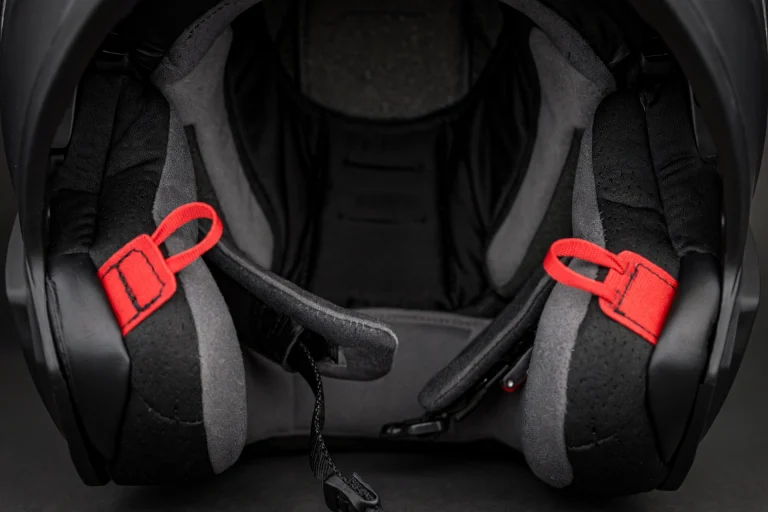
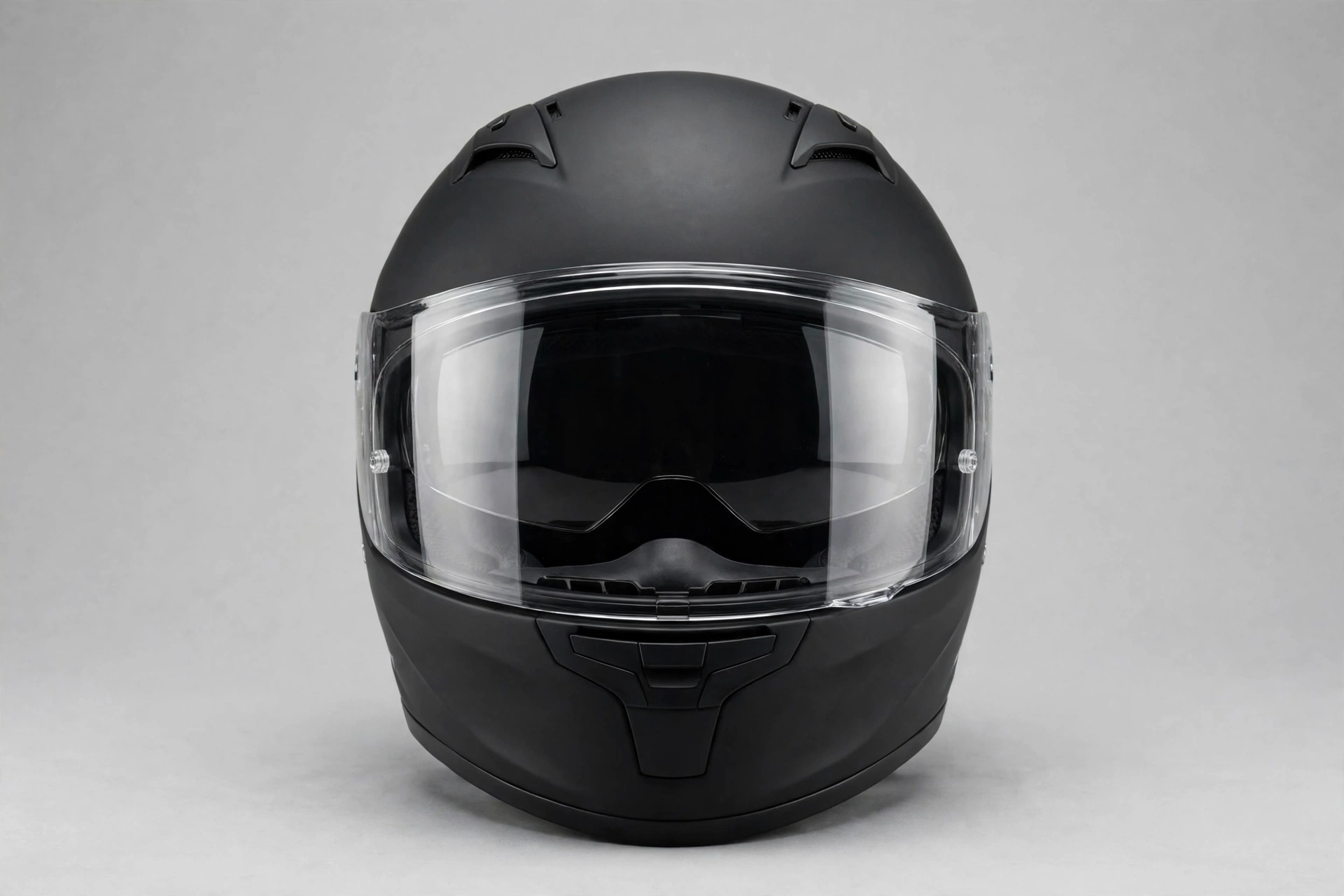
A drop-down sun visor — often called an internal sun shield — is a tinted secondary visor built inside the helmet, between the outer clear shield and the liner. A small slider or lever, usually on the side or bottom edge of the shell, lowers it in front of your eyes and retracts it back up into the shell when you do not need it.
The key point for glasses wearers is that the internal visor drops in front of your ordinary clear prescription glasses. You keep your normal frames on, flip the tint down when the sun comes out, and flip it back up the moment the light drops — all with one hand, while moving, without stopping or touching your glasses at all.
There are trade-offs. The sun visor’s tint is fixed, so it cannot adapt like photochromic lenses, and a cheaper mechanism can feel loose or sit slightly in your eyeline when retracted. Helmets with an internal visor also carry a little extra mechanism in the shell, which is worth remembering when you compare weight and fit.
Which Option Gives Better Clarity and Eye Comfort?
For pure lens quality, prescription sunglasses usually win. They are made for your prescription across the whole lens, the tint is even, and you can choose features such as polarisation that cut reflected glare from wet roads and car windscreens. If your prescription is strong or complex, a lens made exactly for you will generally feel sharper than clear glasses plus a tinted visor.
For comfort in changing light, the drop-down visor wins easily. Glare is not just annoying on a bike — squinting into low sun at the exact moment you need to read the road is a genuine riding problem. Being able to add or remove tint instantly, mid-corner if needed, means you actually use the protection at the right moments instead of leaving sunglasses in a pocket because a stop felt like too much trouble.
Eye comfort over a long day also depends on fit. Sunglasses under a helmet can create pressure points where the arms meet the liner, especially on helmets with snug cheek and temple padding. A drop-down visor adds no pressure to your face at all, because nothing extra sits between your head and the helmet.
Does Either Choice Affect Helmet Fit or Safety?
Yes, and this is the part many comparisons skip. Any glasses worn under a helmet must sit without lifting the helmet, bending the arms, or pushing the liner out of its intended position. If you buy a helmet, try it on with the exact glasses or sunglasses you plan to ride in, and check that the arms sit flat and the helmet still passes a shake test.
Internal sun visors raise a different point: the shell needs space for the retracted visor and its mechanism, and designs vary in how that space is arranged. What matters in general terms is that the helmet meets the safety standard required where you ride and fits your head properly — a certified helmet that fits well protects better than any feature list.
Fit and design also decide how a helmet behaves in the angled impacts that are common in real crashes. Rotational force is a big part of that picture, and if the term is new to you, this overview of what MIPS is for helmets explains how low-friction liners are designed to reduce twisting forces. Whichever sun solution you prefer, choose the helmet on fit and certification first, then check that your glasses or the visor mechanism work with it.
- Glasses under a helmet: check arm pressure, helmet stability, and that frames are not bent by the liner
- Drop-down visor: check the slider works with gloves, and the retracted visor stays out of your eyeline
- Both: never modify or trim the liner to make room — change the glasses or the helmet instead
Which Should You Choose for Your Kind of Riding?
Choose the drop-down sun visor if you commute, tour through mixed weather, or ride at dawn and dusk, because instant adjustment is the feature you will use every single ride. It also keeps life simple if you dislike carrying a second pair of glasses, and it works the same with any prescription as it changes over the years.
Choose prescription sunglasses if your rides are mostly in steady, bright conditions, if you want the best possible tinted optics, or if your helmet has no sun visor and you are not ready to replace it. They are also the fallback for riders whose prescription is complex, where a specialist lens simply performs better.
Plenty of experienced riders use both: a helmet with a sun visor for commuting, and prescription sunglasses for long summer tours. The honest summary is that convenience wins most days, optical quality wins on the brightest ones — and either is far better than squinting through low sun in clear glasses alone.
Frequently Asked Questions
Q: Can I wear prescription sunglasses with a drop-down sun visor at the same time?
A: You can, but it is usually too dark and serves no purpose, and stacking two tinted layers reduces contrast when you need it most. Pick one tint at a time, and keep your clear glasses as the base layer under a sun visor.
Q: Do drop-down sun visors meet safety standards like the main visor?
A: In general terms, the main clear visor is the part tested as eye protection under helmet standards, while an internal sun visor is treated as a comfort accessory on many helmets. Check the maker’s description for your model, and always ride with the main visor available for full protection.
Q: My sunglasses hurt under my helmet after an hour. What helps?
A: The usual causes are thick or curved arms and a liner that presses them into your head. Straighter, thinner arms, frames that sit close to the face, or a helmet model with glasses-friendly channels in the liner all help. Never cut the liner to make room.

Olivia
Writer at Helmet Today, covering helmet reviews, fit and riding safety.