Yes, you can wear glasses under a hockey helmet: choose a helmet that fits your head first, then check that the frames sit flat without lifting the helmet, pick a cage over a visor if your frames are wide, and expect a little trial and error with temple arms and straps. In general terms, the helmet should never be sized up just to make room for glasses — the frame has to work with the helmet, not the other way round.
This guide covers the checks glasses wearers should make when choosing and fitting a hockey helmet, plus the fogging and slipping fixes that matter in a game.
What Should Glasses Wearers Check When Fitting a Hockey Helmet?
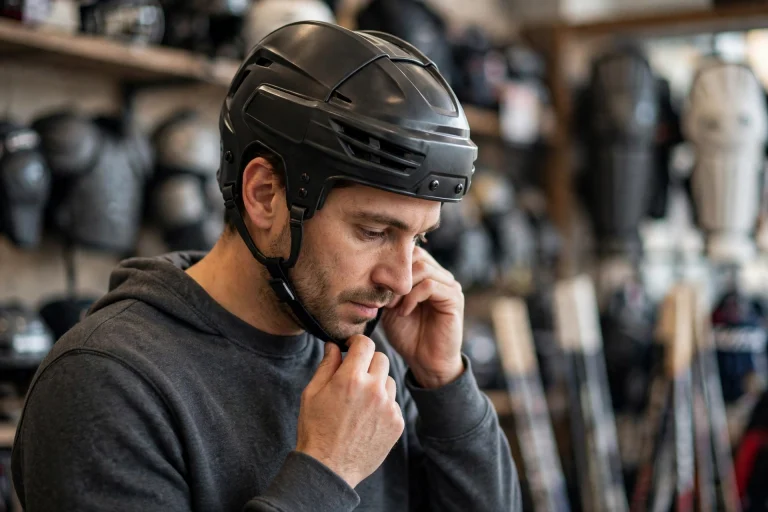
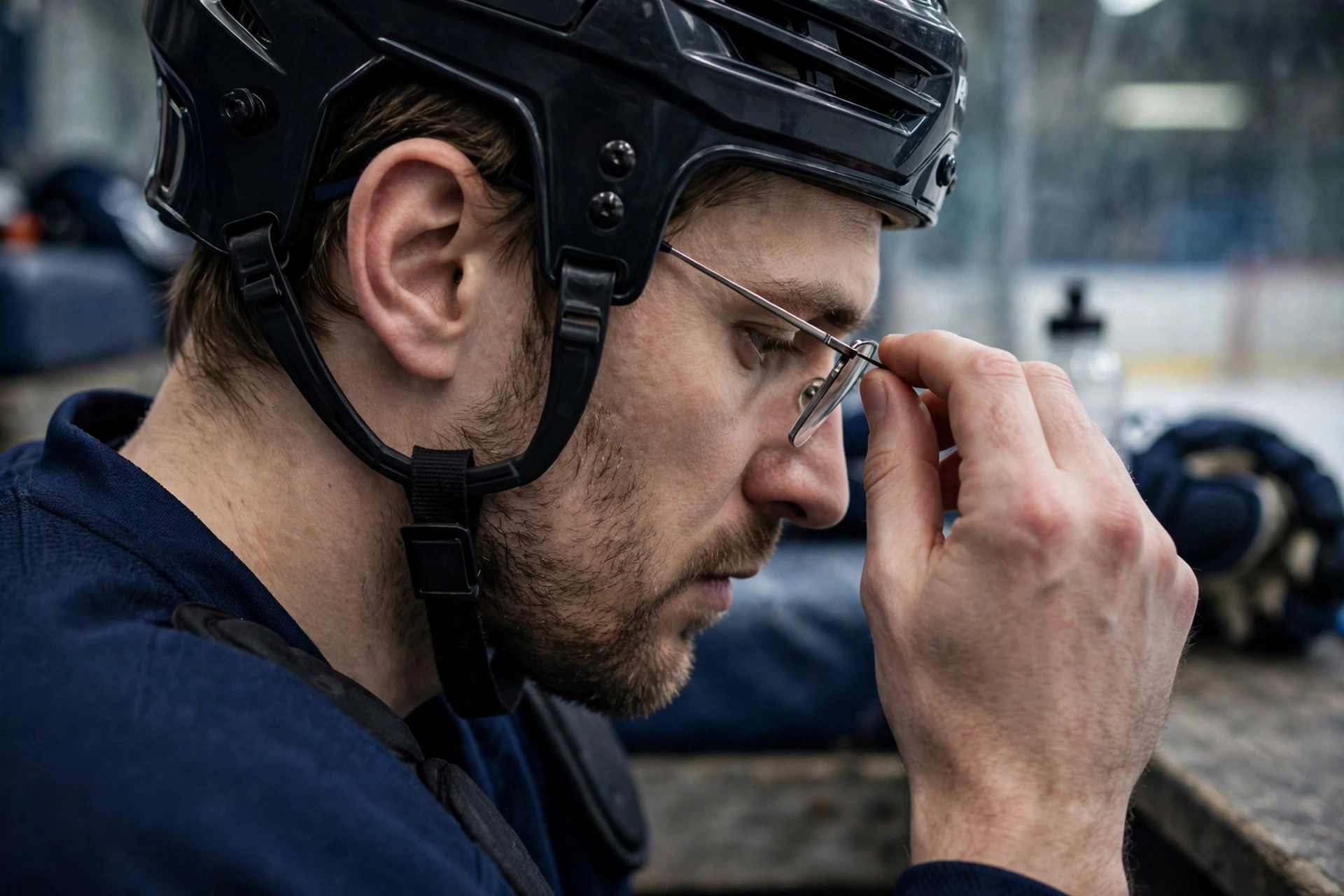
Start with the helmet fit on its own, exactly as any player would: snug all round, no rocking, sitting level with the front edge just above the eyebrows. Then put your glasses on and repeat every check. Frames change the fit at the temples, and a helmet that was perfect bare-headed can start to lift, tilt, or press once the arms are inside it.
Pay closest attention to pressure. Glasses arms pass over the ears and along the temples, underneath the helmet’s side coverage and ear covers. If the helmet squeezes the arms into your head, you will get sore temples within a period. If the arms are thick or curved, they can also push the helmet out slightly, which shows up as new movement when you shake your head.
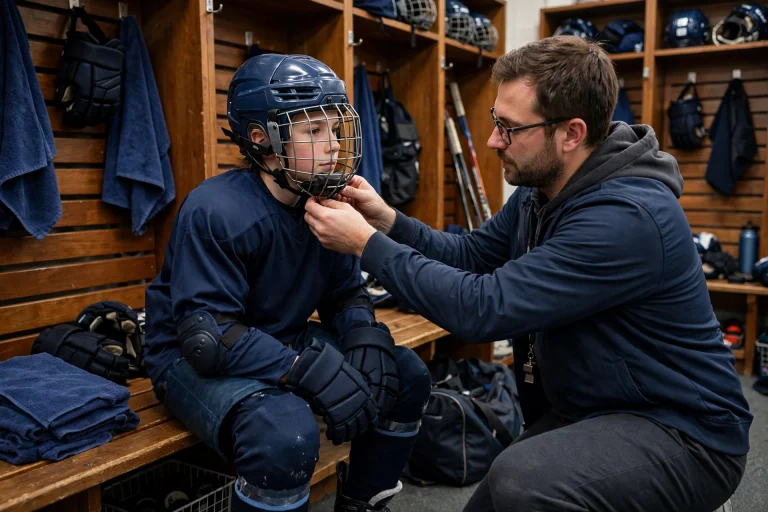
The order matters too. In general terms, most players put the helmet on first and then slide the glasses in straight from the front, guiding the arms over the ears so the frames sit normally. Experiment in the shop or at home — the goal is a routine you can repeat quickly on the bench.
Which Frames Work Best Under a Hockey Helmet?
Thin, straight temple arms are the glasses wearer’s best friend on the ice. In general terms, slim metal or flexible plastic arms that run flat against the head slide under a helmet far more comfortably than thick, wide fashion frames, and they are less likely to bend when the helmet goes on and off twenty times a week.
Flexible or spring hinges help, because helmet pressure is a steady squeeze rather than a single knock, and frames that can flex a little survive it better. A dedicated sports pair is worth considering if you play often: it protects your everyday glasses from the inevitable drop onto concrete, and it can be chosen purely for how it behaves under a helmet.
- Thin, flat arms: slide in without lifting the helmet
- Flexible hinges: tolerate the squeeze of taking the helmet on and off
- Secure nose fit: frames that stay put without constant pushing up
- A spare pair: sensible if your prescription is strong and a break would end your game
Whatever frame you pick, never modify the helmet to fit it. Cutting foam, removing padding, or bending ear covers to make space changes the helmet from the design that was tested, and trades real protection for comfort.
Cage or Visor: Which Works Better With Glasses?
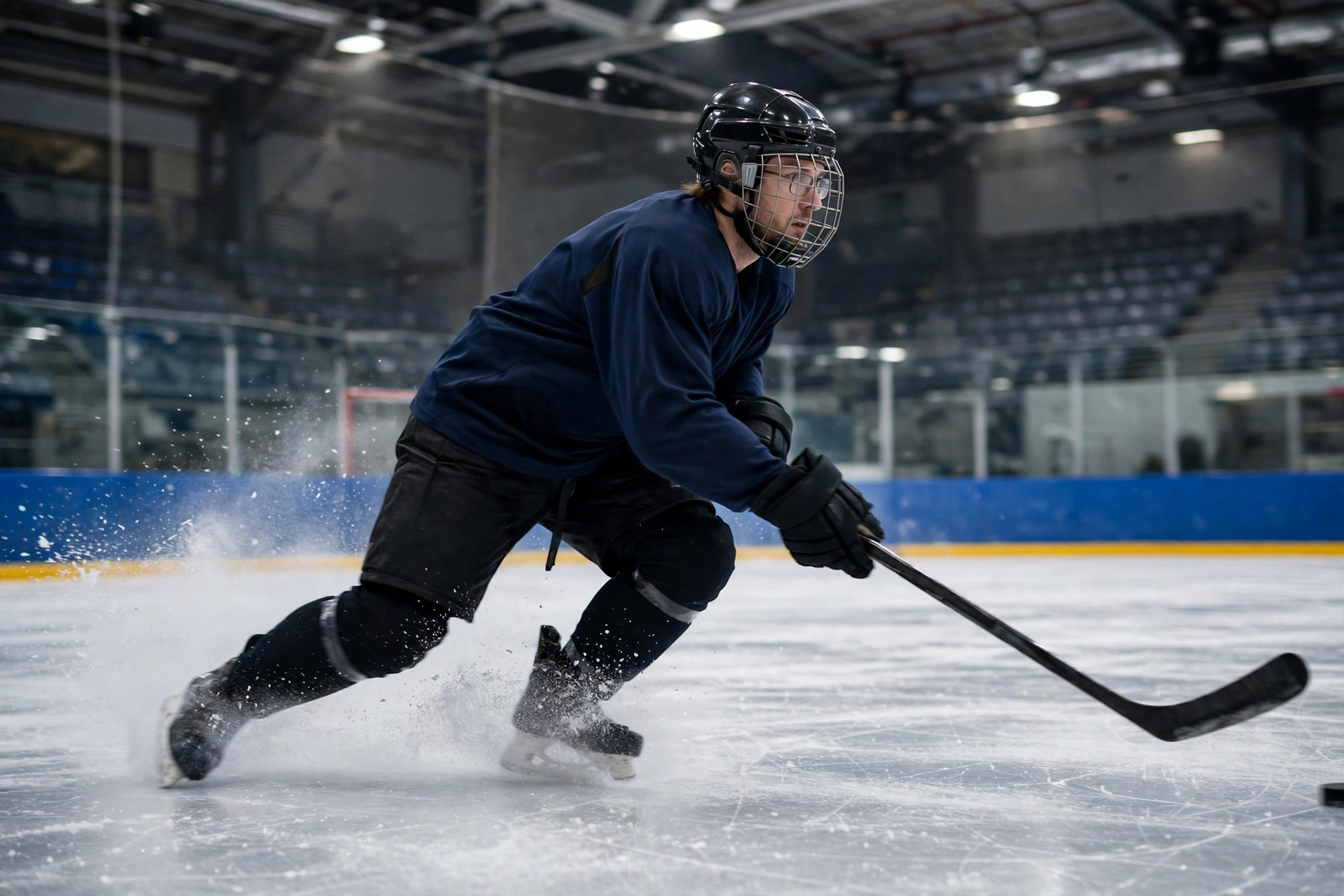
For most glasses wearers, a cage is the easier partner. A cage stands away from the face, it never fogs the way a visor does, and it leaves room for frames to sit naturally. It also gives full face protection, which matters because glasses themselves offer your eyes no protection from a puck or stick.
A visor can work, but it adds two problems. First, space: some visors sit close to the face, and large frames can touch or crowd the shield. Second, fog: you now have two surfaces that can mist up — the visor and your lenses — and the warm air from your face is trapped behind both.
If your league allows a choice and you prefer a visor, test the exact combination before you buy: helmet on, glasses on, visor down, then bend, shake, and breathe hard for a minute. Any contact between frame and visor, or instant fogging at rest, will only get worse in a game.
How Do You Stop Glasses Slipping or Fogging in a Game?
Slipping is usually a strap and fit problem on the glasses, not the helmet. Frames adjusted by an optician so the arms grip properly behind the ears solve most of it. A slim sports strap or retainer that holds the glasses against your head can help during play, provided it lies flat and does not get trapped uncomfortably under the helmet’s ear covers.
Fogging comes from warm, moist air meeting a cold lens. Anti-fog treatments made for glasses can reduce it, and so can habits: put your glasses on early so they warm up gradually rather than going straight from a cold bag to a warm face, and avoid breathing directly up into them while you sit still on the bench.
Cleanliness matters more than most players realise. Lenses that look clean can carry a film of sweat and dressing-room dust that fog grabs onto instantly. A proper clean with a microfibre cloth before the game, and keeping a dry cloth in your glove or pocket for the bench, is the simplest anti-fog system there is.
Do Glasses Affect How a Helmet Protects You?
Only if they change the fit — which is exactly why the checks above matter. A helmet protects by sitting in its designed position, with its foam liner against your head, spreading and absorbing impact force. Frames that lift the helmet at the sides or tilt it back leave the liner working from the wrong position.
Angled impacts make this worse, because they add a twisting, rotational element to the blow — the effect that low-friction liner systems are designed to reduce, as explained in this overview of what MIPS is for helmets. Any rotational system can only work if the helmet starts snug and stays put, and glasses that let it slide undermine that before the hit even arrives.
The glasses themselves are also part of the picture. In a heavy impact or a fall, frames can bend or break; that is another reason a cage, which keeps pucks, sticks, and the ice away from your face in most incidents, pairs so well with glasses. Wear the combination fitted, fastened, and tested, and glasses stop being a problem worth worrying about.
Frequently Asked Questions
Q: Should I buy a bigger helmet to fit my glasses?
A: No. A helmet bought a size up will rock and shift, which costs more protection than the glasses ever would. Fit the helmet correctly to your head, then choose slim, flat-armed frames that work inside it. If one helmet model presses on your frames, try a different model in the correct size.
Q: Are contact lenses better than glasses for hockey?
A: They remove the fit and fogging issues entirely, and many players prefer them for games. They are not an option for everyone, though, and glasses wearers play at every level. If you stay with glasses, a cage, slim frames, and a pre-game lens clean handle nearly every problem.
Q: Can I wear sports goggles instead of glasses under my helmet?
A: Yes, prescription sports goggles are made for exactly this. Check that the goggle strap sits flat under the helmet without lifting it, and test the full combination for pressure points. Some leagues have rules about what eye protection is allowed, so confirm before you rely on them for games.

Olivia
Writer at Helmet Today, covering helmet reviews, fit and riding safety.