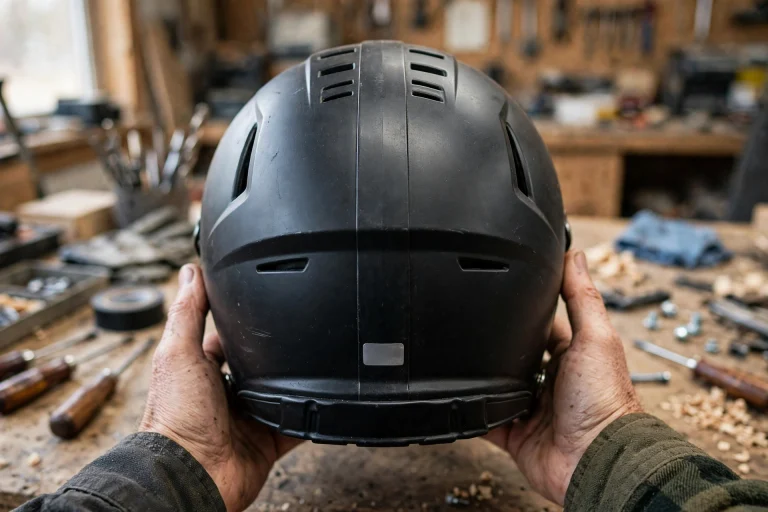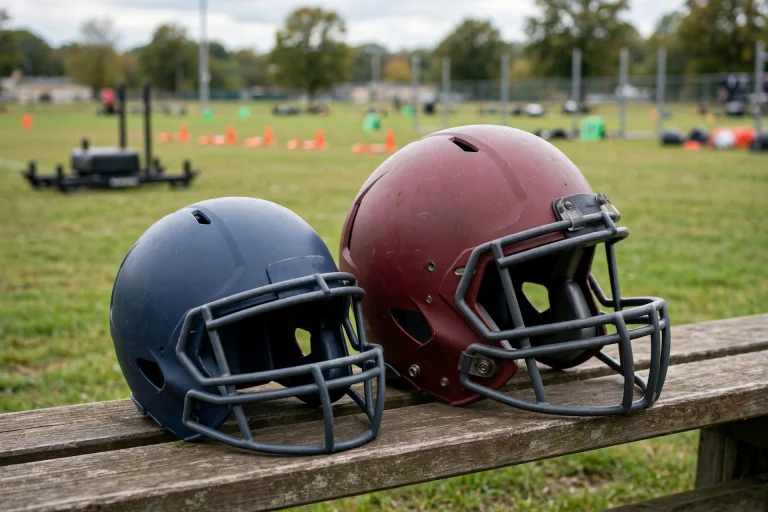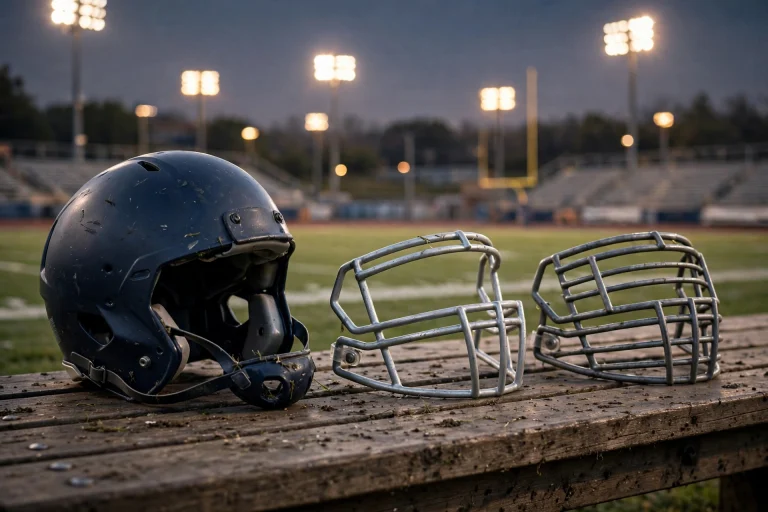
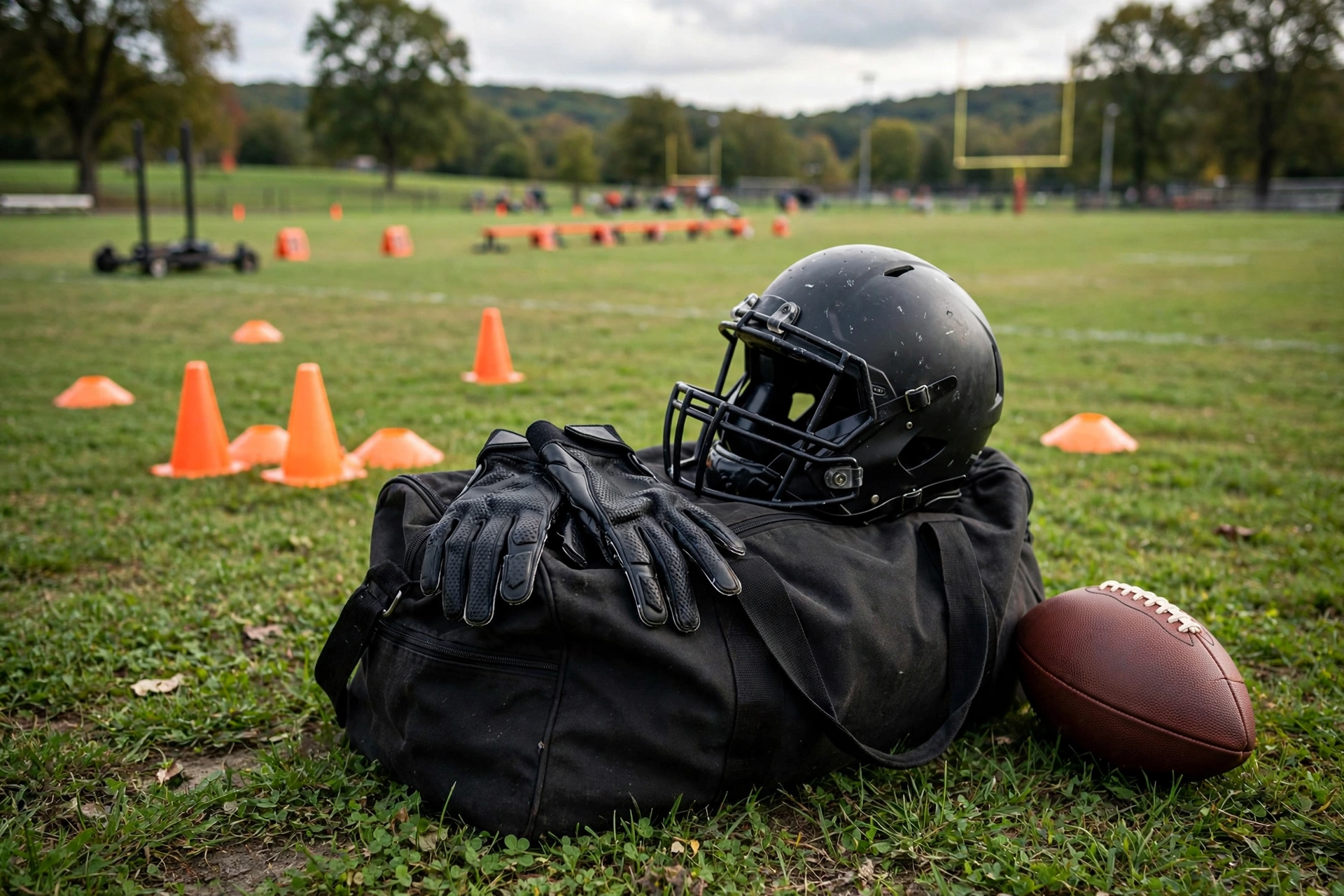
For 7-on-7 leagues, you generally need a helmet that fits well, is in good condition, and meets your league’s own equipment rules — and in many 7-on-7 leagues that means a soft-shell helmet rather than a traditional hard-shell tackle helmet, because 7-on-7 is a non-tackle, passing-focused game. Always check your league’s rules first, because requirements vary by league, age group and event.
What Is 7-on-7 Football and How Does It Differ from Tackle Football?
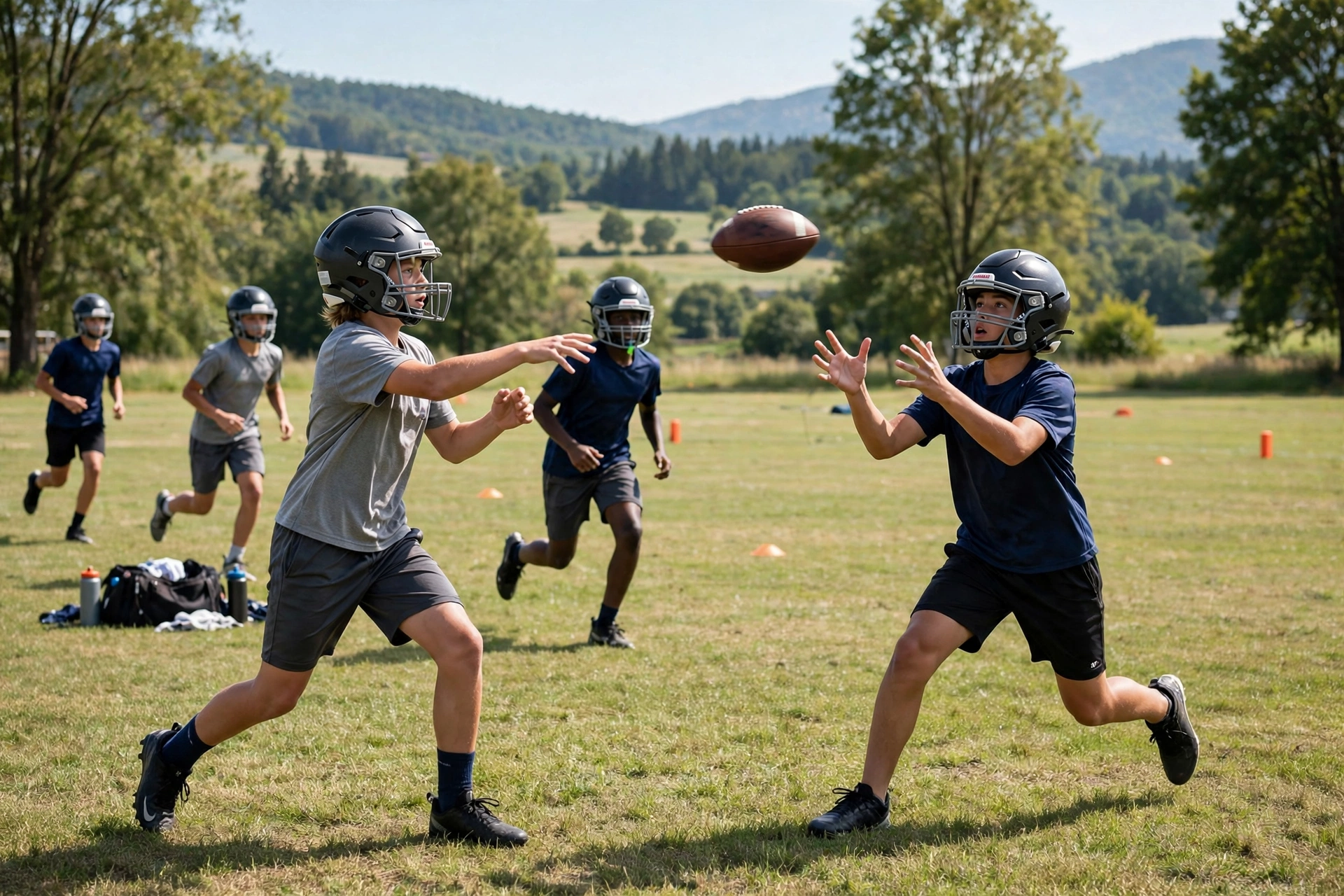
7-on-7 is a passing game played with seven players per side: a quarterback, receivers and a centre on offence, against defensive backs and linebackers on defence. There is no tackling, no line play in the tackle sense, and no kicking game. Plays end on a touch, a flag pull, or when the ball carrier is ruled down, depending on the format.
The pace is different from tackle football too. Games are short, teams run many passing plays in quick succession, and players spend the whole game running routes and reacting in space. The helmet’s job in 7-on-7 is different: it is about protection during incidental contact and falls, rather than repeated line impacts.
Because the game is non-contact by design, many leagues deliberately choose lighter headgear. A soft-shell helmet gives players a layer of protection for accidental bumps and falls without the weight and heat of a full tackle helmet in a game where tackling is not supposed to happen. Other leagues, however, still require or allow traditional helmets, which is why the league rulebook is the first thing to check.
Do You Need a Helmet for 7-on-7 Leagues?
In most organised 7-on-7 leagues and tournaments, yes — some form of headgear is required, and playing without it will usually mean you cannot take the field. The exact requirement varies: some leagues mandate soft-shell helmets for all players, some require them only for certain age groups, and some leave the choice to teams while still strongly recommending headgear. Never assume that because one league did not require a helmet, the next one will not either.
Even where a league does not mandate a helmet, wearing one is a sensible choice. Players run full speed, change direction sharply, and dive for balls, and accidental head contact with the ground or another player can happen in any passing game. A soft-shell helmet is light and does not get in the way of the speed and agility that 7-on-7 rewards.
Parents should also check whether the league provides helmets or expects players to bring their own. Finding that out before the first practice avoids a player sitting out.
What Type of Helmet Works Best for 7-on-7?
If your league uses soft-shell helmets, choose one designed for 7-on-7 or flag-style play, with padding that covers the head evenly and a chin strap that keeps it in place during sprints and cuts. A helmet that slides around on a route is not doing its job, however light it feels standing still.
If your league allows or requires a traditional hard-shell helmet, use a properly fitted tackle helmet in good condition, with its facemask and chin strap intact. Do not use a cracked, damaged or expired helmet, and do not borrow a helmet that does not fit you just because it is available. A hard-shell helmet that fits badly can be worse than a well-fitted soft-shell one.
Either way, ask about the facemask. Some soft-shell helmets have no facemask at all, which is normal for the format, while hard-shell helmets used in 7-on-7 keep their standard mask. What matters is that the helmet matches the format you are playing and the rules of the event you are entering. When in doubt, ask the league director or your coach which type is expected.
How Should a 7-on-7 Helmet Fit?
Fit follows the same principles as any football helmet: snug all round, no rocking, no pressure points, and a chin strap that holds the helmet firmly. Put the helmet on, fasten the strap, and shake your head side to side and up and down. The helmet should move with your head, not slide over it.
For soft-shell helmets, check that the padding sits evenly and that the helmet covers the head without riding high on the forehead or slipping down over the eyes. The chin strap should be snug enough that you cannot easily pull the helmet off, but not so tight that it is painful. If the helmet comes in sizes, use the maker’s sizing guide and measure rather than guessing.
For hard-shell helmets, the fitting checks are stricter. The helmet should sit about a finger’s width above the eyebrows, the jaw pads should contact the cheeks evenly, and the chin strap should be centred and firm. If you are unsure, ask a coach or equipment manager to check the fit: a second pair of eyes catches problems the wearer cannot see.
Comfort matters more in 7-on-7 than many players expect, because tournaments often mean several games in one day in warm weather. A helmet that is hot, heavy or constantly needing adjustment will distract a player and tempt them to loosen straps that should stay firm. Choose the lightest option your league allows that still fits correctly.
What Rules and Gear Checks Should You Confirm Before Playing?
Start with the league’s equipment rules, and get them in writing if you can. Confirm whether a soft-shell or hard-shell helmet is required, whether facemasks or visors are allowed or restricted, and whether there are rules about cleats, mouthguards or gloves. Tournament rules can differ from regular league rules, so check both if you are travelling to an event.
Next, inspect the helmet itself. Look for torn padding, stretched or frayed straps, broken clips, and any cracks or dents in a hard shell. Check that a hard-shell helmet’s facemask is firmly attached and that its hardware is complete. A helmet that fails any of these checks should not be used until it is repaired or replaced — and for hard-shell helmets, repairs and reconditioning should follow the maker’s guidance.
Finally, think about the rest of the kit. A mouthguard is commonly required or strongly recommended in 7-on-7, and cleats must suit the playing surface. Pack a spare chin strap or a second soft-shell helmet for tournament days if you can. Modern designs also include liner systems that manage different kinds of impact, as explained in this guide to what MIPS is for helmets, so it is worth understanding what your helmet is designed to do.
Frequently Asked Questions
Q: Can I wear my tackle football helmet for 7-on-7?
A: Yes, if your league allows hard-shell helmets and the helmet fits you and is in good condition. Many leagues, however, require soft-shell helmets for 7-on-7, so check your league’s rules before assuming your tackle helmet is acceptable.
Q: Are soft-shell helmets safe enough for 7-on-7?
A: Soft-shell helmets are designed for the non-tackle nature of 7-on-7, where the main risks are incidental contact and falls rather than repeated tackling impacts. They are not a substitute for a tackle helmet in full-contact football, and they should be worn correctly fitted and in good condition.
Q: Does my child need a different helmet size for 7-on-7?
A: Not necessarily, but size should always be checked for the specific helmet being worn, because soft-shell and hard-shell helmets size differently. Measure the head, follow the maker’s sizing guide, and do the shake and movement checks with the chin strap fastened.

Olivia
Writer at Helmet Today, covering helmet reviews, fit and riding safety.