For a child learning to ride a skateboard, choose a skate-style helmet that fits snugly today, not one they will grow into, and make wearing it a non-negotiable part of every session. In general terms, kids fall often while learning, usually at low speed onto hard ground, so a well-fitting helmet is the most important item in their kit.
Parents often ask whether a helmet is really needed for gentle first sessions on flat ground. The answer is yes, because beginners fall in unpredictable ways: they step off the board, lose balance going slowly, or get caught out by a crack in the pavement. A helmet turns those everyday tumbles into non-events.
What Type of Helmet Should a Child Learning to Skate Wear?
A skate-style helmet is the best choice for a child learning to ride. It has a hard shell, a foam liner, and a low cut that covers the back and sides of the head, which is where beginners tend to land. Many are multi-sport helmets certified for skating and cycling, which is handy if your child also rides a bike or scooter.
Look for a recognised certification on the label inside the helmet, such as a skate or multi-sport standard. Avoid novelty helmets with no certification, however fun they look, since they may offer little real protection. The certification is the one thing you cannot judge by appearance alone.
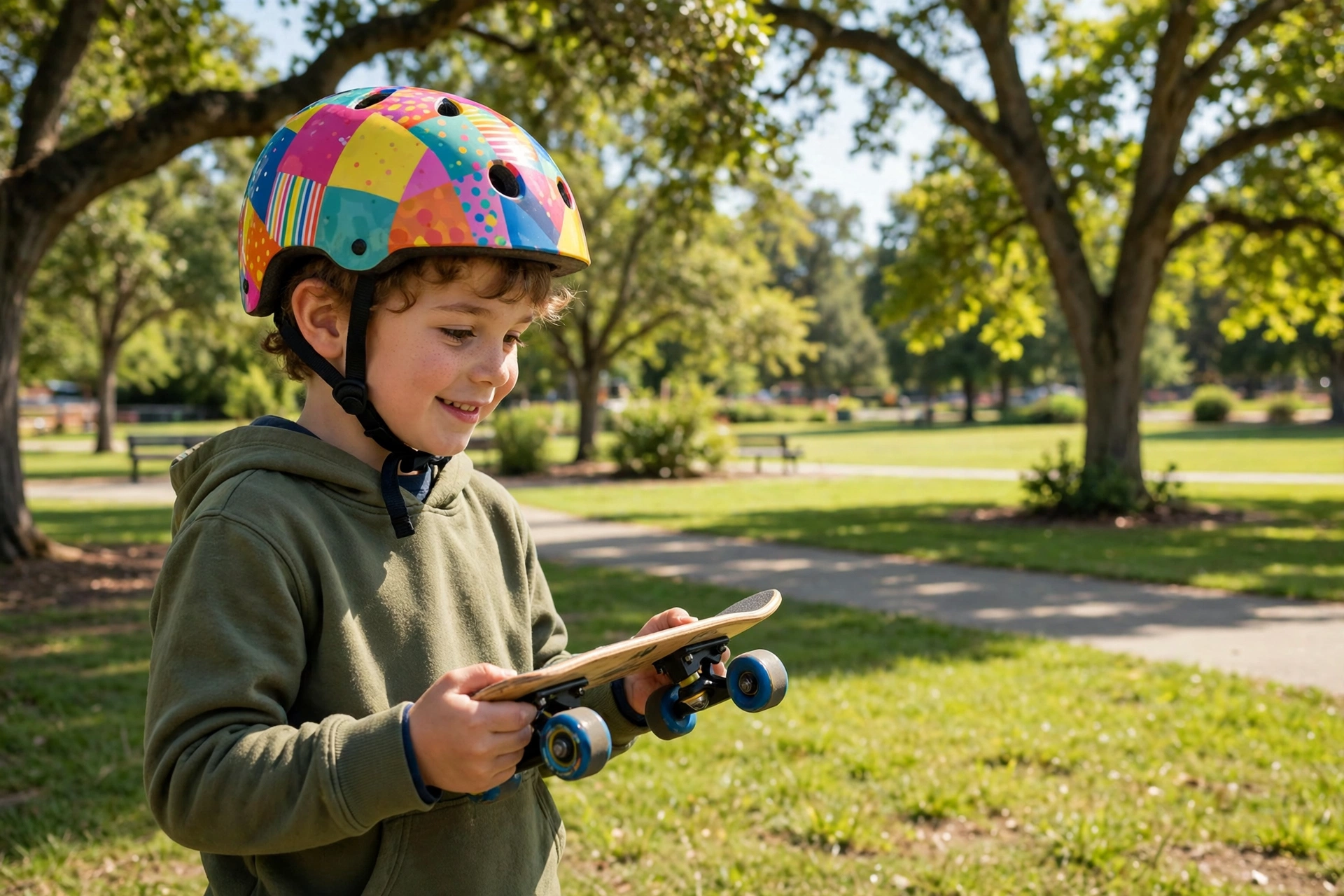
Weight matters for children more than for adults. A heavy helmet makes a child tilt their head, complain, and eventually refuse to wear it. Choose the lightest certified helmet that fits well, and let your child pick the colour, since a helmet they like is a helmet they will wear.
How Do You Fit a Skate Helmet on a Child?
Measure around your child’s head just above the eyebrows and ears, and compare the number with the maker’s size chart. Children’s heads grow quickly, so measure each time you buy, and do not assume last year’s size still fits. If your child falls between sizes, try both, since shell shapes differ between brands.
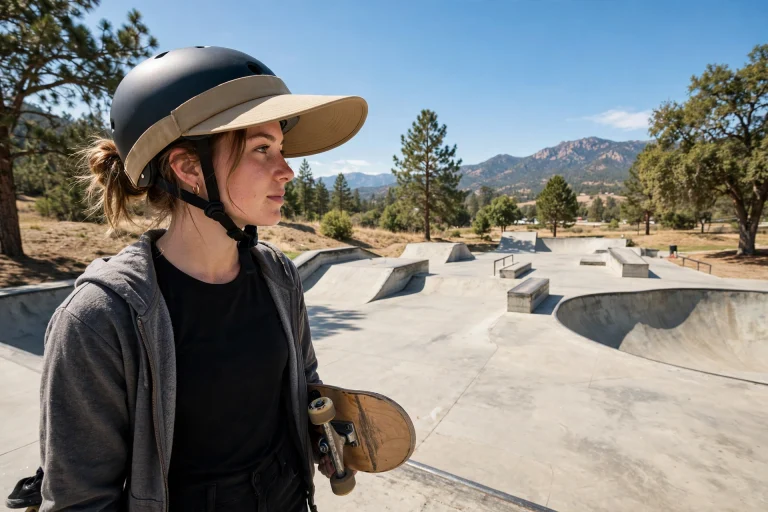
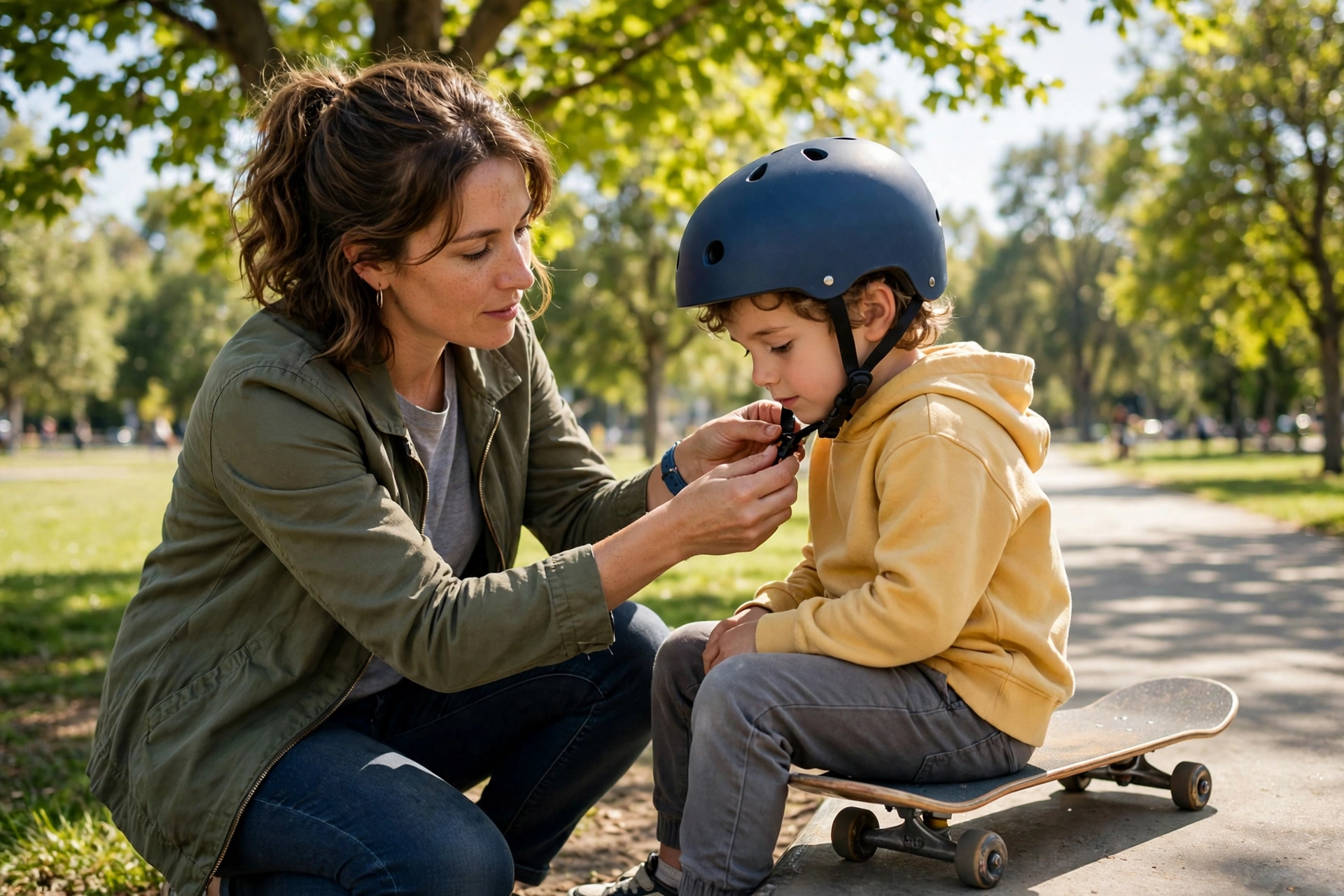
The helmet should sit level, about two fingers above the eyebrows, and feel snug all the way around. Shake their head gently: the helmet should move with the head, not slide over it. Adjust the side straps into a V under each ear and tighten the chin strap until it is snug but comfortable.
Fit the helmet the way your child will actually wear it, including any hairstyle, braids, or thin cap they use. Then teach your child the quick check: helmet level, straps snug, buckle clicked. Children who can check their own helmet are more likely to wear it correctly when you are not standing beside them.
How Do You Make Helmet-Wearing a Habit, Not a Battle?
Make the helmet part of the routine from the very first session. Helmet on, board out, skate. When it is simply how skating starts, children rarely question it. The battles usually begin when a helmet is introduced later, after a child has already skated without one and decided it is optional.
Wear one yourself if you skate or cycle with them. Children copy what adults do far more reliably than what adults say, and a parent in a helmet sends a stronger message than any lecture. If you do not skate, a simple rule works just as well: no helmet, no board, applied calmly every time.
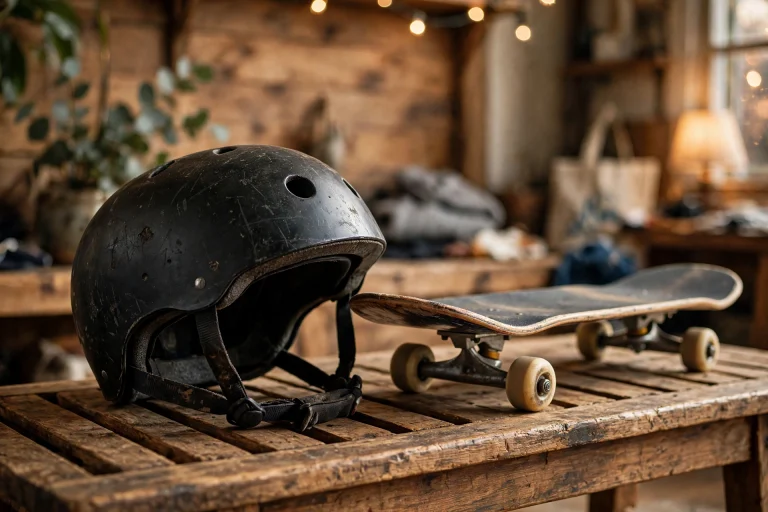
Keep the helmet accessible and in good condition. A helmet buried in a garage, covered in dust, or with a broken buckle invites excuses. Store it with the board, clean the pads occasionally, and replace it promptly if it gets damaged, so there is never a reason to skip it.
What Other Gear Helps a Child Learning to Skate?
Knee pads, elbow pads, and wrist guards take the sting out of the falls beginners have most often. A child who lands on padded knees instead of bare skin gets up faster and with more confidence, which means they practise more and improve sooner. Pads are not a substitute for a helmet, but they complete the kit.
Good shoes help too. Flat-soled skate shoes grip the board better than bulky trainers, which helps a beginner stay on the board and step off safely. Avoid loose laces and slippery soles, both of which cause falls that no helmet can prevent.
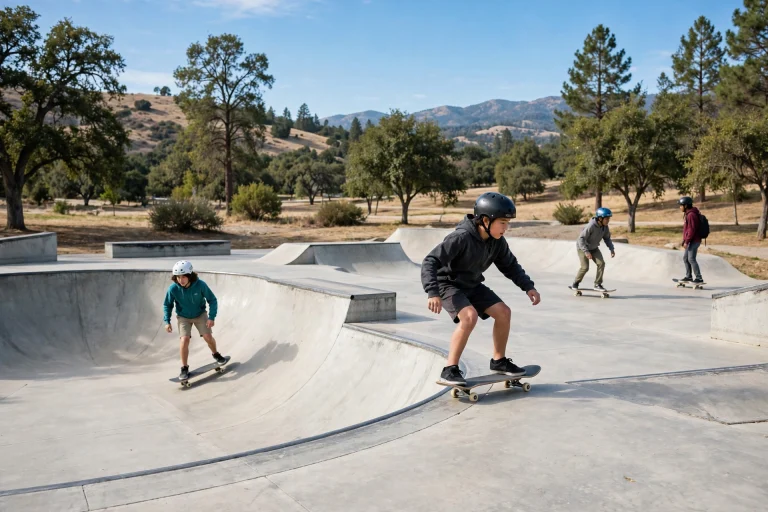
Choosing the right place to learn matters as much as gear. A smooth, flat, car-free area with no cracks or gravel gives a beginner the best chance of steady progress. Save skate parks, slopes, and busy paths until your child can ride, turn, and stop confidently on flat ground.
When Should You Replace a Child’s Skate Helmet?
Replace it after any fall where your child’s head hits the ground, even if the helmet looks fine. Foam damage is often invisible, and a helmet that has absorbed one impact may not protect as well in the next. If in doubt, retire it and buy a fresh one.
Also replace a helmet when it no longer fits. Children outgrow helmets, padding compresses, and straps stretch, all of which loosen the fit. Check the fit every few months, and sooner if your child complains that it feels different. A helmet that wobbles is a helmet that needs replacing, whatever its age.
If you are comparing features for the replacement, it is worth reading what MIPS for helmets means, since some children’s helmets now include this slip layer for angled impacts. It is a useful feature, but it never makes up for a helmet that is too big or past its best.
Frequently Asked Questions
Q: Should I buy a bigger helmet so my child grows into it?
A: No, a helmet that is too big slides around and leaves the forehead exposed. Buy the size that fits snugly now, and replace it when your child outgrows it, just as you would with shoes.
Q: Can my child use their bike helmet for skateboarding?
A: Yes, a bike helmet is better than no helmet, but a skate-style helmet usually covers more of the back of the head and handles repeated small falls better. If your child skates regularly, a skate or multi-sport helmet is the better choice.
Q: At what age can a child skate without a helmet?
A: In general terms, there is no age at which a helmet stops being sensible for skating, since even experienced skaters fall. Many skate parks and local rules require helmets for children, so check the rules where your child skates, and keep the habit going.

Olivia
Writer at Helmet Today, covering helmet reviews, fit and riding safety.