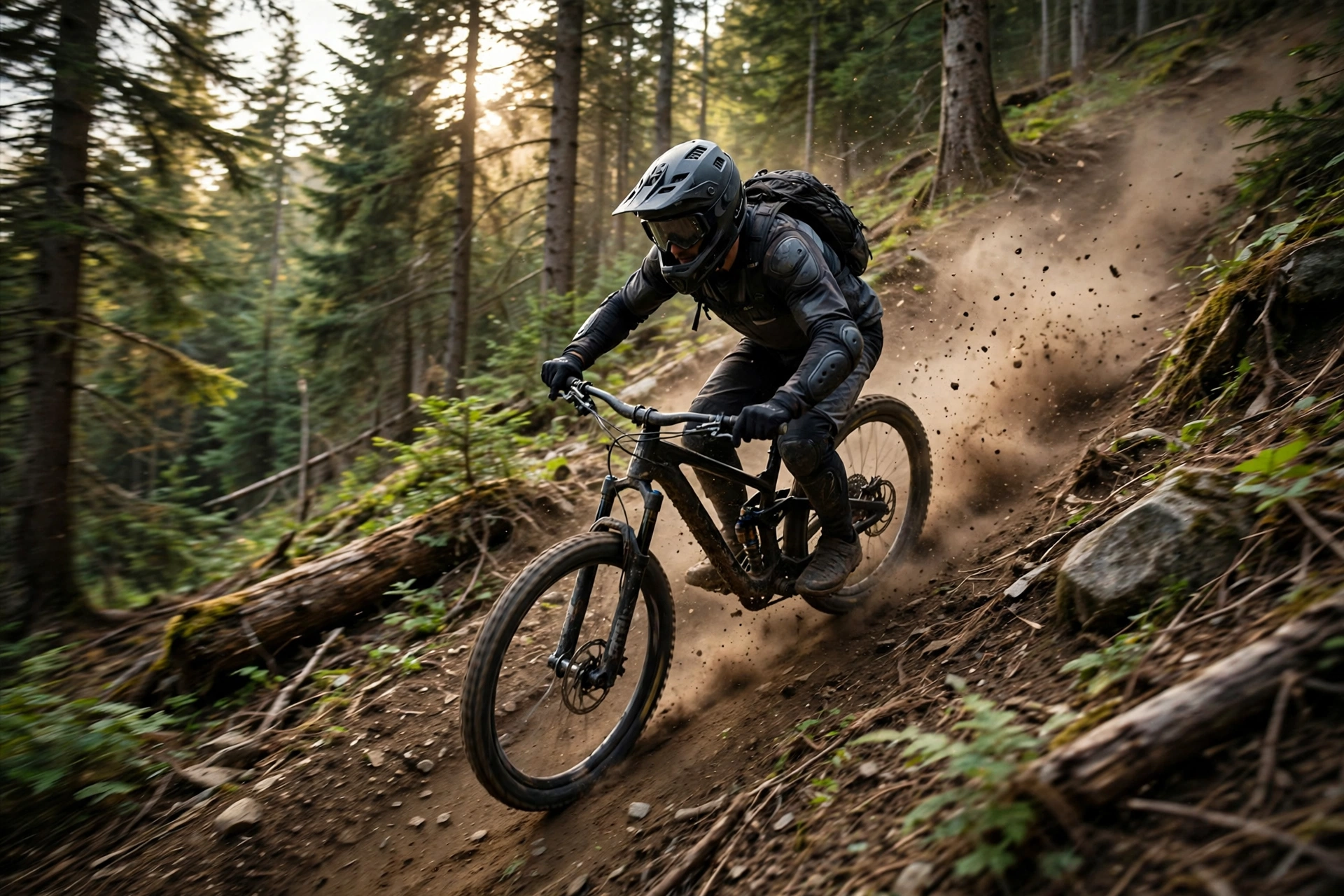
In general terms, an MTB helmet for enduro racing needs to protect like a full-face helmet on the descents while staying light and breathable enough to pedal in all day. Enduro races combine timed downhill stages with untimed climbs between them, so your helmet has to cover both jobs — and that is why most enduro racers choose either a lightweight full-face helmet or a convertible helmet with a removable chin bar. The right choice depends on the stages, the climbs, and your priorities.
Enduro is unusual among racing disciplines because the clock stops on the climbs. You still have to ride them, often for hours, and a helmet that cooks you on the way up will cost you focus and energy on the way down. At the same time, the timed stages are genuinely steep and technical, with the kind of falls where face protection matters. Balancing those two demands is the whole challenge of choosing an enduro helmet.
Full Face or Open Face for Enduro Racing?
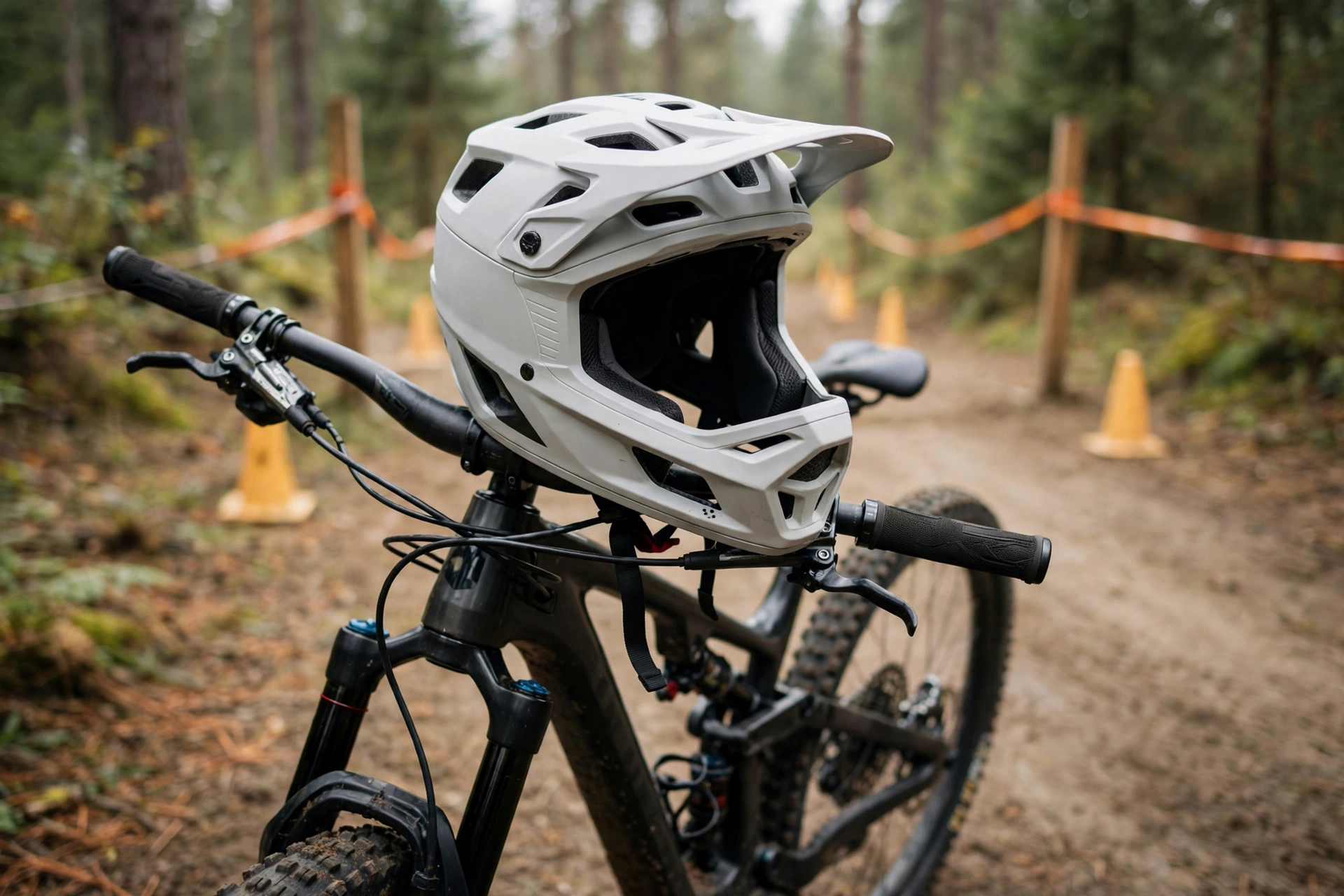
Most enduro racers now ride full-face or convertible helmets, and many race series require or strongly recommend full-face protection for the timed stages. The stages are where the risk concentrates: high speed, rough terrain, jumps and drops, and the possibility of going over the bars. An open-face helmet leaves the jaw and teeth exposed in exactly the kind of fall enduro stages produce.
That said, some racers still use open-face helmets, particularly on events with long, gentle stages or where the rules allow it. The trade-off is comfort and ventilation against protection. If you race enduro regularly, the protection of a full-face or convertible helmet is hard to argue against — one face-first crash can end a season, while the weight penalty of a modern lightweight full-face helmet is modest.
A convertible helmet is the middle path many enduro racers take: chin bar on for the stages, off for the climbs. It means carrying the bar, and stopping to switch, but it gives you the best of both configurations. A lightweight dedicated full-face helmet is the simpler alternative if you are happy to pedal in it all day.
What Protection Should an Enduro Helmet Offer?
Look for a helmet certified for enduro and downhill use, with a chin bar that covers the jaw fully and cheek pads that hold the helmet firmly in place. Extended side and rear coverage matter too, because enduro falls are often sideways or backward off technical features, not just forward over the bars.
Rotational impact protection is now common on enduro helmets and worth having, since most real crashes involve angled forces rather than a straight-on hit. This guide to what MIPS means for helmets explains how one such system works and what it does in an angled crash.
Check the goggle fit as well. Enduro stages are ridden with goggles, not glasses, and the helmet’s eyeport must fit your goggles without gaps at the top or pressure on the nose. A good helmet-and-goggle combination seals against dust and spray and stays put through rough sections.
How Important Are Weight and Ventilation?
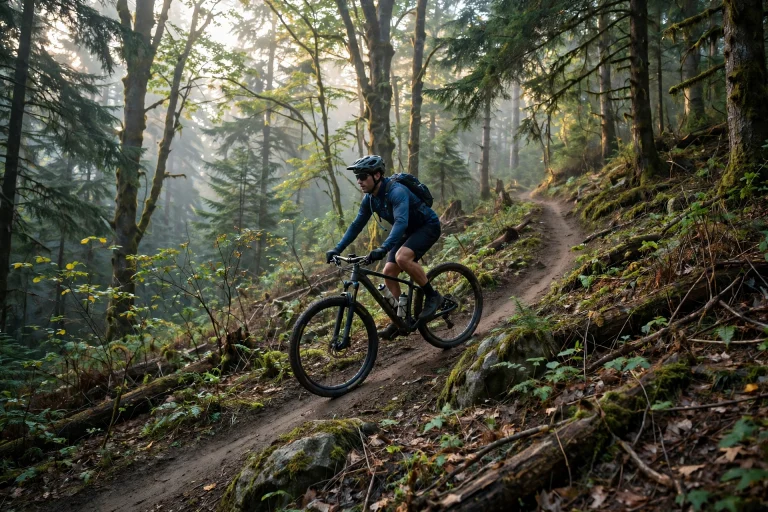
Very important — this is where enduro helmets differ most from downhill helmets. A downhill helmet only needs to be worn for the descent, but an enduro helmet is on your head for the whole event, including hours of climbing. A helmet that is heavy or poorly ventilated will drain you, and a tired rider crashes more.
Modern enduro full-face helmets are noticeably lighter than downhill helmets, with larger vents and internal channelling designed to move air while you pedal. Look for helmets that vent well at low speed, not just at descending speed, because climbs are slow and hot. Some helmets also route air over the top of the head and out the back, which helps on long ascents.
Weight distribution matters as much as total weight. A helmet that balances well and sits securely feels lighter than one that pulls forward or rocks. When trying helmets, wear each one for several minutes, move your head around, and imagine it after three hours of racing — small pressure points become big problems over a race day.
How Should an Enduro Helmet Fit?
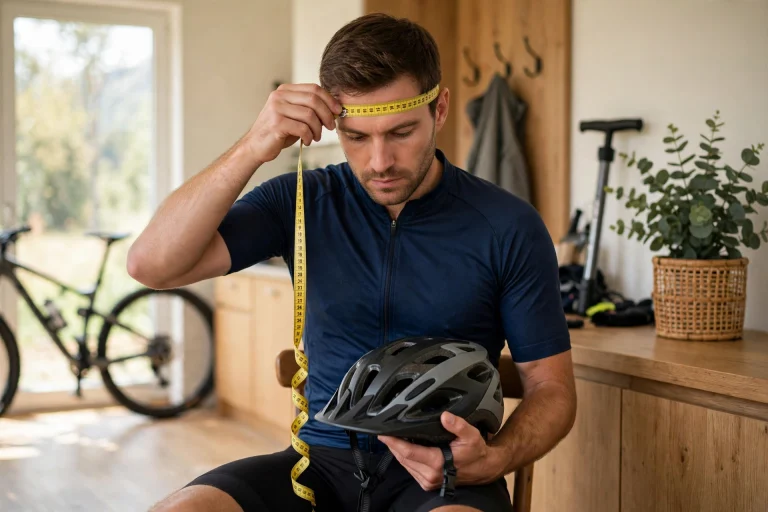
Fit is non-negotiable in enduro racing. The helmet should sit level on your head, cover your forehead, and feel snug all round without tight spots. With a full-face or convertible helmet, the cheek pads should hold your cheeks gently and the chin bar should sit close to your chin without pressing on it. Shake your head firmly: the helmet should move with your head, not slide around it.
Adjust the straps so the buckle sits under your chin and the side straps form a neat triangle around your ears. Loose straps let the helmet shift in a crash, which reduces protection. If the helmet rocks, lifts, or presses on your brow, try another size or model — head shapes differ, and the best helmet is the one that fits your head.
Try the helmet with your goggles and any pack or hydration setup you race with. Goggles that clash with the eyeport, or a helmet that catches on a pack strap, are annoyances that grow over a race day. A short test ride, if the shop allows it, tells you more than any amount of mirror-checking.
What Else Matters on Race Day?
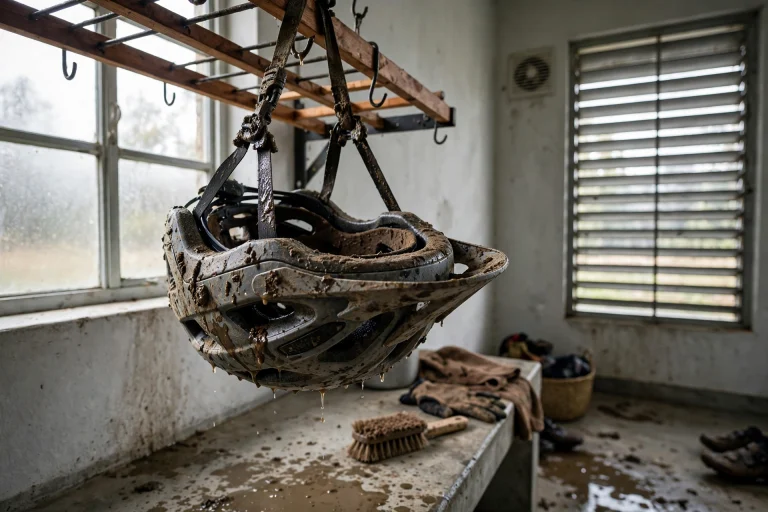
Think about practical details. A helmet with a washable liner is easier to live with across a season of muddy races. A peak visor that adjusts helps in changing light and deflects branches and spray. Spare pads and mounts should be available, because race crashes damage small parts even when the helmet itself survives.
Plan for the climbs too. If you race with a convertible helmet, practise switching the chin bar quickly and stow it securely — a bar bouncing around in a pack or strapped loosely to a bike is a hazard. If you race in a full-face helmet, make sure you can drink and breathe comfortably in it on a climb, and that it does not muffle communication with other riders.
Finally, remember that any helmet that takes a serious crash should be replaced, even if it looks fine. Foam liners can be damaged invisibly, and a helmet that has already absorbed one big impact should not be trusted with another. Budget for replacement as part of racing, not as an afterthought.
Frequently Asked Questions
Q: Do enduro races require a full-face helmet?
A: Many do, or strongly recommend one, but rules vary by series and event. Check the rules for your race before entering, and choose a full-face or convertible helmet to be safe.
Q: Is a convertible helmet good enough for enduro racing?
A: In general terms, yes — most enduro racers who use convertibles find the full-face mode protective enough for timed stages, while the open-face mode makes climbs far more comfortable.
Q: Should I race in the same helmet I train in?
A: You can, but many racers keep a fresher helmet for race days. Either way, make sure it fits well with your goggles and has no crash damage before you start.

Olivia
Writer at Helmet Today, covering helmet reviews, fit and riding safety.