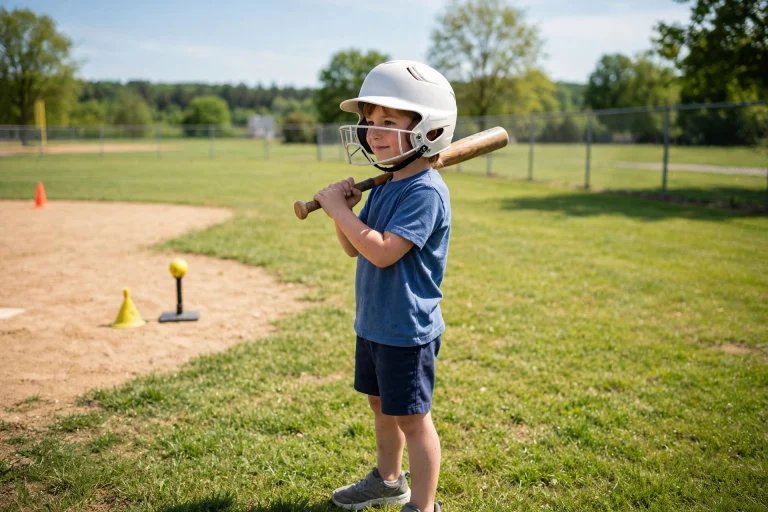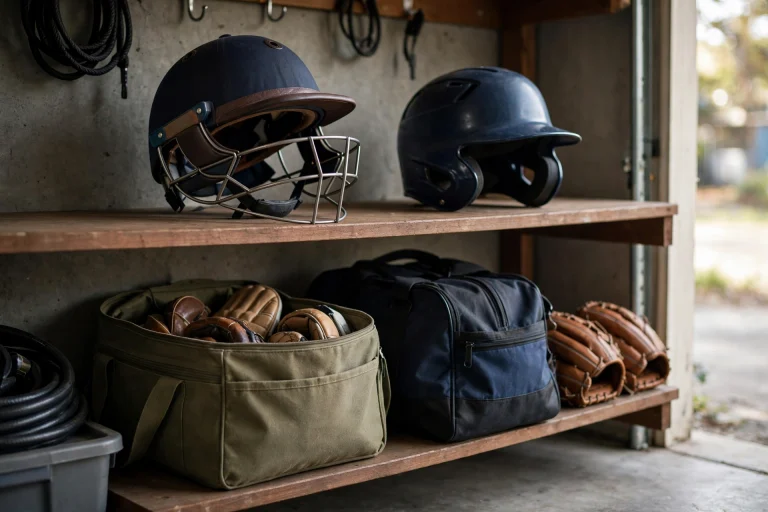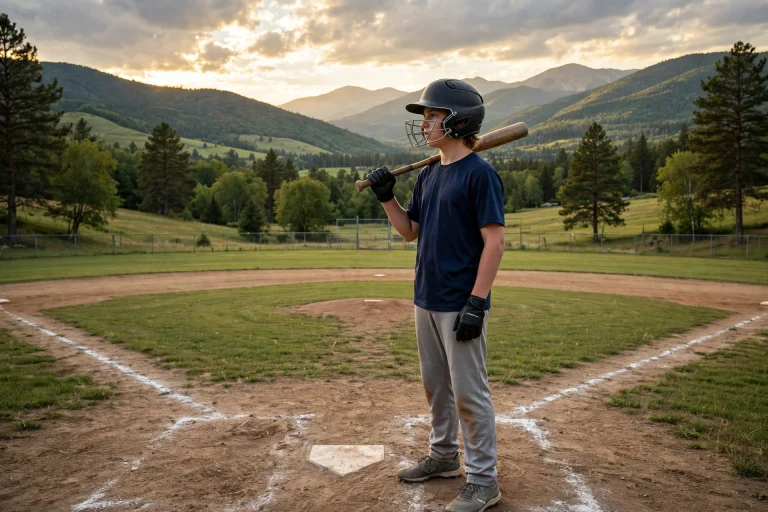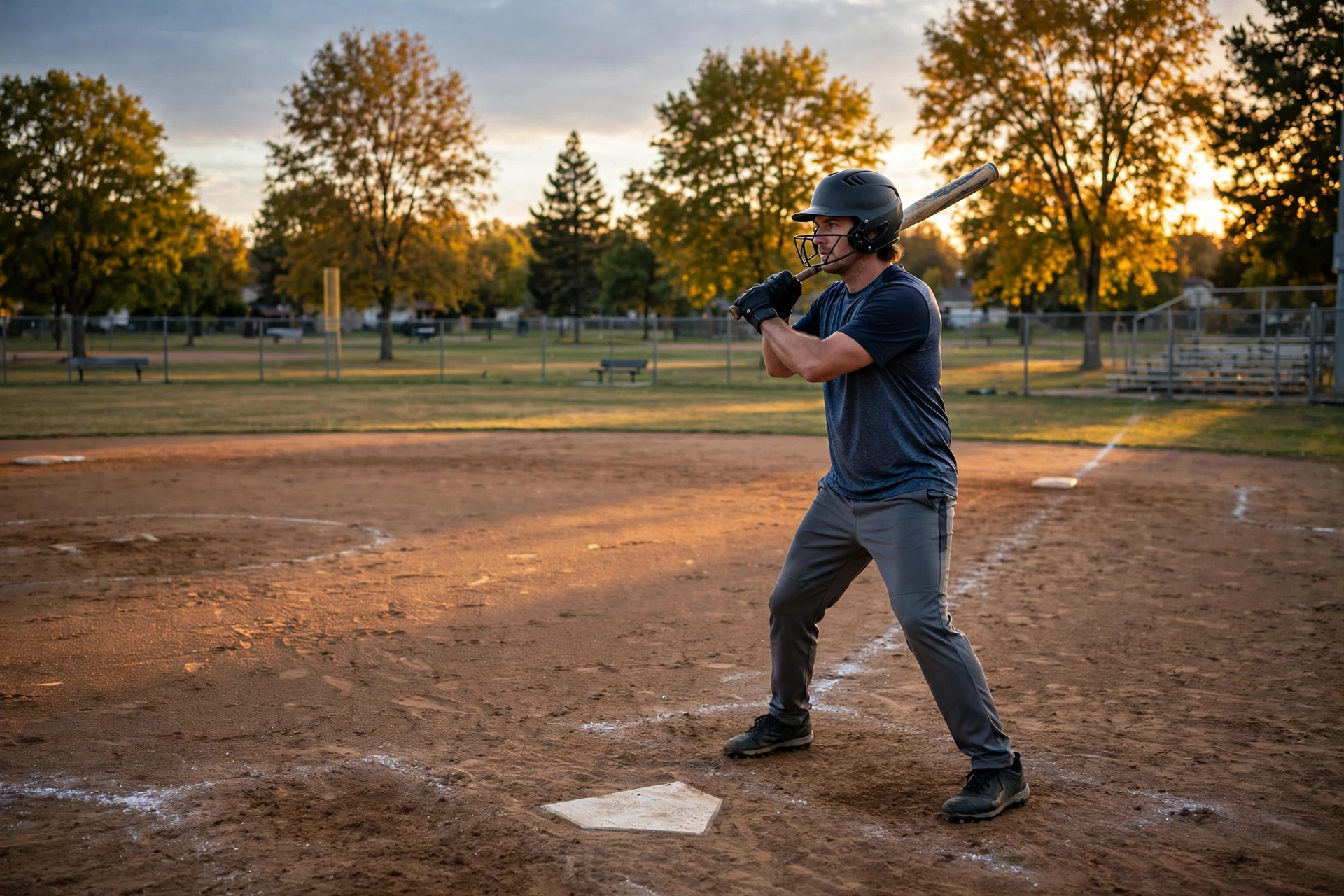
In general terms, whether you need a helmet for slowpitch softball depends on your league’s rules and your position — many leagues require helmets for batters and base runners, and even where they do not, a helmet is sensible protection against a batted or thrown ball. Slowpitch is often seen as a relaxed, social game, but the ball still travels fast off the bat, and head injuries happen at every level of softball.
Players new to slowpitch often assume helmets are optional or unnecessary, because the pitching is gentle. That misses the point: the risk in slowpitch comes less from the pitch and more from batted balls, wild throws, and collisions. This guide covers the rules, the risks, and how to choose.
Do Slowpitch Leagues Require Helmets?
Many leagues do, at least for batters and base runners. League rules vary widely — some require helmets for everyone batting and running, some require them only for certain positions, and some leave it to the player. Always check your league’s rules before your first game, because showing up without a required helmet can mean sitting out.
Tournament play is often stricter than casual league play. Tournaments may require helmets for all batters and runners, and sometimes for infielders too. If you play in both a casual league and tournaments, owning a helmet that satisfies the stricter rules saves trouble.
Even where helmets are not required, leagues and organisers usually encourage them. A league that does not mandate helmets is not saying helmets are unnecessary — it is leaving the decision to the player, and the sensible decision is usually to wear one.
What Are the Risks in Slowpitch Softball?
The main risk is a batted ball. In slowpitch, batters swing hard at a large ball, and a line drive or a mishit can travel fast enough to cause serious head injury, especially at the short distances of the infield. Infielders, pitchers, and base coaches are all within range of a hard-hit ball.
Thrown balls are another risk. Wild throws to first base, overthrows, and throws across the infield can all strike a runner or a fielder in the head. Runners are particularly exposed, because they are moving, focused on the base, and not watching for throws.
Collisions add a further risk. Runners and fielders converge at bases, and a collision can knock a player to the ground or into a fence or post. A helmet protects against the ground and the impact, not just the ball, which is another reason base runners benefit from wearing one.
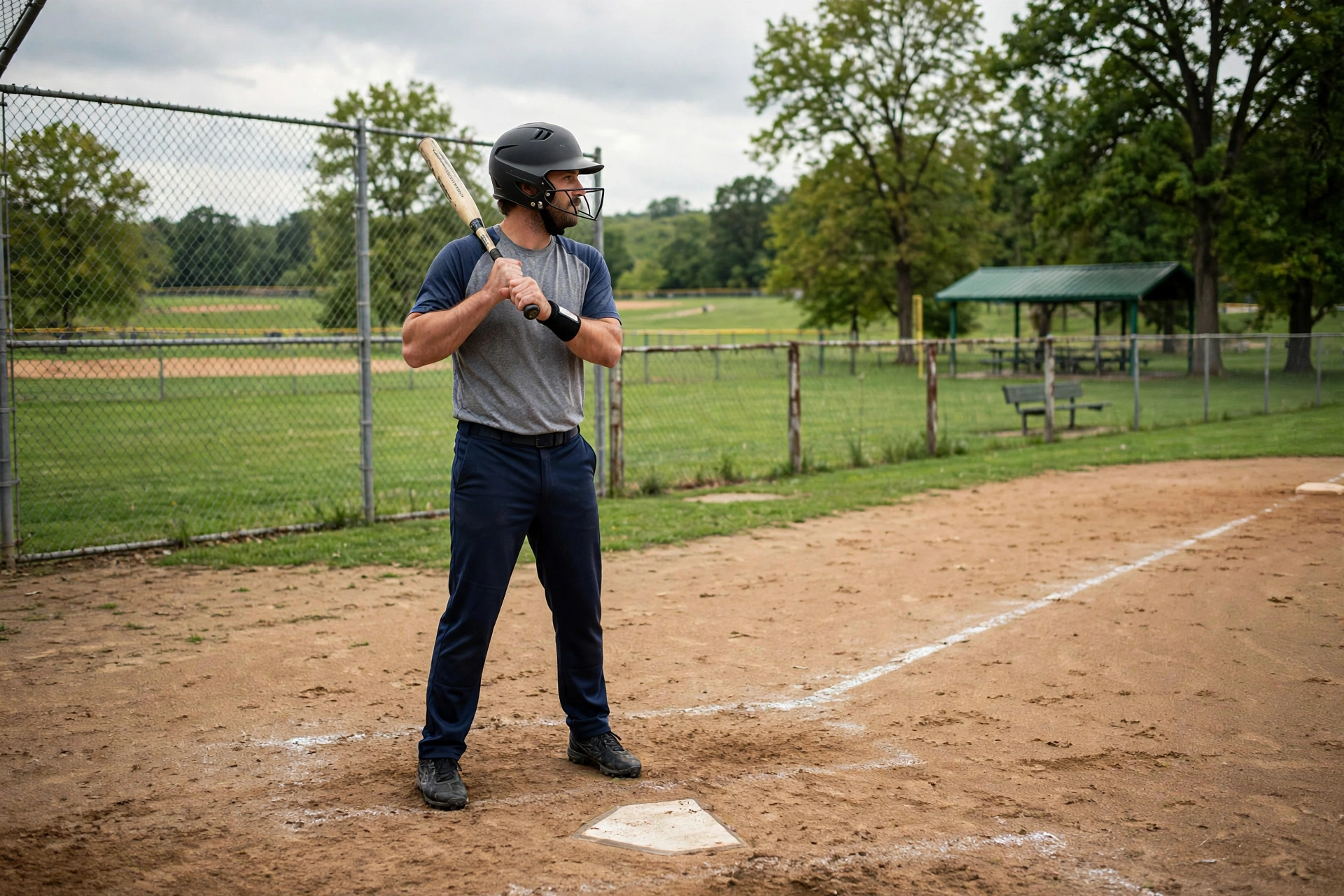
What Type of Helmet Suits Slowpitch Softball?
A softball batting helmet is the standard choice. It covers the head and ears, fits securely, and is designed for the ball sizes and speeds of softball. Baseball batting helmets are similar and often acceptable, but a softball-specific helmet is shaped for the larger softball and the fit players expect.
Some slowpitch players use helmets with a face guard or a jaw guard, which adds protection for the face and jaw against a batted ball or a wild pitch. Face guards are more common among pitchers and infielders, who face batted balls at close range, and they are worth considering if you play those positions.
Fit matters as much as type. The helmet should sit level, cover the forehead, and stay put when running and swinging. Comfort features such as moisture-wicking pads and good ventilation matter in summer leagues, when games are played in heat and a helmet is worn for hours. A helmet that stays comfortable is one that stays on, so do not overlook ventilation and pad quality when comparing models. Try it on with any cap or sweatband you wear, and check that the chin strap holds it securely without being uncomfortable.
Do Fielders and Pitchers Need Helmets?
In general terms, pitchers and corner infielders face the highest risk among fielders, because they are closest to the batter and have the least time to react to a hard-hit ball. Some leagues require helmets or face protection for pitchers, and many pitchers choose to wear them even where not required.
Other infielders and outfielders are at lower risk, but not zero risk. A hard line drive can reach any fielder, and outfielders can collide with fences or each other. Outfielders chasing a fly ball near the fence also benefit from head protection if they collide with the boundary or another fielder. Some players wear helmets or face guards in the field for peace of mind, particularly in competitive leagues.
Base coaches are another group worth mentioning. A first or third base coach stands close to the action and can be struck by a foul ball or an overthrow. Some leagues require helmets for base coaches, and it is a sensible precaution regardless of the rules.
How Do You Choose a Slowpitch Helmet?
Start with your league’s rules: find out whether a helmet is required, for which positions, and whether face guards are specified. That narrows the choice immediately and avoids buying a helmet that is not allowed.
Then focus on fit and comfort. A helmet that fits well and feels comfortable is one you will actually wear, and a helmet left in the bag protects nobody. Try several models, check the ear coverage, and make sure the helmet works with your usual eyewear or sunglasses.
Finally, remember that a helmet is part of a wider approach to safety, and that fit is what makes any helmet’s protection work — including systems that address angled impacts, as explained in this guide to what MIPS means for helmets. Buy a helmet that fits, wear it every game, and replace it after a hard impact or when it shows signs of wear.
Frequently Asked Questions
Q: Is a helmet required for slowpitch softball?
A: It depends on the league — many require helmets for batters and runners, and tournaments are often stricter. Check your league’s rules, and wear one even where it is optional.
Q: Can I use a baseball helmet for slowpitch softball?
A: In general terms, yes, but a softball-specific helmet is shaped for the larger ball and is usually the better fit. Check your league’s rules for any specific requirements.
Q: Do pitchers need extra face protection?
A: Pitchers face the highest risk from batted balls, so many wear a helmet with a face guard. Some leagues require it, and it is a sensible choice even where it is not mandated.

Olivia
Writer at Helmet Today, covering helmet reviews, fit and riding safety.