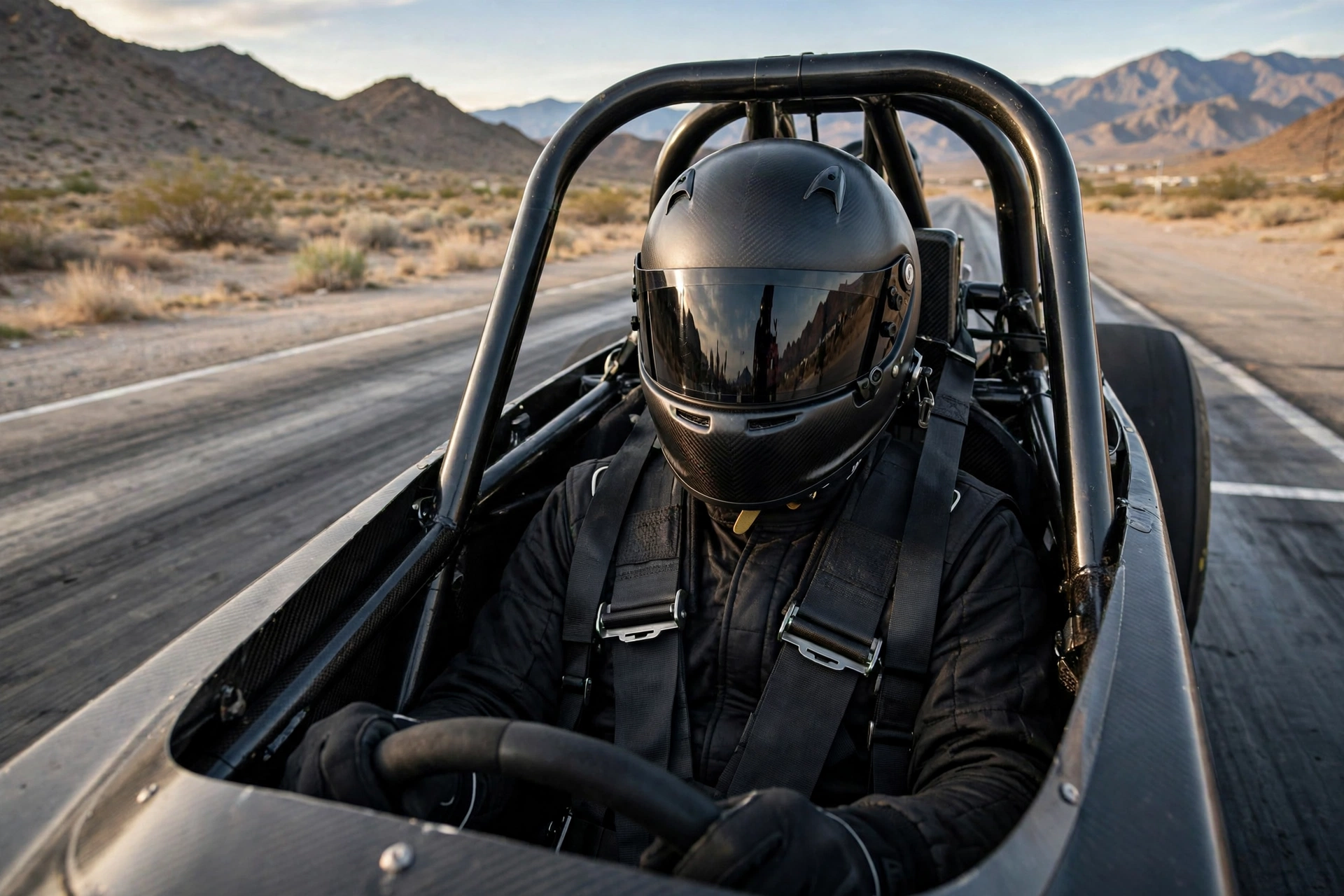
In general terms, drag racing helmet rules require drivers to wear a helmet that meets an accepted auto racing standard, with stricter requirements — including fire-resistant clothing and, in faster classes, additional safety equipment — as cars get quicker. The exact rules depend on the sanctioning body and the car’s speed and class, so always check the current rulebook for your event.
Drag racing looks simple from the stands: two cars, a straight strip, a short burst of speed. The safety rules behind it are anything but simple, because the speeds involved leave very little margin for error. This guide explains, in general terms, how helmet rules work in drag racing and what drivers need to know before they line up.
Do All Drag Racers Need a Helmet?
In general terms, yes — drivers in organised drag racing events are required to wear a helmet. Even in slower classes, a helmet is part of the basic safety equipment, alongside a seat belt or harness and, depending on the class, other protective gear. Street cars taking part in test-and-tune or bracket events are not exempt simply because they are road-legal.
The reason is straightforward: drag racing involves rapid acceleration, high speeds, and the risk of losing control, crossing into the other lane, or suffering a mechanical failure at speed. A helmet protects against impacts with the car interior, debris, and the ground if the car leaves the track, and it is a basic precaution at any speed.
Spectators sometimes wonder why a helmet is needed for a run lasting only seconds. The answer is that a crash in drag racing, when it happens, happens at high speed and with very high forces. The short duration of a run does not reduce the forces involved — if anything, the rapid acceleration and speed make protection more important, not less.
Which Helmet Standards Are Accepted in Drag Racing?
Drag racing series generally accept helmets meeting recognised auto racing standards, such as Snell SA and FIA standards. The specific versions accepted vary by sanctioning body and change over time as standards are updated, so a helmet that was accepted a few years ago may need checking against the current list.
Some slower classes may accept a broader range of helmets, while faster classes are stricter. That tiered approach reflects the risk: as speeds rise, the demands on the helmet — impact protection, fire resistance, and compatibility with other safety equipment — rise with them. Never assume a helmet accepted in one class is accepted in another.
Checking the label is essential. The certification label inside the helmet, not the seller’s claim or the helmet’s appearance, is what officials will rely on. Keep the label readable, and if you are unsure whether your helmet is accepted, ask the event’s technical officials before race day rather than discovering a problem at scrutineering.
How Do Rules Change as Cars Get Faster?
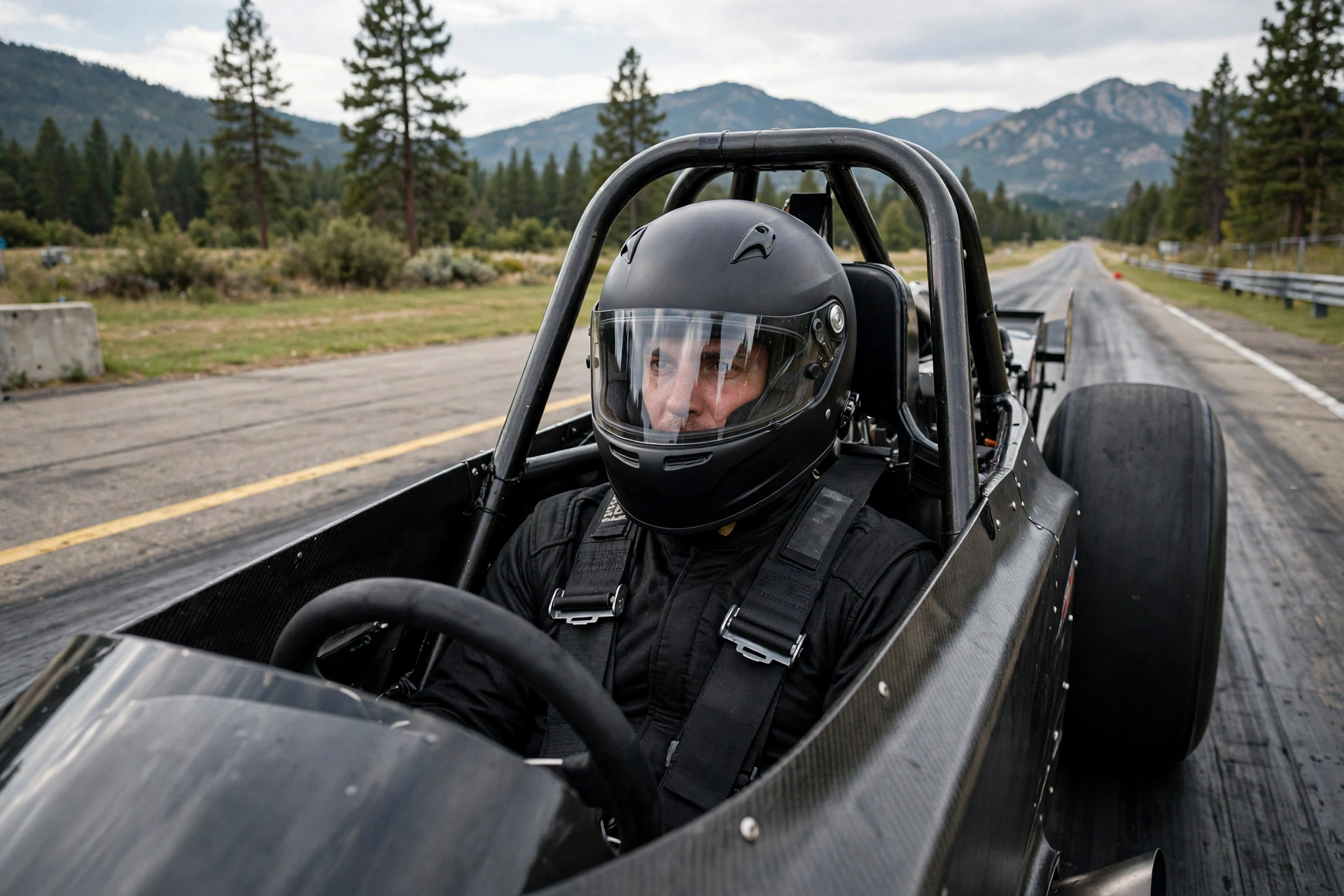
In general terms, drag racing safety rules are tiered by speed and elapsed time. Slower cars need the basics: a helmet, restraints, and a car in sound condition. As cars get quicker, additional requirements come in — fire-resistant suits, gloves, and shoes, roll bars or cages, head restraints, and, in the fastest classes, full chassis and safety systems built to detailed specifications.
The helmet’s role grows with speed too. Faster cars require helmets that work with head restraint devices, and the helmet must have the correct anchors for that system. A helmet without those anchors cannot be used with a head restraint, which may rule it out for a faster class even if it is perfectly good for a slower one.
This tiered structure is why experienced drag racers advise newcomers to buy safety equipment with some headroom. If you plan to make your car faster over time, buying a helmet and other gear that already meets the requirements of the next tier up can save you buying everything twice.
What Else Should Drag Racers Wear With a Helmet?
A helmet is one part of a system. Fire-resistant clothing is required in many classes, because fuel and hot components create a fire risk after a crash. The suit, gloves, and shoes work with the helmet’s fire-resistant lining to give the driver time to escape, and they should be worn together, not treated as optional extras.
Restraints matter just as much. A harness holds the driver in position so the helmet can do its job, and a head restraint device limits the violent head movement that causes neck injuries in a sudden stop. These items are checked at scrutineering alongside the helmet, and missing or worn restraints can keep a car off the track.
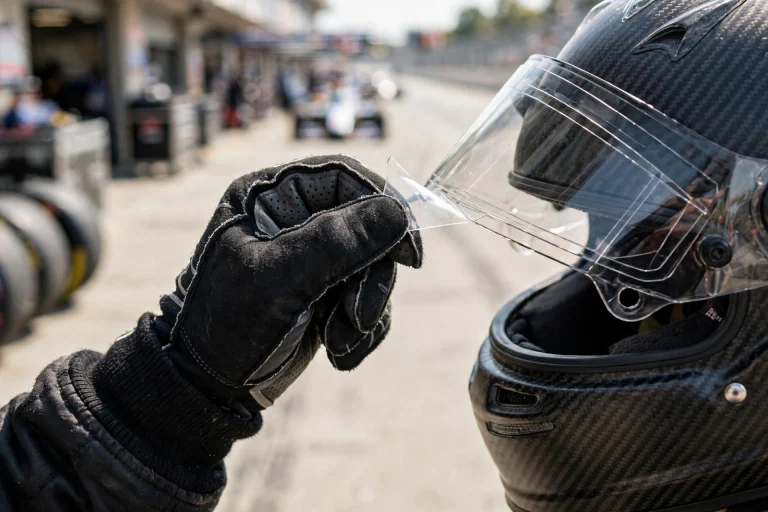
Eye protection is built into most full-face drag helmets through the visor, which should be clean, scratch-free, and securely attached. A damaged visor reduces vision at the moment you need it most — the launch and the first seconds of the run, when the car is accelerating hardest and the driver is making constant small corrections.
How Can You Avoid Problems at Scrutineering?
Preparation is the key. Read the current rulebook for your sanctioning body and class before the event, check your helmet’s label against the accepted standards, and inspect the whole safety system — helmet, suit, harness, and restraints — before you travel. Finding a problem at home is an inconvenience; finding it at the track can end your day.
Keep your equipment clean and in good condition. A helmet with a damaged shell, a frayed strap, or a visor that will not stay in position may be failed, even if its certification is current. Regular inspection, and replacement after any impact or signs of wear, keeps you on the right side of the rules and, more importantly, keeps you safe.
Finally, remember that rules exist to protect drivers, and that fit is what makes any helmet’s protection work — including systems that address angled impacts, as explained in this guide to what MIPS means for helmets. A certified, well-fitting helmet, worn with the rest of your safety gear, is the foundation of safe drag racing at any speed.
Frequently Asked Questions
Q: Can I use my street motorcycle helmet for drag racing?
A: In general terms, no. Drag racing requires helmets meeting accepted auto racing standards, which motorcycle helmets usually do not meet. Check your event’s accepted list and use a proper auto racing helmet.
Q: Do passengers need helmets in drag racing?
A: In general terms, organised drag racing does not carry passengers during timed runs, so the question rarely arises. Any ride-along or demonstration activity is governed by the event’s own rules, which you should confirm with the organisers.
Q: What happens if my helmet fails scrutineering?
A: In general terms, you will not be allowed to run until the problem is fixed — usually by using a different helmet that meets the rules. That is why checking your helmet’s label and condition before the event matters so much.

Olivia
Writer at Helmet Today, covering helmet reviews, fit and riding safety.