A rescue helmet for confined space work should be low-profile, close-fitting, and securely strapped, with a headlamp mount and compatibility with breathing apparatus and communications, because confined spaces combine low headroom, awkward movement, and poor light. In general terms, the best confined-space helmet is the one that protects your head without catching on the space itself or getting in the way of the rescue.
Confined spaces — tanks, silos, sewers, tunnels, and voids — punish bulky equipment. A helmet that is perfect on an open fireground can be a liability in a two-foot opening. This guide explains what to look for and why.
What Makes Confined Space Work Different for Helmets?
Confined spaces are defined by their limits: limited entry and exit, limited space to move, and often limited air and light. Rescuers may crawl, crouch, or climb through openings barely wider than their bodies, and headroom can be inches rather than feet. Every piece of kit must earn its place, and anything that snags, catches, or adds bulk is a problem.
The hazards are specific too. Head strikes against concrete, steel, and pipework are constant, since rescuers move in positions where they cannot see above them. Falling objects are a risk where work happens above an entry point. Poor light makes all of this worse, and the atmosphere may require breathing apparatus, which must work with the helmet rather than against it. A confined-space helmet has to handle all of this at once.
Why Does a Low Profile Matter So Much?
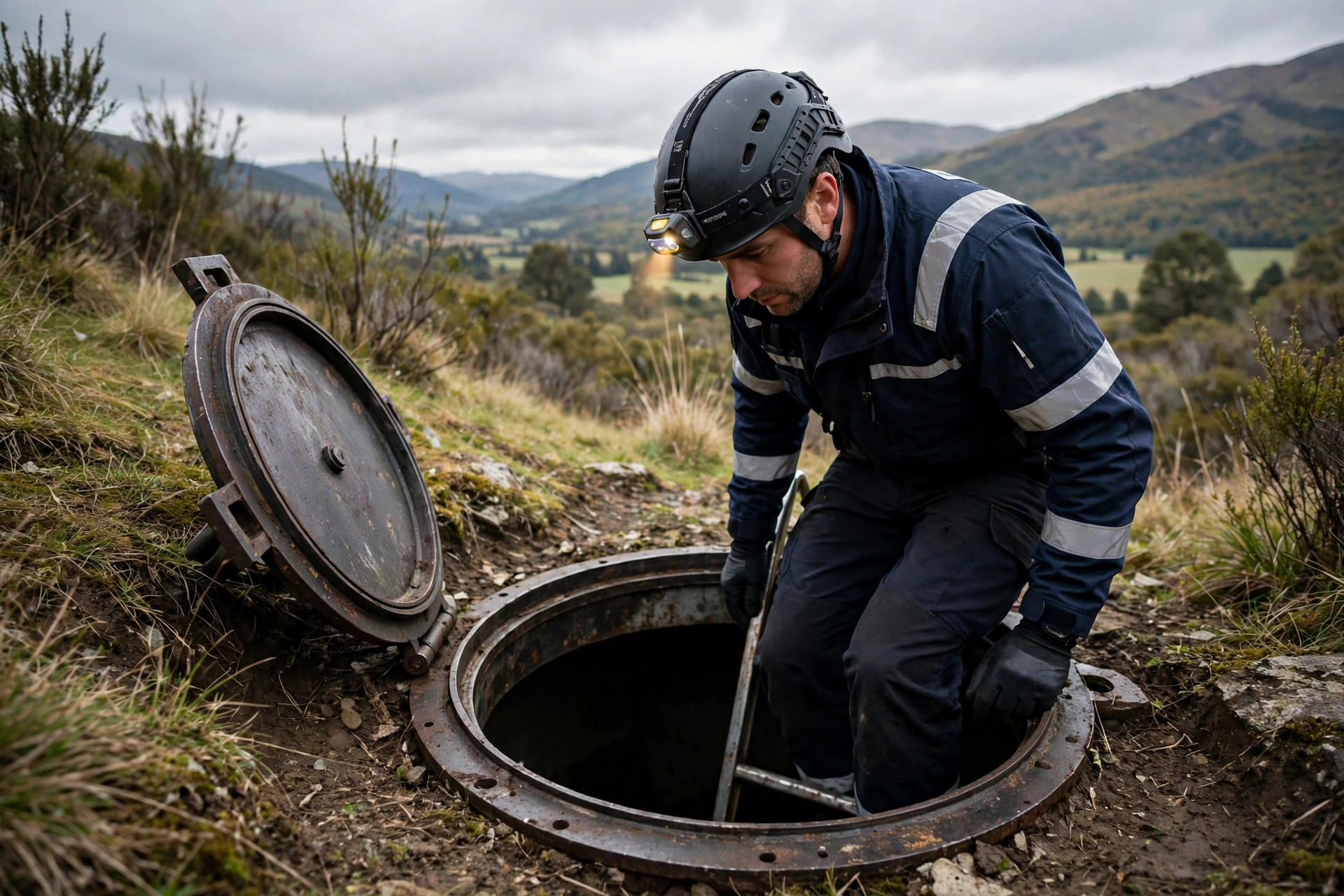
A low-profile helmet sits close to the head, with minimal brim and no tall crown or protruding fittings that catch on edges. In a confined space, a wide brim can snag on a hatch rim, a tall crown can stop you fitting through an opening, and a protruding lamp mount can catch on a ladder rung. Each snag costs time, and in a rescue, time matters.
Low profile does not mean low protection. Modern rescue helmets achieve a close fit with a strong, compact shell and a suspension that holds the helmet firmly in place. The key is that the helmet’s shape follows the head rather than adding bulk around it. Snag hazards are easy to underestimate until you have crawled through a hatch with a helmet that catches on every edge, so test the helmet’s profile in realistic movement before relying on it. When choosing a helmet for confined space work, try it in a realistic movement: crouch, crawl, and turn your head in a tight space if you can, and notice what catches.
How Should the Chin Strap and Fit Be Set?
The chin strap is critical in confined space work, because rescuers move in every orientation — on their backs, on their sides, upside down on a ladder — and a helmet that can slide off is a helmet that will slide off. The strap should be snug, with a secure buckle, and the helmet should stay put through a full range of movement. A four-point chin strap system, which anchors at four points around the shell, holds the helmet more securely than a simple two-point strap during inverted or sideways movement.
Fit should be checked with all other kit in place, especially breathing apparatus. The helmet must not push a mask out of its seal, and the mask straps must not push the helmet out of position. If your team uses a particular breathing apparatus model, check helmet compatibility with that model specifically, not just in general. A fit check done without the mask is only half a check.
What About Light and Communications?
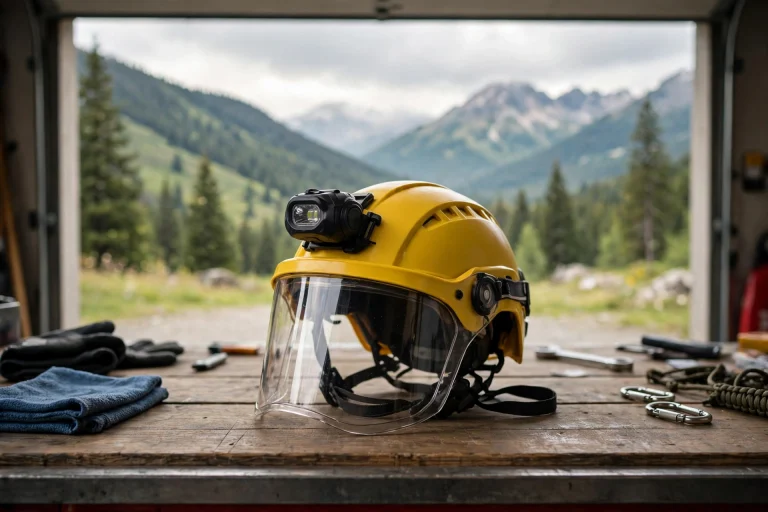
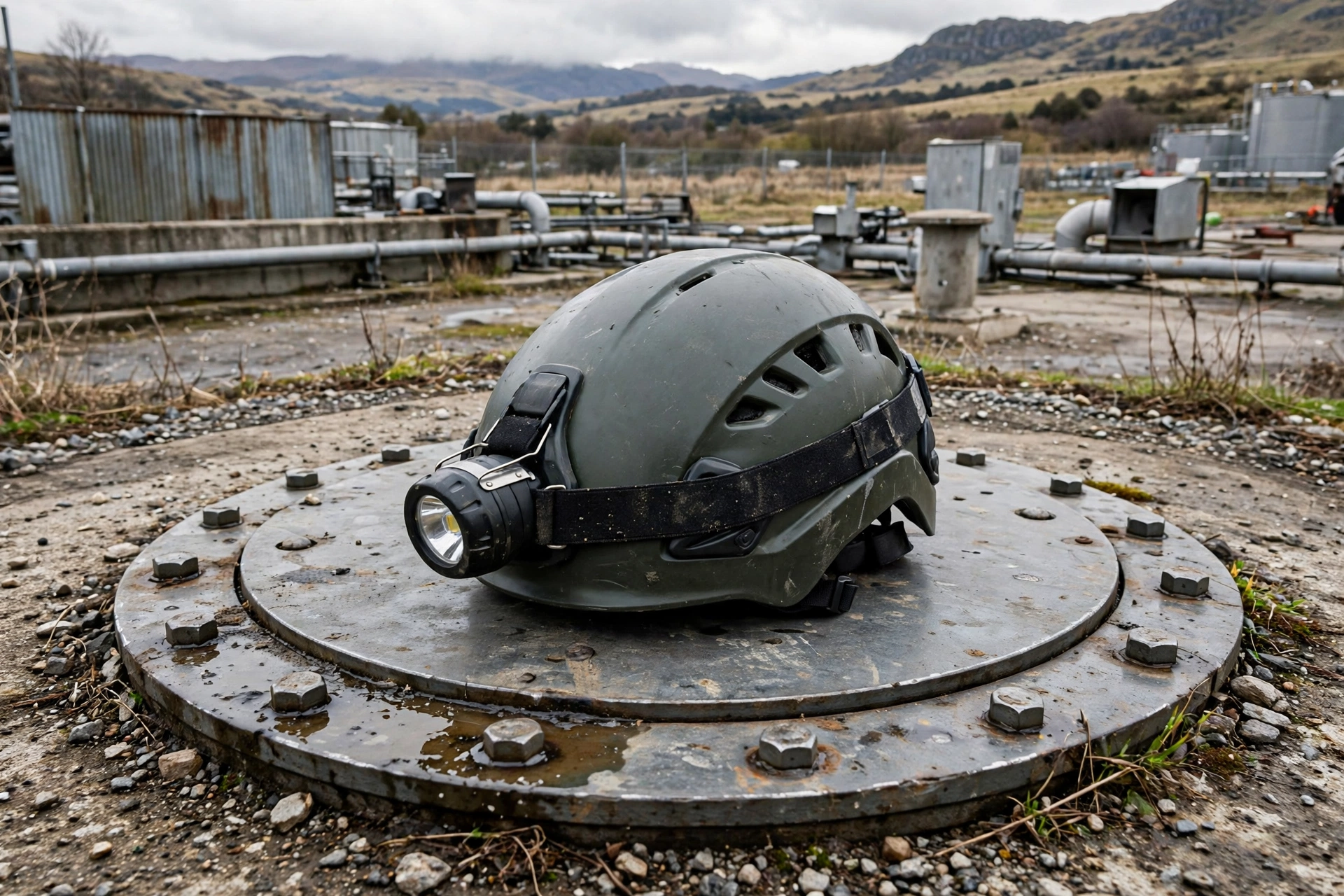
Light is essential in a confined space, and a helmet-mounted headlamp is the standard solution because it keeps both hands free and points where the rescuer looks. The helmet should have a secure lamp mount or clips that hold the lamp firmly through crawling and climbing. A lamp that falls off in a tank is worse than no lamp at all, since it becomes a distraction and a lost item.
Communications matter just as much. Confined-space rescues depend on constant contact between the entrant, the attendant outside, and the rest of the team, often through radios or hard-wired systems. The helmet should work with the team’s communication setup, whether that means ear defenders with built-in comms, a headset that fits under the helmet, or a speaker and microphone mounted to the shell. Test the whole system — helmet, lamp, comms, breathing apparatus — together before relying on it, since parts that work alone can conflict when combined.
How Do You Inspect and Maintain a Confined Space Helmet?
Confined space helmets take a beating: they scrape against concrete, get soaked, and pick up chemical and biological contamination from sewers and tanks. After each use, clean the helmet according to your procedures, paying attention to decontamination where the space required it. Inspect the shell for cracks and deep abrasion, the suspension for wear, and the chin strap and buckle for function, just as with any rescue helmet.
Check the lamp mount and any comms fittings for damage, and replace batteries or charge lamps as part of the post-use routine. A helmet used in confined spaces should be inspected before every entry, not just at the start of a shift, because the last entry may have damaged it in ways that are not obvious from a distance. Keep a record of inspections where your procedures require it, and take any helmet with shell or suspension damage out of service. If you are learning about helmet technology, reading about what MIPS is for helmets can help you understand one of the features you may see listed on modern helmets.
Frequently Asked Questions
Q: Can I use a regular fire helmet for confined space rescue?
A: In general terms, a structural fire helmet is bulkier than ideal for confined spaces, with a brim and profile that can catch. A low-profile rescue helmet designed for the role is the better choice.
Q: Do I need a chin strap with four attachment points?
A: Not always, but a four-point system holds the helmet more securely during inverted or sideways movement, which is common in confined spaces. It is worth considering for dedicated confined-space helmets.
Q: How do I keep a headlamp secure on a confined space helmet?
A: Use the helmet’s dedicated lamp mount or clips, and check them before entry. A lamp held on with tape or an improvised fitting is likely to come loose when you crawl or climb.

Olivia
Writer at Helmet Today, covering helmet reviews, fit and riding safety.