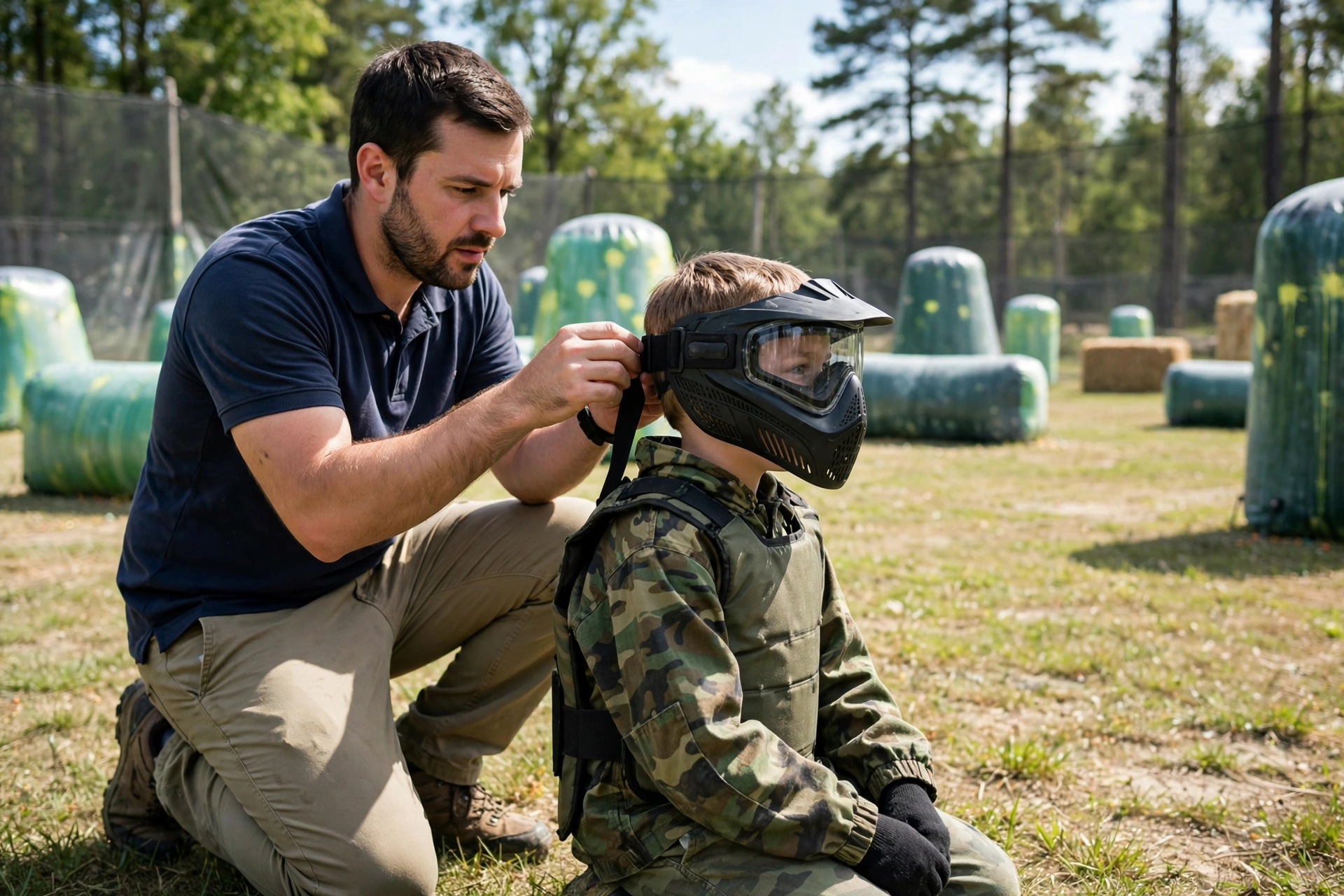
To fit a paintball mask for juniors, choose a mask sized for a smaller face, set the strap so the mask sits level and snug without squeezing, and check that the foam seals all around with no gaps. In general terms, the best junior fit is a mask made for smaller faces rather than an adult mask tightened down as far as it goes, because a shrunken adult mask still has adult proportions and will gap at the cheeks or press on the forehead.
Children and younger teens have narrower faces, shorter distances between eyes and chin, and less tolerance for a mask that hurts or slips. A mask that fits badly is a mask a junior will want to lift — and lifting a mask on the field is the one thing that must not happen. Getting the fit right is therefore a safety job, not a comfort extra.
Why Do Junior Players Need a Different Mask Fit?
Junior faces are not just smaller versions of adult faces. The cheekbones are narrower, the chin is shorter, and the bridge of the nose sits differently, so a mask shaped for an adult face will contact in the wrong places. It may press hard on the forehead while gaping at the cheeks, or sit so low that it covers the mouth while leaving the forehead exposed.
That mismatch matters for protection as well as comfort. Gaps in the foam seal let paint and shell fragments reach the skin, and a mask that rocks or slides can shift on impact and expose an eye. A mask that fits a junior properly stays in place when they run, turn, and dive, which is exactly when protection is needed most.
Age alone is a poor guide to size, since children grow at different rates. Judge by the face in front of you, not by the age on a chart, and be ready to re-check the fit every season as a junior grows. A mask that fitted perfectly last year may be too small this year, and a mask that is too small will press on the nose and forehead while leaving the chin exposed.
How Do You Choose a Mask Size for a Junior?
Start with masks marketed for juniors or smaller faces, and try more than one if you can. The right mask covers from the forehead to below the chin and from ear to ear, with the lens sitting squarely in front of the eyes. If the mask covers the mouth but leaves the forehead bare, or vice versa, it is the wrong size or shape.
Check the foam next. It should touch the skin all the way around with gentle, even pressure — no hard spots on the forehead or nose, and no daylight visible at the cheeks. Press the mask lightly from the sides: it should not rock or pivot. If it rocks, the shape is wrong for that face, and tightening the strap will not fix it, so try a different mask rather than forcing a poor fit.
Consider weight as well. A heavy mask tires a smaller neck faster and encourages slouching, which breaks the seal. Junior-sized masks are usually lighter, and that lightness is a real advantage over a full game day, not just a marketing point. A junior who is comfortable will play better and, more importantly, will keep the mask on.
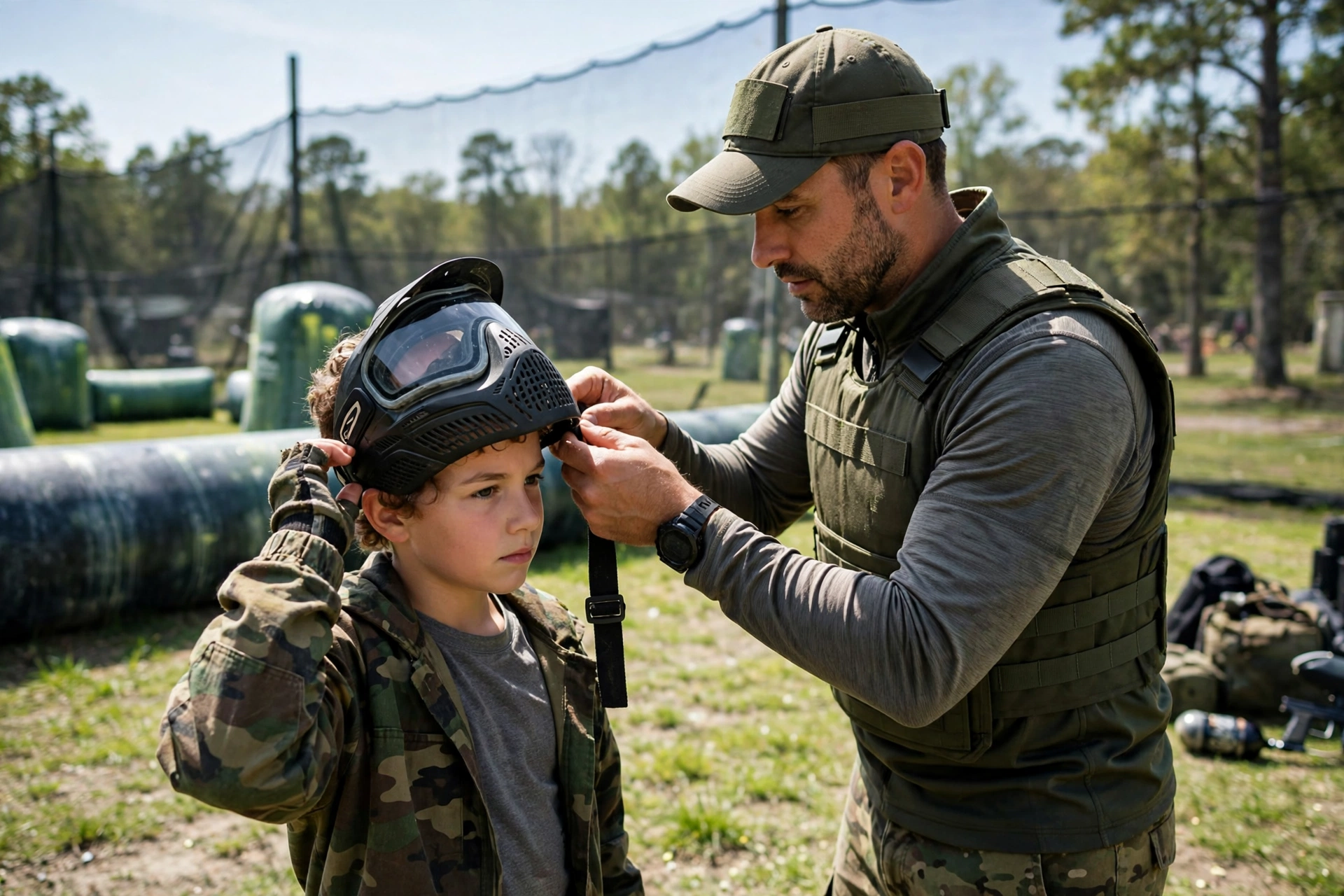
How Do You Adjust the Strap and Foam?
Set the strap so the mask is snug but not tight. You should be able to fit one finger under the strap with slight resistance, and the mask should not slide when the junior shakes their head or looks sharply sideways. A strap that is too loose lets the mask bounce, while a strap that is too tight causes headaches and tempts the wearer to loosen it mid-game.
Adjust the strap with the mask on and the junior looking straight ahead, not tilted up or down. Check the fit again after a few minutes of wear, since foam compresses slightly and straps settle. If the mask needs constant re-tightening, the strap elastic may be worn, or the mask may be the wrong shape — both are worth fixing before game day.
Some masks allow foam or pad swaps to fine-tune the fit. A thicker cheek pad can close a small gap, and a different forehead pad can relieve a pressure point. Small changes like these often turn a nearly-right mask into a properly fitting one without buying a new mask.
What Should You Check Before Every Game?
Run a quick fit check before every game, not just the first one. Strap settings drift, foam compresses, and juniors grow. Check that the lens is clean and undamaged, the foam seals all around, the strap holds snugly, and the mask does not slip when the junior runs on the spot or turns quickly.
Talk to the junior about the fit, too. Ask where it presses, whether they can see clearly in all directions, and whether breathing feels restricted. A junior who can describe a problem will get a better fit than one who is told to stop complaining, and a junior who is comfortable in their mask is far less likely to lift it on the field.
If you also buy helmets for other sports your junior plays, reading about what MIPS is for helmets can help you understand a protective feature found on many youth helmets. The principle is the same across sports: protection only works when the gear fits the person wearing it, and junior gear deserves the same careful fitting as adult gear.
Frequently Asked Questions
Q: Can a junior wear an adult paintball mask?
A: Sometimes an older teen can, if the mask genuinely fits their face with a full foam seal. In general terms, though, a junior-sized mask fits younger players better, and an adult mask should never be used if it gaps or slips.
Q: How tight should a junior mask strap be?
A: Snug enough that the mask does not slide when the head shakes, but not so tight that it causes pain or leaves deep marks. One finger under the strap with slight resistance is a useful guide.
Q: How often should I re-check a junior’s mask fit?
A: Before every game as a quick check, and fully re-sized at least each season or after a growth spurt. A mask that fitted last year may not fit this year.

Olivia
Writer at Helmet Today, covering helmet reviews, fit and riding safety.