To replace a paintball mask strap, remove the old strap from its side mounts, thread the new strap through the same mounts, and adjust it until the mask sits snug and level. In general terms, it is a simple job that needs no tools on most masks, though some models use clips, buckles, or screws that are worth understanding before you pull anything apart. A fresh strap restores the fit that a stretched or frayed strap has lost.
Straps wear out gradually, so players often do not notice how bad theirs has become. Elastic loses its spring, stitching frays, and buckles crack, and the mask starts slipping at the worst moments. This guide covers how to tell when a strap needs replacing, how to swap it, and how to get the adjustment right afterwards.
When Does a Paintball Mask Strap Need Replacing?
Replace the strap when it no longer holds the mask snugly at a normal adjustment. If you have tightened it to the end of its range and the mask still slides, the elastic is spent. Visible fraying, torn stitching, cracked or bent buckles, and a strap that feels limp rather than springy are all clear signs.
Also replace a strap that has become stiff or sticky with dried paint and sweat, since a strap in that state will not adjust smoothly and may snap under sudden load. In general terms, a strap that needs cleaning after every game to stay usable is a strap near the end of its life. Straps are inexpensive compared with masks, so replacing early is better than nursing a failing one.
Check the strap mounts at the same time. If the slots or clips on the mask frame are cracked, a new strap will not fix the problem, and the mask itself may need repair or replacement. A strap is only as strong as what it attaches to.
How Do You Remove the Old Strap?
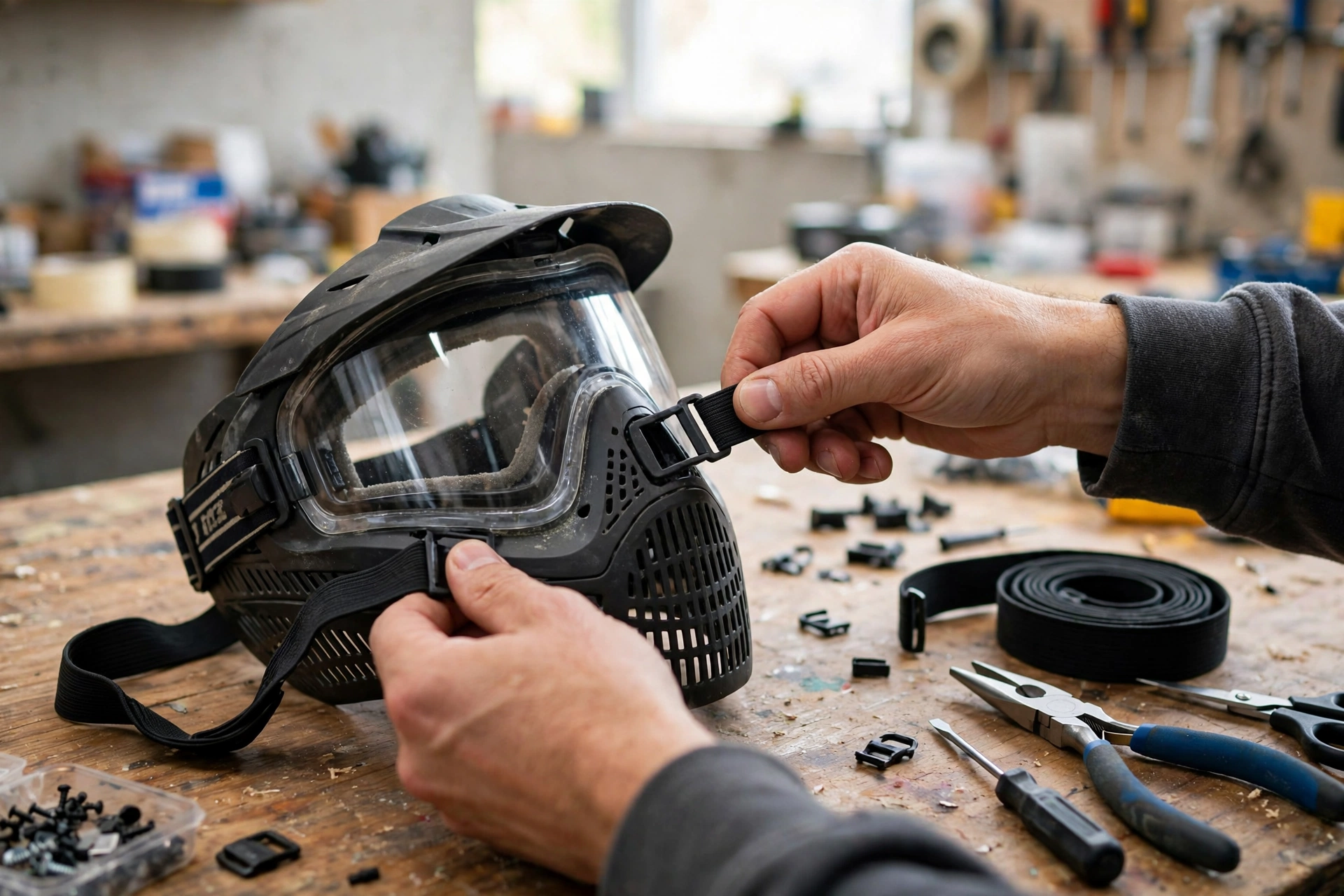
Start by looking at how the strap attaches. Most paintball masks thread the strap through slots on each side of the frame, sometimes with a buckle or clip that holds it in place. Work in good light, and take a photo of the routing before you undo anything — a picture of the original threading saves a lot of guesswork when fitting the new strap.
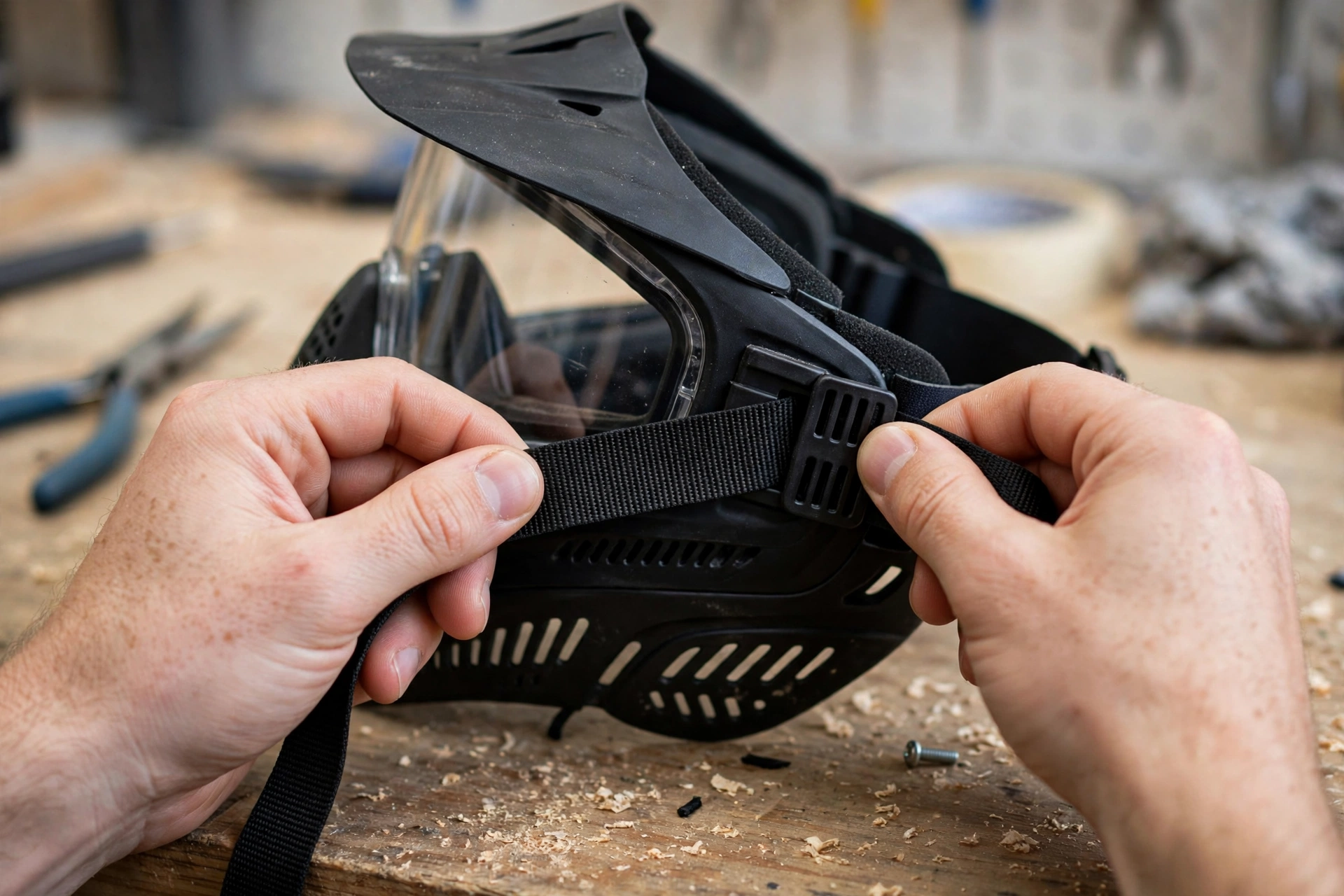
Undo any buckle or clip, then slide the strap out of its slots, noting which side faces outward. If the strap is held by screws, remove them carefully and keep them somewhere safe, since replacement screws for a specific mask can be hard to find. If a clip feels stuck, check for a release tab rather than forcing it, as mask frame plastic can crack under force.
Once the old strap is off, clean the slots and the surrounding frame. Paint and grit collect in strap slots, and fitting a new strap over old grime wears it faster. A damp cloth and a soft brush are usually enough, and the frame should be dry before the new strap goes on. While you are there, inspect the frame around the slots for cracks or stress marks, since a cracked mount will not hold even a brand-new strap securely.
How Do You Fit and Adjust the New Strap?
Thread the new strap through the mounts in exactly the same route as the old one, using your photo as a guide. Make sure the strap is not twisted, since a twisted strap sits unevenly and wears faster. Fasten any buckles or clips, and check that they click or seat fully before going further.
Put the mask on and adjust the strap gradually, a little on each side at a time, so the mask stays centred. The mask should sit level, covering forehead to chin, with the foam sealing evenly. Test the fit by shaking your head and looking sharply sideways: the mask should stay put without needing a death grip from the strap, and it should feel the same after a few minutes as it did when first put on.
Adjust with any other kit you wear, such as a headwrap or cap, since extra layers change how the strap sits. A strap adjusted bare-headed may feel different once a headwrap is underneath it, and the final adjustment should reflect how you actually play. Check the adjustment again after the first game with the new strap, since new elastic settles slightly with use.
What Kind of Replacement Strap Should You Buy?
Buy a strap made for your mask model where possible. Mask makers design straps to match their frame slots and buckles, and a model-specific strap fits first time. Universal straps exist and can work, but they may need trimming or may not match the buckle style, so check the width and attachment type before ordering.
Consider the strap material as well. Wide, padded straps spread pressure and suit long game days, while simple elastic straps are lighter and cheaper. Silicone grip strips on the inside of some straps stop the strap sliding on smooth headwear, which is useful if you wear a headwrap or a hood. Whatever style you choose, test it over a full game day rather than a quick try-on, since a strap that feels fine for five minutes can still slip or pinch after hours of play.
Keep the old strap as a spare if it is still partly usable, and note the model of your mask somewhere with your kit. If you play other helmet sports, reading about what MIPS is for helmets can help you understand protective features on helmets, which, like a good strap, only protect when they fit and stay in place. A ten-minute strap swap is one of the cheapest fit improvements you can make.
Frequently Asked Questions
Q: Do I need tools to replace a paintball mask strap?
A: In general terms, no. Most straps thread through slots or clips by hand. Some models use small screws, so check your mask first and have a suitable screwdriver ready if yours does.
Q: Can I use a universal strap on any mask?
A: Often, but not always. Check the strap width and attachment style against your mask’s slots and buckles, since a mismatched strap may not seat securely or may need trimming.
Q: How long should a paintball mask strap last?
A: It depends on play frequency and care, but a strap that no longer holds tension at normal adjustment, or shows fraying or cracked buckles, should be replaced regardless of age.

Olivia
Writer at Helmet Today, covering helmet reviews, fit and riding safety.