You stop an airsoft mask slipping by fitting it snugly to your face, setting the strap so it grips without squeezing, and removing whatever is letting it slide — usually sweat, a wrong size, or a strap that has lost its stretch. In general terms, a mask that slips is a mask that does not fit, and no amount of tightening a worn strap will fix a mask of the wrong size or shape. The fix is a combination of fit, strap condition, and grip.
A slipping mask is more than an annoyance. Every time it slides, it can expose skin, break the seal of your eye protection, or fog your view, and a player who is constantly pushing their mask back into place is a player who is not watching the game. This guide covers the causes of slipping and the fixes that actually hold.
Why Does an Airsoft Mask Slip?
The most common cause is sweat. As you play, sweat builds up between the mask and your skin, and the mask’s contact points lose friction. A mask that fitted perfectly at the start of a game can start sliding within an hour on a hot day, especially if the padding is smooth rather than textured or if the mask sits on a sweaty forehead and cheeks.
Strap problems are the second cause. Elastic straps lose their spring with age and washing, and a strap that has stretched will not hold tension no matter how far you tighten it. Straps also slip over smooth headwear: a mask strap worn over a slick cap or a satin headwrap has little to grip, and it will ride up or down as you move.
Size and shape are the third cause, and the hardest to fix with adjustments. A mask that is too big for your face will slide because nothing anchors it, and a mask shaped for a different face will pivot on its high points. If a mask slips even when new, dry, and correctly tightened, it is probably the wrong mask for your face.
How Do You Get the Strap Adjustment Right?
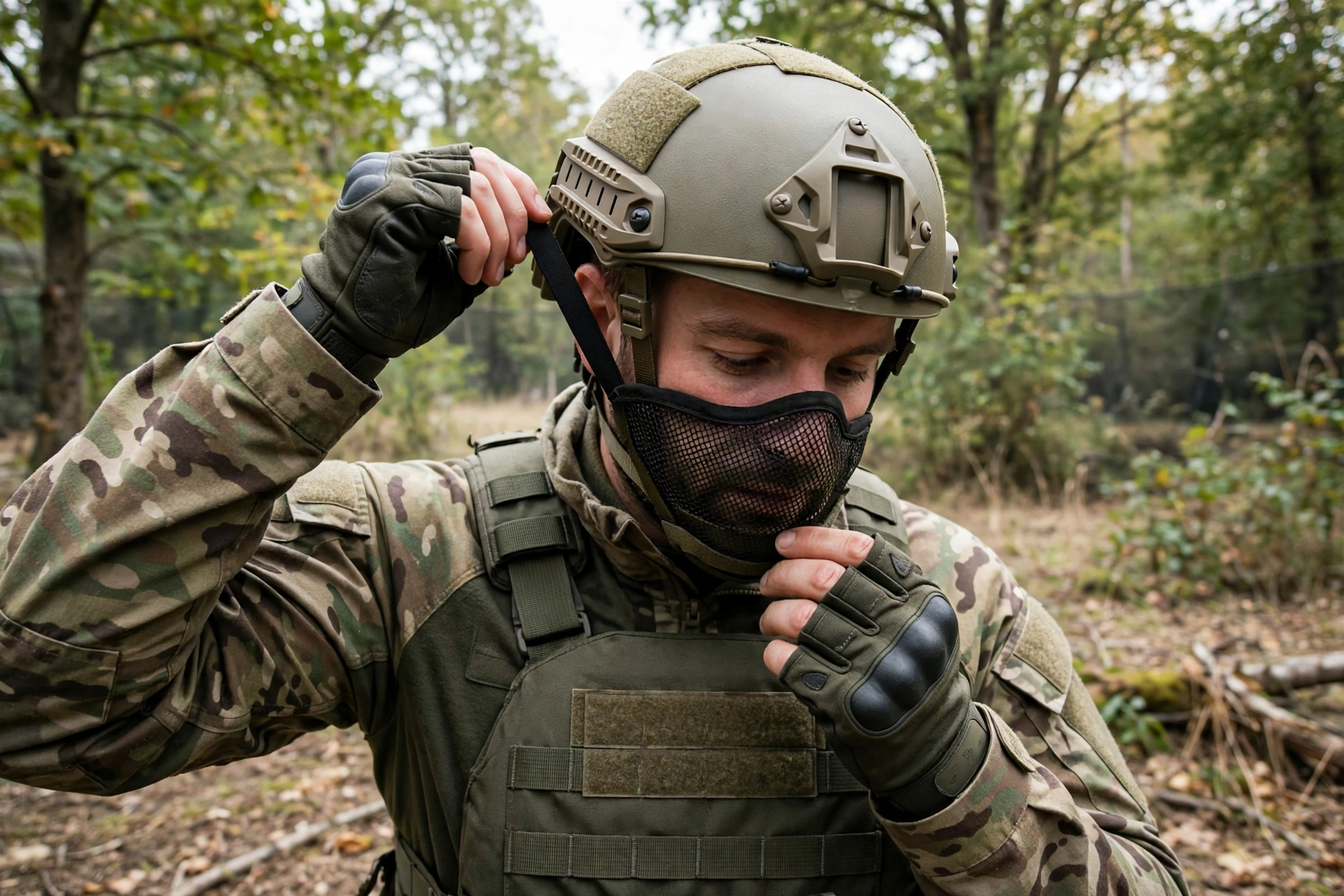
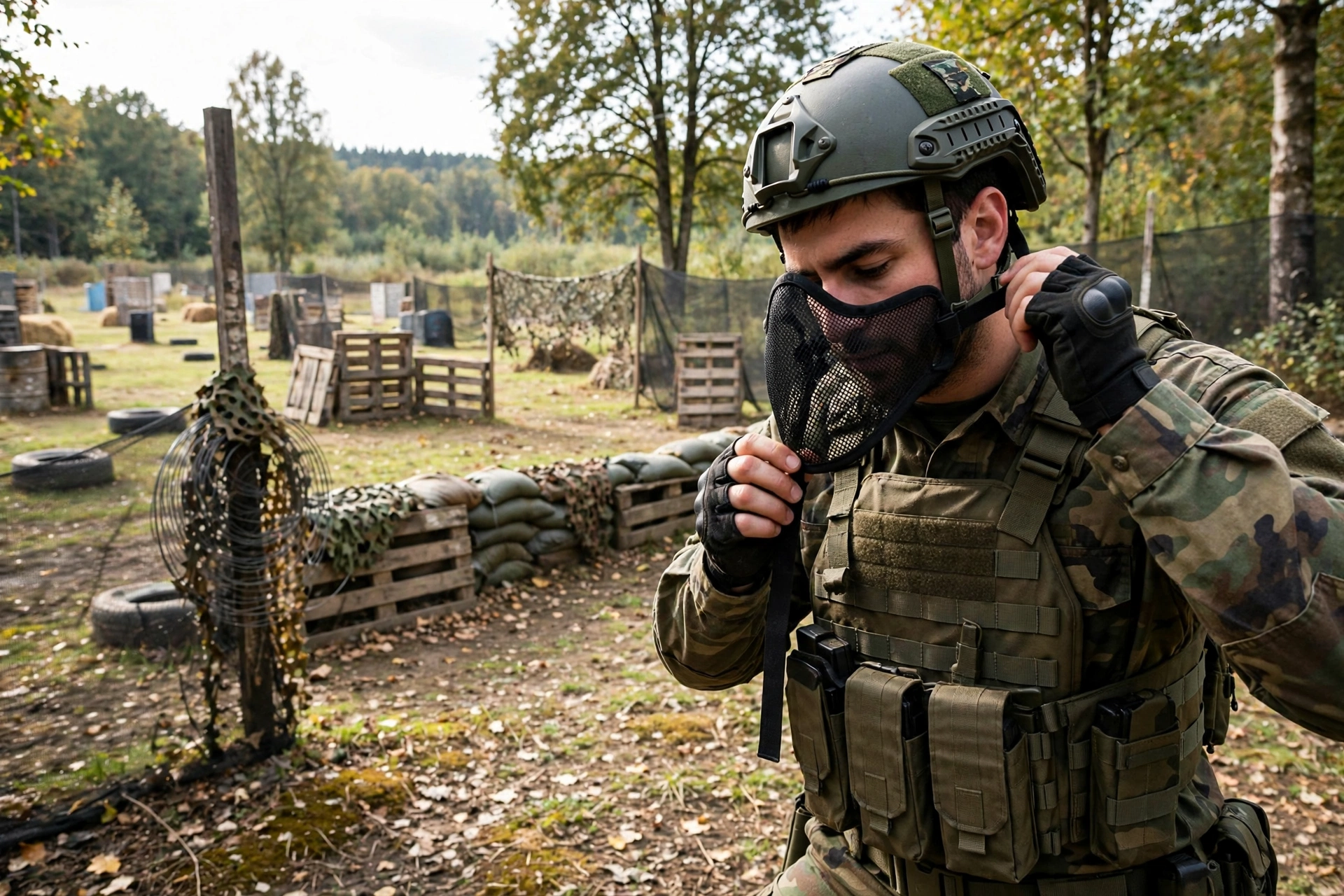
Adjust the strap with the mask on and your head level, tightening a little on each side at a time so the mask stays centred. The mask should feel snug all around, with even pressure and no single point digging in. You should be able to shake your head and look sharply sideways without the mask shifting, but you should not feel a headache building after a few minutes.
Check the strap route as well as its tightness. A strap that sits high on the back of the head grips differently from one that sits low, and the best position depends on your head shape and hairstyle. Experiment with the strap position before deciding the mask is at fault: moving the strap a centimetre up or down can change the grip completely, and the right position is worth finding before buying replacements.
Re-check the adjustment during the day. Straps settle, padding compresses, and sweat changes the fit, so a mask adjusted in the morning may need a small tweak by afternoon. A quick check between games takes seconds and prevents a mid-game slip.
What Can You Do About Sweat and Grip?
Manage sweat before it manages your mask. A thin, absorbent headwrap or skull cap worn under the strap gives the strap something to grip and soaks up sweat before it reaches the mask. Choose a wrap with some texture rather than a slick fabric, and make sure it does not break the seal of your eye protection or push the mask out of position.
Check the mask padding too. Padding that has gone smooth and shiny with wear grips worse than fresh padding, and replacing worn pads can restore grip immediately. Some players add a thin layer of grip material inside the mask frame, but keep any addition thin and secure: anything that changes the mask’s shape or presses on the skin can create new fit problems.
On very hot days, accept that you will need to manage the mask more actively. Carry a small towel to dry your face between games, and wipe the mask’s contact points as well as your skin. A dry mask on a dry face grips far better than a wet mask on a wet one, and a minute spent drying off between games saves constant adjustment during them.
When Is It Time to Replace the Mask or Strap?
Replace the strap when it no longer holds tension at a normal adjustment, when the elastic feels limp, or when stitching or buckles are damaged. A strap is a cheap part, and replacing it is the fastest fix for a mask that has started slipping with age. Keep a spare strap in your kit bag if your mask uses a common type.
Replace the mask itself when it slips despite a new strap, dry conditions, and careful adjustment. That combination points to a size or shape problem that adjustments cannot solve. When buying a replacement, try it on with your eye protection and headwear, and move in it — run, crouch, turn — before deciding it fits.
Remember that a slipping mask is a safety issue, not just a comfort one, because it can expose your face and eyes. If you wear helmets for other sports too, reading about what MIPS is for helmets can help you understand protective features on helmets, which share the same rule as masks: gear only protects when it stays where it belongs. Never play through a mask that will not stay put.
Frequently Asked Questions
Q: Why does my mask only slip when I sweat?
A: Sweat removes friction between the mask and your skin, so a mask that grips when dry slides when wet. A textured headwrap under the strap and drying your face between games usually solve it.
Q: Should I just tighten the strap as far as it goes?
A: No. Over-tightening causes headaches, distorts the mask, and can break the seal of your eye protection. If the mask only stays put at maximum tightness, the strap is worn or the mask is the wrong size.
Q: Can a headwrap stop my mask slipping?
A: In general terms, yes. A thin, textured headwrap gives the strap grip and absorbs sweat. Avoid slick fabrics that the strap slides over, and check that the wrap does not disturb your eye protection seal.

Olivia
Writer at Helmet Today, covering helmet reviews, fit and riding safety.