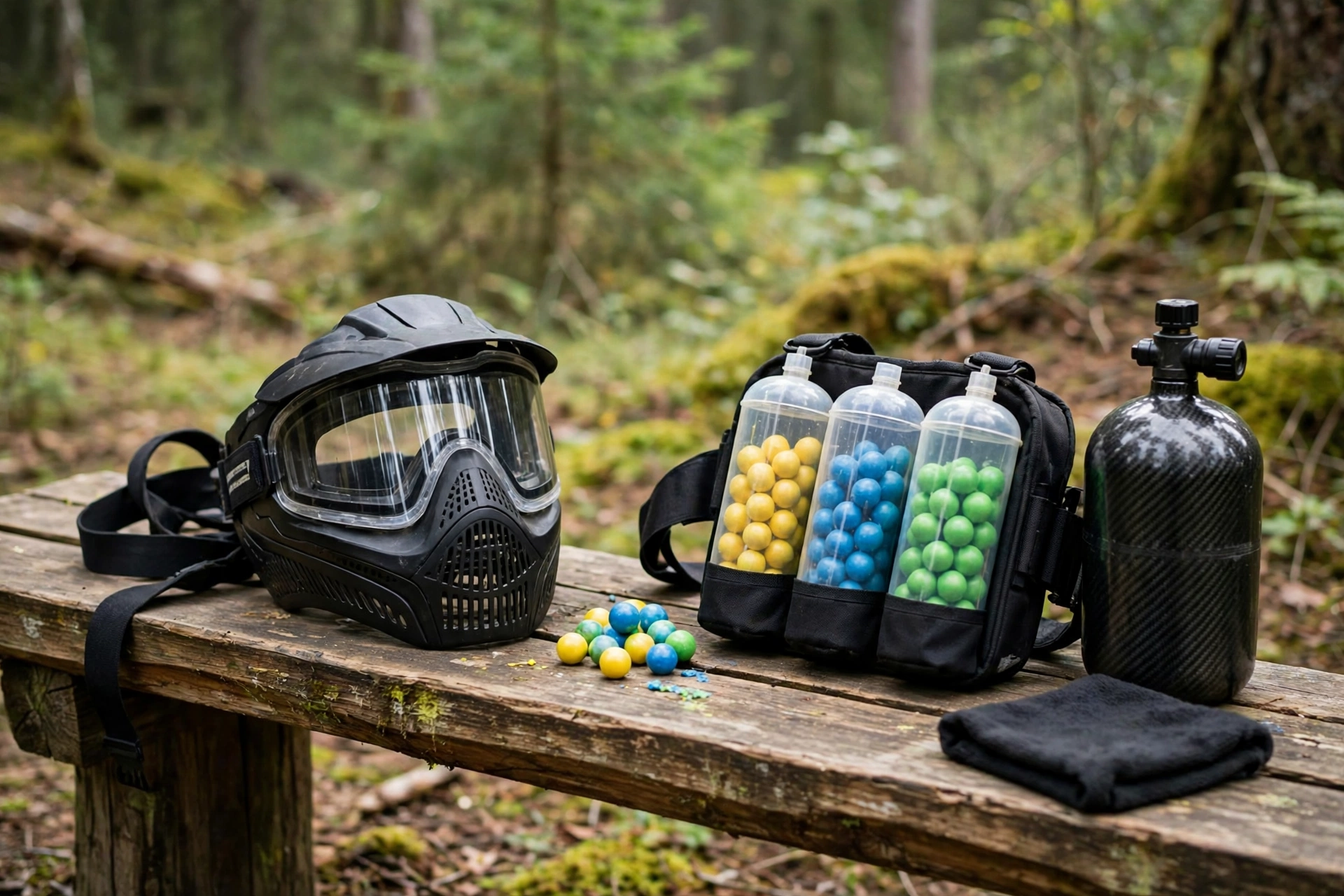
Replace a paintball mask lens when it is scratched, cracked, fogged beyond cleaning, or has taken a hard direct hit — in general terms, a lens that no longer gives you a clear, undistorted view is past its useful life. A paintball mask is protective equipment, and its lens is the part that stands between your eyes and a fast-moving paintball, so a lens you have to squint through is not a lens to keep trusting.
This guide explains how long a paintball mask lens usually lasts, the warning signs that mean replacement rather than cleaning, and how simple care can stretch the life of the lens you already own.
How Long Does a Paintball Mask Lens Last?
There is no single expiry date for a paintball mask lens, because lifespan depends on how often you play, how hard the lens is hit, and how it is stored between games. In general terms, a lens used every weekend in rough, muddy conditions will wear out far sooner than one used a few times a season and stored indoors.
The lens material itself ages slowly. Repeated cleaning, exposure to sun, and contact with paint, sweat, and cleaning chemicals can dull the surface over time. A lens that was crystal clear when new may gradually pick up fine haze that no amount of wiping removes. That slow decline is easy to miss, because you adapt to it game by game, until one day you realise you are seeing the field through a fog of fine scratches.
Think of the lens as a consumable part of the mask, not a lifetime component. Most experienced players keep a spare lens in their kit bag, so a lens that fails an inspection on game day does not end the day.
What Are the Signs a Paintball Mask Lens Needs Replacing?
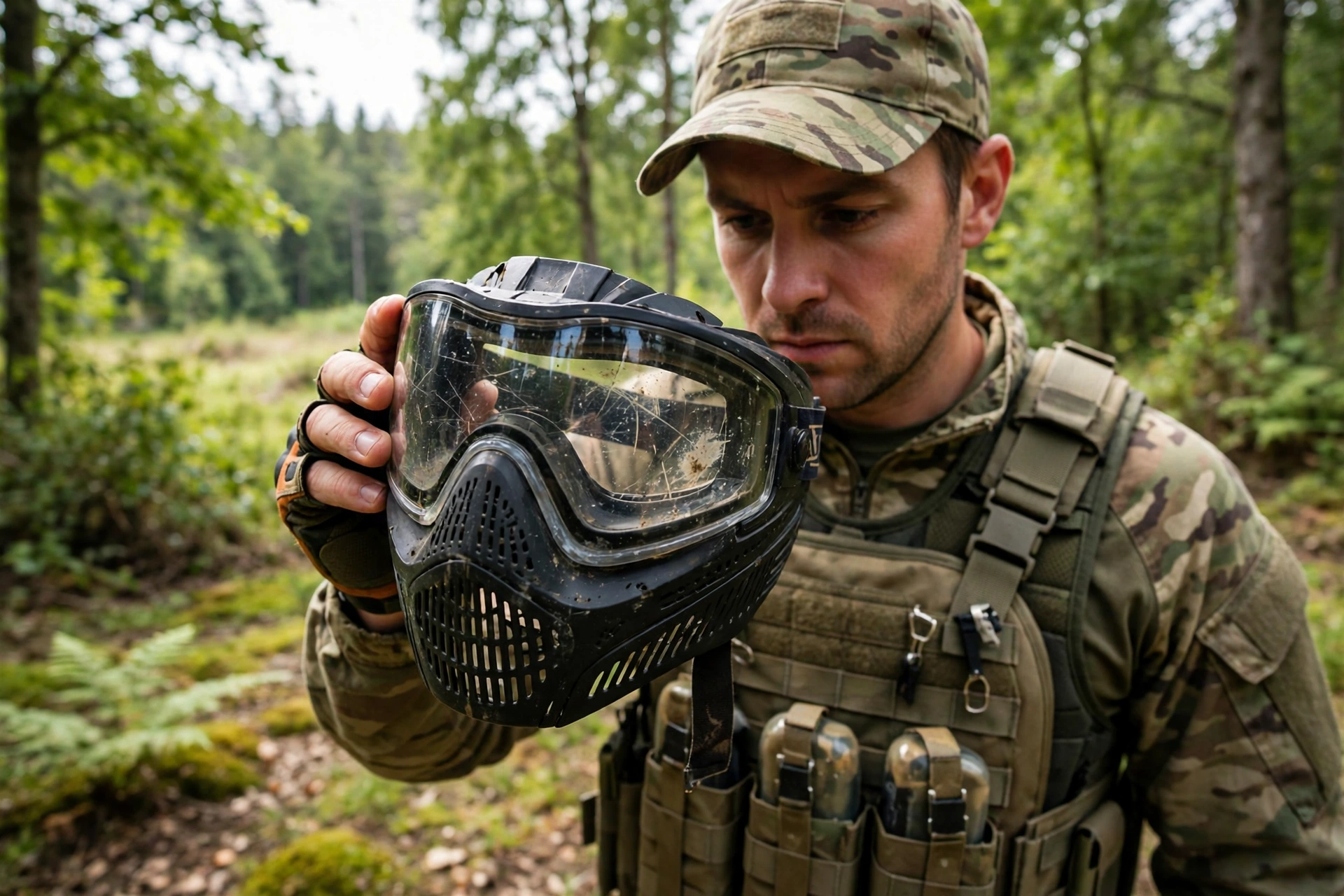
Scratches in your line of sight are the clearest sign. Light scratches at the very edge of the lens may be harmless, but scratches across the centre, or a web of fine scratches that scatter sunlight, reduce contrast and make it harder to spot movement at distance. If you find yourself tilting your head to see around a mark, the lens should go.
Cracks, chips, and deep gouges are a definite replacement, even if they look small. A cracked lens has lost structural strength exactly where it needs it most, and a chip at the edge can spread under the next impact. Do not try to polish out a crack or fill it; replacement is the only sound fix.
Persistent fogging is another sign. Most modern lenses carry an anti-fog coating, and when that coating wears away the lens fogs up again within minutes of play, even in mild conditions. If careful cleaning and a fresh anti-fog treatment no longer help, the coating is worn out and the lens has reached the end of its useful life.
Does a Scratched Lens Always Need Replacing?
Not always, but the location and depth of the scratch decide. A shallow scratch well outside your direct view, on a lens that is otherwise clear and strong, is usually cosmetic. You can keep playing with it while you keep an eye on whether it grows or starts catching the light.
A scratch across your line of sight is different. Even a shallow mark there can flare in bright sun and hide a player behind a bunker at distance. In general terms, if a scratch changes what you can see, it has stopped being cosmetic and started being a safety and performance problem.
Deep scratches are a replacement regardless of position. A deep groove thins the lens and creates a weak point, and aggressive polishing to remove it only thins the lens further and can distort your view. When in doubt, compare the lens against a new one held up to the same light — the difference is usually obvious.
Should You Replace a Lens After a Hard Direct Hit?
Yes, if the hit left any mark at all. Paintball lenses are built to take repeated hits, but a direct strike at close range is the hardest test a lens faces. After such a hit, inspect the lens closely in good light: look for star cracks, white stress marks, dents, or a milky patch where the material has been stressed.
A lens that took a hard hit and shows no visible damage can usually stay in service, but it deserves a careful check after every game from then on. Damage from an impact is not always visible on the surface, and a lens that has been stressed once may fail sooner on the next hit. If you have any doubt about what you are seeing, replacing the lens is the cheaper option by far.
Never play with a lens you suspect is cracked. Eye protection is the one piece of paintball gear where “probably fine” is not good enough.
How Can You Make a Paintball Mask Lens Last Longer?
Clean it the gentle way. Rinse off paint and grit with clean water first, so you are not grinding dirt across the surface, then wipe with a soft microfibre cloth. Avoid paper towels, shirt sleeves, and harsh solvents, all of which scratch or strip coatings. Store the mask in its bag or case, lens facing away from hard objects, rather than loose in a kit bag with tanks and pods.
Keep the lens out of prolonged sun and heat between games. A mask left on a car dashboard or in a hot garage all summer will age faster than one stored indoors at room temperature. And when you buy a replacement, consider how the whole mask manages impact energy: modern systems such as rotational-impact liners like MIPS are designed to reduce twisting forces in angled impacts, and a fresh lens in a well-fitting mask is the combination that actually protects you.
The simple rule is this: if your lens is clear, undamaged, and fog-free, keep it. The moment it stops being any of those three things, replace it and keep the old one only as a reminder of how much use it gave you.
Frequently Asked Questions
Q: How often should I replace my paintball mask lens?
A: In general terms, replace it when it shows scratches in your line of sight, cracks, or fogging that cleaning cannot fix, rather than on a fixed calendar. Frequent players may go through a lens in a season or two; occasional players may keep one for years.
Q: Can I polish scratches out of a paintball mask lens?
A: Light surface haze can sometimes be improved with a gentle plastic polish, but deep scratches should not be polished out, since polishing thins the lens and can distort vision. A lens with a deep scratch should be replaced.
Q: Is a thermal dual-pane lens worth replacing sooner?
A: A thermal lens is worth replacing when its inner pane fogs persistently or the seal between the panes fails, because that fogging defeats the whole point of the design. Treat persistent internal fog as a replacement sign, not a cleaning problem.

Olivia
Writer at Helmet Today, covering helmet reviews, fit and riding safety.