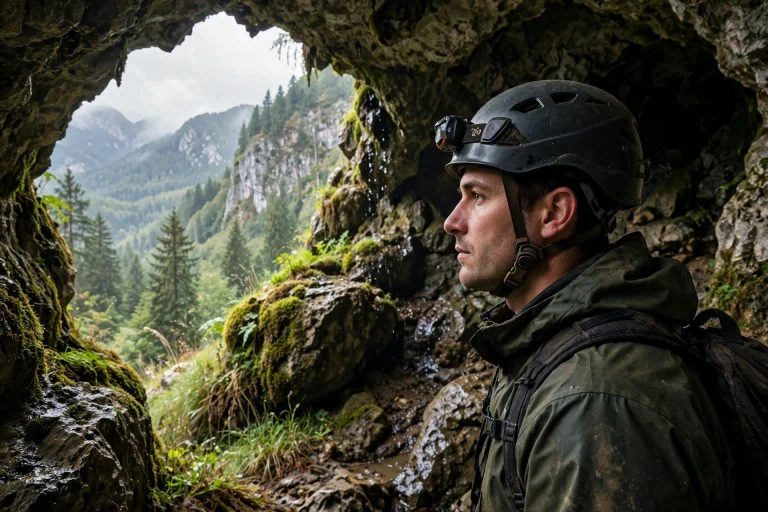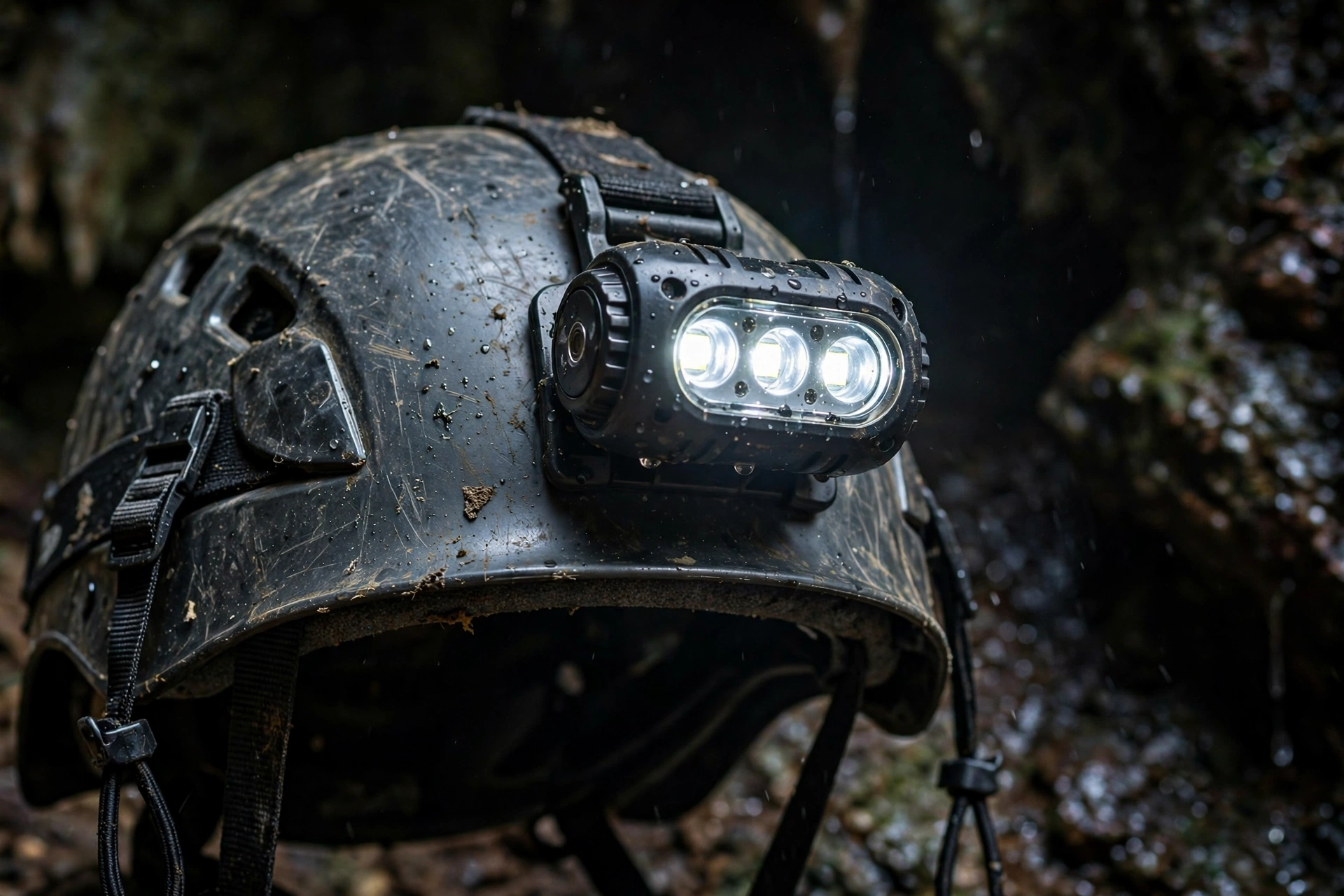
Caving helmet lamp mounts are the brackets and clips that fix your headlamp to the front of your helmet, keeping the beam aimed where you look while you crawl, climb, and squeeze through passages. In a cave there is no ambient light at all, so a lamp that slips, tilts, or falls off is not an inconvenience — it is a safety problem.
This guide explains the main mount types, how they attach, and how to choose and maintain the one that suits your helmet and lamp.
What Are the Main Types of Caving Helmet Lamp Mount?
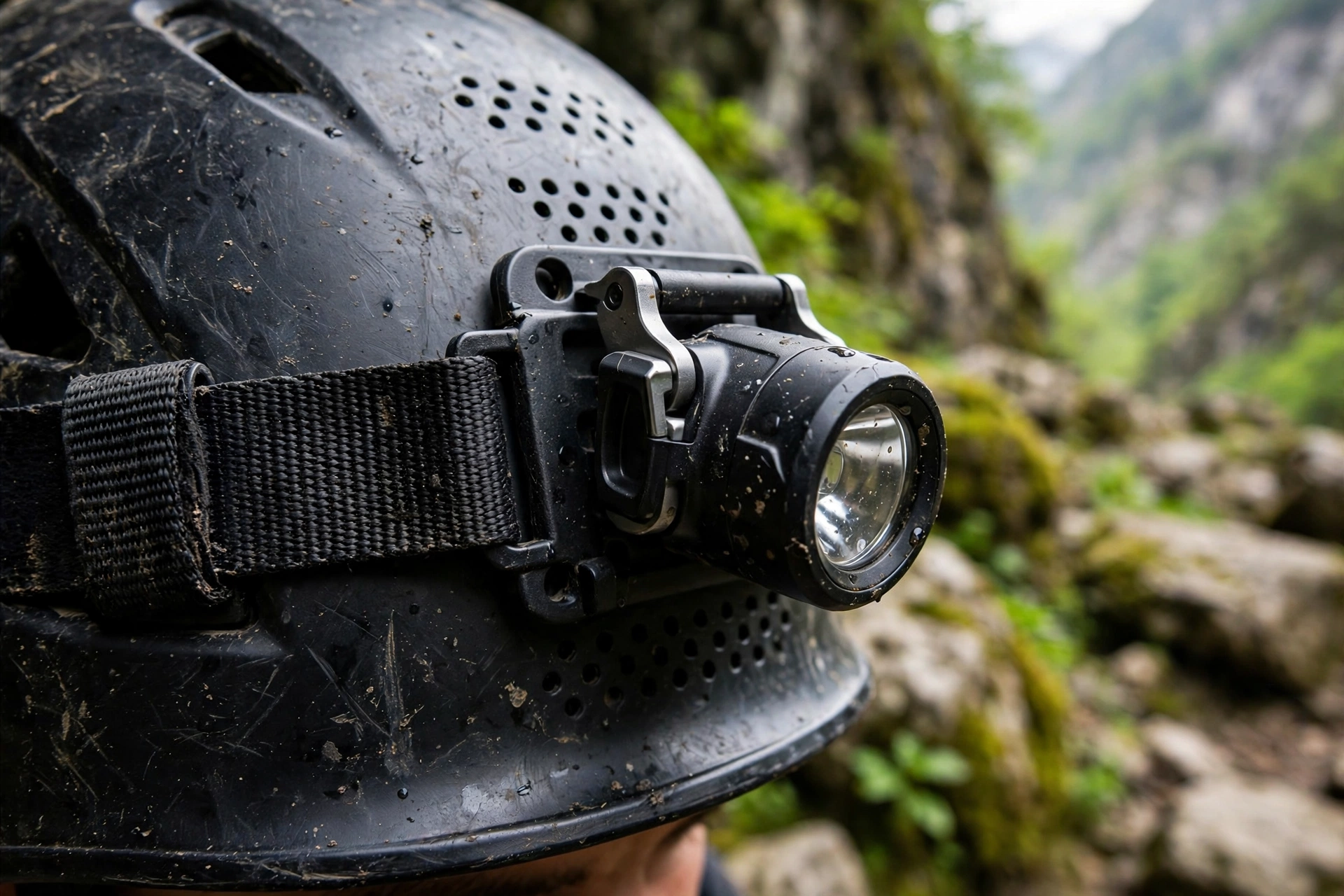
The most common type is the front bracket mount: a small bracket fixed to the front of the helmet that the lamp clips, slides, or screws into. These brackets are usually made for a specific lamp model or for a standard bracket size, and they hold the lamp centred on the helmet so the beam follows your head.
A second type is the slot-and-clip mount found on many climbing-style helmets: the lamp’s headband clips slide into slots or clips moulded into the helmet shell. This system is simple and light, and it works well with lamps designed for it, but it can be less secure than a dedicated bracket under hard knocks.
A third type is the adhesive or bolt-on plate: a flat plate stuck or bolted to the helmet front, onto which a lamp bracket is fixed. These plates are a practical way to fit a lamp to a helmet that has no dedicated mount, and they let you move a lamp between helmets. Whichever type you use, the test is the same: shake the helmet hard and tug the lamp — if it moves, it is not secure enough for a cave.
How Does a Lamp Mount Attach to the Helmet?
Dedicated mounts usually bolt through the helmet shell or clip into moulded slots. Bolt-through mounts are the most secure, because they cannot peel off in wet or muddy conditions, but they do mean drilling or using pre-drilled holes, so follow the helmet maker’s guidance before modifying a shell.
Clip-in mounts rely on the helmet’s own slots and are easy to fit and remove, which is handy if you share lamps between helmets. Their weakness is that mud, grit, or wear can loosen the grip over time, so check the fit before every trip.
Adhesive mounts are the simplest to fit, but they depend entirely on the bond between plate and shell. In general terms, adhesive mounts suit dry, gentle use better than wet, muddy caving, where water and grit work at the bond. If you use an adhesive mount, clean the shell thoroughly before fitting, let the bond cure fully, and inspect it regularly for lifting edges.
What Makes a Good Lamp Mount for Caving?
Security comes first. A good mount locks the lamp with a positive action — a click, a screw, or a latch — that you can feel engage, and it keeps the lamp in place when the helmet is knocked, dropped, or scraped against rock. If you have to wonder whether the lamp is locked, it is not locked well enough.
Beam adjustment comes second. The mount should let you tilt the lamp up and down easily, ideally with one hand and with gloves on, so you can aim the beam at your feet on a climb or ahead on a traverse without stopping to fiddle. A mount that needs tools to adjust the beam angle will be left at one angle all trip, which is rarely the right one.
Compatibility comes third. A mount that accepts a range of lamps, or at least the lamp you already own and its likely replacement, saves you from buying a new mount every time you change lamps. Check the bracket size and fixing pattern before you buy, not after.
Should the Battery Go on the Helmet or on Your Belt?
Helmet-mounted batteries keep the whole lighting system in one place, with no cable to snag on rock or manage on a pitch. The trade-off is weight on your head and a helmet that is front-heavy, which can make the helmet tip forward on steep ground.
Belt- or harness-mounted batteries lighten the helmet and move the weight to your body, which most cavers find more comfortable on long trips. The trade-off is a cable running from the battery to the lamp, which needs routing and clipping so it does not snag or dangle. A cable that is properly clipped is rarely a problem; a loose cable is a constant annoyance.
Some lamps offer both options, with a battery pack that can sit on the helmet or clip to a belt. That flexibility is worth having if you do both short trips and long vertical trips, since the best balance differs between the two.
How Do You Maintain a Caving Helmet Lamp Mount?
Inspect the mount before every trip: check for cracks in the bracket, worn clips, loose screws, and any play in the lamp when it is locked in. A mount that has developed play should be tightened, repaired, or replaced before you go underground, not after it fails there.
Clean mud and grit out of the mount after every trip. Grit in a clip or screw thread wears the parts quickly and can stop a latch from engaging fully. Rinse with clean water, dry thoroughly, and check that moving parts still move freely. A drop of suitable lubricant on a stiff hinge can help, but keep lubricants away from the lens and the helmet shell.
Carry a backup. Many cavers carry a small second lamp, or at least a spare mount clip, because a lamp mount failure in total darkness is a serious situation. And remember that the lamp is only part of the system: the helmet itself still needs to protect your head, and modern impact designs such as rotational-impact liners like MIPS show how helmet protection has moved beyond a simple hard shell.
Frequently Asked Questions
Q: Can I fit a lamp mount to any caving helmet?
A: In general terms, most caving and climbing helmets accept some form of lamp mount, whether dedicated, clip-in, or adhesive. Check the helmet maker’s guidance first, especially before drilling or bolting through the shell.
Q: Why does my caving lamp keep slipping in its mount?
A: Usually because the clip is worn, grit is preventing the latch from engaging, or the mount is not made for that lamp model. Clean the mount, check for wear, and confirm the lamp and mount are a matched pair.
Q: Is a helmet-mounted or belt-mounted battery better for caving?
A: Neither is universally better. Helmet batteries are simpler with no cable, while belt batteries lighten the helmet for long trips. Choose based on trip length, comfort, and how much you mind managing a cable.

Olivia
Writer at Helmet Today, covering helmet reviews, fit and riding safety.