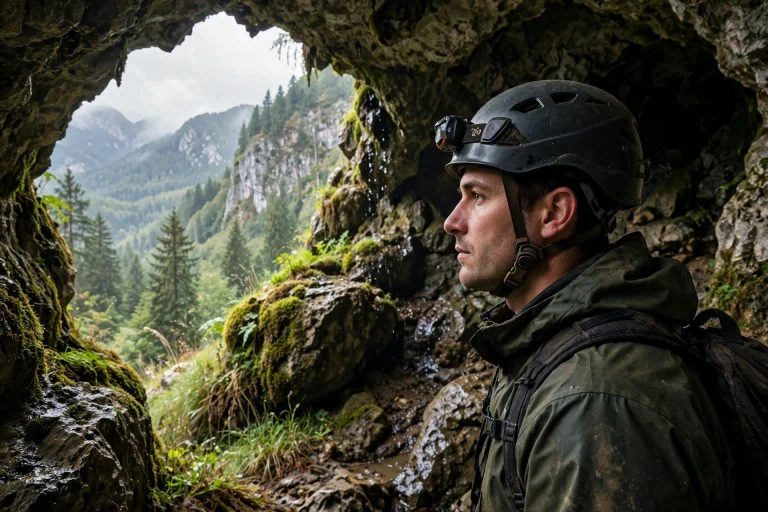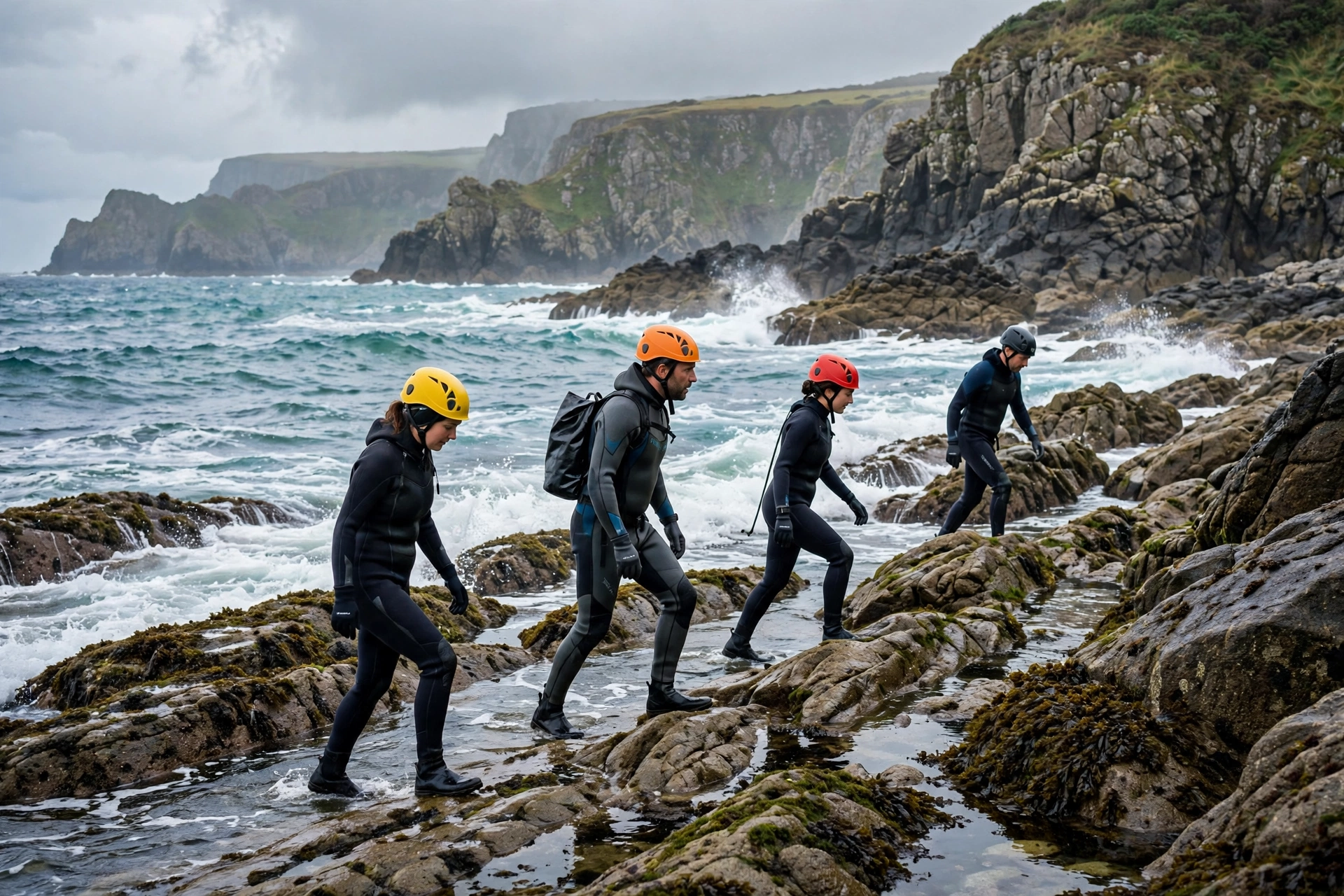
For coasteering, look for a helmet that stays put in the water, drains quickly, protects against rock impacts from every direction, and still lets you hear and move freely. Coasteering mixes climbing, scrambling, swimming, and jumping into the sea, so the helmet has to work on rock and in water, often in the same minute.
This guide explains what makes a coasteering helmet different, which features matter most, and what to avoid when you choose one.
Why Does Coasteering Need a Specific Kind of Helmet?
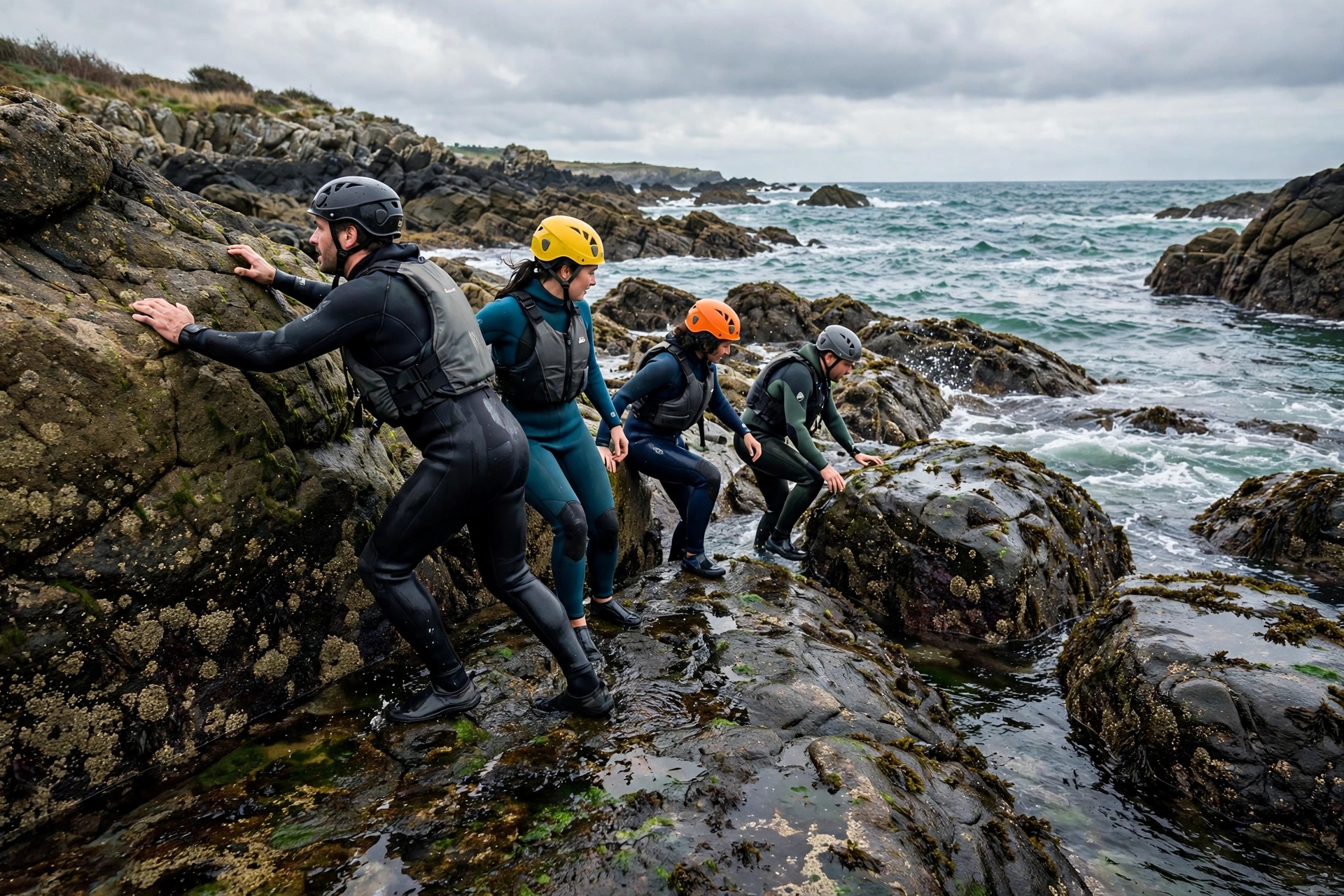
Coasteering puts your head at risk in two very different ways. On the rocks, you face the same hazards as scrambling: slips, falls, and bumps against hard, barnacle-covered stone. In the water, you face jumps and entries where a loose helmet can be ripped off, and swims where a heavy, waterlogged helmet drags your head down.
A helmet that works well for only one half of that is not good enough. A climbing helmet that absorbs water and becomes heavy is a liability in a swim, and a watersports helmet with poor side coverage leaves you exposed on a traverse. The right coasteering helmet handles both halves without a compromise that matters.
The sea adds its own wear. Salt water corrodes metal fittings, barnacles and rock abrade shells, and repeated wetting and drying ages straps and padding faster than dry use. A coasteering helmet needs to be built for that environment, not just adapted to it.
What Fit and Retention Should a Coasteering Helmet Have?
Retention is the single most important feature. When you jump into the sea, water hits the helmet with real force, and a helmet with a weak chin strap or a loose fit can be pulled off or pushed over your eyes at the worst moment. Look for a secure, adjustable chin strap and a fit system that holds the helmet snug even when wet.
Test the fit in the way you will actually use it: wet your hair, tighten the strap as you would before a jump, and shake your head hard. The helmet should not rock, lift, or slide. If it moves on land, it will move far more in the water.
Ear coverage deserves attention too. Some coasteering helmets cover the ears, which protects against knocks and cold water, while others leave the ears open for hearing. In general terms, ear coverage suits rough, rocky routes, while open ears suit guided groups where hearing instructions clearly matters. Either way, the helmet must not block your hearing so much that you cannot hear a guide or a warning shout.
How Important Are Drainage and Water Handling?
Very important. A helmet that traps water becomes heavy, uncomfortable, and slow to dry, and it can hold cold water against your head on a long route. Look for drainage holes or channels that let water escape quickly, and padding that does not soak up water like a sponge.
Closed-cell foam padding is a practical choice for coasteering, because it absorbs far less water than open-cell foam and dries faster between swims. Removable padding is a bonus, since it lets you rinse salt out properly and dry the helmet fully after a trip.
Weight when wet is worth checking before you buy. Pick the helmet up, soak it if the shop allows, and feel how heavy it becomes. A helmet that feels light dry but doubles in weight wet will feel very different after your first swim.
What Protection and Coverage Do You Need?
Look for good coverage of the top, sides, and back of the head. Coasteering involves scrambling at odd angles, and impacts can come from any direction: a slip on a wet traverse, a bump against a low rock, or a fall onto barnacles. A helmet with skimpy side or rear coverage leaves gaps exactly where those impacts land.
Shell toughness matters more than light weight here. A shell that resists abrasion and cracking against barnacles and rock will last longer and protect better than an ultralight shell that gouges easily. In general terms, a slightly heavier, tougher helmet is the better trade for coasteering.
Also consider visibility. Bright colours help guides and group members spot you in the water and on the rocks, which is a genuine safety benefit on a busy coastline. A bright helmet is easier to see in a swim and easier to count in a group.
What Else Should You Check Before Buying?
Check that the helmet is made for watersports or multi-activity use, not just for a single dry sport. A helmet designed with water in mind will have corrosion-resistant fittings, drainage, and straps that hold when wet. A dry-sport helmet pressed into coasteering service may tick the boxes on land and fail them in the sea.
Check sizing carefully, especially if you wear a neoprene hood or cap underneath in cold water. The helmet should fit snugly over whatever you will actually wear, not just over bare hair. And as with any helmet, look at how it manages impact forces overall — modern designs such as rotational-impact liners like MIPS are designed to reduce twisting forces in angled impacts, which matches the glancing blows common on wet rock.
Finally, rinse the helmet in fresh water after every trip and dry it out of direct sun. Salt left in straps and fittings is the fastest way to ruin an otherwise good coasteering helmet.
It is also worth trying the helmet on with the rest of your coasteering kit before you commit to it. A wetsuit hood, a buoyancy aid, and a helmet all interact, and a combination that feels fine piece by piece can feel crowded together. Check that the helmet does not push the buoyancy aid up around your neck, that the chin strap still fastens cleanly over a hood, and that you can turn your head freely to look for the next handhold or the next entry point.
Frequently Asked Questions
Q: Can I use a climbing helmet for coasteering?
A: In general terms, a climbing helmet can work for coasteering if it has a secure chin strap, good side coverage, and padding that does not soak up water. A watersports or multi-activity helmet designed for wet use is usually a better fit.
Q: Can I use a cycling helmet for coasteering?
A: No. A cycling helmet is designed for road impacts, has large vents that let in water and barnacle scrapes, and is not built for the repeated wetting, rock contact, and water entries of coasteering.
Q: Should a coasteering helmet cover the ears?
A: It depends on the route. Ear coverage protects against knocks and cold water on rough routes, while open ears help you hear guides clearly. Choose based on the route and whether you are in a guided group.

Olivia
Writer at Helmet Today, covering helmet reviews, fit and riding safety.