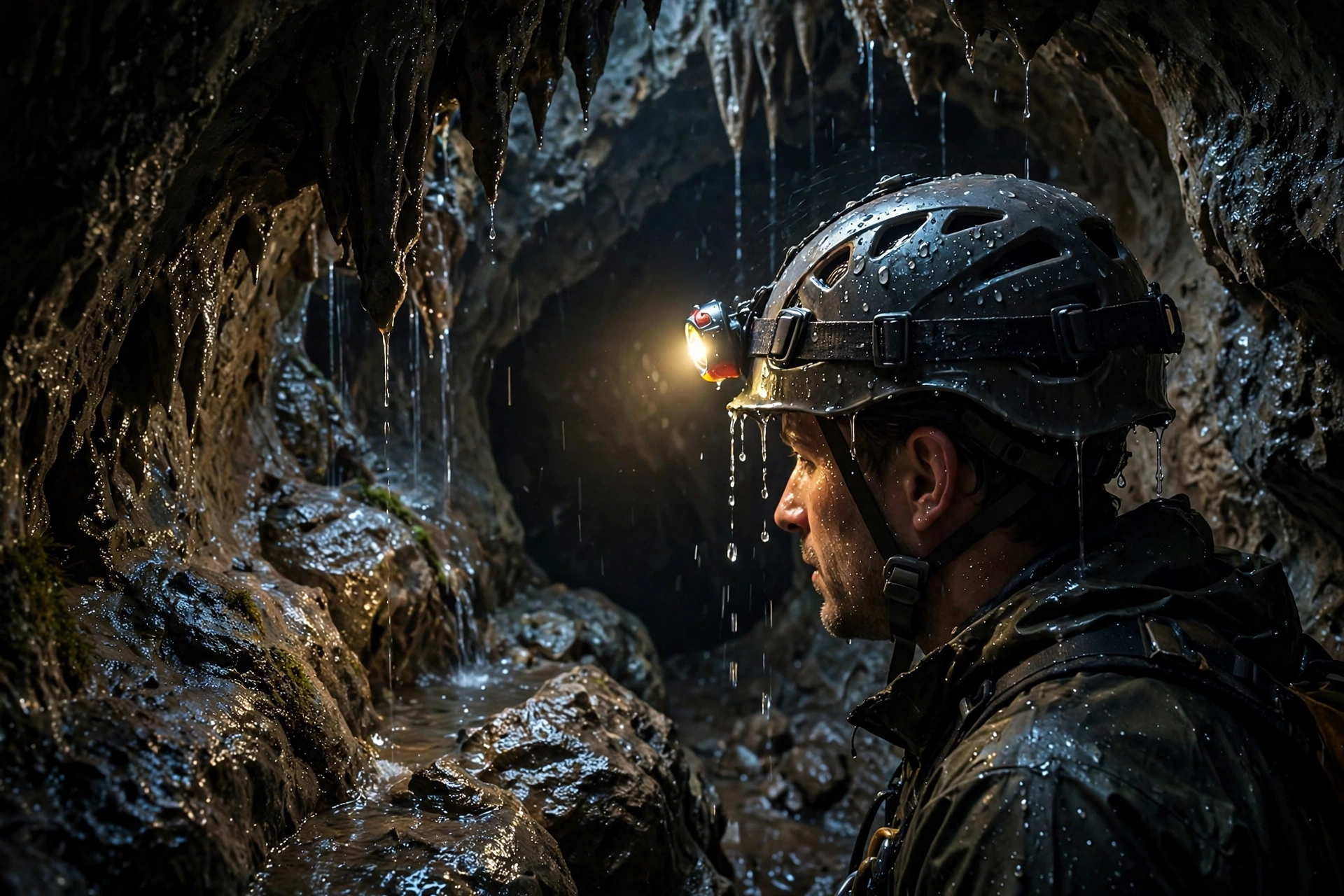
In general terms, drainage on a caving helmet is the set of holes, channels, and open padding that lets water escape instead of pooling inside the shell. Wet caves drip, spray, and sometimes pour water over you, and a helmet without a way for that water to get out can grow heavy, shift on your head, and leave you with a cold, sodden liner for the rest of the trip. Drainage does not keep you dry — nothing does in a wet cave — but it keeps water moving through and out of the helmet so it does not collect.
Understanding how drainage works helps you choose a helmet for wet trips, check it before you go underground, and look after it afterwards. This guide explains where water enters a caving helmet, how drain holes and channels work, what to check before a wet cave trip, and how to dry and care for your helmet when you get home.
How Does Water Get Into a Caving Helmet?
Water reaches a caving helmet from several directions at once. Drips fall from the ceiling onto the top of the shell, spray bounces off walls and pools when you move through a stream passage, and water runs down your head and neck from your hood or hair. In a wet crawl, water can also come from below, splashing up as you move forward through a low passage. A helmet that sits well on dry rock can still collect a surprising amount of water in a wet cave, simply because water keeps arriving faster than it can run off.
The shell itself sheds most of the water that lands on top of it, as long as it is smooth and undamaged. Problems start where water finds a way in: through ventilation holes in the top of the shell, through gaps around the headband, and through the padding, which soaks water up like a sponge. Once water is inside, gravity pulls it down toward the rim of the helmet and the liner. If there is no exit at that level, it stays there, sloshing gently every time you move your head.
How Does Drainage Work on a Caving Helmet?
Drainage on a caving helmet works through three features that are simple on their own and effective together. First, drain holes: small openings low in the shell, often near the rim, that let water run out instead of collecting inside. Second, channels: shallow grooves moulded into the inside of the shell or the liner that guide water toward those holes rather than letting it sit in flat spots. Third, open padding: pads with gaps or mesh-like structure that do not hold a large volume of water and let it pass through to the channels below.
Ventilation holes in the top of the shell play a double role here. They let air in, which helps with cooling, but they also let drips in. On a wet-cave helmet, that trade-off is accepted, because the drain holes at the bottom give the water somewhere to go. The system only works if both ends are open: blocked drain holes turn the helmet into a bowl, and blocked vents reduce airflow without stopping the drips. That is why a quick check of both sets of holes before a trip matters more than it might seem.
Some helmets also use a cradle or webbing suspension rather than thick foam pads against the head. Webbing holds very little water, dries quickly, and leaves air gaps that help water run off. Foam pads, by contrast, absorb water and take longer to dry, though they can feel more comfortable and spread pressure more evenly. Neither choice is wrong in general terms, but for repeated wet trips, a helmet whose padding dries fast and drains freely will usually be the more comfortable option over a long day underground.
What Should You Check Before a Wet Cave Trip?
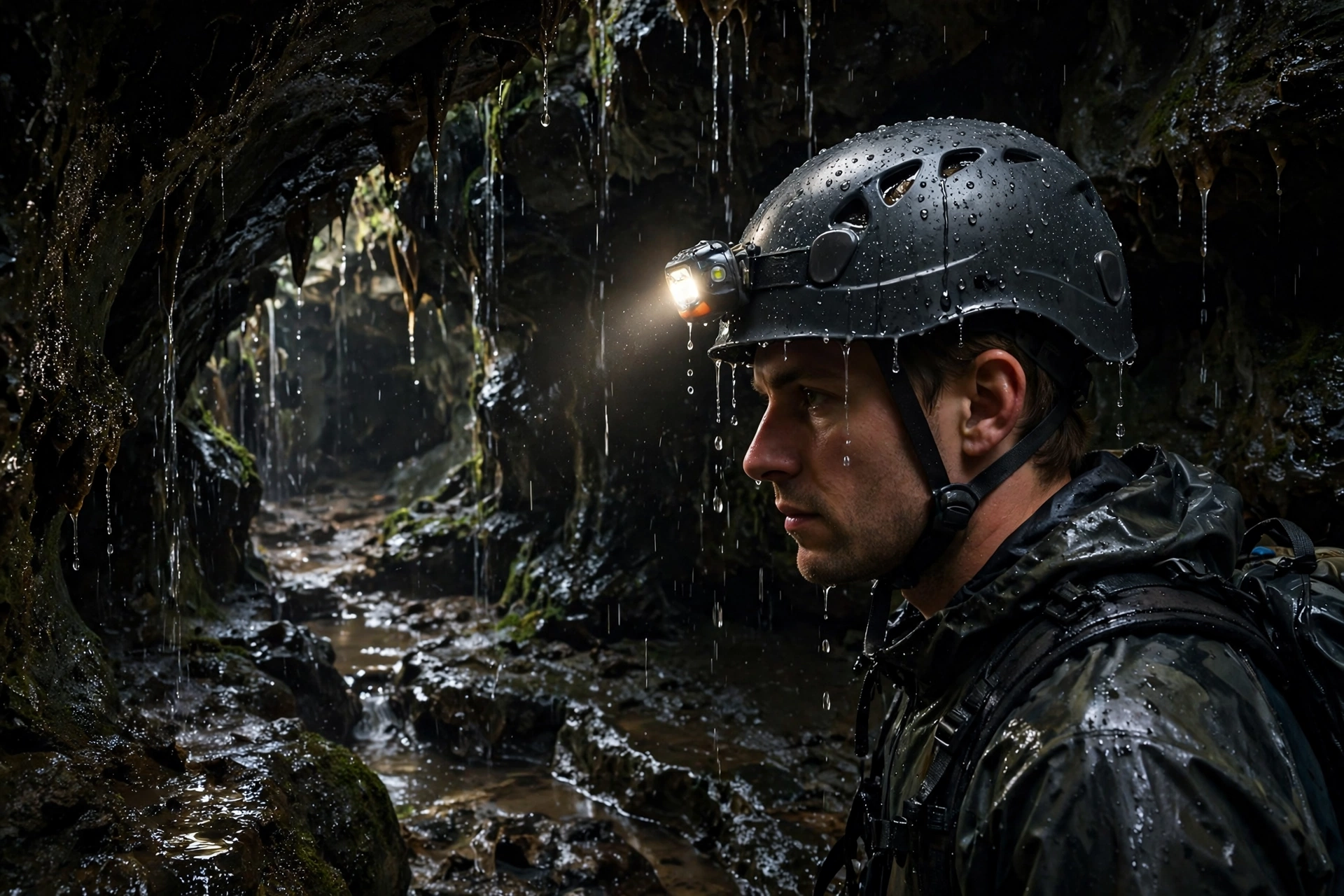
Before a wet cave trip, check the drain holes first. Look at each hole low in the shell and make sure it is not clogged with dried mud, grit, or old tape from a previous repair. A blocked drain hole is easy to miss on a dry day and obvious once water starts pooling inside the helmet. A soft brush or a rinse under a tap usually clears them, and it is worth doing this check at home rather than discovering the problem underground.
Finally, think about what else you wear with the helmet. A hood or balaclava changes how water runs off your head and into the helmet, and a headlamp bracket can create a small dam on the shell if it sits over a drain channel. None of this needs special equipment, but a quick trial at home — helmet on, hood up, lamp fitted — can reveal a fit problem that is much easier to fix above ground. If you are learning about helmet features in general, reading about what MIPS is for helmets can help you understand one of the technologies listed on some helmet boxes.
How Do You Dry and Care for a Wet Caving Helmet?
Drying starts as soon as you are out of the cave. Remove the padding if it comes out, shake loose water from the shell, and leave the helmet somewhere with airflow rather than sealed in a bag or a closed box. A helmet left wet in a sealed bag stays damp for days, and damp padding can develop an unpleasant smell that is hard to remove. In general terms, air drying at room temperature is the safest approach, since strong direct heat can warp shells and degrade foam over time.
Cleaning matters as much as drying. Rinse mud and grit out of the shell and the drain holes with clean water, and wash removable pads following the maker’s instructions. Check the shell for cracks or dents while you clean it, especially if the trip involved tight squeezes or falling rock, and retire a helmet that shows real damage rather than hoping it will hold for one more trip.
Storage between trips deserves the same care. Keep the helmet somewhere dry and out of direct sunlight, with the drain holes unblocked and the padding fully dry. Avoid hanging it by the chin strap for long periods, which can stretch the strap, and avoid stacking heavy gear on top of it.
Frequently Asked Questions
Q: Do all caving helmets have drain holes?
A: Not all of them. Many helmets designed for wet conditions include drain holes low in the shell, but some helmets built for dry or industrial use may not. Check the shell before buying if wet caves are a regular part of your caving.
Q: Can I drill extra drain holes in my caving helmet?
A: In general terms, you should not drill into a helmet shell unless the maker says it is acceptable, because drilling can weaken the shell and may void any warranty or certification. Choose a helmet with drainage already designed in instead.
Q: Why does my helmet feel heavier in a wet cave?
A: The extra weight is usually water held in the padding and inside the shell. If the drain holes are blocked or the pads are waterlogged, that weight builds up over the trip. Clearing the holes and using fast-drying padding helps.

Olivia
Writer at Helmet Today, covering helmet reviews, fit and riding safety.