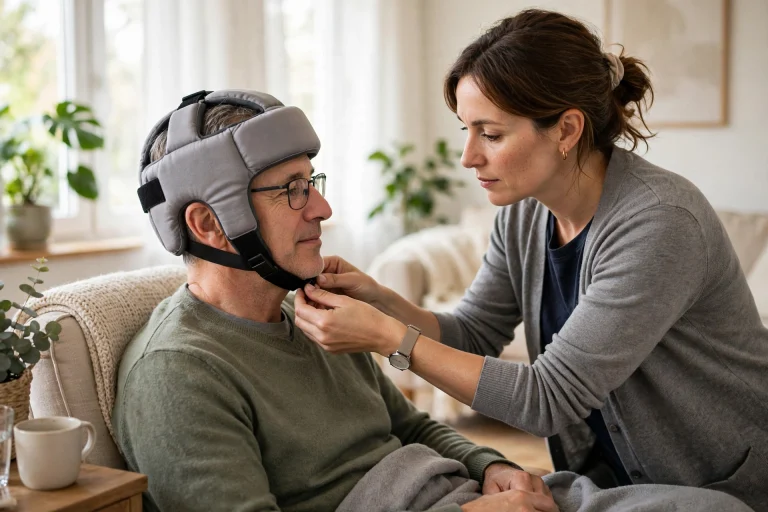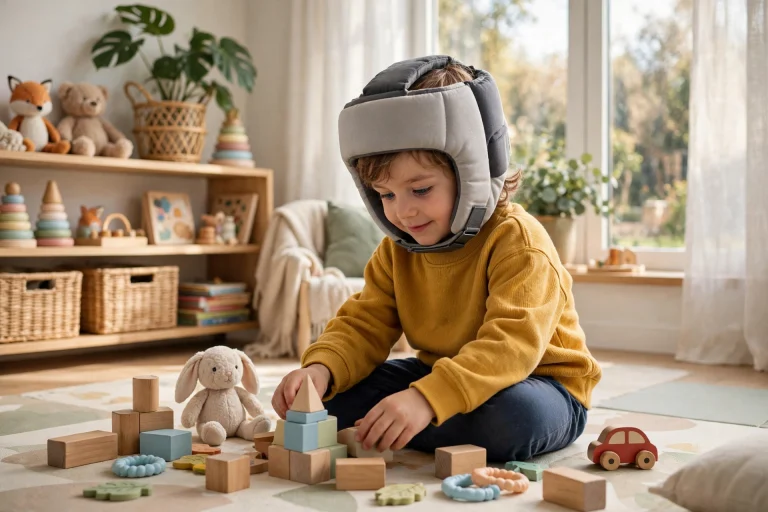
A cranial helmet for babies is a lightweight, custom-shaped helmet worn by an infant to help guide the shape of the head as it grows. It is not a protective helmet for bumps and falls. It is a medical device, prescribed and fitted by a clinician, and it works by gently directing growth: it holds back growth where the head is already fuller and leaves room for growth where the head is flatter, so the shape becomes more even over time.
Cranial helmets are usually discussed when a baby’s head shape stays noticeably uneven after the early months, despite repositioning and tummy time. This guide explains, in general terms, what a cranial helmet is, who decides whether one is needed, what daily life with one looks like, and what parents can ask at the first appointment. It is general information only and is not medical advice for any individual child — always follow your own clinician’s advice.
What Does a Cranial Helmet Do?
A baby’s skull in the first year of life is soft and grows quickly, which is why head shape can change noticeably in a short time. A cranial helmet takes advantage of that growth. The inside of the helmet is shaped to fit the baby’s head closely on the fuller areas and to leave a small gap over the flatter areas. As the head grows, it grows into the gap, and the snug areas help restrain growth where it is not wanted. Over weeks and months, this guided growth can make the head shape more symmetrical.
The helmet does not squeeze the head into shape. In general terms, it works passively: the baby’s own growth does the work, and the helmet simply directs it. That is why timing matters. Cranial helmets are most often used in the first year, when the skull is still soft and growth is fast. Later, when the skull hardens and growth slows, a helmet has less effect, which is one reason clinicians often discuss the option during a particular window rather than leaving it open-ended.
It is also important to understand what a cranial helmet does not do. It is not worn to protect a baby from injury, and it is not a treatment for developmental or medical conditions beyond head shape. If a clinician recommends one, they will usually explain what outcome they expect and what they do not expect, and parents should feel free to ask how success will be measured.
Who Decides Whether a Baby Needs a Cranial Helmet?
The decision is made by a clinician, often a paediatrician, who may refer the family to a specialist clinic for a detailed head-shape assessment. That assessment usually includes measuring the head, looking at its shape from several angles, and sometimes taking a scan or a moulded impression so the helmet can be made to fit. The clinician will also consider the baby’s age, how the head shape has changed over time, and whether repositioning strategies have already been tried.
Not every uneven head shape leads to a helmet. Many babies have mild flattening that improves as they spend more time sitting up, rolling, and moving, and clinicians often start with repositioning advice: varying the baby’s sleeping and resting positions, increasing supervised tummy time, and changing the side the baby looks toward during play. A helmet is generally discussed when flattening is more marked, when it is not improving, or when it is linked to a condition such as torticollis, where tight neck muscles make a baby favour one side.
Parents sometimes worry that asking about a helmet means committing to one. In general terms, an assessment is a conversation, not a decision made in advance. A good appointment leaves parents understanding the options, the expected timeline, and what happens if they choose to wait and review again later.

What Is Daily Life Like With a Cranial Helmet?
Daily life with a cranial helmet is, in general terms, fairly ordinary once the first few days have passed. Babies usually wear the helmet for most of the day and night, with a break each day for cleaning the helmet and the baby’s head, and for skin checks. The helmet is light, and most babies get used to it quickly, though some fuss at first while they adjust to the new feeling on their head.
Parents often ask about sleeping, feeding, and play. Babies can usually sleep, feed, and play in the helmet much as before, and the helmet does not normally stop them from rolling, sitting, or reaching milestones on their own schedule. Bathing usually happens during the daily break, and the helmet itself is cleaned separately. Clothing with wide necklines can make putting the helmet on and taking it off easier, and it is worth checking that hats and hoods fit comfortably over it in cold weather.
Skin care is the main daily job. Parents are usually asked to check the skin under the helmet for redness or pressure marks, especially in the first week, and to report anything that does not fade quickly. Mild redness that fades quickly is common at first, but persistent marks, soreness, or a helmet that seems to fit differently should be raised with the clinic rather than adjusted at home. If you are learning about helmet features in general, reading about what MIPS is for helmets can help you understand a different helmet technology, though it is not related to cranial helmets.
What Should Parents Ask at the First Appointment?
The first appointment is the best time to ask practical questions, because the answers shape months of daily life. Useful questions include how long the helmet is expected to be worn each day, how long the course of treatment usually lasts, and how often follow-up appointments happen. It is also worth asking what the helmet is made of, how it is cleaned, and what to do if it is damaged or outgrown.
Cost and logistics matter too. Parents may want to ask whether the helmet is covered by their health plan and how quickly a replacement or adjustment can be arranged if the baby outgrows it. Clinics vary in how they handle these details, and knowing the process in advance avoids surprises later.
Finally, ask what success looks like and what the alternatives are. A clinician should be able to explain, in plain terms, what improvement is expected, whether a second helmet is ever needed, and what the plan is if the family decides not to proceed. Remember that this article is general information only; your own clinician’s advice for your child takes priority over anything written here.
Frequently Asked Questions
Q: Is a cranial helmet painful for a baby?
A: In general terms, a properly fitted cranial helmet should not be painful. Some babies fuss while they adjust to it, and mild redness can appear at first, but persistent pain, soreness, or marks that do not fade should be raised with the clinic promptly.
Q: How long do babies usually wear a cranial helmet?
A: It varies from baby to baby and depends on age at starting and the degree of flattening. Many courses last several months, with regular follow-up appointments to check fit and progress. Your clinician can give a more specific estimate for your child.
Q: Can a baby wear a cranial helmet instead of a regular baby helmet?
A: No, they serve different purposes. A cranial helmet guides head shape under clinical supervision, while a regular soft baby helmet is designed for everyday bump protection. They are not interchangeable, and a clinician should advise which, if either, is appropriate.

Olivia
Writer at Helmet Today, covering helmet reviews, fit and riding safety.