Yes, some adults do wear medical helmets for seizures, in general terms, when a clinician judges that head protection could reduce injury during a seizure-related fall. These are soft, lightweight protective helmets — quite different from sports helmets — designed to cushion the head if a person falls suddenly and cannot break the fall with their hands. They are not prescribed for every person with seizures, and whether one is appropriate depends on the individual’s seizure pattern, fall risk, and daily activities.
This guide explains, in general terms, why an adult might wear a medical helmet for seizures, what kinds are used, when one is usually considered, and what its limits are. It is general information only and is not medical advice for any individual. Anyone considering a medical helmet should discuss it with their own clinician, who knows their history and can advise on fit, type, and whether a helmet is suitable at all.
Why Might an Adult Wear a Medical Helmet for Seizures?
The main reason is fall-related head injury. Some seizure types cause a sudden loss of muscle tone or consciousness, and the person may fall without warning and without putting their hands out. A fall like that can send the head into the floor, furniture, or a hard surface with no chance to soften the impact. Repeated falls of this kind carry a risk of cuts, bruising, and more serious head injury, and a soft helmet is one way to reduce that risk.
Not every person with seizures faces this risk in the same way. Some people have warning signs before a seizure, some have seizures mainly during sleep, and some have seizure types that do not cause falls at all. A helmet is most often discussed when falls happen without warning, happen often, or have already caused head injuries. The clinician will usually weigh the frequency and type of seizures against the person’s daily life: someone who works at height or near hard surfaces faces different risks from someone whose seizures are well controlled.
There is also a confidence aspect that families sometimes mention. In general terms, some adults feel more willing to go out, work, or take part in activities when they know their head has some protection. That benefit is real but secondary: a helmet is a safety measure, not a treatment for seizures themselves, and it does not reduce how often seizures happen.
What Kinds of Medical Helmets Are Used?
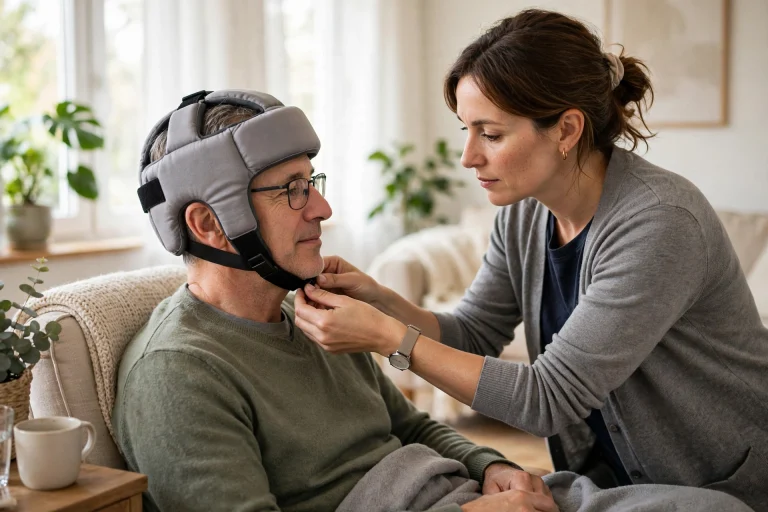
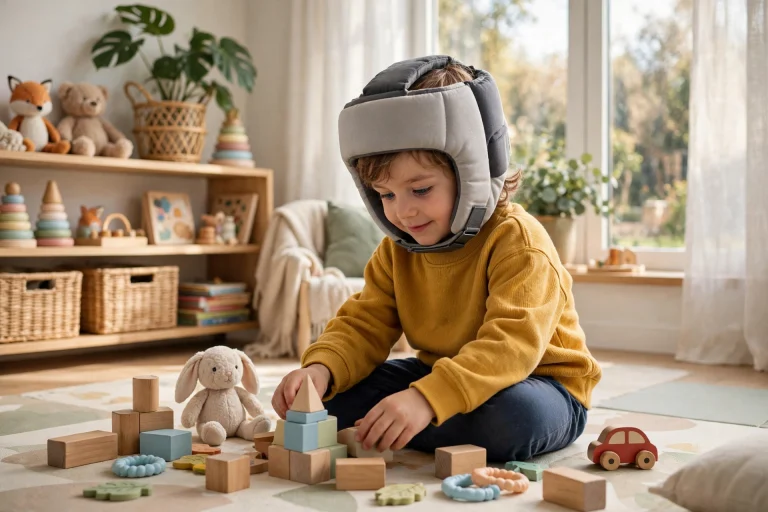
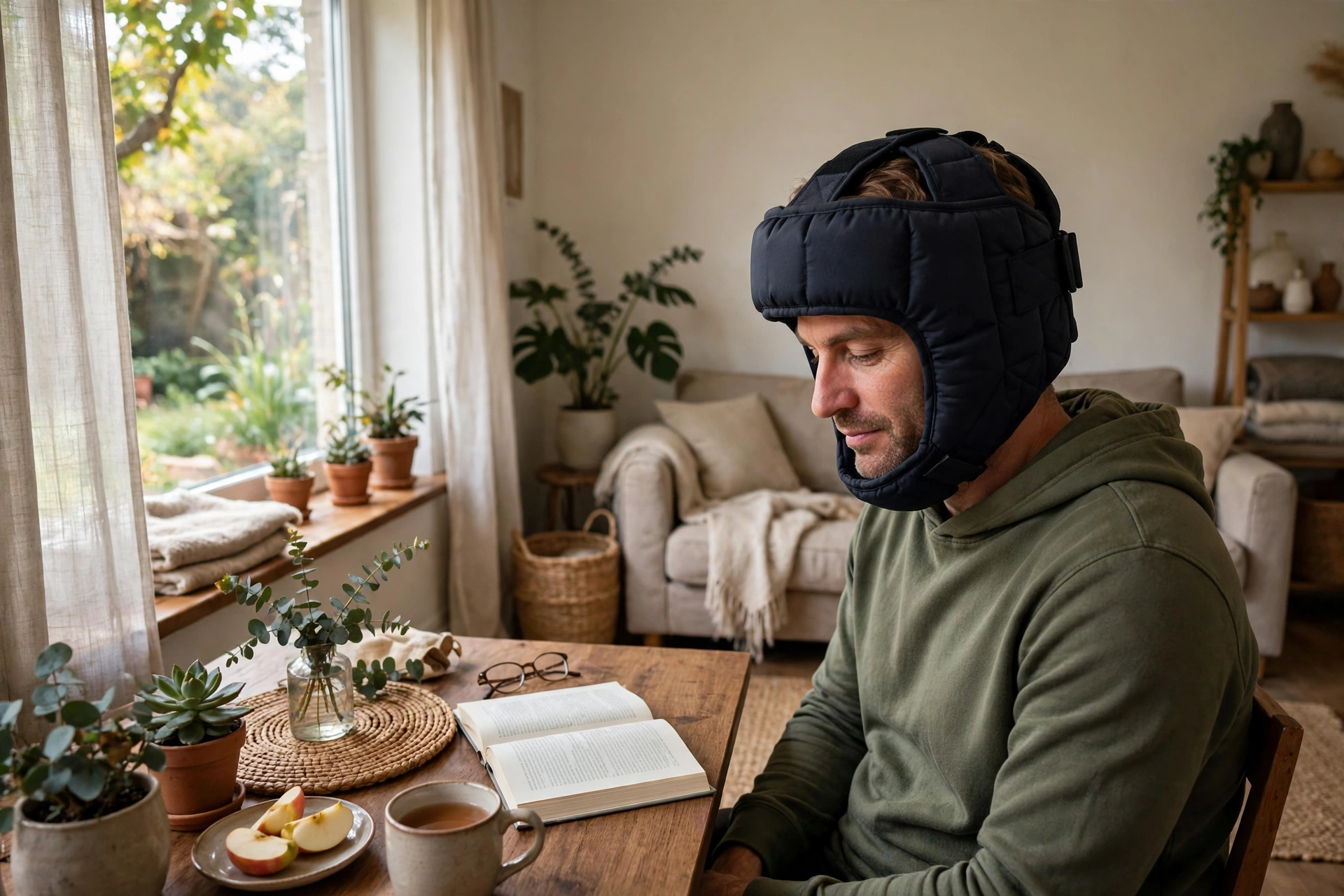
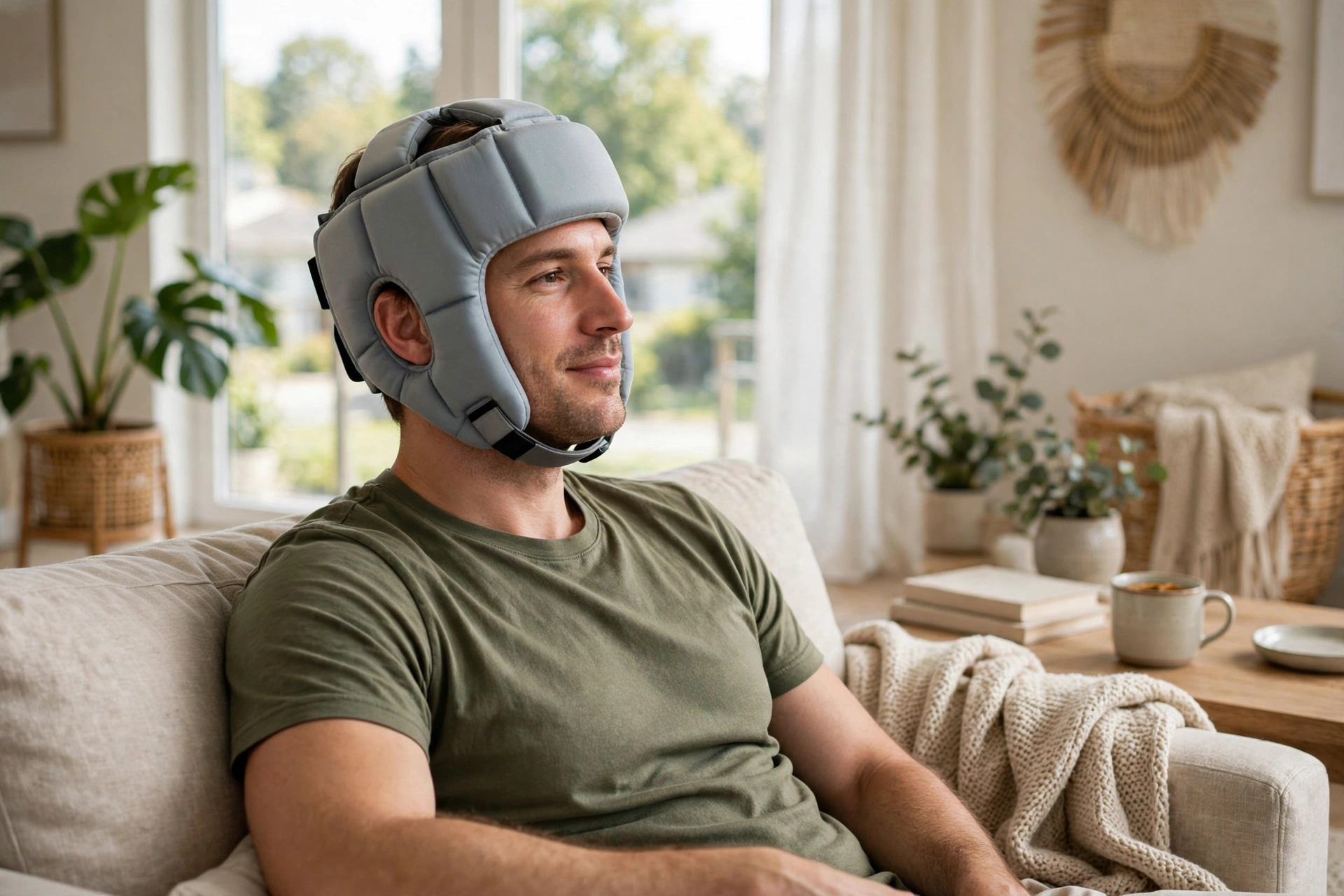
Medical helmets for adults are usually soft-shelled. They look more like a padded cap than a sports helmet, with a soft foam body, a fabric cover, and a chin strap. Some models cover the whole head, while others leave the ears or the top of the head partly open for comfort and hearing. Hard-shell sports helmets are generally not used for this purpose, because they are heavier, hotter, and less comfortable for all-day wear, and their design is tuned to a different kind of impact.
Within soft helmets, there are differences in coverage and fastening. Some have a simple chin strap, others have a more secure harness that keeps the helmet in place during a fall. Some are designed to look discreet under a hat or to blend with everyday clothing, which matters for adults who wear one at work or in public. Ventilation also varies: a helmet worn all day needs airflow, or it becomes hot and uncomfortable, and an uncomfortable helmet is one that gets left at home.
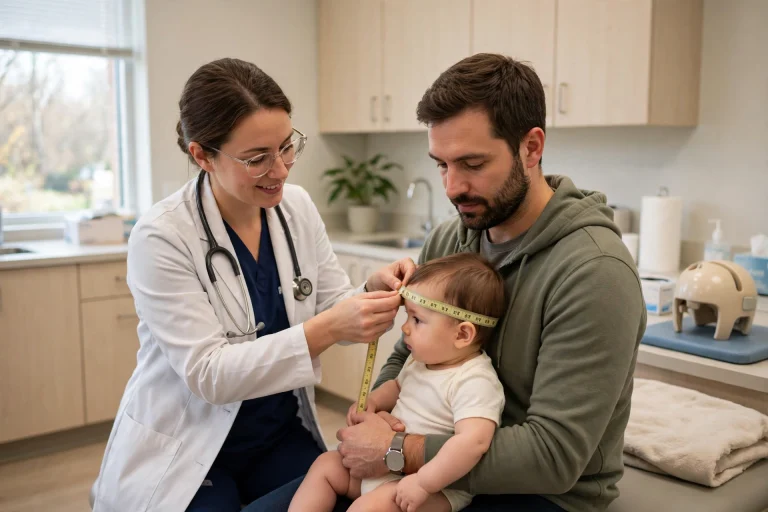
Sizing is usually by head circumference, with adjustable straps or pads to fine-tune the fit. Because a medical helmet only helps if it stays in place during a fall, fit matters as much as the helmet itself. A helmet that slides forward over the eyes, or rotates sideways, gives little protection where it is needed. If you are learning about helmet features in general, reading about what MIPS is for helmets can help you understand a different helmet technology, though it applies to sports helmets rather than soft medical helmets.
When Is a Medical Helmet Usually Considered?
A medical helmet is usually considered after a conversation with a clinician who knows the person’s seizure history. That conversation often follows a pattern: seizures that cause falls, falls that have caused head injuries, and other measures — such as medication adjustments or changes to the home environment — already considered or in place. A helmet is rarely the first step, and it is usually one part of a broader plan rather than a standalone solution.
Environment matters in the decision too. A person who spends time on hard floors, near sharp furniture corners, or in places where a fall could be dangerous may benefit more than someone whose daily surroundings are already soft and supervised. Clinicians may also consider whether the person can put the helmet on independently, whether they will wear it consistently, and whether it interferes with hearing, glasses, or other equipment.
Families sometimes ask whether a helmet should be worn all the time or only in certain situations. In general terms, that depends on when seizures are most likely and where the risk is highest. Some people wear a helmet mainly outdoors or during particular activities, while others wear it for most of the day. The right pattern is a clinical decision, and it may change over time as seizure control improves or changes.
What Are the Limits of a Medical Helmet?
A medical helmet reduces the force of a head impact; it does not prevent seizures, prevent falls, or guarantee that no injury will occur. A hard fall onto a sharp edge can still cause injury even with a helmet, and a helmet does not protect the rest of the body. Understanding these limits matters, because overestimating a helmet’s protection can lead to riskier behaviour than the person would otherwise accept.
Comfort and consistency are practical limits too. A helmet only helps when it is worn, and adults who find theirs hot, tight, or embarrassing may wear it inconsistently. Choosing a model that fits well, ventilates, and looks acceptable to the wearer is therefore not cosmetic — it directly affects whether the helmet does any good. Caregivers and clinicians can help by treating comfort complaints seriously rather than dismissing them.
Finally, a helmet needs maintenance. Foam compresses over time, straps stretch, and covers wear out. A helmet that has taken several hard falls, or that no longer fits snugly, should be checked and possibly replaced. Keeping a helmet in good condition, and reviewing its use at regular clinical appointments, is part of using it safely.
Frequently Asked Questions
Q: Does a medical helmet stop seizures?
A: No. A medical helmet does not treat seizures or reduce how often they happen. It only cushions the head if a seizure causes a fall, and seizure management itself remains a matter for the person’s clinician.
Q: Can an adult wear a sports helmet instead of a medical helmet?
A: In general terms, a sports helmet is designed for a different kind of impact and is heavier and less comfortable for all-day wear. A soft medical helmet is usually more suitable, but the choice should be discussed with a clinician.
Q: Should a medical helmet be worn during sleep?
A: That depends on the individual’s seizure pattern and clinician’s advice. Some people have seizures mainly at night, while others do not, so whether a helmet is worn at night is a decision for the person’s own clinician.

Olivia
Writer at Helmet Today, covering helmet reviews, fit and riding safety.