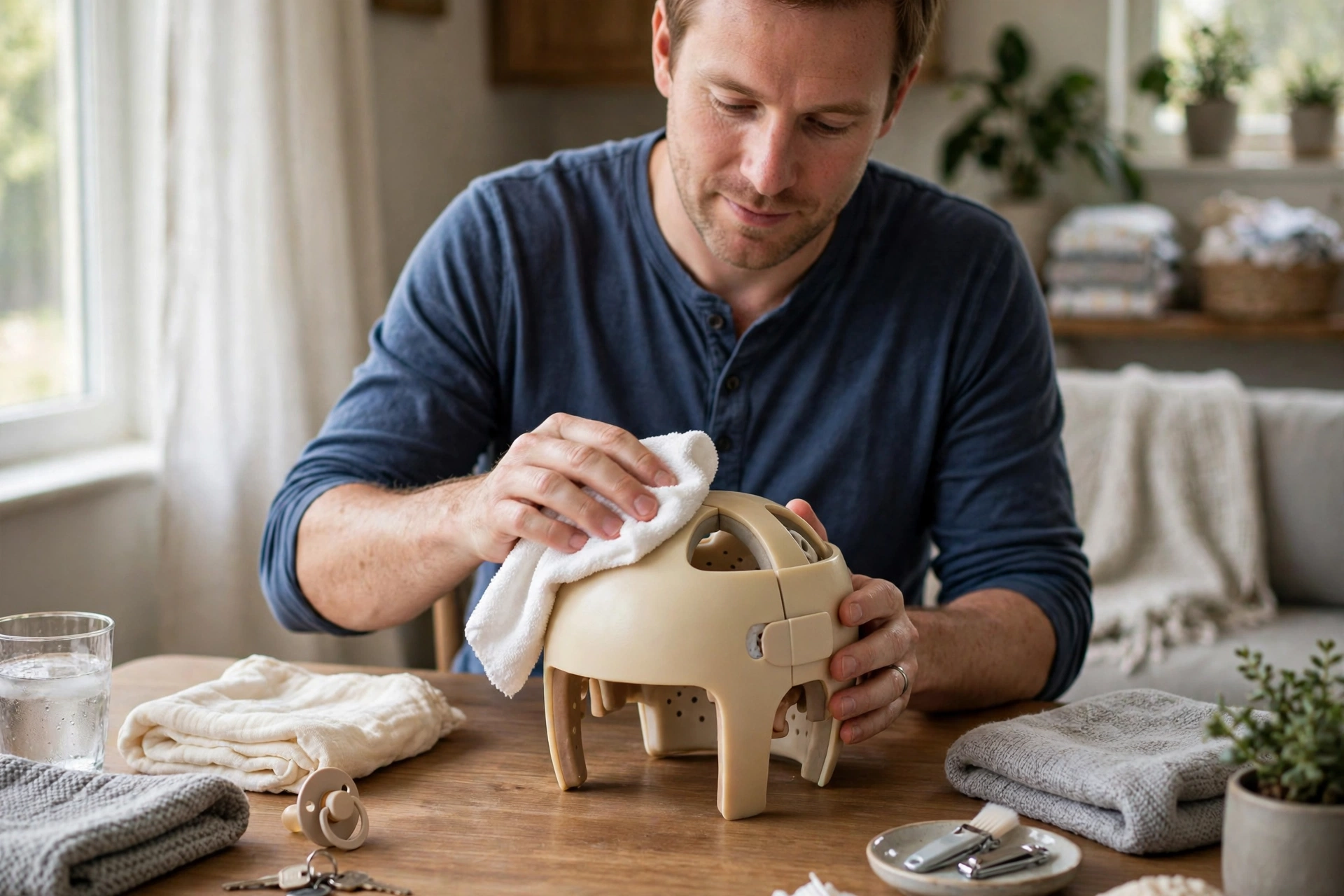
To clean a cranial helmet, wipe the outside and inside with a soft cloth dampened with mild soap and water, then let it air dry fully before putting it back on your baby. That simple routine, done daily, keeps the helmet fresh, reduces odour, and lets you check the skin underneath at the same time. The details matter, though: harsh cleaners, soaking, and heat can damage the helmet or irritate your baby’s skin, so it is worth getting the method right from the start.
This guide explains, in general terms, how often to clean a cranial helmet, what supplies are safe, a step-by-step cleaning routine, and what to avoid. Always follow your clinic’s specific instructions as well, since they take priority over general advice, and ask the clinic if anything here conflicts with what you were told. This is general information only, not medical advice for any individual child.
How Often Should a Cranial Helmet Be Cleaned?
Most clinics recommend cleaning a cranial helmet once a day, during the baby’s daily break from wearing it. That break already exists in the wearing schedule, so cleaning fits naturally into it: helmet off, baby bathed or wiped down, helmet cleaned, skin checked, and then the helmet goes back on. Daily cleaning matters because the helmet sits against the baby’s head for most of the day, and sweat, skin oils, and milk drips build up quickly in warm conditions.
In hot weather, or if the baby has been sweating more than usual, a second quick wipe during the day can help, as long as it does not eat into wearing time in a way the clinic would not approve. Conversely, skipping cleaning for several days can let odour build up in the lining and can make skin irritation more likely. A helmet that smells unpleasant is often simply a helmet that has not been cleaned recently, and a quick daily routine usually prevents the problem.
It is also worth cleaning the helmet after any obvious soiling — a milk spill, a nappy change accident, or a bout of drooling — rather than waiting for the next scheduled clean. A prompt wipe takes a minute and keeps the lining in better condition than letting a spill dry into the foam.
What Supplies Are Safe to Use?
Safe supplies for cranial helmet cleaning are deliberately boring: a soft cloth, lukewarm water, and a small amount of mild, fragrance-free soap or baby shampoo. A second clean cloth for drying, and a soft towel for the baby’s head, complete the kit. Fragrance-free products matter because scented soaps and wipes can irritate a baby’s skin, especially skin that spends most of the day covered by a helmet.
What not to use is just as important. Avoid bleach, disinfectant sprays, alcohol-based cleaners, and abrasive pads, all of which can damage the helmet’s lining or leave residues against the skin. Avoid baby wipes with added fragrance or lotion for the inside of the helmet, even if they seem convenient, unless your clinic specifically approves them. And avoid soaking the helmet in water: the lining and shell are not designed to be submerged, and soaking can warp the shape or trap moisture inside the foam.
If your clinic supplied a specific cleaning product or gave you written instructions, follow those instead of general advice. Clinics sometimes recommend a particular soap or method for the helmet model they use, and that recommendation is based on the materials in that helmet. When in doubt, a plain damp cloth with a little mild soap is the safest default, and the clinic can confirm whether it suits your baby’s helmet.
Step by Step: How to Clean a Cranial Helmet
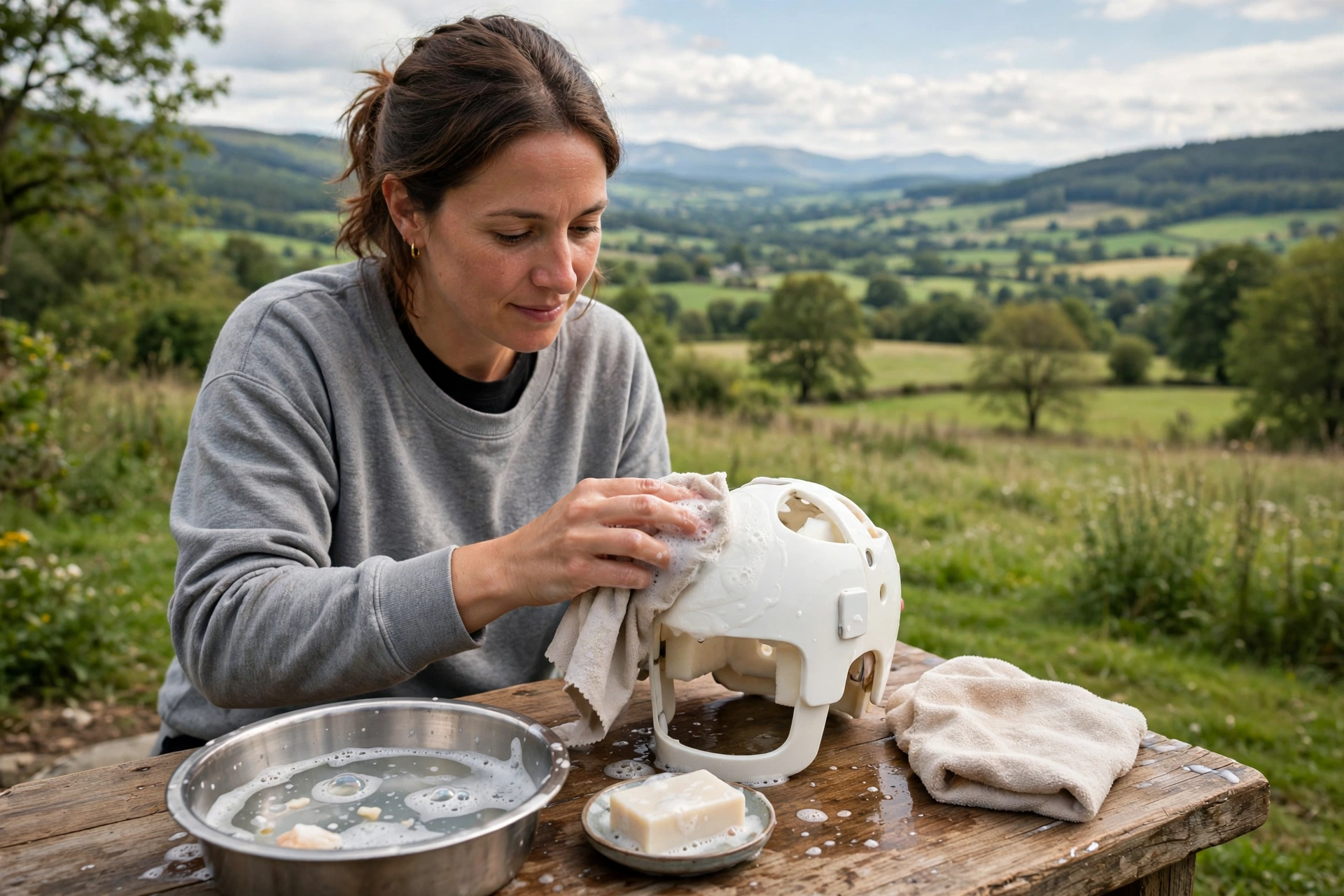
Start by taking the helmet off during the baby’s scheduled break and checking the skin underneath for redness or pressure marks. Note anything unusual to mention to the clinic, especially marks that do not fade quickly. Then dampen a soft cloth with lukewarm water and a small amount of mild soap, wringing it out so it is damp rather than dripping.
Wipe the outside of the shell first, removing surface dirt and drips. Then wipe the inside, including the foam lining, working gently around any pads or straps. Pay attention to the edges and the areas that sit closest to the skin, since these collect the most sweat and oil. For stubborn spots, hold the damp cloth against the area for a few moments rather than scrubbing, which can roughen the lining.
Next, wipe the helmet again with a cloth dampened with clean water only, to remove soap residue. Soap left on the lining can irritate the skin once the helmet goes back on, so this rinse wipe matters. Dry the helmet with a soft towel, then leave it in open air until it is fully dry before putting it back on. Check the straps and fastenings while it dries, and look for cracks, loose pads, or damage that should be reported to the clinic. If you are learning about helmet features in general, reading about what MIPS is for helmets can help you understand a different helmet technology, though it is not related to cranial helmets.
What Should You Avoid When Cleaning a Cranial Helmet?
The main things to avoid are heat, soaking, and harsh chemicals. Do not put the helmet in a dishwasher, a washing machine, or a tumble dryer, and do not dry it with a hair dryer on a hot setting or leave it on a radiator. Heat can warp the shell and change the fit, and a helmet that no longer fits as intended should be checked by the clinic before it is worn again.
Do not try to adjust the helmet yourself, either by trimming pads or bending the shell, even if it seems to rub. Fit changes are the clinic’s job, because small changes to the inner shape can affect how the helmet guides growth. If the helmet feels tight, loose, or uncomfortable, or if redness persists, contact the clinic and describe what you see rather than attempting a home fix.
Finally, do not put the helmet back on while it is still damp. A damp lining against the skin for hours can irritate the skin and encourage odour, and it undoes the point of cleaning. If drying takes longer than the scheduled break allows, it is better to ask the clinic how to handle the timing than to put a wet helmet back on a baby’s head.
Frequently Asked Questions
Q: Can I use baby wipes to clean a cranial helmet?
A: In general terms, plain water-based wipes without fragrance may be acceptable for a quick wipe, but scented or lotion-added wipes can irritate the skin. A soft cloth with mild soap and water is the safer routine, and your clinic can confirm what suits your baby’s helmet.
Q: What if the helmet still smells after cleaning?
A: A lingering smell usually means the lining has not dried fully or needs a more thorough clean. Make sure the helmet air dries completely, repeat the soap-and-water wipe, and ask the clinic if the smell persists, since the lining may need attention.
Q: Should I clean the baby’s head at the same time?
A: Yes, the daily break is a good time to wash or wipe your baby’s head and check the skin. Keeping both the helmet and the skin clean helps prevent irritation and makes the daily routine easier to maintain.

Olivia
Writer at Helmet Today, covering helmet reviews, fit and riding safety.