Whether children with special needs need protective helmets depends on the individual child, their activities, and their risk of head injury — there is no single answer that fits every child. Some children benefit from a soft protective helmet because they fall often, have seizures, or engage in behaviours that put their head at risk. Others do not need one, and for them a helmet would add little benefit and may cause unnecessary discomfort or distress.
This guide explains, in general terms, why a protective helmet might be considered for a child with special needs, what types are available, how families and clinicians decide together, and how a child can get used to wearing one. It is general information only, not medical advice for any individual child. Decisions should always be made with the child’s own clinician and care team, who know the child’s needs and history.
Why Might a Child Need a Protective Helmet?
There are several reasons a protective helmet might be discussed for a child with special needs. Some children have conditions that affect balance and coordination, making falls more frequent. Some have seizures that cause sudden falls without warning. Some engage in head-banging or self-injurious behaviour, where a helmet can reduce injury while other supports are put in place. And some children are simply at a developmental stage where they are mobile but not yet steady, combined with a condition that makes injury more likely.
In each case, the helmet’s job is the same: to cushion the head during a fall or impact and reduce the severity of injury. It does not treat the underlying condition, and it does not replace supervision, therapy, or environmental changes. A helmet is one layer of protection within a wider care plan, and its value depends on how often and how hard the child’s head is at risk.
It is also worth noting that need can change over time. A child who needs a helmet during a particular phase — while learning to walk, during a period of frequent seizures, or while a behaviour plan is being established — may need it less later as skills improve or circumstances change. Regular review with the care team keeps the decision current rather than letting it drift.
What Types of Protective Helmets Are Available?
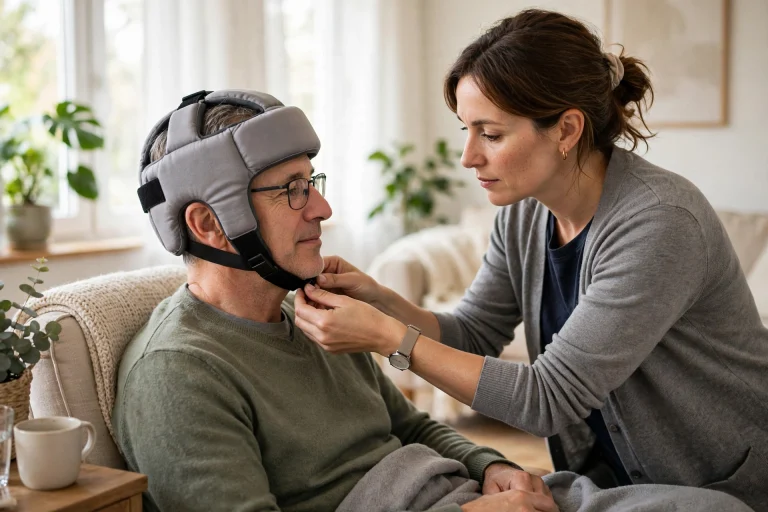
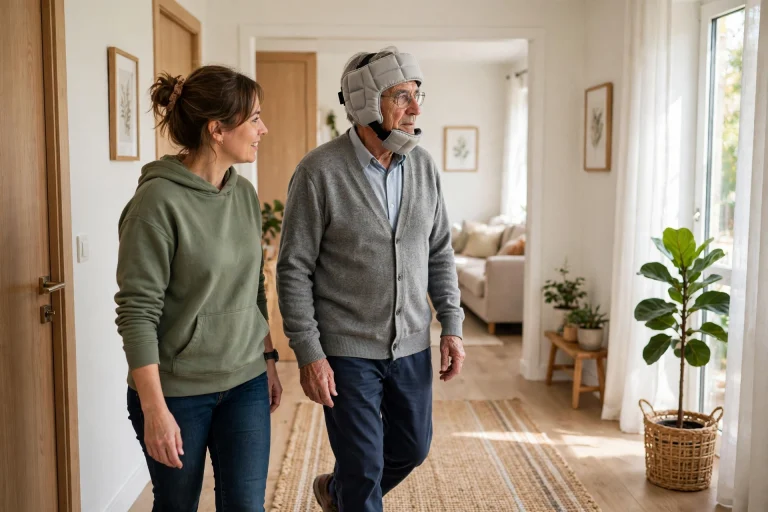
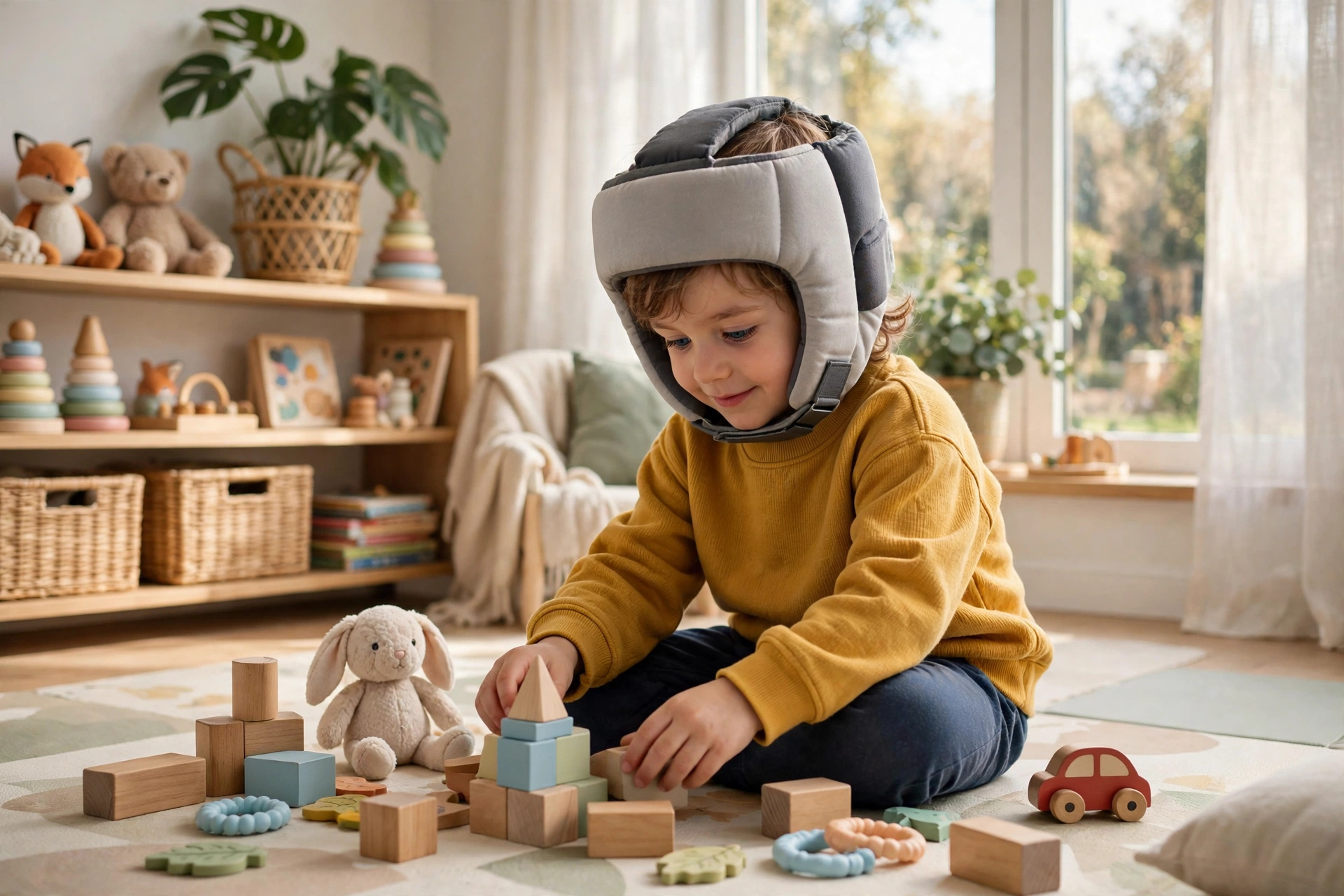
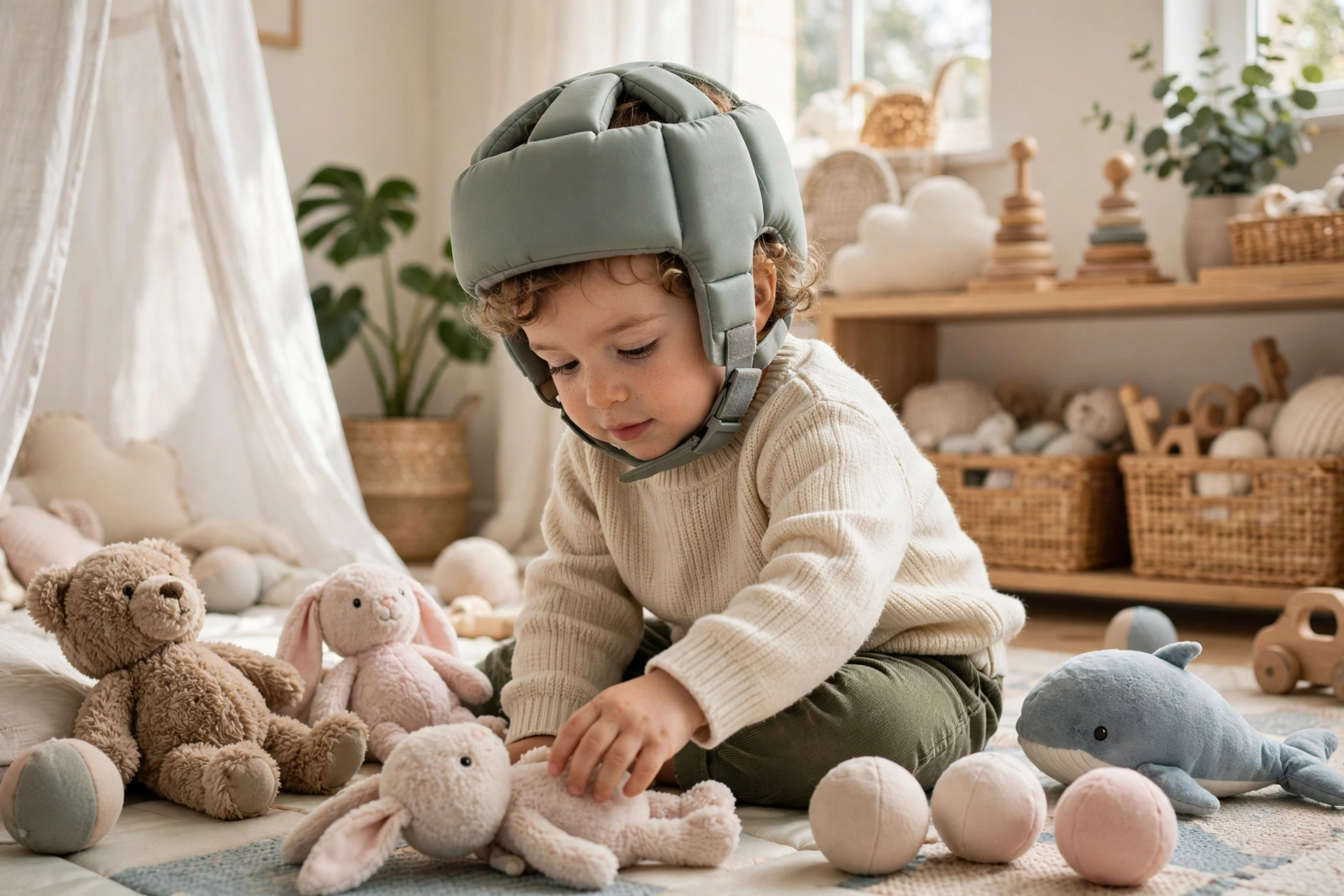
Protective helmets for children are usually soft. They are made of foam panels inside a fabric cover, with a chin strap or harness, and they are designed to be light and comfortable enough for regular wear. Hard-shell sports helmets are generally not used for this purpose, because they are heavier, hotter, and designed for a different kind of impact, and they can be distressing for a child who is sensitive to weight or pressure on the head.
Coverage and design vary. Some helmets cover the whole head, while others focus on the areas most at risk for that child — the back, the sides, or the forehead. Some have ear openings so the child can hear well, which matters for communication and learning. Some are made in bright colours or with patterns, which can help a child accept the helmet as their own rather than as medical equipment. Fastenings vary too, from simple chin straps to more secure harnesses that keep the helmet in place during a fall or vigorous movement.
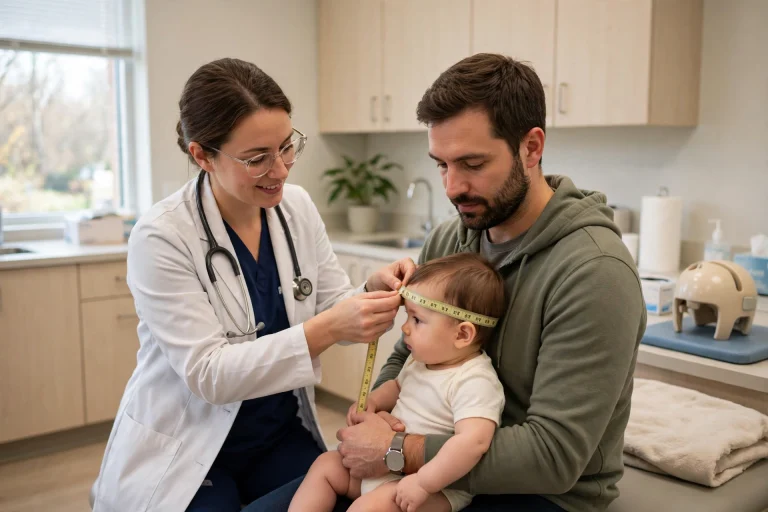
Sizing is by head circumference, with adjustable straps or pads to fine-tune the fit. Because children grow, the fit needs regular checking, and a helmet that fitted well a few months ago may need adjusting or replacing. A helmet that slips over the eyes, rotates sideways, or presses painfully is not doing its job properly, however good its design. If you are learning about helmet features in general, reading about what MIPS is for helmets can help you understand a sports helmet technology that does not apply to soft protective helmets for children.
How Do Families and Clinicians Decide Together?
The decision usually starts with a conversation: what is putting the child’s head at risk, how often does it happen, and how serious have any injuries been? The clinician or therapist will consider the child’s diagnosis, developmental stage, seizure history if any, and daily activities. The family brings equally important knowledge: when incidents happen, what triggers them, how the child reacts to wearing things on their head, and what daily life actually looks like.
Together, they weigh the benefits against the drawbacks. A helmet that prevents injuries is clearly valuable, but a helmet that a child finds distressing, that interferes with hearing or communication, or that is worn inconsistently may do less good than expected. In some cases, the team may try a helmet for a trial period and review how it works in practice, rather than making a permanent decision at the first meeting.
Other measures are usually discussed at the same time. These might include padding sharp furniture corners, choosing safer play surfaces, adjusting supervision for higher-risk activities, or working on balance and motor skills through therapy. A helmet is rarely the only answer, and families should feel able to ask what else can help, what the alternatives are, and how the decision will be reviewed.
How Can a Child Get Used to Wearing a Helmet?
Getting used to a helmet takes time and patience, especially for a child who is sensitive to new sensations. A gradual introduction often works best: short periods of wear at first, during a favourite activity, building up slowly as the child becomes comfortable. Pairing the helmet with something enjoyable — a favourite game, a story, or a treat — can help the child associate it with good experiences rather than with restriction.
Letting the child have some choice helps too, where possible. Choosing a colour, decorating the helmet if the maker allows it, or naming it can turn it from something imposed into something owned. Consistency matters as well: wearing the helmet at the same times each day, as part of a routine, is usually easier than putting it on unpredictably.
If a child consistently resists the helmet, becomes distressed, or shows skin problems, raise it with the care team rather than forcing the issue. The fit may need adjusting, a different model may suit better, or the wearing schedule may need changing. A helmet that causes distress every day is a problem to solve together, not a battle to win, and the care team can suggest strategies that fit the child’s needs.
Frequently Asked Questions
Q: Do all children with special needs need a protective helmet?
A: No. Need depends on the individual child, their activities, and their risk of head injury. Some children benefit greatly, while others do not need one at all. The decision should be made with the child’s own clinician and care team.
Q: Will a protective helmet stop my child from getting hurt?
A: A helmet cushions the head and can reduce the severity of injury, but it cannot prevent all injuries or replace supervision and other safety measures. It is one layer of protection within a wider care plan.
Q: Can my child wear a regular sports helmet instead?
A: In general terms, a sports helmet is designed for a different kind of impact and is heavier and less comfortable for everyday wear. A soft protective helmet is usually more suitable, but the choice should be discussed with the child’s care team.

Olivia
Writer at Helmet Today, covering helmet reviews, fit and riding safety.