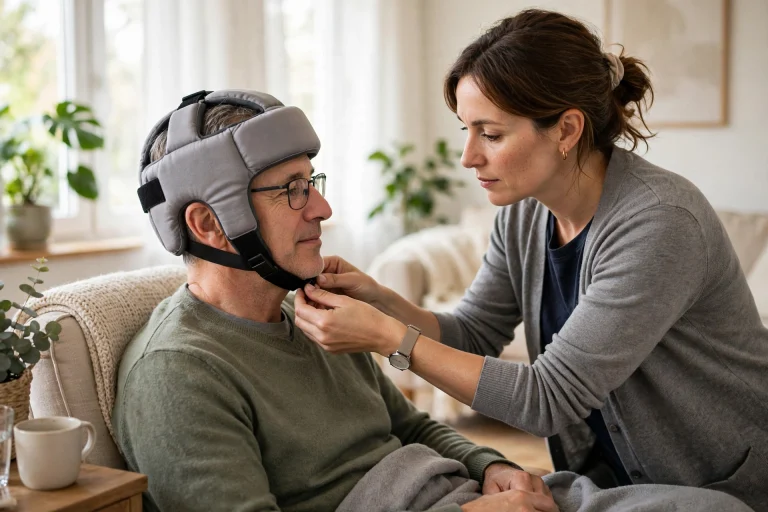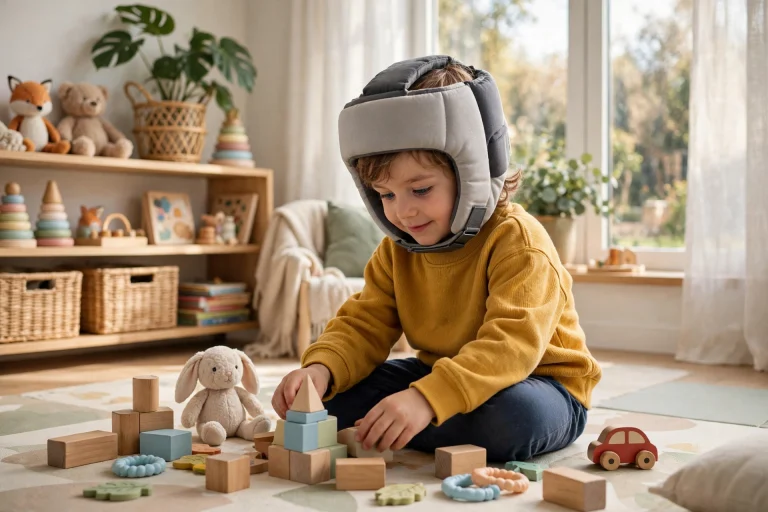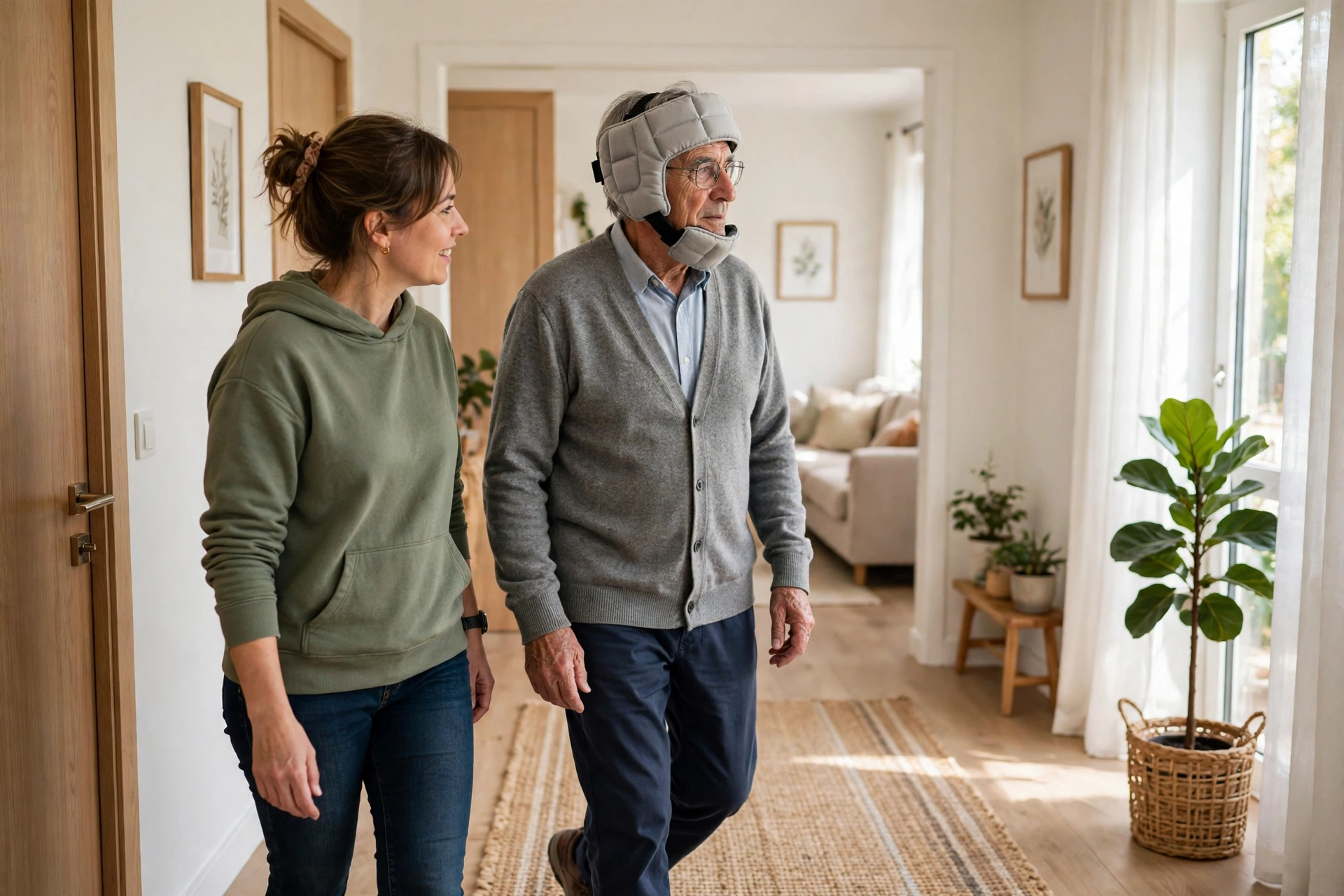
To choose a soft head protector for elderly fall safety, start with fit and comfort, then check coverage, weight, ventilation, and ease of putting it on — because a protector only helps if it is worn every day. Soft head protectors are padded caps designed to cushion the head in a fall, and for older adults who are at risk of falling, they can reduce the severity of head bumps. They are not a substitute for fall prevention, medical care, or supervision, but they can be a useful extra layer of protection.
This guide explains, in general terms, what a soft head protector is, who might benefit from one, what features matter most, and how to get the fit and comfort right. It is general information only, not medical advice for any individual. Anyone considering a head protector for themselves or a relative should discuss it with their own clinician, who can advise on suitability and on the broader fall-safety plan.
What Is a Soft Head Protector?
A soft head protector is a lightweight padded cap that covers the head and absorbs some of the force when the head strikes a surface. It is usually made of foam panels inside a fabric cover, with a chin strap to keep it in place. Unlike a sports helmet, it has no hard shell, which keeps it light and comfortable for long wear, and it is designed for falls from standing height rather than high-speed impacts.
Soft head protectors come in several styles. Some look like a close-fitting cap, others like a headband with extra padding, and some are designed to look like an ordinary hat so the wearer feels less conspicuous. Coverage varies: some models protect the whole head, while others focus on the sides and back, where falls most often cause impact. The right style depends on the wearer’s fall pattern, comfort preferences, and daily routine.
It is important to understand the limits. A soft head protector cushions a bump; it does not prevent a fall, and it does not guarantee that no injury will occur in a hard fall onto a sharp edge. It works best alongside other measures: reviewing medications that affect balance, improving lighting and removing trip hazards at home, using mobility aids as advised, and following a clinician’s advice on exercise and strength.
Who Might Benefit From a Soft Head Protector?
A soft head protector is most often considered for older adults who fall frequently, who have fallen and injured their head before, or whose balance or mobility makes a fall likely. It may also be discussed for people with conditions that affect balance, coordination, or awareness of their surroundings, and for people who are recovering from an illness or operation that temporarily affects steadiness.
The decision is individual. Some older adults fall rarely and have no head-injury history, in which case a protector may add little benefit. Others fall often, live alone, or spend time on hard floors, where the risk of a head strike is higher. A clinician, physiotherapist, or occupational therapist who knows the person’s history can help weigh the risk against the practicalities of wearing a protector every day.
Family members sometimes raise the idea when they are worried about a relative who resists other changes. In that situation, it helps to frame the protector as one option among several, not as a solution on its own. A protector that is forced on an unwilling wearer is likely to be left in a drawer, while one chosen together — with attention to comfort and appearance — stands a much better chance of actually being worn.
What Features Matter Most?
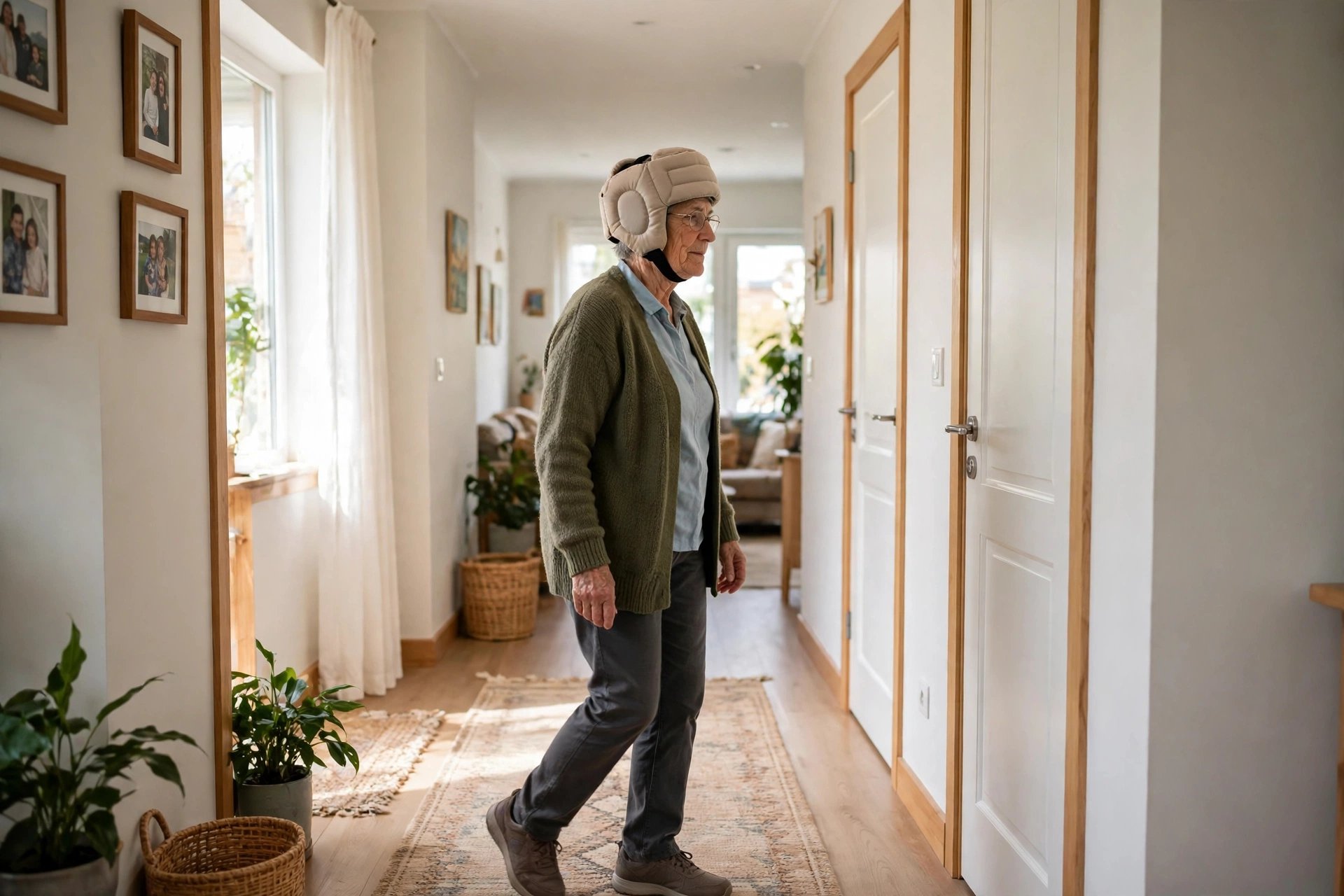
Fit comes first. Measure the head around its widest part, just above the eyebrows and ears, and match the result to the maker’s size chart, then try the protector on before committing. It should sit level, cover the forehead without sliding over the eyes, and feel snug without pressing painfully. A protector that slips or rotates in a fall gives little protection where it is needed.
Weight and ventilation come next. A protector worn all day needs to be light and breathable, or it becomes hot and uncomfortable, especially in warm weather. Look for models with ventilation or moisture-wicking fabric, and check whether the cover is removable and washable, since a protector worn daily will need regular cleaning. Weight matters more than it might seem: even a small amount of extra weight on the head can feel tiring over a full day.
Ease of use matters too, particularly for someone with limited hand strength or dexterity. A simple chin strap or hook-and-loop fastening is easier to manage independently than a complicated harness. If the wearer also uses glasses or hearing aids, check that the protector fits comfortably with them in place. And consider appearance honestly: a protector that looks like an ordinary hat is more likely to be worn in public than one that looks obviously medical. If you are learning about helmet features in general, reading about what MIPS is for helmets can help you understand a sports helmet technology that does not apply to soft head protectors.
How Do You Get the Fit and Comfort Right?
Getting the fit right takes a little patience. Start with the measured size, then try the protector on with the wearer’s usual hairstyle and any glasses or hearing aids. Adjust the strap so the protector stays put when the head is shaken gently, but not so tight that it leaves marks or causes a headache. Wear it around the house for a while before deciding: a protector that feels fine for five minutes may feel different after an hour.
Check the fit again after a week or two of regular wear. Foam settles, straps stretch slightly, and the wearer gets used to the feeling, so a small adjustment is often needed. Also recheck the fit if anything changes — a new haircut, weight change, or a different pair of glasses can all affect how the protector sits. A protector that no longer fits snugly should be adjusted or replaced, not worn loose.
Finally, build the protector into the daily routine. Keeping it in a consistent place, such as beside the bed or by the front door, makes it easier to remember. If the wearer forgets it or resists it, it is worth asking why: discomfort, appearance, or difficulty putting it on are all fixable problems, and solving them matters more than insisting on a model that does not suit the person.
Frequently Asked Questions
Q: Will a soft head protector stop all head injuries from falls?
A: No. It cushions the head and can reduce the severity of a bump, but it cannot prevent falls or guarantee against injury, especially in a hard fall onto a sharp edge. It works best as part of a broader fall-safety plan.
Q: Can a soft head protector be worn outdoors?
A: In general terms, yes. Many models are designed for everyday wear indoors and outdoors. Check the maker’s guidance on weather and washing, and choose a style the wearer feels comfortable wearing in public.
Q: How do I wash a soft head protector?
A: Follow the maker’s instructions. Many have removable, washable covers, while the foam panels usually need a gentle wipe rather than soaking. Regular cleaning keeps the protector fresh and comfortable for daily wear.

Olivia
Writer at Helmet Today, covering helmet reviews, fit and riding safety.