Yes, luge athletes wear full face helmets — every slider, in every run, wears a full face helmet with a visor. There is no open-face option in luge: the speeds, the lying position, and the closeness of the head to the ice all make full face coverage essential. The helmet is as much a part of the sport as the sled itself.
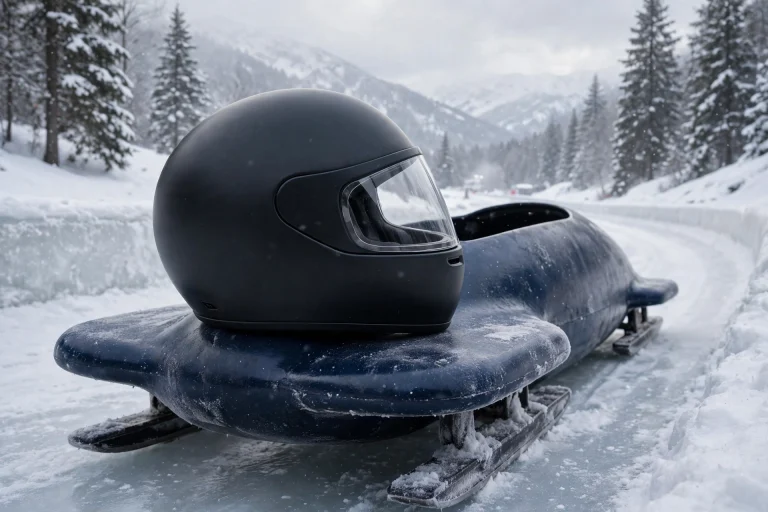
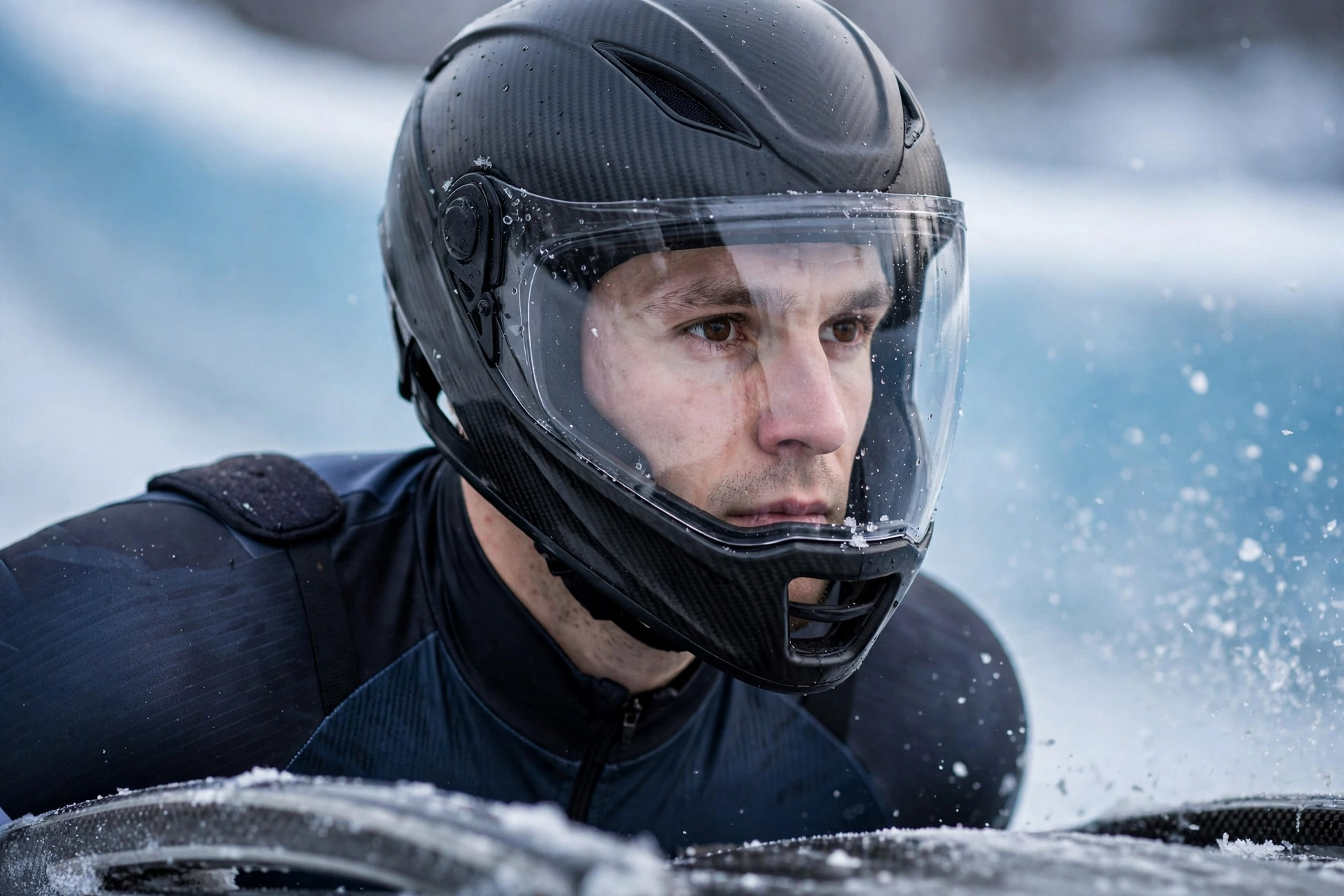
If you have watched luge on television, you will have seen the distinctive helmets: smooth, rounded, with a clear visor and a chin bar that covers the jaw. This guide explains why luge helmets are full face, what protection that gives, and how the design works in practice.
Why Must a Luge Helmet Be Full Face?
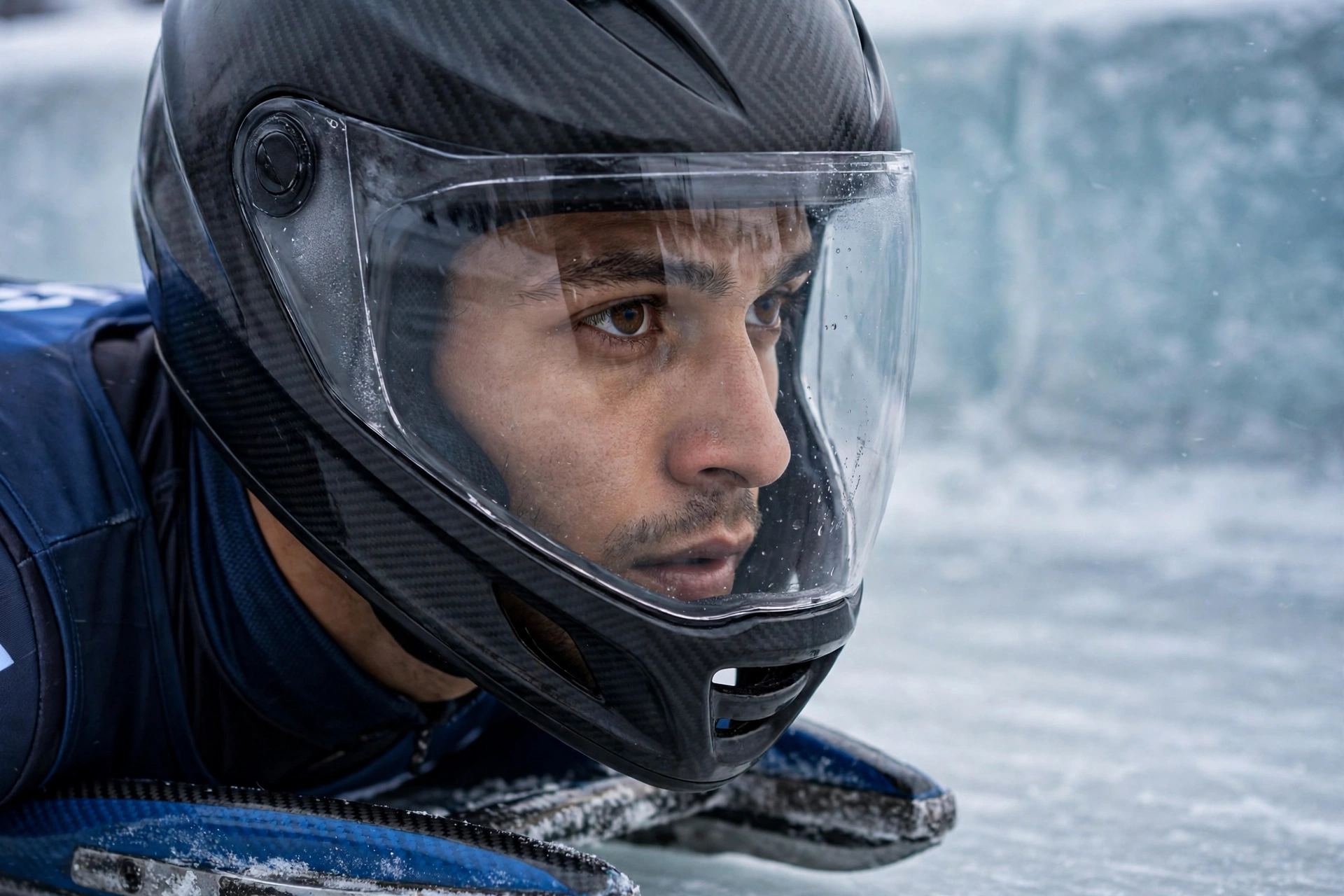
The main reason is the riding position. A luge athlete lies on their back, feet first, with their head just above the ice and raised slightly to see ahead. In that position, the face is exposed to the wind, to ice spray from the track, and to the surface itself if the head dips. An open-face helmet would leave the chin, jaw, and mouth unprotected in exactly the place where contact is most likely.
Speed is the second reason. Luge is one of the fastest sliding sports, and at those speeds even a small piece of ice hitting the face would hurt. The full face shell and visor together create a barrier between the rider’s face and everything the track throws up. In general terms, the faster the sport, the more coverage the helmet needs, and luge sits at the fast end of that scale.
What Does the Chin Bar Actually Protect?
The chin bar is the lower front part of the helmet, and it protects the jaw, chin, and teeth. In a fall or a heavy bump, the chin bar takes the impact instead of the rider’s face. Because a luge rider’s head is so close to the ice, even a small dip can bring the chin area into contact with the surface, so the chin bar is not decorative — it is working protection.
The chin bar also shapes the airflow. Its smooth curve helps the air flow over the helmet rather than catching on the face, which matters for speed. And it holds the visor in place, keeping the seal tight against wind and spray. A helmet without a chin bar could not do any of these jobs.
Fit matters here too. The chin bar should sit close to the chin without pressing hard against it, and the padding inside should hold it steady. If the chin bar is too far from the face, it offers less protection; if it presses, it becomes uncomfortable over a run.
Do Singles and Doubles Riders Wear the Same Helmet?
Yes, singles and doubles riders wear the same kind of full face helmet. In doubles luge, two athletes lie on one sled, one behind the other, and both wear helmets. The rider at the back has an even more restricted view, because the rider in front blocks part of the track, but the helmet design is the same.
The main difference in doubles is that the rear rider relies more on feel and on the front rider’s steering, but the helmet still has to give a clear view of what can be seen and protect the head just as well. Both riders face the same speeds and the same ice, so both need the same coverage.
How Do Luge Athletes See Through the Visor?
Seeing clearly is one of the hardest parts of luge. The rider lies flat and looks up the track through the visor, judging curves and steering by small movements of the legs and shoulders. The visor must be crystal clear, because even a smear or a patch of fog can hide the shape of the track ahead.
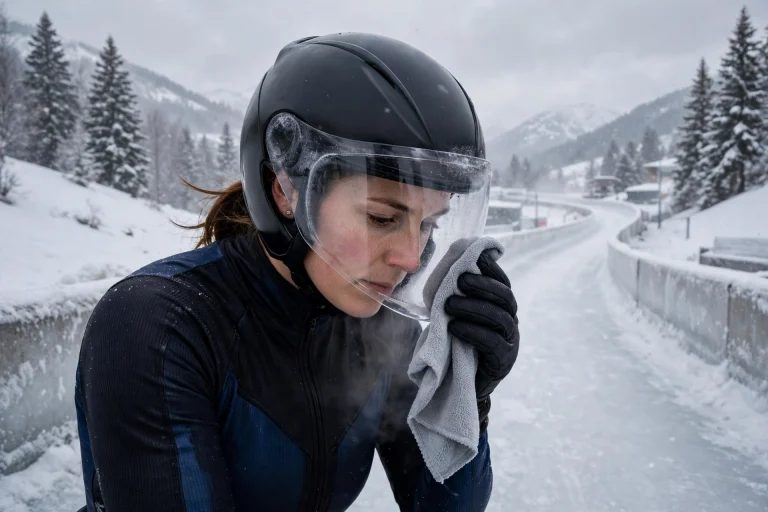
Riders keep the visor clean between runs and may use an anti-fog treatment on the inside. On bright days, a tinted visor cuts glare from the ice; on dull days, a clear visor gives the best view. Some riders carry both and choose based on the light. If you are learning about helmet technology in general, reading about what MIPS is for helmets can help you understand one of the features found in modern helmets.
What Should a Beginner Look for in a Luge Helmet?
Start with fit. Try the helmet on lying back, in the luge position, and check the view through the visor. It should feel snug without pressure points, and it should not move when you shake your head gently. The chin bar should sit close to your chin, and the strap should fasten firmly.
Check the visor next. It should be clear and scratch-free, and it should seal well against the shell. Ask whether spare visors are available, and whether the padding can be removed and washed. Finally, confirm the helmet meets the standard your track or competition requires — luge has its own rules, and the organiser’s word is final.
A helmet that fits well in the lying position, gives a clear view, and meets the standard will serve a beginner far better than a helmet chosen for looks alone.
It is also worth thinking about how the full face design affects communication and awareness on the track. A luge rider cannot turn their head far, and the helmet limits peripheral vision a little, so riders rely on the view straight ahead and on their sense of the sled’s movement. The trade-off is accepted because the protection is essential, but it means a beginner should spend time getting used to the helmet before their first fast run. Practising the lying position with the helmet on, even away from the track, helps the rider learn where the edges of their vision are and how the helmet feels when they move their head. Coaches often have new riders do this on a flat surface first, so the helmet feels familiar by the time they slide.
Frequently Asked Questions
Q: Has luge always used full face helmets?
A: In general terms, full face helmets have been the standard for modern luge for many years, as speeds rose and the sport’s safety rules developed. Earlier designs were simpler, but the full face shape is now universal.
Q: Can a luge athlete wear goggles instead of a visor?
A: No. The visor is part of the helmet’s design and seals against the shell. Goggles would not seal the same way and would leave gaps for wind and ice spray.
Q: Do luge helmets need replacing after a crash?
A: In general terms, yes. A helmet that has taken a hard impact should be checked and usually replaced, even if the outside looks fine, because the liner inside may be damaged.

Olivia
Writer at Helmet Today, covering helmet reviews, fit and riding safety.