MMA headgear for training should protect your head, ears, and cheekbones without blocking your vision, muffling your hearing, or sliding around when you move. In general terms, the best training headgear is the one that fits snugly, covers the areas you actually get hit, and stays comfortable through a full sparring round. Price and brand matter far less than fit, padding, and coverage.
Sparring is where most head contact in MMA training happens, and it is also where headgear earns its keep. The right headgear will not make you invincible, but it can reduce cuts, bruising, and ear damage, and it can take the sting out of glancing blows. This guide explains what to look for so you can choose headgear you will actually wear, round after round.
What Does MMA Training Headgear Actually Protect?
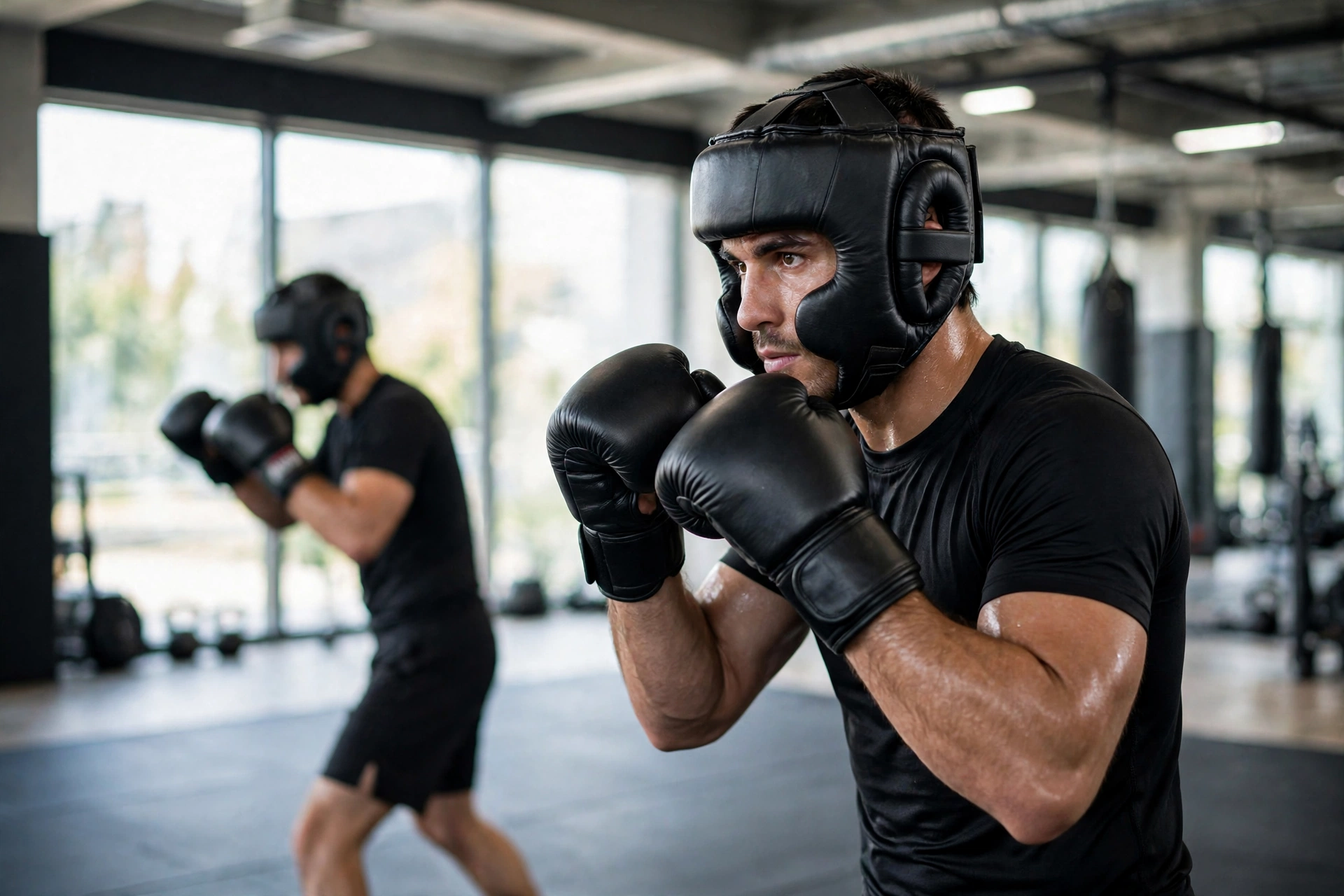
MMA training headgear is designed to protect the parts of your head that take the most contact in sparring: the forehead, temples, cheekbones, chin, and ears. Most designs use thick foam padding over these areas, with an open face so you can breathe, see, and take a mouthguard comfortably. The padding spreads the force of a punch or a knee across a wider area, which can reduce the chance of cuts and surface bruising.
Ear protection deserves special attention. Repeated friction and impact on the ears can lead to cauliflower ear, a condition where the ear swells and hardens after the cartilage is damaged. Headgear with padded ear cups covers the ears and reduces that risk, which is one of the main reasons many regular sparring partners wear headgear even for light rounds.
What headgear does not do is just as important to understand. It does not prevent concussion. A punch that snaps your head back will still move your brain, padded or not. Headgear can also create a false sense of security, tempting you or your partner to hit harder than you would bareheaded. Good headgear is a layer of protection for training, not a licence to spar harder.
What Kind of Padding Should You Look For?
Padding is the heart of any headgear, and in general terms, thicker is not automatically better. Very thick padding can feel bulky, block your peripheral vision, and make the headgear heavy enough to shift during a round. What matters is how the padding is distributed: it should be thickest over the forehead, temples, and cheekbones, and it should feel dense rather than soft and squashy. Padding that compresses flat under your thumb will not absorb much in a real exchange.
Look for layered foam rather than a single thin sheet. Many training headgear designs use several layers of foam of different densities, which absorb impact more gradually than one hard slab. The padding should also cover the back of the head, since takedowns and scrambles can send you to the mat, and a fall onto a hard floor is a real risk in MMA training.
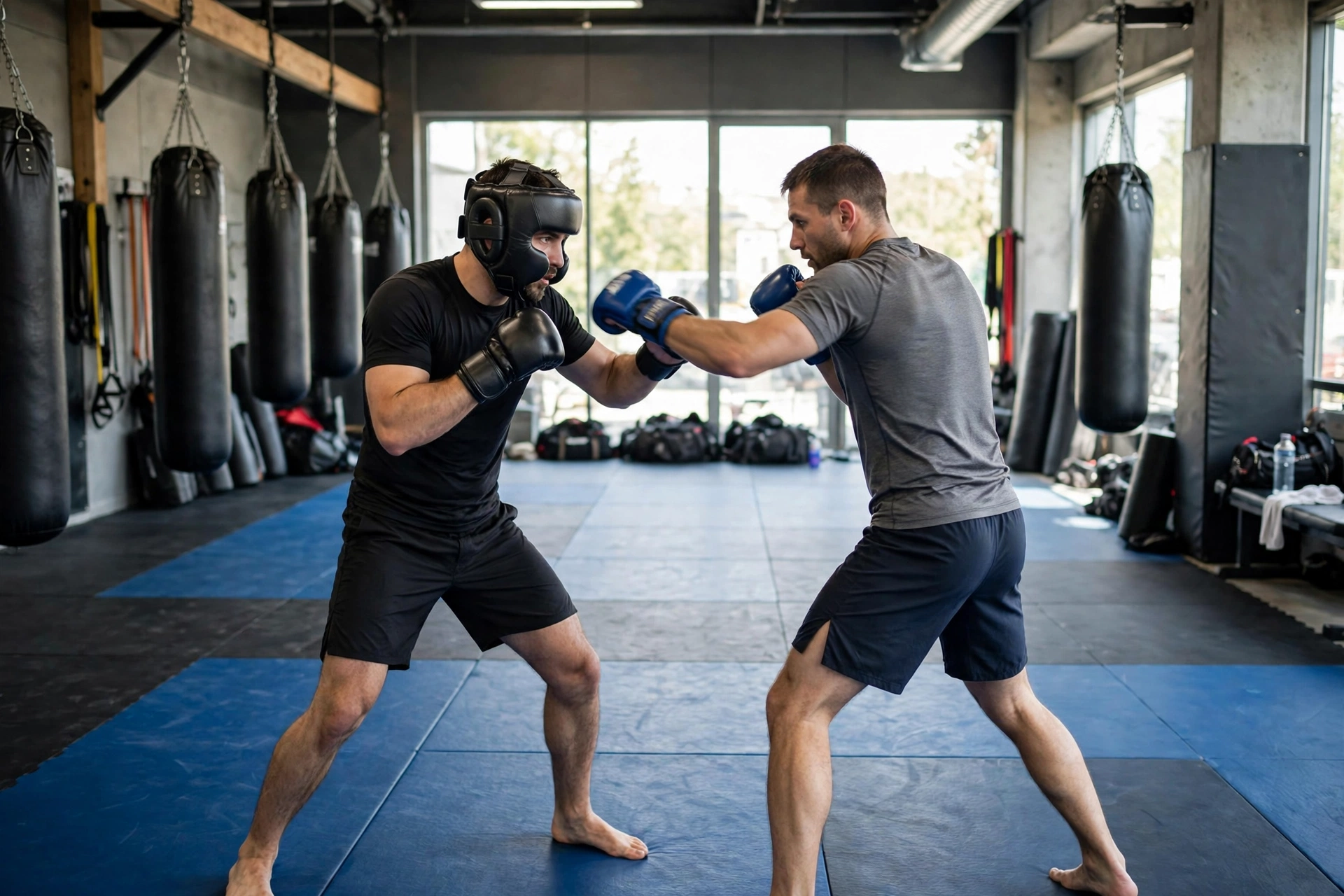
How Should MMA Headgear Fit?
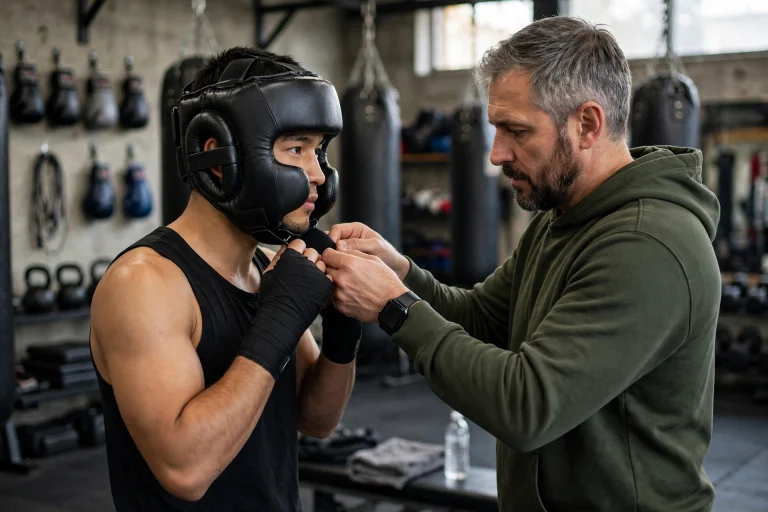
Fit decides whether headgear protects you or just gets in the way. It should sit snugly all around your head with no gaps, and it should not rock side to side or slide forward when you shake your head. The top should sit low enough to cover your forehead without dropping over your eyebrows, and the cheek pads should rest against your cheekbones without pressing so hard that they make you clench your jaw.
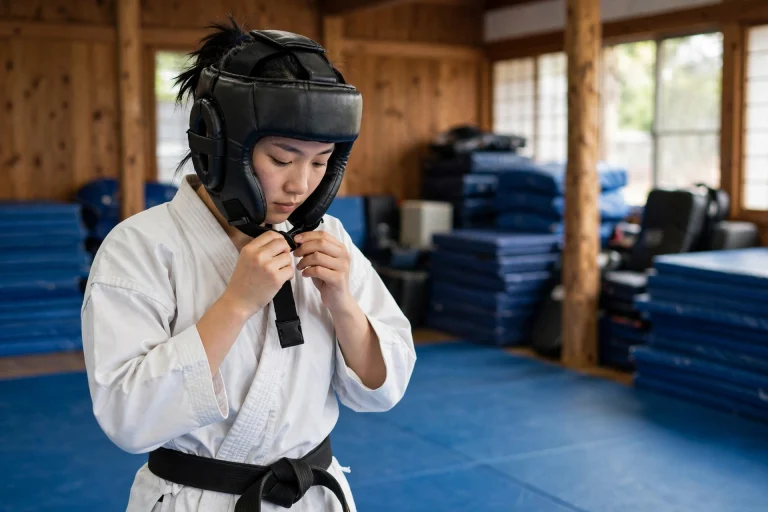
Try headgear on with your mouthguard in, because that is how you will wear it. A mouthguard changes the shape of your lower face slightly, and headgear that fits without one can feel tight or awkward with one. The chin strap should fasten snugly under your chin, and the laces or straps at the back should let you adjust the fit without help. If you need someone else to lace you in every session, that is a minor hassle that adds up over time.
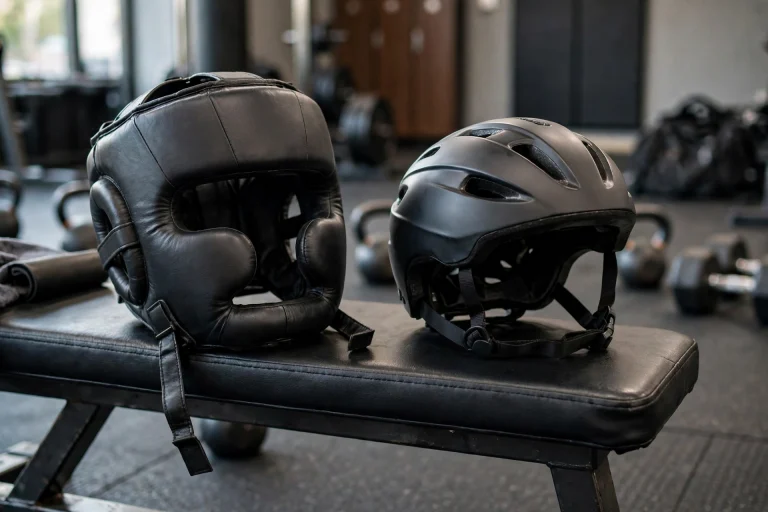
Sizing varies between makers, so a size label is only a starting point. Measure around your head above your eyebrows and compare that number with the maker’s size chart, then try the headgear on and move in it: shadowbox, duck, and turn your head quickly. If it shifts during those movements, it will shift far more in sparring. If you are comparing headgear features and the protection language on product pages confuses you, reading about what MIPS is for helmets can help, even though MIPS itself is a feature of hard-shell helmets rather than soft sparring headgear.
Does Headgear Affect Your Vision and Hearing?
Headgear always changes your vision and hearing a little, and the question is how much you are willing to trade for protection. Cheek pads that are too tall can block your lower peripheral vision, which matters when you are watching for takedowns or low kicks. Ear cups that are too thick can muffle your coach’s calls and make it harder to hear your partner moving around you. Both problems get worse as a round goes on and you start to tire.
In general terms, open-face designs with slimmer cheek padding give the best vision, while full-coverage designs with bigger cheek and chin padding give more protection. Before you buy, check the edges of your vision with the headgear on: look left and right without turning your head, and glance down as if checking for a takedown. If you notice a big blind spot, try a different model.
Hearing is harder to test in a shop, but you can get a sense of it by having someone talk to you from a few steps away while you wear the headgear. If their voice sounds distant or muffled, the ear cups are thick.
How Do You Look After Training Headgear?
Headgear gets sweaty, and sweat breaks down foam and stitching over time. After each session, wipe the inside and outside with a damp cloth and leave it somewhere with airflow to dry. Do not leave it crumpled in your gym bag overnight, and do not dry it on a radiator or in direct sun.
Check the padding and straps regularly. If the foam has gone flat in one spot, if a seam has split, or if the chin strap no longer holds its adjustment, the headgear is not protecting you the way it should. Replace it rather than patching it up: headgear is a consumable, and for someone sparring several times a week, a year or so of regular use is a reasonable expectation before the padding starts to lose its spring.
Frequently Asked Questions
Q: Should beginners wear MMA headgear for training?
A: In general terms, yes. Beginners are still learning distance and control, so they are more likely to catch accidental hard shots. Headgear protects against cuts and ear damage while you learn, and it can make sparring feel less intimidating.
Q: Does MMA headgear prevent cauliflower ear?
A: It reduces the risk, but it does not remove it entirely. Padded ear cups shield the ears from friction and direct impact, which are the main causes of cauliflower ear, but a hard blow or a tight squeeze can still damage an ear even with headgear on.
Q: Can I wear MMA headgear for boxing sparring too?
A: Yes, in general terms. MMA training headgear works for boxing sparring, though boxing-specific headgear often has more cheek and forehead padding. If you box regularly as well as training MMA, you may prefer a boxing design for those rounds.

Olivia
Writer at Helmet Today, covering helmet reviews, fit and riding safety.