The visor on a skeleton helmet is shaped the way it is because the rider lies face down, head first, with their chin just above the ice — and the visor has to give a clear view in that low, forward position while staying smooth against the wind. It is not a styling choice. Every curve of the visor follows from the riding position, the speed, and the need to see the track ahead without lifting the head.
Skeleton is one of the most unusual positions in sport: lying flat on a small sled, head first, at high speed. This guide explains why the visor is shaped as it is, what it does, and how riders keep it clear in icy conditions.
What Does a Skeleton Helmet Visor Look Like?
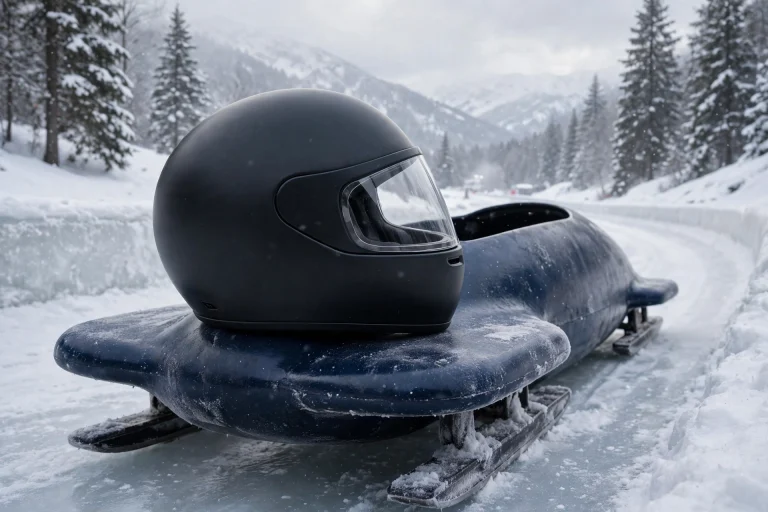
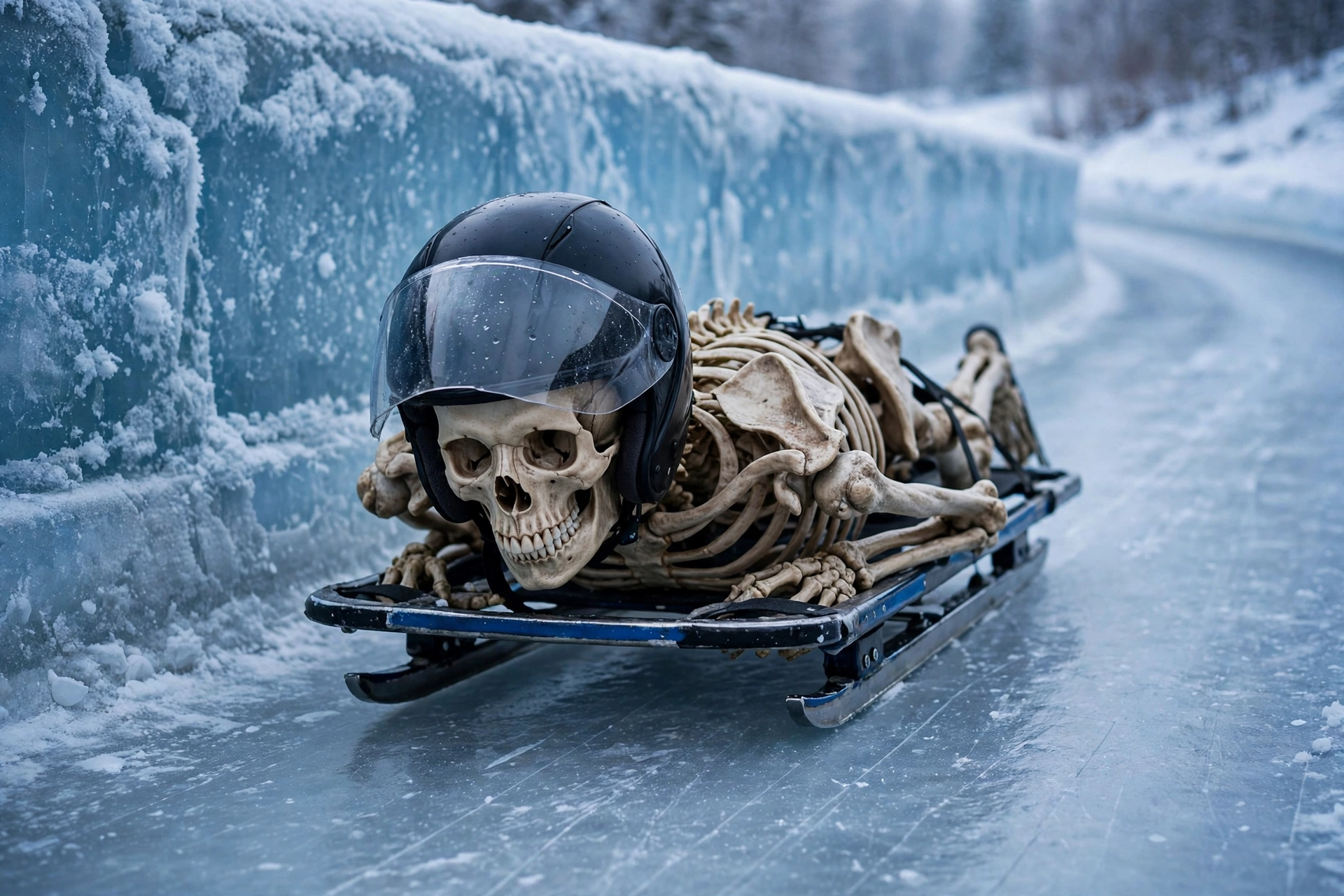
A skeleton helmet visor is a clear, curved shield that sits in front of the rider’s eyes and follows the shape of the helmet closely. It is wider than it is tall, and it curves around the sides of the face to keep the wind out. From the front, it looks like a smooth, low band of clear material set into the front of the helmet.
The visor is fixed to the helmet rather than hinged like a motorcycle visor, because a fixed visor seals better and creates less drag. It sits flush with the shell so the air flows over it cleanly, and its lower edge sits close to the chin bar. In general terms, the visor is designed to disappear: the rider should notice the track, not the visor.
Why Does the Shape Matter So Much?
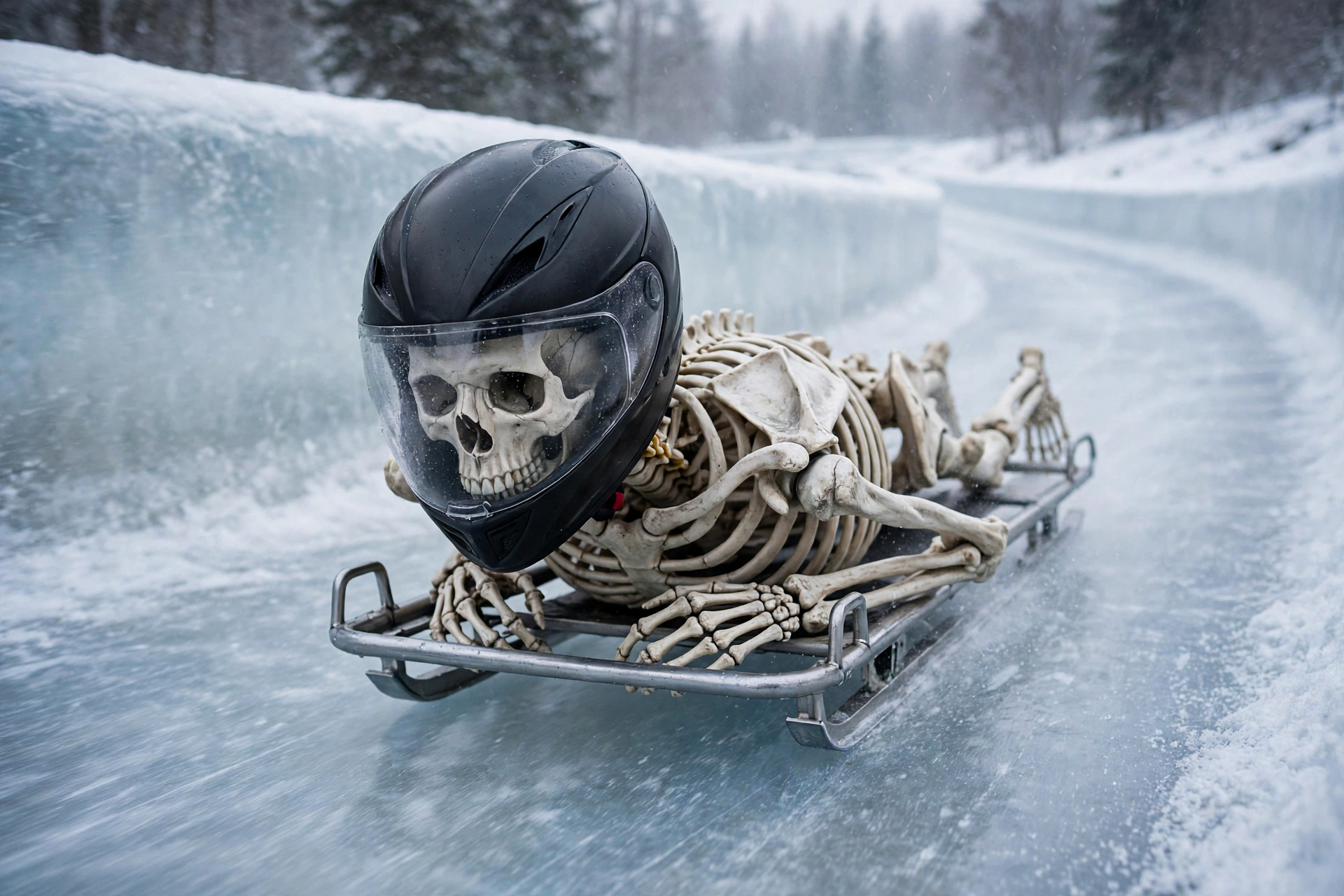
The shape matters because of the head-down position. A skeleton rider lies face down with their head low, looking ahead and slightly down the track. If the visor were flat or tall, the rider would have to lift their head to see through it, and lifting the head increases drag and breaks the streamlined shape of the body.
The curved, low shape lets the rider see the track while keeping their head down and their body flat. The visor’s curve also matches the curve of the helmet, so the air flows smoothly over the whole front of the helmet instead of catching on an edge. At skeleton speeds, even a small amount of extra drag matters, and a visor that sticks out would slow the rider down.
The shape also matters for protection. A visor that follows the helmet closely is less likely to catch on the ice if the rider’s head dips, and it keeps ice spray and wind out of the eyes more effectively than a visor that stands proud of the shell.
How Does the Visor Affect What the Rider Sees?
The visor defines the rider’s field of view. Because the rider’s head is low, the view through the visor is narrow and focused: the track ahead, the walls of the curves, and the line the sled is taking. The visor is shaped to give the widest possible view in that low position, with the top edge high enough to see the track ahead and the sides wide enough to catch the walls of the curves.
Riders learn to read the track through the visor, judging speed and line by the way the ice and the walls move past. A visor that distorts the view, even slightly, would make that harder. That is why visors are made from clear, optically good material, and why riders are fussy about scratches: a scratch in the wrong place can distract the eye at the worst moment.
Clear or Tinted: Which Visor Do Riders Choose?
Most skeleton riders carry more than one visor, or choose a tint to suit the day. A clear visor is best on dull days and in indoor tracks, where light is low and the rider needs every bit of visibility. A tinted visor cuts glare on bright, sunny days, when the ice reflects the sun and the track can be hard to read.
Some visors have a slight tint that works in a range of conditions, and riders may stick with one tint for a whole competition if the light is steady. The choice is personal: what matters is that the rider can see the track clearly and comfortably. If you are learning about helmet technology in general, reading about what MIPS is for helmets can help you understand one of the features found in modern helmets.
How Do Riders Keep the Visor Clear?
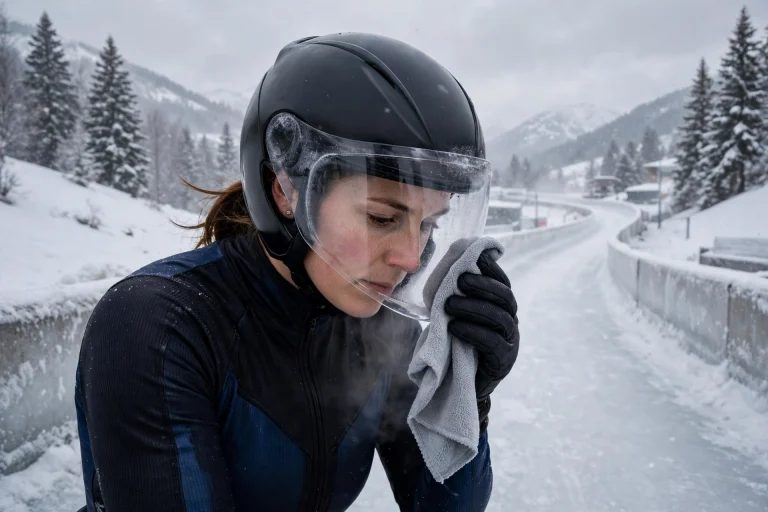
Keeping the visor clear is a constant job in skeleton. Cold air, breath, and damp conditions can fog the inside of the visor, while ice spray and condensation can cloud the outside. Riders wipe the visor clean before every run, and many use an anti-fog treatment on the inside surface.
Between runs, the helmet is kept somewhere dry and not too cold, so condensation does not form on the visor. A spare visor is useful: if one fogs up or gets scratched, the rider can swap it rather than sliding with a poor view. The seal between the visor and the shell matters too — a good seal keeps out the wind that drives moisture onto the inside surface.
At the start line, the rider does a final check: visor clean, strap fastened, helmet sitting level. It is a small routine, but a clear visor is one of the most important pieces of kit on the sled.
The visor’s shape also changes how a rider deals with changing light on the track. A track that runs partly in shade and partly in sun can be hard to read, because the rider’s eyes need to adjust as the light changes. A visor with the right tint evens out that change, while a visor that is too dark in the shaded sections can hide the shape of the ice. Riders who know the track well will often choose a visor based on the time of day and the weather, and they may practise with different tints to learn which one suits each condition. It is a small detail, but in a sport decided by fractions of a second, seeing the track clearly is part of going fast — and a visor that suits the light helps the rider commit to the line with confidence.
Frequently Asked Questions
Q: Can a skeleton rider use a tinted visor in dull conditions?
A: In general terms, a dark tint in dull light makes the track harder to read, so most riders switch to a clear visor when the light is low. A light tint can work in mixed conditions.
Q: Why is the skeleton visor smaller than a motorcycle visor?
A: The rider’s head is low and the view is narrow, so a large visor would add drag and weight without helping. The visor is sized to the view the rider actually needs.
Q: What happens if the visor fogs during a run?
A: In general terms, a fogged visor is a serious problem, because the rider cannot see the track clearly. That is why riders treat anti-fog care and visor checks as part of their preparation for every run.

Olivia
Writer at Helmet Today, covering helmet reviews, fit and riding safety.