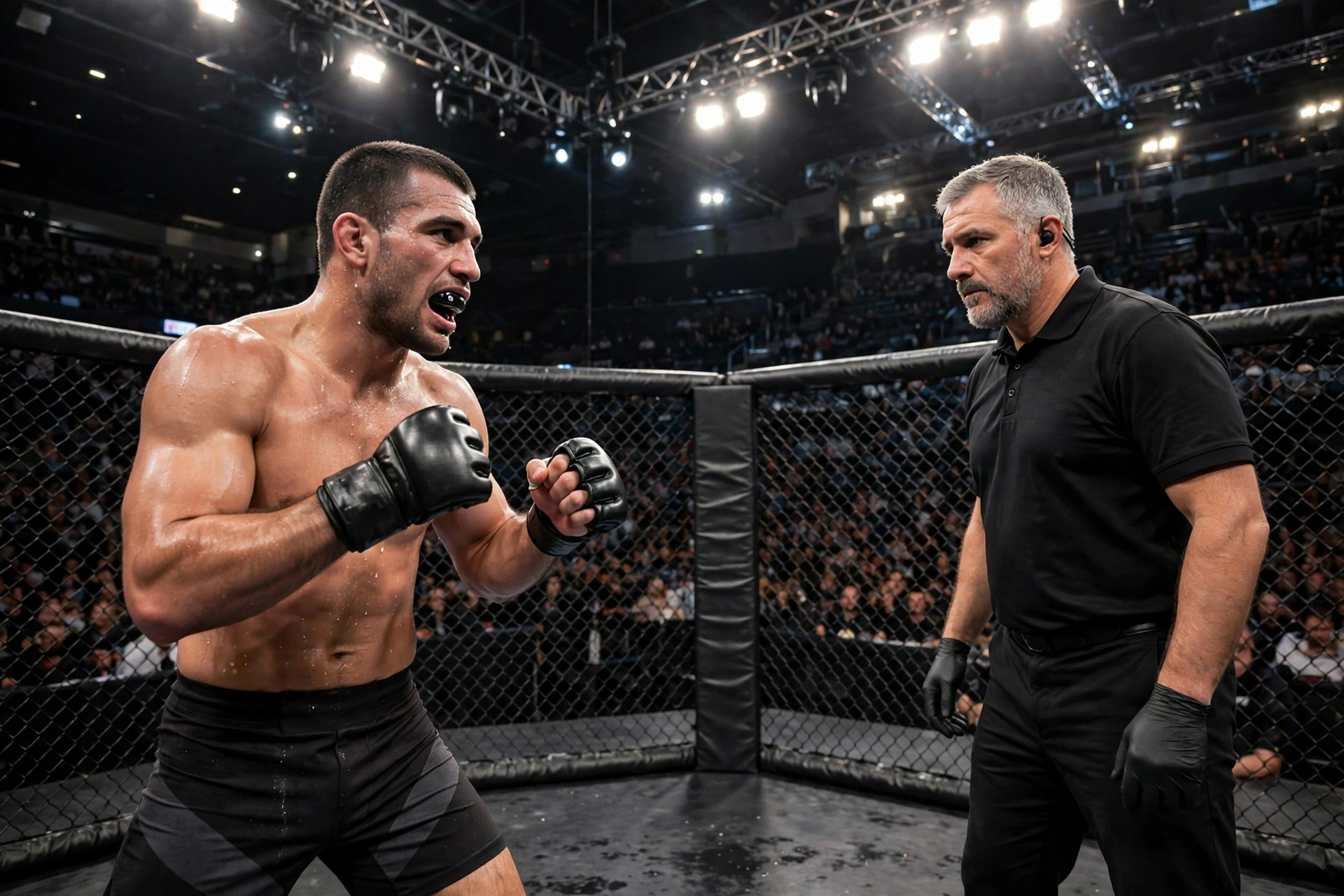
In general terms, no — MMA fighters do not wear headgear in professional competition. Professional MMA bouts are fought bareheaded, with gloves, a mouthguard, and groin protection as the standard equipment. Headgear is a training tool, not part of the competition kit, and you will not see it in a professional cage.
That surprises many newcomers, because headgear is common in amateur boxing and in some other combat sports. MMA took a different path, and the reasons are a mix of history, rules, and the nature of the sport itself. This guide explains when headgear does and does not appear in MMA, why the rules are written the way they are, and what that means for your own training.
Why Don’t Professional MMA Fighters Wear Headgear?
Professional MMA grew out of a sport that prized minimal equipment. From its early days, the idea was that fighters would compete with as little between them as possible, and that tradition carried through as the sport became regulated. When unified rules were written, headgear was simply not part of the competition equipment list, and it has stayed that way ever since.
There are practical reasons too. MMA involves grappling, clinch work, and ground fighting as well as striking. Headgear can get in the way during grappling: it can be grabbed, it can shift and block vision, and it can make it harder to apply or escape chokes. On the ground, a bulky headguard can catch on the mat or on an opponent’s limbs. For a sport that moves constantly between striking and grappling, headgear creates as many problems as it solves.
There is also a widely held view among coaches and regulators that headgear does not prevent the most serious head injuries in MMA. A punch that causes concussion does so by moving the brain inside the skull, and padding on the outside of the head does not stop that movement. Headgear can reduce cuts and bruising, but in a professional bout, where cuts are treated by ringside doctors, regulators have judged that trade-off differently than in amateur sport.
Do Amateur MMA Fighters Wear Headgear?
Amateur MMA is a different picture, and the answer depends on where you compete. Some amateur organisations and local promotions do require headgear, especially for younger fighters or for first-time competitors. Others follow the professional rules closely and do not use it. Because amateur MMA is regulated at a local or national level rather than by one global body, the rules vary from place to place and can change over time.
In general terms, amateur rules tend to be more protective than professional rules. That can mean headgear, shin guards, larger gloves, shorter rounds, and stricter rules about strikes to a grounded opponent. The aim is to let newcomers gain experience with a lower risk of injury before they move to professional competition. If you are planning to compete as an amateur, the rules of the specific organisation running your event are the ones that matter, not a general description.
What About Headgear in MMA Training and Sparring?
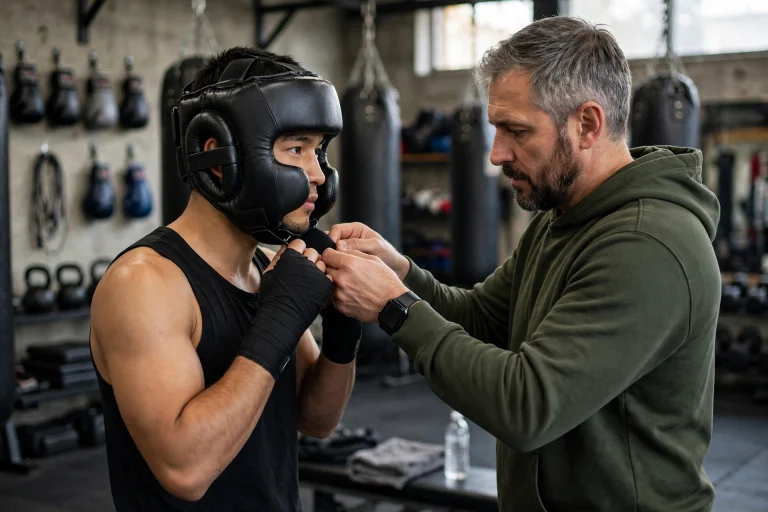
Headgear is very common in MMA training, even though it is absent from professional competition. Most gyms expect or encourage headgear during sparring, particularly for harder rounds, and many fighters wear it for every sparring session. The logic is straightforward: training happens far more often than competition, so the total number of head impacts in training is far higher, and protecting yourself there matters more over a career.
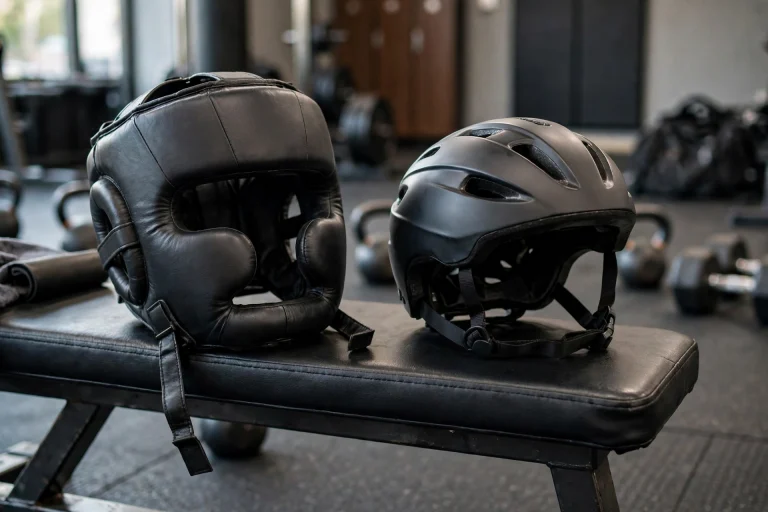
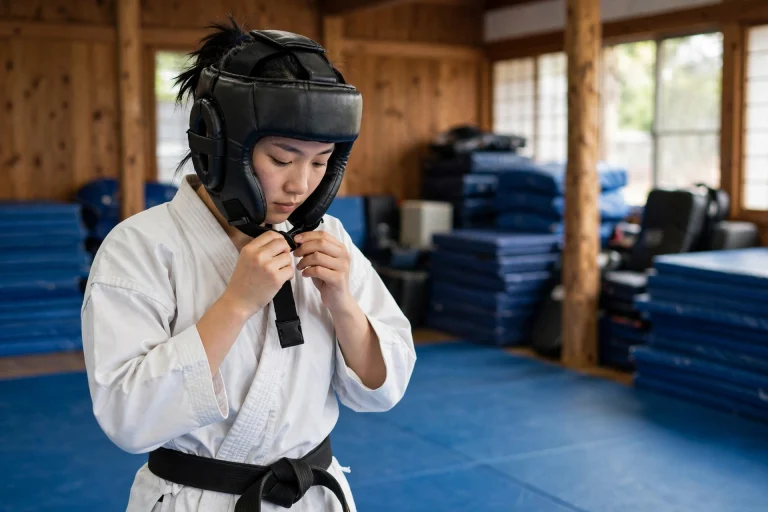
Sparring headgear in MMA is usually open-faced, with padding over the forehead, temples, cheeks, and ears, and a chin strap to hold it in place. It is designed to reduce cuts and ear damage and to soften glancing blows, not to make hard sparring safe. Good gyms pair headgear with controlled sparring: partners agree on intensity, and coaches stop rounds that get too heated. Headgear plus control is the combination that actually keeps people healthy.
There is a balance to strike. Some coaches worry that headgear makes fighters spar harder than they should, because padded heads feel less vulnerable. Others point out that training without headgear teaches better defence, since every shot is felt. Most gyms settle on a middle ground: headgear for regular sparring, lighter contact for technical work, and no headgear only in carefully controlled drills. If you are learning how impact protection is described across different types of headgear, reading about what MIPS is for helmets can help you understand the language used on product pages, even though MIPS is a feature of hard-shell helmets rather than soft sparring headgear.
Does Headgear Make MMA Safer?
The honest answer is that headgear makes some things safer and other things more complicated. On the plus side, it reduces cuts, bruising, and ear injuries, which are the most common head injuries in training. It can also reduce the force of glancing blows, where the padding catches and deflects part of the impact. For regular sparring, those are real benefits.
On the other hand, headgear does not prevent concussion, and it can change how people fight. A bigger, padded head is a bigger target, and some fighters feel protected and take more risks. Headgear can also reduce peripheral vision, which can mean a fighter sees a punch later and takes it more cleanly than they would have bareheaded.
For competition, regulators have weighed these factors and decided against headgear in professional MMA. For training, most coaches have weighed the same factors and decided in favour of it. Both decisions can be reasonable at the same time, because training and competition have different goals: training is about learning and repetition over years, while competition is about a single performance under agreed rules.
What Should You Wear Instead in Competition?
If you compete in MMA, your head protection comes from your defence, your conditioning, and your preparation, not from equipment. That means keeping your hands up, moving your head, learning to roll with punches, and building the neck strength that helps your head stay stable on impact. None of this is glamorous, but it is what actually protects a fighter in the cage.
The equipment you will wear is straightforward: approved gloves, a mouthguard, and groin protection. Your mouthguard deserves attention, because a well-fitted mouthguard protects your teeth and jaw and can reduce the shock of a blow to the chin. A custom-fitted mouthguard from a dentist fits better and stays in place more reliably than a boil-and-bite version, and many fighters consider it one of the best investments they make.
Frequently Asked Questions
Q: Do MMA fighters wear headgear in the UFC?
A: No. Professional MMA, including UFC bouts, is fought bareheaded. Headgear is not part of the approved competition equipment, and fighters wear gloves, a mouthguard, and groin protection instead.
Q: Is headgear required for amateur MMA?
A: It depends on the organisation and the event. Some amateur promotions require headgear, especially for younger or first-time fighters, while others follow professional rules and do not use it. Always check the rules of your specific event.
Q: Why is headgear used in training but not in competition?
A: Training involves far more head contact over time than competition, so reducing cuts and ear damage in sparring matters a lot. In competition, regulators have decided that headgear creates grappling problems and does not prevent concussion, so professional bouts are fought bareheaded.

Olivia
Writer at Helmet Today, covering helmet reviews, fit and riding safety.