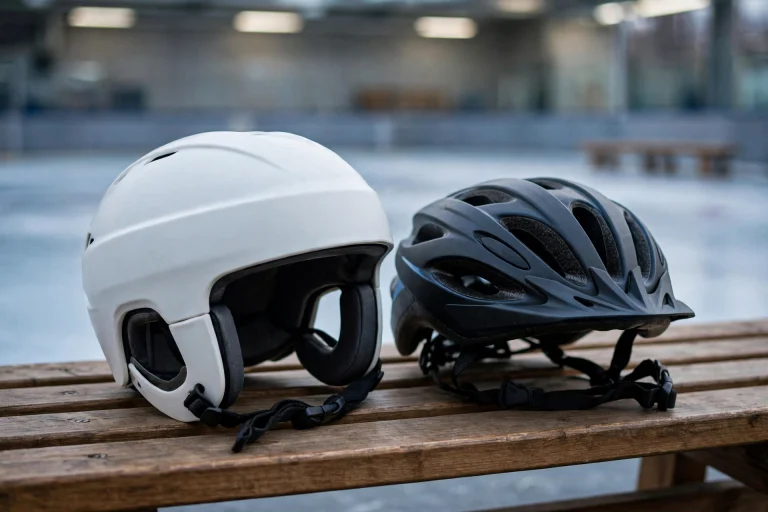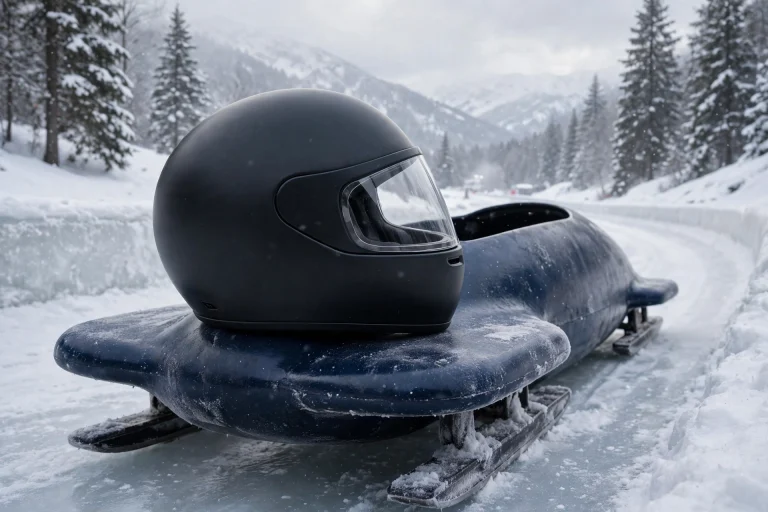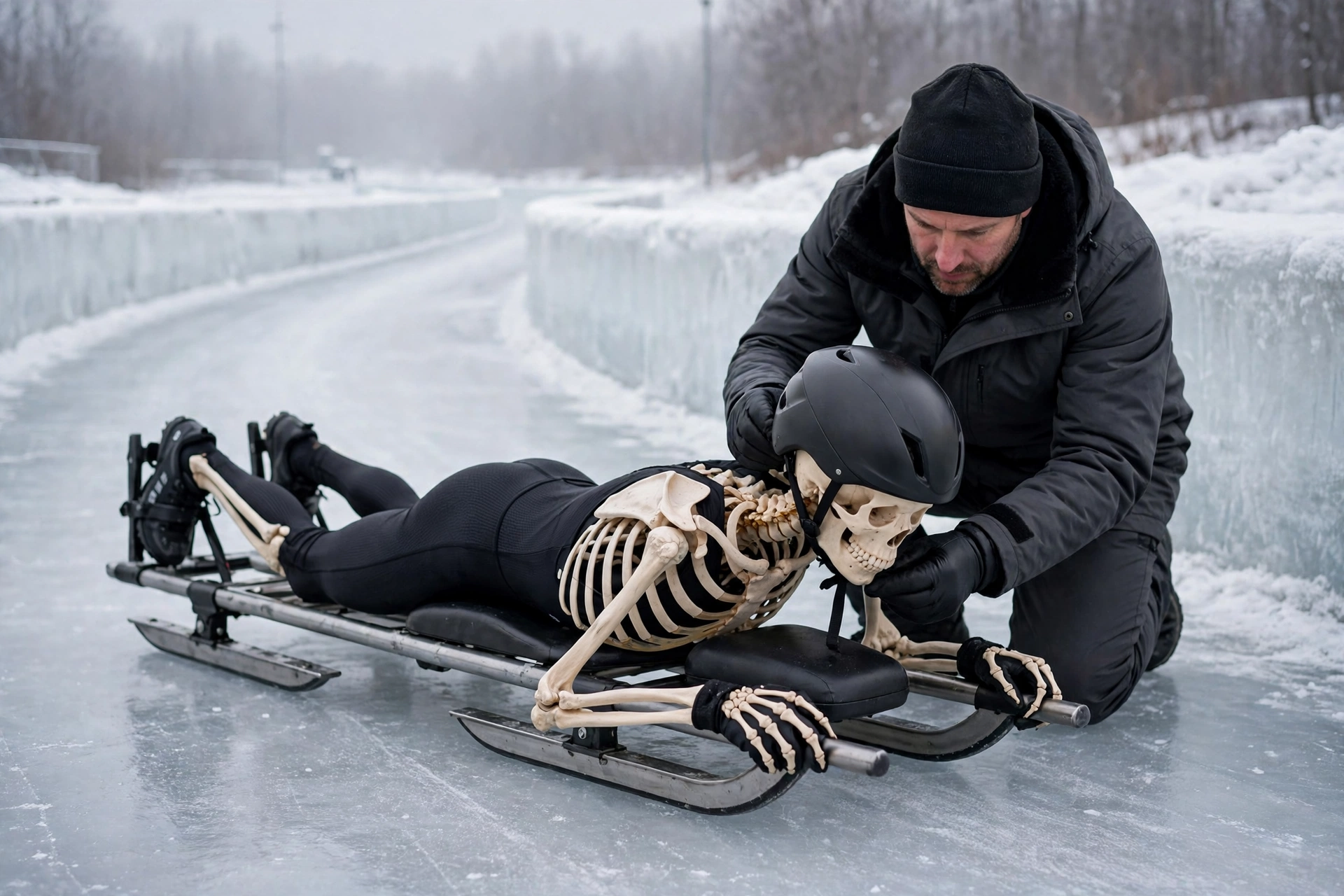
To fit a skeleton racing helmet, it should sit level and snug on your head, stay put when you shake your head, and give you a clear view through the visor while you lie face down. Fit is not a detail in skeleton: the helmet is your only head protection at high speed on an ice track, and a helmet that shifts or presses in the wrong place will distract you for the whole run. Getting the fit right starts before you ever slide.
This guide walks through the fitting process step by step, from measuring your head to checking the helmet in the face-down position. It covers the common mistakes beginners make and the checks that experienced sliders do before every run.
How Do You Measure Your Head for a Skeleton Helmet?
Start with a soft tape measure. Wrap it around your head just above your eyebrows and ears, at the widest point, and note the measurement. Do this twice to be sure, and measure with your hair as you would wear it under the helmet — if you wear a thin balaclava, measure with that on.
Compare your measurement with the maker’s size chart. Sizes vary between makers, so a medium from one brand may not match a medium from another. The chart is a starting point, not a guarantee: two heads with the same measurement can be different shapes, and the shape matters as much as the size. A round head and a long head need different helmets even at the same circumference.
What Should the Helmet Feel Like When You Try It On?
When you first put the helmet on, it should feel snug all round, with even pressure and no sharp pressure points. Push the helmet gently from side to side and front to back: your skin should move with it, and the helmet should not slide freely over your head. If it rocks or wobbles, it is too big.
Check the forehead and temples. The helmet should sit low enough to cover your forehead, about one or two fingers above your eyebrows. If it sits high and exposes your forehead, it is the wrong size or shape. If it presses hard on one spot, try a different size or model — a pressure point that hurts in the shop will hurt far more on the track.
Wear the helmet for several minutes, not just a few seconds. Padding compresses slightly with wear, so a helmet that feels very tight at first may settle into a good fit. But a helmet that hurts after five minutes will not improve: comfort in the shop is the best predictor of comfort on the track.
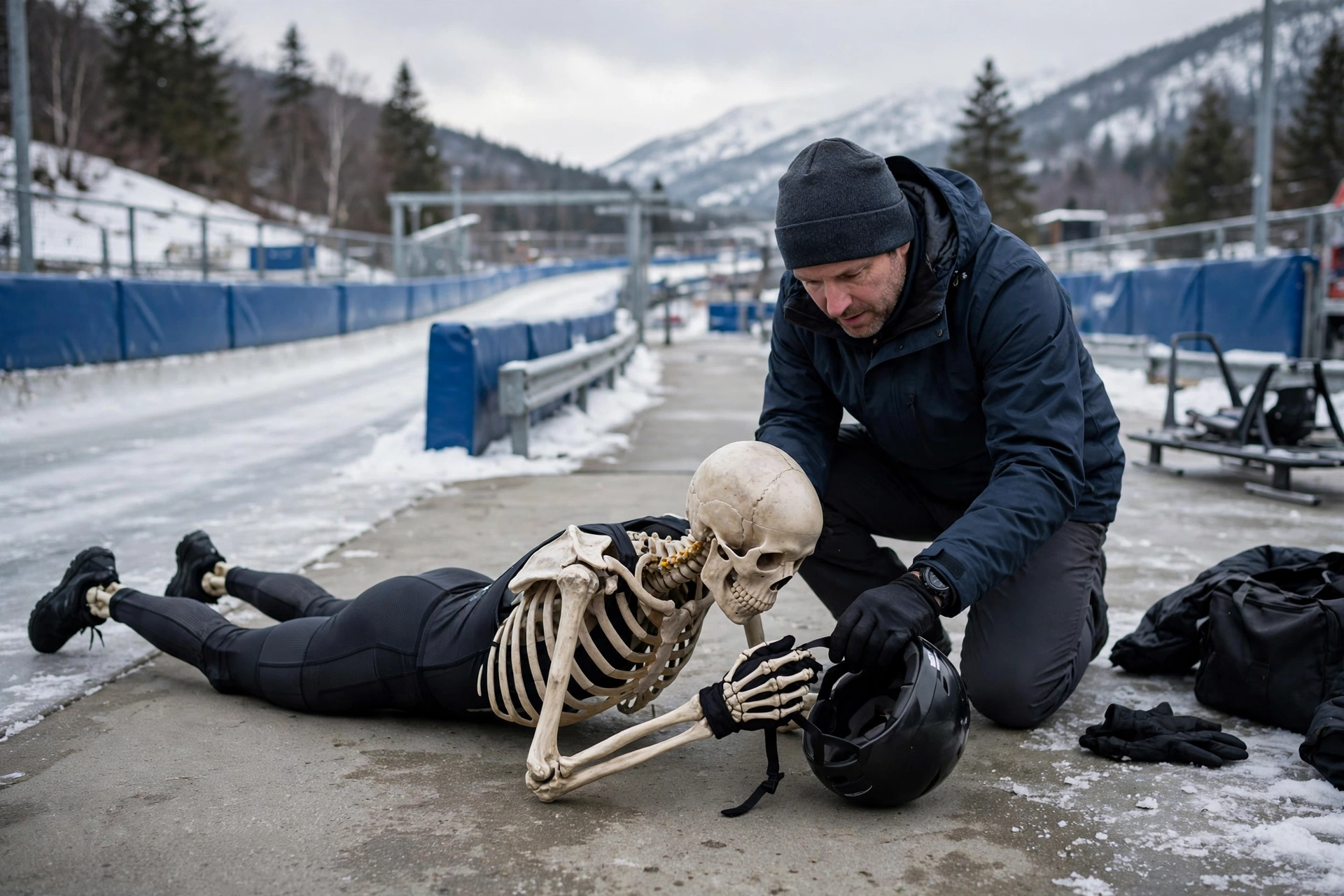
Why Must You Check the Fit Lying Face Down?
A skeleton helmet that feels fine standing up can feel wrong when you lie face down, because gravity pulls the helmet differently and the padding presses on different parts of your head. The chin bar, which felt fine upright, may press on your jaw when your head is low. The visor, which gave a clear view standing up, may sit at the wrong angle when you are flat.
So always do the final fit check in the sliding position. Lie face down on a bench or a sled, lower your head to the position you will use on the track, and look ahead through the visor. Can you see clearly without lifting your head? Does the helmet stay put when you turn your head slightly? Does anything press or pinch? If the answer to any of these is no, adjust the padding or try a different size.
This check is worth doing with a coach or a teammate watching. They can see from the side whether the helmet sits level when you are lying down, which is hard to judge yourself. A helmet that tilts forward or back in the sliding position needs adjusting before you slide.
How Do the Strap and Padding Affect the Fit?
The strap holds the helmet on, and it must be snug. Fasten it under your chin so that you can fit one or two fingers between the strap and your chin, but no more. A loose strap lets the helmet shift in a crash, which defeats the purpose of wearing it. A strap that is too tight will chafe and distract you.
The padding inside the helmet does most of the fitting work. Many skeleton helmets have removable cheek pads and crown pads in different thicknesses, so you can tune the fit. If the helmet is slightly loose at the cheeks, thicker cheek pads can fix it; if it presses at the crown, a thinner pad may help. Make small changes, one at a time, and test the fit lying down after each change.
If you are learning about helmet technology in general, reading about what MIPS is for helmets can help you understand one of the features found in modern helmets.
What Are the Common Fitting Mistakes?
The most common mistake is buying a helmet that is too big. A loose helmet feels comfortable in the shop, because nothing presses — but it will shift on the track, and in a crash it may not stay where it needs to be. If you are between sizes, the smaller size is usually the better choice, provided it does not cause pain.
Another mistake is ignoring the shape of your head. A helmet made for a round head will press on the forehead of a long-headed rider, and vice versa. If every helmet you try presses in the same place, you may need a different brand with a different internal shape, not a different size.
A third mistake is skipping the lying-down check. It takes a minute, and it catches problems that no amount of standing-up trying-on will reveal. Do it every time you try a new helmet, and repeat it if you change the padding.
Frequently Asked Questions
Q: Should a skeleton helmet feel tight when new?
A: In general terms, yes — a new helmet should feel snug, and the padding will settle slightly with use. It should never hurt, though. Pain is a sign the size or shape is wrong.
Q: Can I wear a balaclava under a skeleton helmet?
A: Yes, many sliders wear a thin balaclava for warmth. Fit the helmet with the balaclava on, because it changes the fit, and choose a thin one so it does not make the helmet too tight.
Q: How often should I recheck the fit of my skeleton helmet?
A: Check the fit at the start of each season and whenever you change the padding. If the helmet starts to feel loose after a season of use, the padding may have compressed and need replacing.

Olivia
Writer at Helmet Today, covering helmet reviews, fit and riding safety.