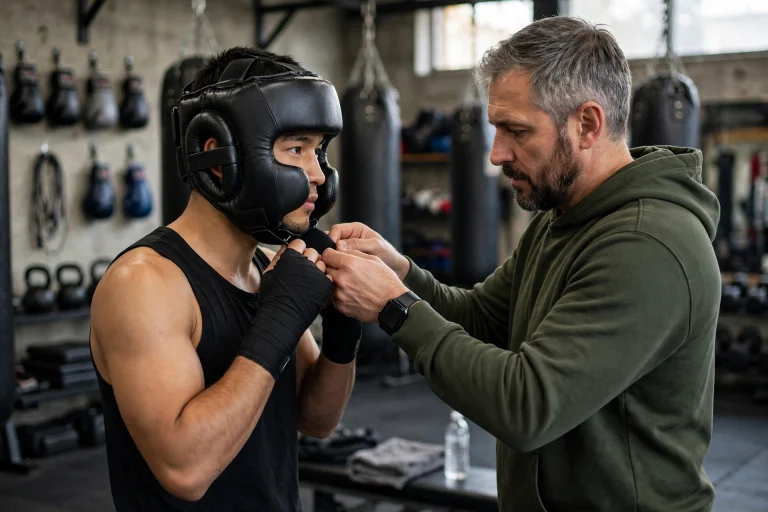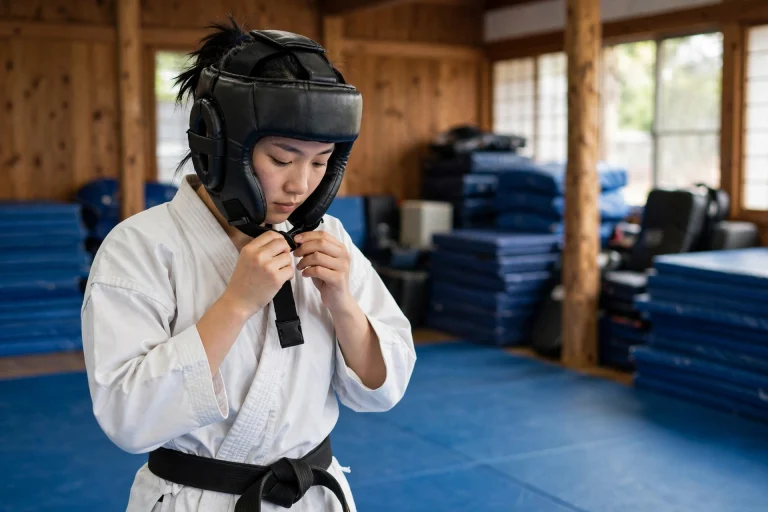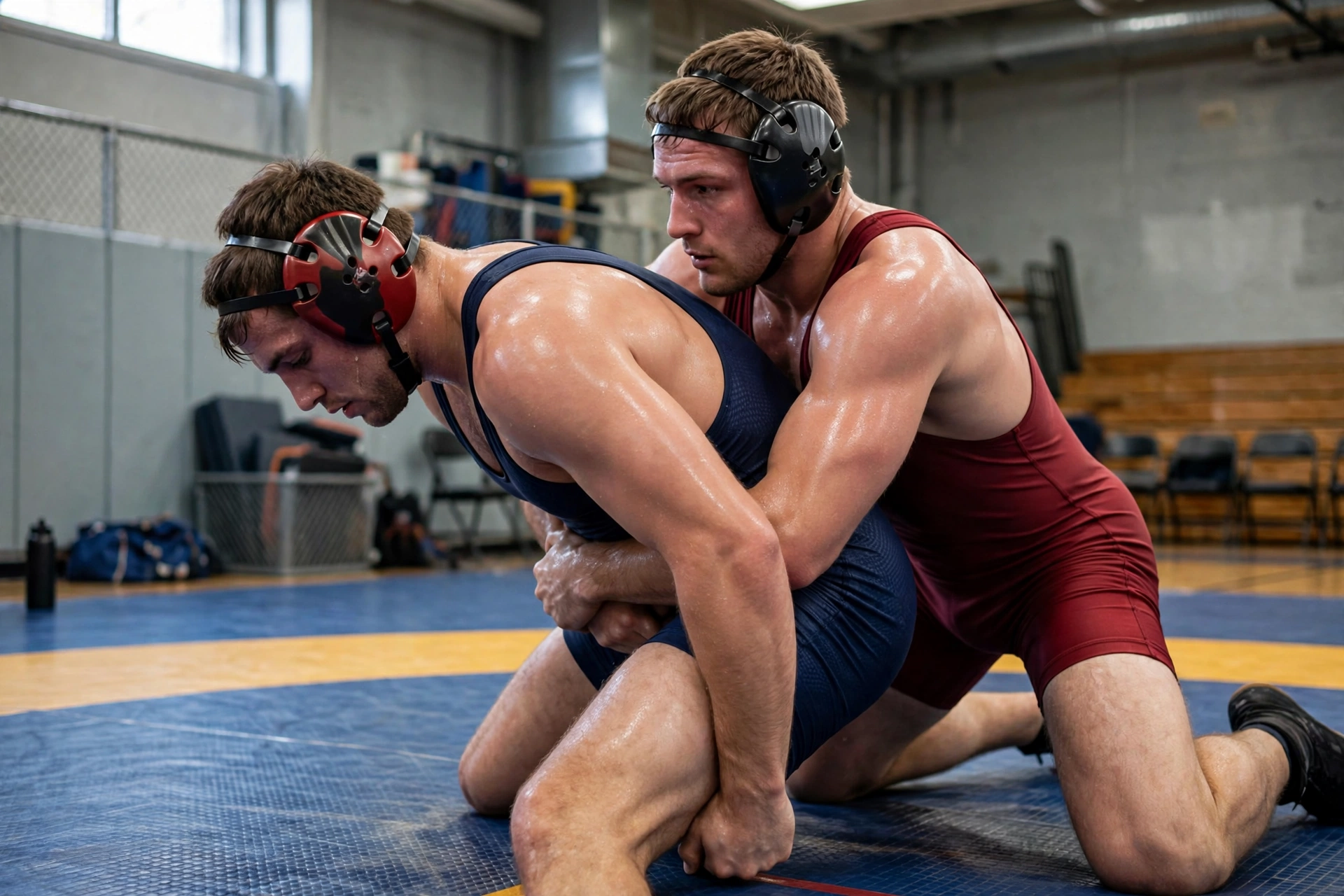
Wrestlers wear ear guards, also called wrestling headgear, to protect their ears from the repeated rubbing, pressure, and impact that happen in close wrestling. In general terms, the ear cups shield the outer ear from friction against the mat, an opponent’s head, or an arm, which can otherwise lead to a painful, swollen ear injury often called cauliflower ear. The headgear also gives some padding to the sides of the head.
Ear guards are a familiar sight on the mat, from school wrestling to senior competition. They are light, close-fitting, and designed to stay in place during fast, physical exchanges. This guide explains why wrestlers wear them, how they work, and what to look for when choosing a pair.
What Is Cauliflower Ear and Why Do Wrestlers Worry About It?
Cauliflower ear is the common name for a swollen, misshapen outer ear that can develop after repeated blows or friction. In wrestling, the ear is often pressed, rubbed, or bent during clinches, takedowns, and scrambles on the mat. Over time, that repeated trauma can cause fluid or blood to collect under the skin of the ear, and if it heals without care, the ear can stay swollen and lumpy.
It is not only a cosmetic issue. A swollen ear can be sore, tender to touch, and uncomfortable to sleep on. In some cases it can affect hearing if the ear canal is narrowed. Wrestlers who train often, several times a week, face the most repeated exposure, which is why ear guards are so common in the sport. In general terms, one hard knock rarely causes lasting damage, but many small knocks over a season can add up.
Ear guards do not make the ear invincible. They reduce friction and spread the force of contact over a wider area, which lowers the risk. They work best when combined with good technique, controlled training, and prompt care for any ear soreness. A wrestler who notices swelling should tell a coach and seek medical advice rather than hoping it will settle on its own.
How Does Wrestling Headgear Protect the Ears?
Wrestling headgear has two hard or firm ear cups, joined by straps that run over the top of the head and around the back. The cups sit over the ears and create a small gap between the ear and the outside world, so the ear is not rubbed directly against the mat or an opponent. The straps hold the cups in place, even when the head is twisted or pressed sideways.
Most modern ear guards have a smooth, rounded cup with padding inside and small holes or vents so the wrestler can still hear calls from the coach and the referee. The cups are usually made from a firm plastic with a soft lining, while the straps are adjustable so the fit can be tuned. Some models have a chin strap as well, which helps keep the whole unit from shifting during a bout.
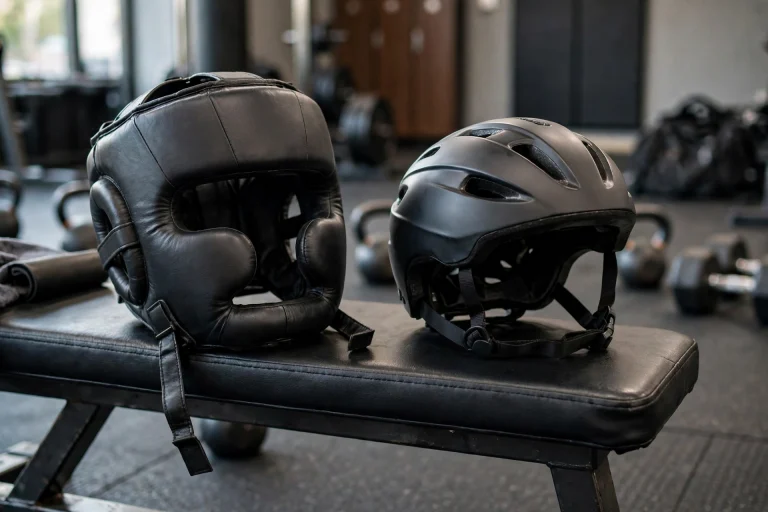
The design is deliberately simple. There is no heavy shell over the top of the head, because wrestling headgear is not meant to protect against the kind of high-speed impact a cycling or motorbike helmet handles. Its job is focused: protect the ears and the sides of the head from the close, grinding contact that is part of wrestling. If you are learning about helmet technology, reading about what MIPS is for helmets can help you understand one of the features you may see listed on protective headgear.

Is Wrestling Headgear Required in Competition?
Whether wrestling headgear is required depends on the level and the rules in use. In some school and youth competitions, headgear is required for all wrestlers. In other senior or international styles, it may be optional, and some experienced wrestlers choose not to wear it. Coaches and organisers set the rule for each event, so a wrestler should always check before a competition rather than assuming.
Even where it is optional, many wrestlers wear it in training. Training involves far more mat time than competition, with repeated drills and live rounds that add up to many hours of ear contact each week. Wearing headgear in practice and taking it off only for certain bouts is a common compromise, though some wrestlers wear it for every session.
For young wrestlers, parents and coaches often insist on headgear from the first session. Starting with headgear builds a habit that is hard to break later, and it avoids an injury that could put a young athlete off the sport.
What Should You Look for in Wrestling Ear Guards?
Start with the ear cups. They should be deep enough to cover the whole ear without pressing it flat, and smooth enough that they do not catch on the mat. Padding inside the cup should feel even, with no hard edges against the ear. Vents or holes in the cup help with hearing, which matters when a coach is calling instructions from the side of the mat.
Next, check the straps. They should adjust easily and stay where you set them, without slipping during a bout. A headgear that loosens mid-match is a distraction and may need to be refitted between periods. The straps should sit flat against the head, without digging in behind the ears or across the forehead. Some wrestlers prefer a four-strap design for a more even hold, while others prefer a simpler three-strap model.
Comfort over a full session is the final test. Try the headgear on, move your head in all directions, and practise a few shots and sprawls if you can. It should stay put without needing constant adjustment. If it pinches, slips, or blocks your hearing badly, try another model or size. A comfortable pair is one you will actually wear every session.
How Do You Care for Wrestling Headgear?
Wrestling headgear gets sweaty, so basic care matters. After each session, wipe the cups and straps with a damp cloth and let the headgear air-dry away from direct heat. Do not leave it crumpled in a kit bag for days, because damp straps and padding can smell and wear out faster. If the straps are removable, wash them according to the maker’s instructions.
Check the headgear regularly for wear. Look for cracked cups, frayed straps, broken buckles, or padding that has gone flat. A strap that slips or a cup that no longer sits over the ear properly should be replaced, not patched up and hoped for the best. In general terms, headgear that has been used hard for a season or two is worth inspecting closely before the next one.
Store it flat or hanging up, rather than folded under heavy kit. That keeps the cups in shape and the straps from twisting. If you share headgear between training partners, clean it between uses, and in general terms, having your own pair is better for fit and hygiene.
Frequently Asked Questions
Q: Does wrestling headgear stop cauliflower ear completely?
A: No, it lowers the risk by reducing friction and spreading contact, but it does not remove it entirely. Prompt care for any ear swelling is still important.
Q: Can wrestlers hear properly while wearing ear guards?
A: In general terms, yes. Most ear guards have vents to let sound through, though hearing may be slightly muffled. A well-fitted pair should still let you hear your coach and the referee.
Q: Do wrestlers wear headgear in every style of wrestling?
A: Not in every style. Some competitions require it and some make it optional. Check the rules for your event and follow your coach’s guidance for training.

Olivia
Writer at Helmet Today, covering helmet reviews, fit and riding safety.