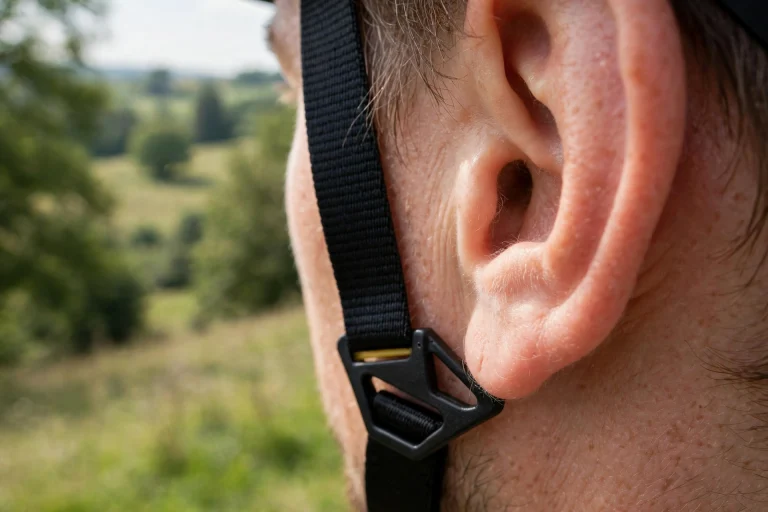
For a narrow head, look for a helmet with a long, narrow shell shape, an adjustable retention system with a wide range, and thicker comfort pads that can fill the space at the sides. Most helmets are built around an average head shape, and a narrow head can swim inside a shell that is the right length but too wide. The result is a helmet that rocks side to side, slides forward over the eyes, or needs the straps over-tightened to stay put.
A narrow head is not a rare problem, and it is not solved by simply buying a smaller size — a smaller helmet may be too short front to back while still being loose at the sides. This guide explains how to recognise a narrow fit problem, what to look for when shopping, and how to fine-tune the fit.
How Do You Know If You Have a Narrow Head?
The clearest sign is side-to-side movement. Put the helmet on, do up the strap, and try to rock it left and right with your hands. If it slides easily from side to side while fitting snugly front to back, the shell is too wide for your head. A well-fitting helmet should move the skin on your forehead when you try to twist it, not slide freely across it.
Another sign is the gap at the temples. Look in a mirror: if you can see a clear gap between the padding and the side of your head, while the front and back feel snug, the shape is wrong. Measuring with a tape gives a circumference, which decides the size, but it says nothing about shape — two heads with the same circumference can be very different shapes.
What Helmet Shapes Suit a Narrow Head?
Helmet makers describe shell shapes in different ways, but in general terms, some brands build longer, narrower shells and others build rounder ones. A brand whose helmets have always felt too wide is unlikely to change, so trying a different brand is often the fastest fix. Ask a shop which of their helmets have a narrower fit — staff who fit helmets every day usually know.
Look for a shell that is long front to back rather than wide side to side. In the shop, try the helmet on and check the contact: the padding should touch your head evenly all around, with no gaps at the temples and no pressure points at the forehead. If the front and back are snug but the sides are loose, the shape is still wrong, even if the size label matches your measurement.
Some helmets come in different shell shapes for the same size, or with fit systems designed for narrower heads. A helmet with an adjustable retention cradle that tightens at the sides as well as the back can help, because it takes up the slack where a narrow head needs it most.
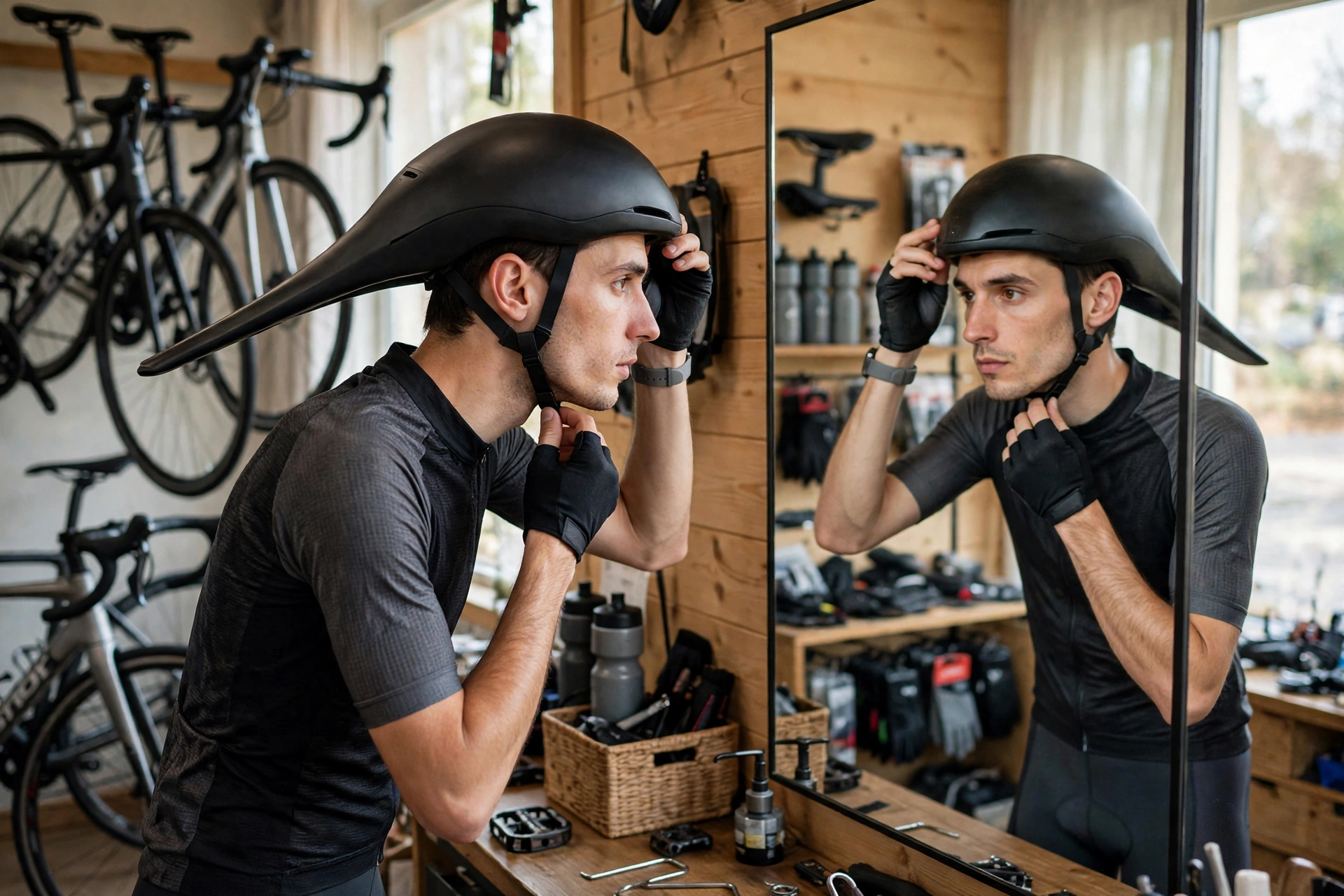
How Do Pads and Retention Systems Help a Narrow Fit?
Thicker comfort pads can fill the gap at the sides of a narrow head. Many helmets come with spare pads in different thicknesses, and swapping the side pads for thicker ones can turn a loose-feeling helmet into a snug one. This works best when the gap is small — a centimetre or so — rather than a large mismatch in shape.
The retention system matters just as much. A dial at the back that tightens a cradle around the head can take up slack at the sides, especially if the cradle wraps low around the head. Try the dial at different settings and check whether the helmet still rocks side to side. If the dial alone cannot stop the movement, pads or a different shell shape are needed.
Be careful with the straps. Over-tightening the chin strap to stop a loose helmet rocking is a common mistake, and it does not fix the problem — it just makes the helmet uncomfortable while it still moves. The fit should come from the shell and the retention system, with the strap as a back-up, not the main hold.
What Mistakes Should Narrow-Headed Riders Avoid?
The most common mistake is sizing down. A smaller helmet may feel tighter at the sides, but it will also be shorter front to back, which can press on the forehead and lift the back of the helmet away from the head. A helmet that is too short can also sit too high, leaving the forehead exposed. Size for length first, then fix the width with pads and the retention system.
Another mistake is adding a thick beanie or cap to fill the space. A bulky layer under the helmet changes how it sits and can make it sit higher and looser in a fall. A thin skull cap is fine in cold weather, but it is not a fit solution. If you are comparing helmet features, reading about what MIPS is for helmets can help you understand one of the liner systems you may see, since some liners affect how closely the helmet follows the shape of your head.
Do not ignore side-to-side movement either. A helmet that rocks may feel fine on a smooth road, but in a fall it can shift before it needs to protect you. If you cannot get a helmet to sit still on your head, keep looking — the right shape is out there, and a shop that fits helmets properly can help you find it.
How Should You Test a Helmet for a Narrow Head?
Try the helmet on with your hair as you normally wear it on a ride, and with any glasses or goggles you use. Do up the strap snugly, then do three checks: shake your head side to side, nod up and down, and try to twist the helmet with your hands. It should stay put in all three, and it should move the skin on your forehead rather than sliding across it.
Wear it in the shop for at least ten minutes. A narrow head often shows up as a pressure point at the front and back after a few minutes, while the sides stay loose. If the front starts to throb, the helmet is too short; if the sides stay loose, the shape is too wide. Either way, try another model.
Finally, check the helmet in a riding position. Bend forward as if on the bike and look up — the helmet should not slide forward over your eyes. A helmet that passes the standing test but slides when you bend forward is not the right fit, and no amount of strap tightening will fix it.
Frequently Asked Questions
Q: Should I buy a smaller helmet if I have a narrow head?
A: Not usually. Size for the length of your head first, then fix width with thicker side pads and the retention system. A smaller helmet is often too short front to back.
Q: Do some helmet brands fit narrow heads better?
A: Yes. Brands vary in shell shape, and some build longer, narrower shells. A shop that fits helmets daily can usually point you to the narrower models they stock.
Q: Can pads fix a helmet that is too wide?
A: Thicker side pads can fix a small gap, but not a large shape mismatch. If the helmet still rocks side to side with the thickest pads, try a different shell shape.

Olivia
Writer at Helmet Today, covering helmet reviews, fit and riding safety.