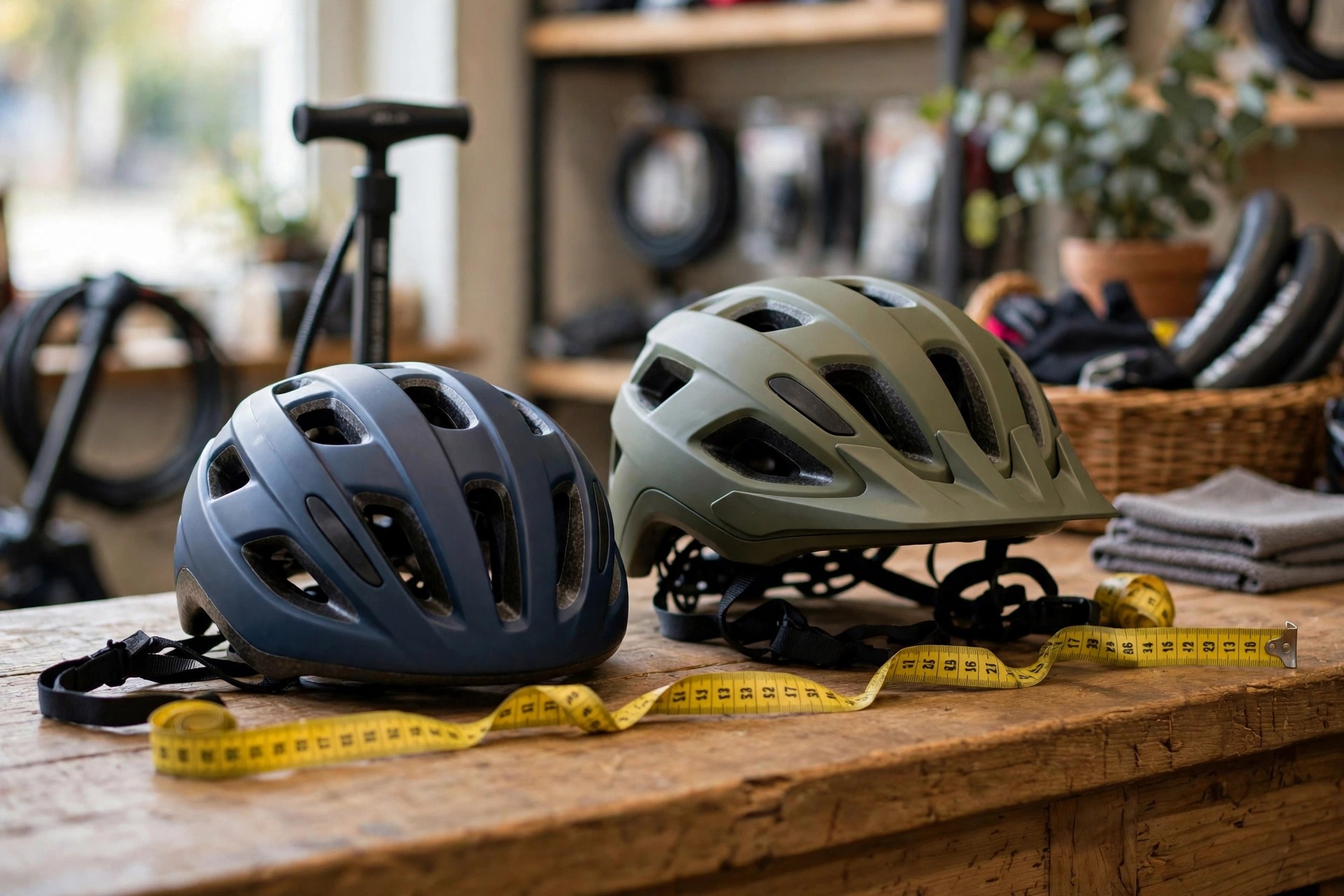
If you are between helmet sizes, try both sizes on and choose the one that fits your head shape best — then use the retention system and pads to fine-tune it, rather than guessing from the size chart alone. Size charts give a starting point, not an answer. A head measuring on the line between medium and large may fit either size well, and the right choice depends on your head shape, the helmet’s shell shape, and how the pads sit.
Being between sizes is common, and it is not a problem that needs a perfect answer. What matters is a helmet that sits level, feels snug all around, and stays put when you move. This guide explains how to test both sizes and decide with confidence.
Why Do Helmet Sizes Overlap?
Helmet sizes are ranges, not exact numbers. A medium might cover 55 to 59 centimetres and a large 59 to 63, which means a 59-centimetre head sits on the boundary of both. That overlap is deliberate: it gives shops and riders room to choose based on shape, not just circumference.
The overlap is also there because head shapes differ. Two heads measuring 59 centimetres can be shaped very differently — one round, one long — and the same size helmet will fit them differently. A round head may need the larger size for width, while a long head may fit the smaller size better for length. The tape measure cannot tell you which.
Padding adds another variable. New padding is thick and firm, and it compresses slightly with use. A helmet that feels snug on day one may feel roomier after a few weeks, which is why a slightly snug fit at first is often the better choice — as long as it is not painful.
Should You Size Up or Size Down?
In general terms, if you are between sizes, try the smaller size first. A snug helmet that you can fine-tune with the retention dial is usually better than a larger helmet that relies on the dial to take up a lot of slack. A helmet that starts slightly snug will also settle as the pads compress, while a helmet that starts loose will only get looser.
But snug must not mean painful. If the smaller size presses hard on your forehead, gives you a headache within minutes, or leaves a red mark, it is too small — no matter what the chart says. Pain is not something a helmet breaks in from; it is a sign the shell is the wrong size or shape for your head.
Size up if the smaller size is tight front to back but loose at the sides, or if you wear a thick layer under the helmet in winter and need the room. A larger shell with the retention system tightened can fit well, as long as the helmet does not rock or slide. The test is always the same: does it stay put, and does it hurt?

How Do You Test Both Sizes Properly?
Try both sizes in the same model, one after the other, with your hair as you normally wear it on a ride. Put each helmet on, do up the strap, and adjust the retention dial until it feels snug. Then do the same three checks on each: shake your head side to side, nod up and down, and try to twist the helmet with your hands.
The helmet should move the skin on your forehead when you twist it, not slide freely across it. It should not rock side to side or slide forward over your eyes when you bend forward. Wear each size for several minutes in the shop — a fit that feels fine for thirty seconds can become uncomfortable after ten.
Check the coverage too. The helmet should sit level, low enough to cover the forehead, with the front edge about two fingers above the eyebrows. If one size sits noticeably higher than the other, that size is probably too small. Compare how each size feels with your glasses or goggles on, since those change the fit around the temples.
Can Pads and the Retention System Bridge the Gap?
Yes — that is what they are for. Many helmets come with spare comfort pads in different thicknesses, and swapping a thick pad for a thin one (or the other way round) can change the effective size by a useful amount. If the smaller size is just slightly tight, thinner pads may fix it; if the larger size is just slightly loose, thicker pads can take up the slack.
The retention system does the same job at the back and sides of the head. A dial that tightens a cradle around the head can take up several millimetres of slack, which is often enough to make the larger size work. But there is a limit: if the dial is at its tightest and the helmet still rocks, the shell is too big, and pads alone will not fix it.
Some helmets also have an adjustable cradle height, which changes where the retention system grips. A lower cradle can make a larger helmet feel more secure, while a higher cradle suits a smaller head. If you are comparing helmet features, reading about what MIPS is for helmets can help you understand one of the liner systems you may see, since some liners sit between the shell and the pads and change how the fit feels.
What If Neither Size Feels Right?
If neither size in one model feels right, the problem is probably shape, not size. Try a different model or a different brand: a rounder shell may suit you where a long shell does not, or the other way round. Shops that fit helmets every day can usually suggest a model that matches your head shape once they have seen you try a few.
Do not settle for a poor fit because the colour or price is right. A helmet you wear every ride needs to be comfortable enough to forget about, and a helmet that pinches or rocks will end up left at home. It is better to try more models than to buy a helmet you will not wear.
Finally, remember that sizes vary between makers, so a medium in one brand may fit like a large in another. Ignore the label and trust the fit checks: level, snug, stable, and pain-free. That is the same test whatever the size on the box says.
Frequently Asked Questions
Q: Is it better to size up or down when between helmet sizes?
A: In general terms, try the smaller size first — a snug fit that settles as pads compress is usually better than a loose one. But if the smaller size hurts or presses hard, size up.
Q: Will a helmet loosen up with use?
A: The comfort pads compress slightly over the first weeks, so a snug helmet often feels roomier with time. The shell itself does not stretch, so a helmet that is painfully tight will not become comfortable.
Q: Can I use thicker pads to make a large helmet fit?
A: Thicker pads can take up a small amount of slack, and the retention dial helps too. But if the helmet still rocks side to side with the thickest pads, the shell is too big and you need a smaller size or a different shape.

Olivia
Writer at Helmet Today, covering helmet reviews, fit and riding safety.