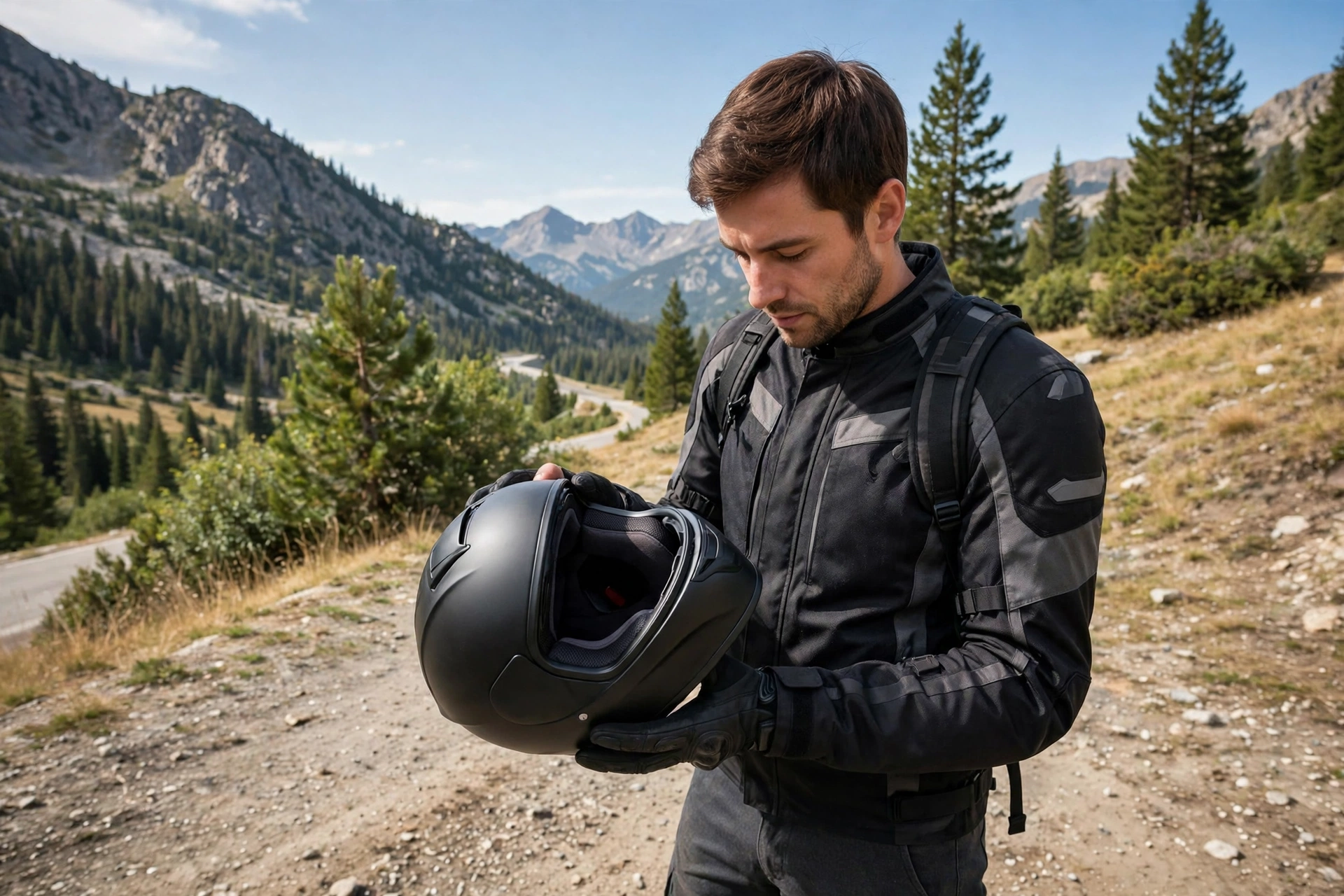
A helmet creaks when its parts move against each other as you ride, and in general terms the noise usually comes from the shell, the foam lining, the vents, or the straps shifting under pressure, rather than from a single broken part. A creak can be a small, regular ticking sound or a louder groan that appears when you turn your head, hit a bump, or lean into the wind. It is a common complaint, and in most cases it is annoying rather than dangerous, but it is still worth finding the cause.
Helmets are made from several materials joined together: a hard outer shell, a foam liner, plastic vent parts, fabric padding, and straps with buckles. Each of these parts can expand, contract, and flex with heat, cold, and sweat. When two parts rub or shift against each other, the result is a creak, and the sound can seem louder than it is because the helmet sits close to your ears.
What makes a helmet creak?
A helmet creaks when one part moves against another under load, and the most common cause is the shell flexing against the foam liner. As you ride, the wind presses on the shell, your head moves inside the helmet, and bumps from the road shake the whole helmet. In general terms, any small gap or loose joint between the shell and the liner can become a source of noise, and the sound often appears only at certain speeds or in certain positions.
Vents are another common cause. Many helmets have plastic vent covers, sliders, or shutters that can work loose over time, and a loose vent part can rattle or creak with every bump. Straps can creak too, especially where the webbing passes through a plastic guide or where the buckle meets the strap. Padding that has dried out or hardened can also squeak against the shell, and a visor or a peak that is not seated firmly can add its own noise.
Is a creaking helmet safe to wear?
A creaking helmet is, in general terms, safe to wear if the helmet is in good condition, fits well, and has not taken a serious impact. A creak on its own does not mean the helmet is broken, and many helmets creak from new without any loss of protection. The key question is whether the noise comes with any other sign of trouble, such as a crack, a loose part, or a change in fit.
A creak should be taken more seriously if the helmet has been dropped, has been in a crash, or shows visible damage. In that case the noise may be a sign that the shell or the liner has been weakened, and the helmet should be looked at with care. If the shell is cracked, if the foam is dented or crumbling, or if a strap or buckle is damaged, the helmet should be replaced rather than used again. When in doubt, it is better to replace a helmet than to keep riding in one you do not trust.
How can you find where the creak is coming from?
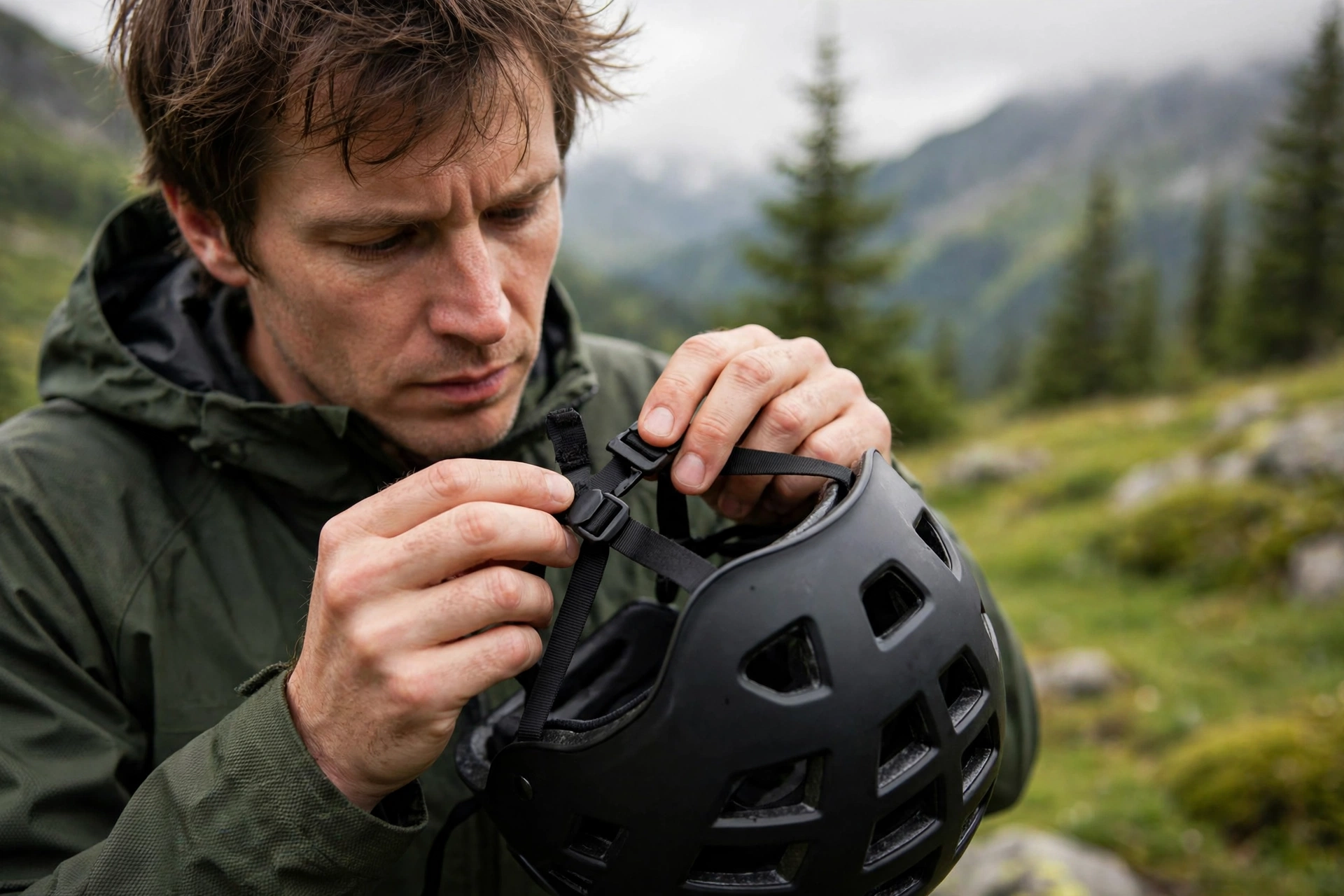
You can find where a creak is coming from by testing the helmet in your hands before you ride. Hold the helmet firmly and press on different parts of the shell, one at a time, listening for the sound. Press the vents, wiggle the visor or peak, and move the straps through their guides. In general terms, the part that makes the noise when you press it is the part that needs attention.
It also helps to wear the helmet and move your head slowly from side to side, then nod up and down, to see which movement brings the creak. If the noise appears only when the strap is tight, the strap or the buckle may be the cause. If it appears when you press the top of the shell, the shell and liner may be rubbing. Testing in a quiet room makes the job easier, because wind noise on the road can hide a small creak.
How do you stop a helmet from creaking?
You can often stop a helmet from creaking by cleaning the parts that rub and by tightening anything that has worked loose. Start by removing the lining and the cheek pads, if they come out, and washing them according to the maker’s guidance. Clean the inside of the shell and the vent parts, and let everything dry naturally before putting the helmet back together. Dirt and grit caught between parts is a common cause of noise.
If a vent slider or a visor screw is loose, tighten it gently, but do not force it. A tiny amount of silicone lubricant on a plastic vent or a strap guide can quiet a creak, though it should be kept away from the foam liner and the fabric. Check that the lining is seated properly in the shell, with no folds or twists, and that the straps run freely through their guides. If the creak will not go away after cleaning and checking, ask a dealer or the maker for advice before your next ride.
When should a creaking helmet be replaced?
A creaking helmet should be replaced when the noise comes with damage, a poor fit, or a history of hard knocks. If the shell is cracked, the foam is compressed or crumbling, or the strap or buckle no longer holds firmly, the helmet has reached the end of its useful life. In general terms, a helmet that has taken a serious impact should be replaced rather than used again, even if the damage is hard to see.
Age matters too. A helmet that has been worn for a long time, stored in heat, or used every day will wear out, and a creak can be one sign of that wear. Riders who are choosing a new helmet may also want to learn about features that can help in a fall, including a system designed to reduce rotational forces, such as MIPS, which is found in many modern helmets. A well-kept helmet, cleaned and checked often, gives a rider the best chance of a quiet and comfortable ride.
Why does my helmet creak only at speed?
In general terms, a helmet creaks only at speed because wind pressure flexes the shell and shakes loose parts. At low speed there is less force on the helmet, so the parts do not move enough to make a noise.
Can a new helmet creak?
Yes, a new helmet can creak. The parts may still be settling in, or a vent or a visor may need to be seated firmly. If a new helmet keeps creaking after a few rides, check the vents and straps, or ask the dealer.
Does a creak mean my helmet is broken?
Not on its own. A creak is often just parts rubbing, but if the helmet is cracked, has been in a crash, or no longer fits well, it should be checked and may need to be replaced.

Olivia
Writer at Helmet Today, covering helmet reviews, fit and riding safety.