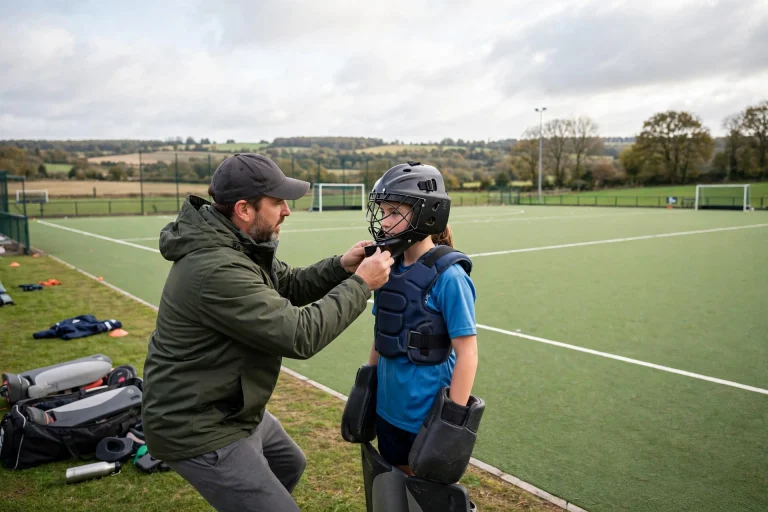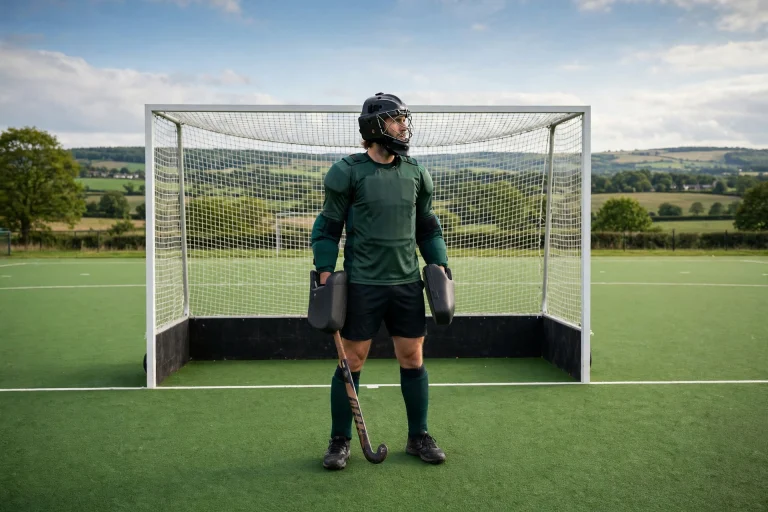
Yes, in general terms, rugby headgear and a mouthguard can work together, and many players wear both at the same time. They protect different things: the headgear is soft padding for the head and ears, and the mouthguard protects the teeth, jaw, and mouth. Worn together, they cover more of the player than either one alone, as long as each is fitted properly and neither interferes with the other.
The question comes up often, because players who already wear one wonder whether adding the other is sensible, and parents wonder whether their child should wear both. This guide explains how the two work together, how to wear them comfortably, and what their limits are.
What Is Rugby Headgear, Really?
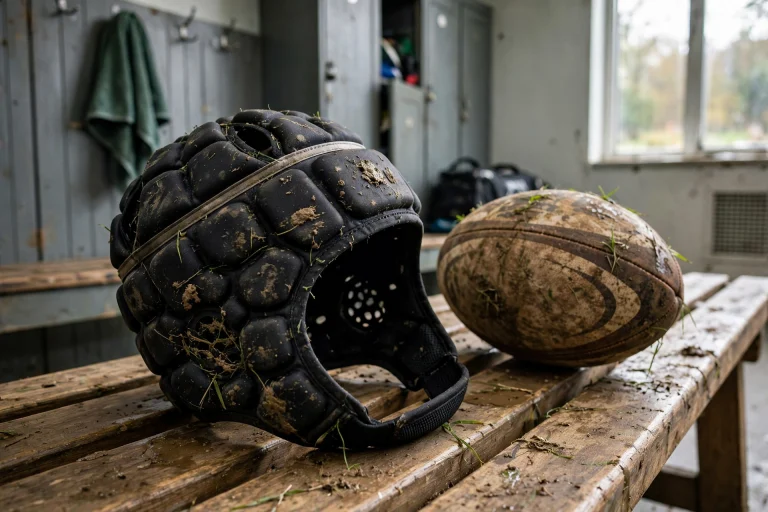
Rugby headgear, often called a scrum cap, is a soft padded cap worn over the head. It is made from foam padding covered in fabric, shaped to fit closely around the crown, sides, and back of the head, with openings for the ears. It is not a hard helmet, and it should not be confused with one.
It is important to be honest about what soft headgear does and does not do. It is padding, not armour. It can help with scrapes, cuts, and pressure on the ears, and it may cushion light knocks. It does not prevent concussion, and no player should wear it thinking it makes the head safe from serious injury. That is a claim the evidence does not support, and players should not rely on headgear in that way.
Do Rugby Headgear and Mouthguards Work Together?
Yes, in general terms they work together well, because they sit on different parts of the head and do different jobs. The headgear covers the top and sides of the head, while the mouthguard sits inside the mouth, over the teeth. They do not overlap in a way that causes a problem, and one does not stop the other from doing its job.
Many players wear both, particularly forwards, who face close contact in scrums, rucks, and mauls. For them, the combination is practical: the headgear deals with the ears and the scalp, and the mouthguard deals with the teeth and the jaw. Neither piece of kit is a substitute for the other.
How Do You Wear Headgear With a Mouthguard?
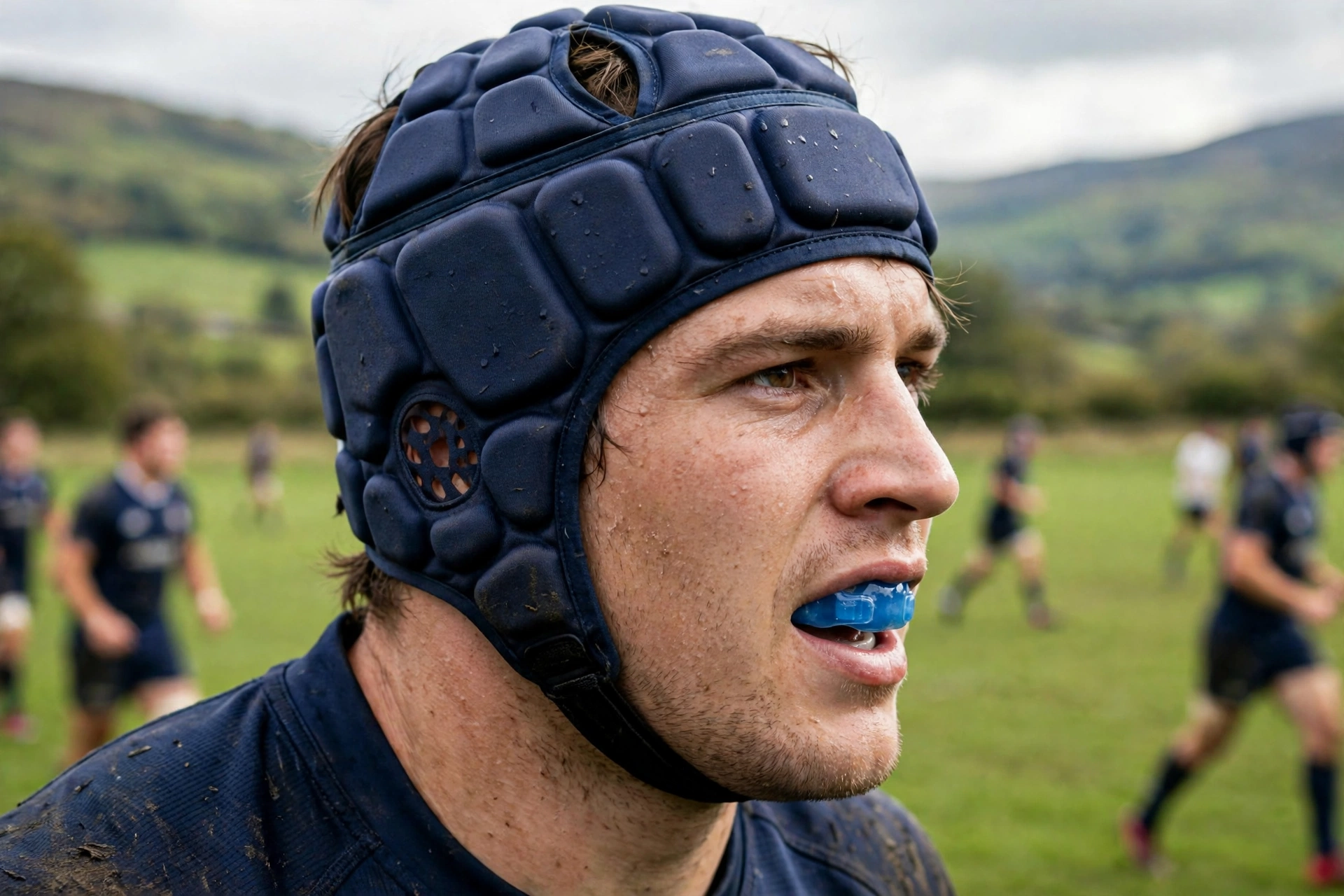
Put the headgear on first, then the mouthguard. Fit the headgear so it sits level and snug, with the chin strap done up comfortably, and check that it does not slide forward over the forehead or back off the head. The ears should sit in the ear openings, so the player can hear clearly.
Then fit the mouthguard. A mouthguard should be moulded to the player’s teeth, usually by heating it and biting down so it takes the shape of the mouth. A well-fitted mouthguard stays in place without the player having to clench to hold it, and it should not make speaking or breathing difficult. If it does, it may need to be remoulded or replaced with a different size.
Once both are on, check them together. Talk, breathe hard, and move the jaw. The headgear should not press the mouthguard out of place, and the mouthguard should not push against the headgear. The chin strap of the headgear sits under the chin, while the mouthguard sits inside the mouth, so the two should not interfere. If something feels wrong, adjust the headgear first, because the mouthguard’s fit depends on the shape of the teeth, which does not change.
What Are the Limits of Headgear and Mouthguards?
It is important to understand what these two pieces of kit cannot do. Rugby headgear is soft padding. It does not prevent concussion, and wearing it does not make a tackle to the head safe. Any player who takes a knock to the head should be checked properly, whether they are wearing headgear or not, and the decision about whether they can keep playing should follow the concussion guidance that applies to their level of the game.
A mouthguard protects the teeth, the lips, and the jaw, and it can reduce the risk of dental injury. It does not protect the brain, and it does not prevent concussion either. Players sometimes assume that a mouthguard offers more protection than it does, so it is worth being clear: the mouthguard guards the mouth, not the head as a whole.
Both pieces of kit work best as part of good technique. Learning to tackle safely, to fall safely, and to keep the head out of dangerous positions will do more for a player’s safety than any equipment. Coaches teach these skills for a reason, and equipment should support good technique, not replace it.
What Should You Look for in Each?
For headgear, look for a snug fit, even padding, and a chin strap that holds firmly without cutting in. The ear openings should line up with the ears, and the player should be able to hear clearly. Padding should be comfortable and, ideally, washable, because headgear gets sweaty and should be cleaned regularly. Check the stitching and the strap before each use, and replace the headgear if the padding has gone flat or the strap no longer holds.
For a mouthguard, the fit is everything. A mouthguard that is too loose will not stay in place, and one that is too tight will be uncomfortable and may make breathing harder. A boil-and-bite mouthguard, moulded at home, suits many players, while a custom-fitted mouthguard made by a dentist offers a closer fit. Young players should have their mouthguard checked as their teeth change, because a mouthguard that fitted last year may not fit this year.
For both, comfort over a full match matters more than comfort in the shop. A player should try headgear and a mouthguard together in training, not just standing still, before wearing them in a match. If you want to understand the technology inside hard helmets more generally, reading about what MIPS is for helmets is a useful introduction, although soft rugby headgear does not use that system.
How Do You Look After Headgear and a Mouthguard?
Headgear should be washed regularly, following the maker’s instructions, because sweat and dirt build up quickly. Let it dry fully before putting it away, and do not leave it damp in a kit bag, where it can develop a smell and wear out faster. Check the padding and the straps each time you use it, and replace it if the padding has flattened or the strap is frayed.
Frequently Asked Questions
Q: Can you wear rugby headgear and a mouthguard at the same time?
A: Yes, in general terms they work well together. The headgear covers the head and ears, and the mouthguard protects the teeth and jaw. They do different jobs and do not interfere with each other when both are fitted properly.
Q: Does wearing headgear and a mouthguard prevent concussion?
A: No. Soft rugby headgear does not prevent concussion, and a mouthguard protects the teeth and jaw rather than the brain. Any player who takes a knock to the head should be checked properly, whether they are wearing headgear or not.
Q: Which should a player get first, headgear or a mouthguard?
A: In general terms, a mouthguard is the more common first step, because it protects the teeth, which are easily damaged. Headgear is a personal choice, often for forwards or players who want ear protection. Many players end up wearing both.

Olivia
Writer at Helmet Today, covering helmet reviews, fit and riding safety.