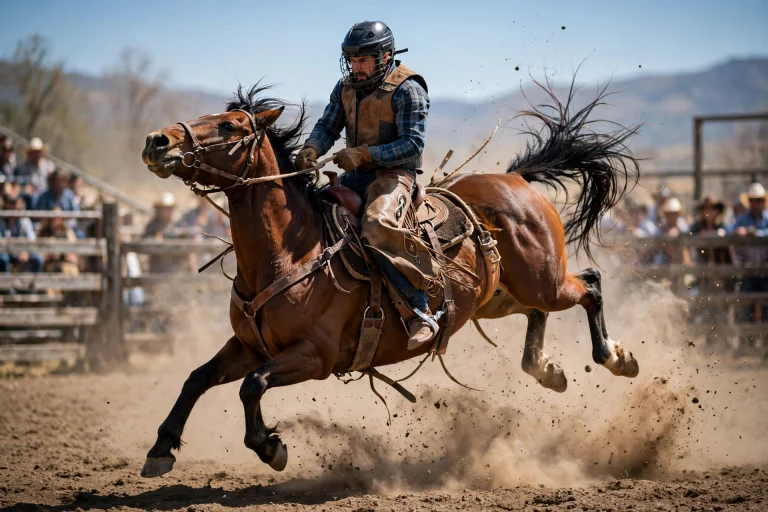
In general terms, good ventilation in a rodeo helmet matters most at hot weather events, where heat, dust, and hard riding combine to make a poorly ventilated helmet unbearable. A helmet that traps heat will leave you sweating, distracted, and tempted to take it off — and a helmet sitting on a fence rail protects no one. Ventilation is therefore not a comfort extra for rodeo riders; it is a practical feature that decides whether the helmet stays on your head through a long, hot day of competition.
This guide explains why ventilation matters so much at rodeos, how helmet ventilation works, which features to look for, and how to stay cool without giving up protection when the temperature climbs.
Why Does Ventilation Matter So Much at Rodeos?
Rodeos are often held outdoors in summer, and the arena offers little shade. The sun beats down on the dirt, the air is still between runs, and the rider is working hard: warming up, competing, and then cooling down a horse, all while wearing jeans, boots, a long-sleeved shirt, and a helmet. In those conditions, heat builds up fast, and a helmet that does not breathe makes it worse.
Heat affects more than comfort. A rider who is overheating loses focus, reacts more slowly, and tires faster, and in a sport where a fraction of a second decides whether you stay on, that matters. Sweat running into your eyes, a helmet that feels like an oven, and the constant urge to pull it off are all distractions you do not need before a ride.
How Does Rodeo Helmet Ventilation Work?
Helmet ventilation works by letting air flow through the helmet, carrying heat and moisture away from your head. Most ventilated helmets have intake vents at the front, which catch air as you move, and exhaust vents at the back, which let warm air escape. Inside the helmet, channels in the liner guide the airflow over your head, so the cooling effect reaches more than the vent openings themselves.
Speed helps, but only up to a point. On a fast run, such as barrel racing, the airflow through the vents is strong. Between runs, when you are standing still or walking your horse, the airflow is much weaker, and the helmet relies on natural convection — warm air rising and escaping through the top and rear vents. That is why the number and placement of vents matters, not just their size: a helmet with vents only at the front will cool less when you are standing still than one with vents all round.

What Ventilation Features Should You Look For?
Start with the vents themselves. Look for a helmet with several intake and exhaust vents, placed at the front, top, and rear, rather than one or two small holes. Vents that you can open and close are useful, because they let you adjust the airflow to the weather: open in the heat, partly closed in cooler conditions or rain. Check that the vents are not blocked by padding or a hat cover when the helmet is worn as you would wear it to compete.
Look at the liner and padding next. A removable, washable liner made from a breathable, moisture-wicking fabric will feel cooler and will be easier to keep fresh through a season of hot, dusty events. Padding with air channels built in works with the vents to move air across your head, and it is worth asking the maker or retailer how the liner is designed.
Colour and shell finish matter more than many riders expect. A light-coloured shell absorbs less heat from the sun than a dark one, and that difference is noticeable after an hour in direct sun. If you compete in rodeo regularly in hot weather, a white or light-coloured helmet is a practical choice rather than a style statement. If you are comparing helmet features in general, reading about what MIPS is for helmets can help you understand one of the safety features you may see listed on the box.
How Can You Stay Cool Without Giving Up Protection?
The first rule is simple: do not solve the heat problem by riding without a helmet. A ventilated helmet is the answer, not no helmet. If your current helmet is unbearably hot, the fix is a better-ventilated helmet, not a bare head. Try several models in warm conditions if you can, and pay attention to how each one feels after ten minutes, not just ten seconds.
Small habits help. Keep your helmet out of direct sun between events rather than leaving it on a hot truck seat or a fence rail in the sun, so it starts cool. Wearing a thin, moisture-wicking skull cap or bandana under your helmet can help manage sweat and keep the liner fresher, as long as it does not change the fit. Drink water regularly through the day, and take what shade you can between events: cooling your whole body helps your head feel cooler too.
Be realistic about what ventilation can do. No helmet will feel like no helmet on a very hot day, and a ventilated helmet still traps more heat than a bare head. The goal is a helmet you can wear comfortably for the whole event, not one you forget entirely. If a helmet feels good in the shop but unbearable after half an hour in the sun, it is not the right helmet for hot weather events, however well it is ventilated on paper.
What Should You Avoid in Hot Weather?
Avoid helmets with no vents at all, or with vents that are sealed by a decorative cover. Some helmets designed to look like a cowboy hat have little or no airflow, and they can become very hot in summer. If the look matters to you, look for a western-styled helmet that is specifically designed with ventilation, rather than one that simply copies the shape of a hat.
Avoid a helmet that is too tight in the hope that it will stay put. A tight helmet traps heat, causes pressure points, and becomes a distraction. The helmet should be snug, not tight, and it should not leave deep marks on your forehead. If it does, try a different size or a different model with a different internal shape.
Frequently Asked Questions
Q: Does a ventilated helmet protect as well as a non-ventilated one?
A: In general terms, yes. Vents are designed into the helmet so that protection is maintained, and a certified ventilated helmet meets the same standard as a certified non-ventilated one. Check the label inside the helmet to confirm its certification.
Q: How many vents should a rodeo helmet have?
A: There is no single right number, but look for several vents placed at the front, top and rear, with air channels inside the liner. A helmet with vents all round will cool better when you are standing still between runs than one with vents only at the front.
Q: Can I wear a bandana under my helmet to stay cool?
A: A thin, moisture-wicking bandana or skull cap can help manage sweat, as long as it does not change the fit of the helmet. If the helmet becomes loose or sits higher on your head with the bandana on, it no longer fits properly — try a thinner layer or a different helmet.

Olivia
Writer at Helmet Today, covering helmet reviews, fit and riding safety.