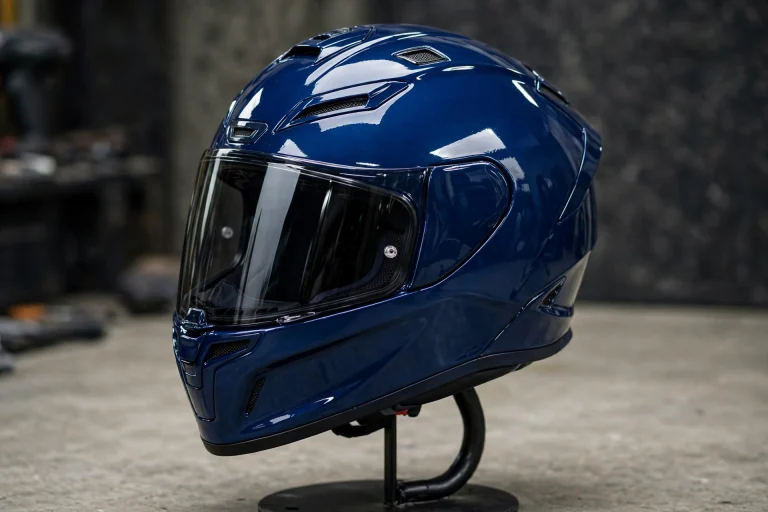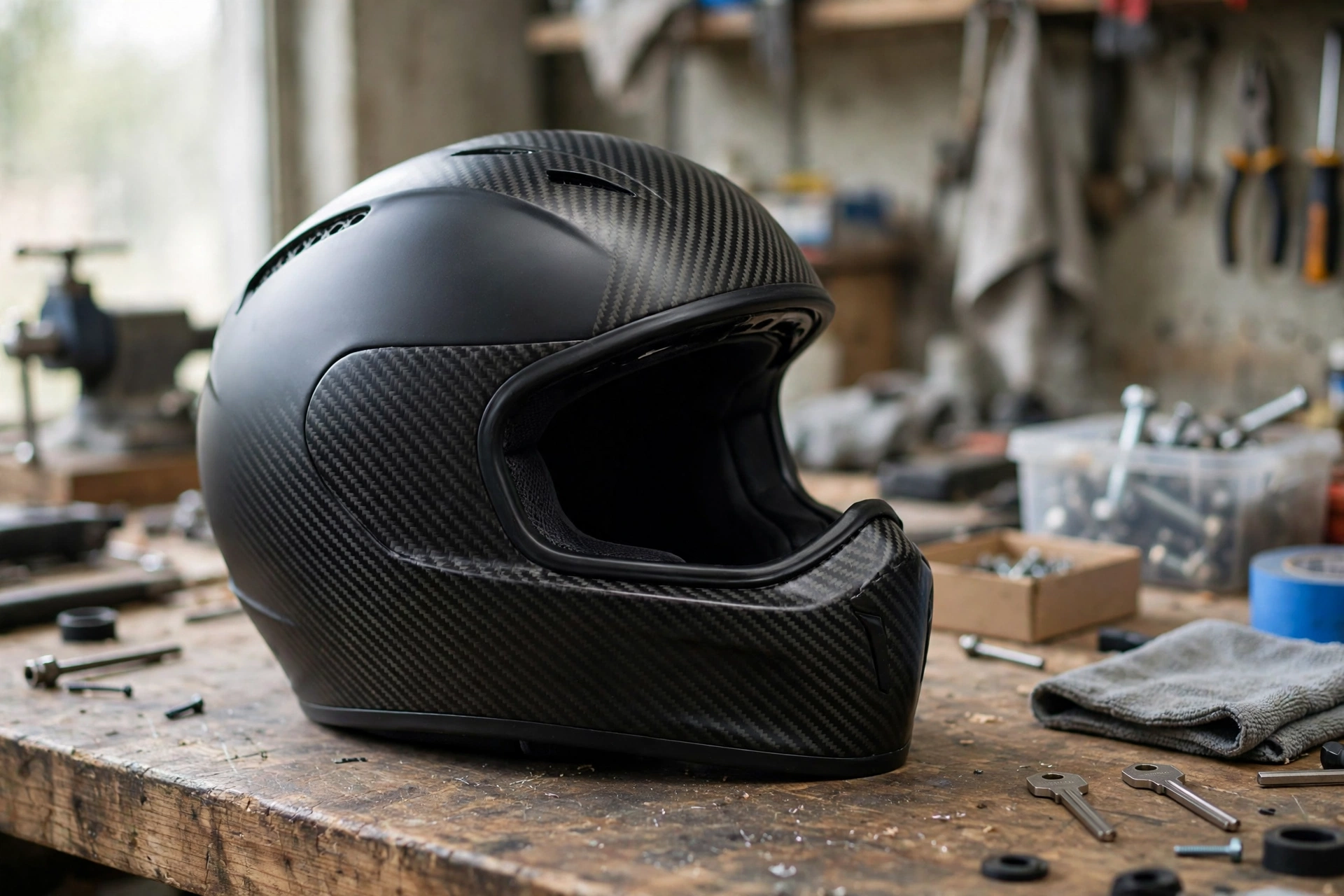
In general terms, a carbon fibre helmet shell is a helmet outer shell made from layers of carbon fibre fabric set in resin, and it is valued because it can be both very light and very strong. Carbon fibre is a material you may have heard of in cycling, motorsport, and aviation, where weight and strength matter a great deal. In helmets, it offers the same appeal: a shell that protects your head without the weight of heavier materials. But carbon fibre is not magic, and understanding how these shells are made — and what they can and cannot do — will help you decide whether one is right for you.
This guide explains what carbon fibre is, how helmet shells are made from it in general terms, what its advantages and downsides are, and how to look after a carbon fibre helmet if you own one.
What Is a Carbon Fibre Helmet Shell?
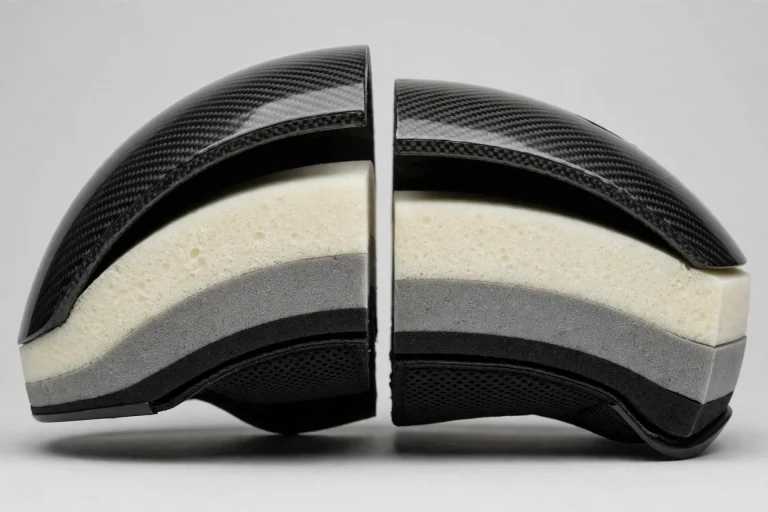
The shell is the hard outer layer of a helmet. Its job is to spread the force of an impact over a wider area, resist penetration from sharp objects, and hold the energy-absorbing liner in place. Most helmet shells are made from plastics, fibreglass, or a mix of materials. A carbon fibre shell is made from carbon fibre fabric — thin strands of carbon woven into a cloth — set in a resin that hardens to hold the fibres in shape.
Carbon fibre is known for its strength relative to its weight. A carbon fibre part can be as strong as a steel part of the same size while weighing far less, and it is stiffer than fibreglass at the same weight. For a helmet, that means a shell can be made thinner and lighter without losing strength. Riders often notice the difference immediately: a carbon fibre helmet can feel noticeably lighter on the head than a similar helmet made from heavier materials.
How Are Carbon Fibre Helmet Shells Made?
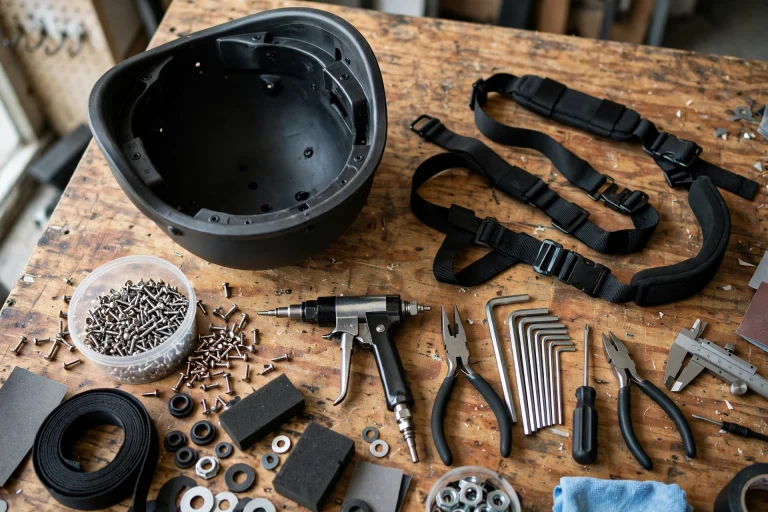
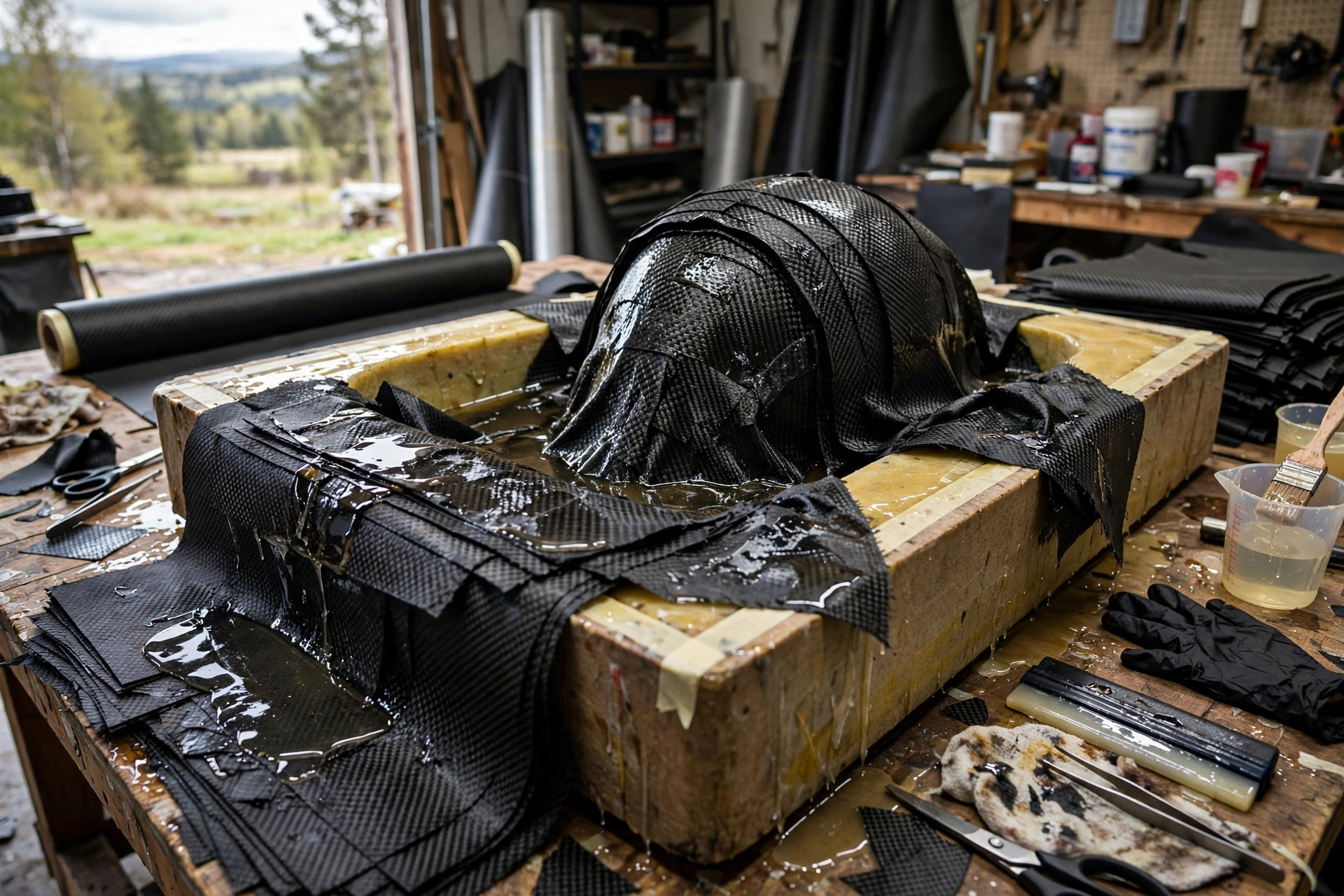
Carbon fibre helmet shells are made by layering sheets of carbon fibre fabric in a mould, in a process that is often called lay-up. Workers or machines place layer upon layer of the fabric into a mould shaped like the helmet shell, with the fibres in each layer running in a different direction. This matters, because carbon fibre is strongest along the direction of its fibres, so layering the fabric in different directions gives the finished shell strength in all directions rather than just one.
Once the layers are in place, resin is added to bind the fibres together, and the mould is closed. The shell is then cured — heated under pressure for a set time — so that the resin hardens and locks the fibres into a single rigid shape.
What Are the Advantages of Carbon Fibre?
Weight is the clearest advantage. A carbon fibre shell can be lighter than a shell made from fibreglass or plastic of the same strength, and that lower weight is something you feel on a long ride. A lighter helmet is less tiring on your neck, less likely to shift around at speed, and more comfortable over hours in the saddle or on the road. For riders who wear a helmet all day, that comfort is a real benefit, not a small one. If you are comparing helmet safety features in general, reading about what MIPS is for helmets can help you understand one of the features you may see listed on the box.
Strength and stiffness are the other advantages. Carbon fibre is very stiff for its weight, which means a shell can be made thin without flexing too much. A stiff shell spreads impact force over a wider area, which is exactly what a shell is meant to do.
Are There Downsides to Carbon Fibre Shells?
Cost is the most obvious downside. Carbon fibre fabric, resin, and the skilled labour involved in laying up and curing a shell all cost more than moulding a plastic shell, and that shows in the price. A carbon fibre helmet is usually one of the more expensive helmets on the shelf, and the price difference can be large. For many riders, a well-made fibreglass or composite helmet that meets the same standard offers similar protection for less money.
Damage behaviour is another consideration. Carbon fibre is strong, but it can be brittle: it may crack or splinter rather than dent when it takes a hard knock, and damage can be hidden beneath the surface where you cannot see it. That is why a carbon fibre helmet, like any helmet, should be replaced after a hard impact, even if the outside looks undamaged. It is also why you should be careful not to drop a carbon fibre helmet onto a hard surface or knock it against sharp edges.
Repair is generally not a practical option. Unlike some materials that can be patched, a damaged carbon fibre shell cannot be reliably repaired at home, and a repair that looks fine on the outside may not restore the shell’s strength. If a carbon fibre helmet is damaged, the safe answer is to replace it.
How Do You Care for a Carbon Fibre Helmet?
Handle a carbon fibre helmet with the same care you would give any good helmet, and a little more. Store it in a cool, dry place out of direct sunlight, ideally in a helmet bag, and do not leave it on a hot dashboard or in a car boot on a summer day. Avoid hanging it by its strap on a hook, which can stretch the strap, and keep it away from solvents, petrol, and strong cleaning chemicals, which can damage the resin and the finish.
Clean the shell with a soft cloth and mild soap and water, and dry it gently. Avoid abrasive cleaners or rough cloths, which can scratch the clear coat that protects the carbon fibre. If the helmet has a removable liner, take it out and wash it according to the maker’s instructions, and let everything air-dry fully before you put the helmet away.
Inspect the helmet regularly, and replace it after any hard impact or if you find cracks, chips, or delamination — layers separating from each other — in the shell. In general terms, helmets wear out over time even without a crash, and makers usually give a recommended replacement period, often around five years from first use. A carbon fibre helmet is an investment, and looking after it properly is part of getting your money’s worth from it.
Frequently Asked Questions
Q: Is a carbon fibre helmet safer than a fibreglass helmet?
A: Not necessarily. Both can meet the same safety standard, and the helmet as a whole — shell plus liner — is what is tested. Carbon fibre is lighter and stiffer, but a fibreglass helmet that meets the same standard offers similar protection.
Q: Why are carbon fibre helmets more expensive?
A: The materials cost more, and making a shell by layering carbon fibre fabric in a mould and curing it takes more time and skilled work than moulding a plastic shell. You are paying for lighter weight and a more labour-intensive process.
Q: Can a damaged carbon fibre helmet be repaired?
A: In general terms, no. A cracked or damaged carbon fibre shell cannot be reliably repaired at home, and a repair may not restore its strength. If a carbon fibre helmet takes a hard knock, replace it.

Olivia
Writer at Helmet Today, covering helmet reviews, fit and riding safety.