ABS is a moulded plastic used for the outer shell of many helmets, valued because it is tough, affordable and easy to shape into smooth, consistent shells. ABS stands for acrylonitrile butadiene styrene, a thermoplastic that can be heated, moulded and cooled into a hard shell. It appears widely in motorcycle, cycling, ski and work helmets, especially at the more affordable end of the range.
An ABS shell is not a sign of a cheap or unsafe helmet on its own. What matters is the whole helmet, including the foam liner, the fit and the safety standard it meets. This guide explains what ABS is, what it does well, where its limits lie, and how to look after a helmet with an ABS shell.
What Is ABS and How Is a Helmet Shell Made from It?
ABS is a plastic made by combining three building blocks: acrylonitrile, which adds strength and heat resistance; butadiene, which adds toughness and flexibility; and styrene, which makes the plastic rigid and easy to mould. Together they produce a material that is hard enough to hold its shape yet flexible enough to absorb a knock without shattering.
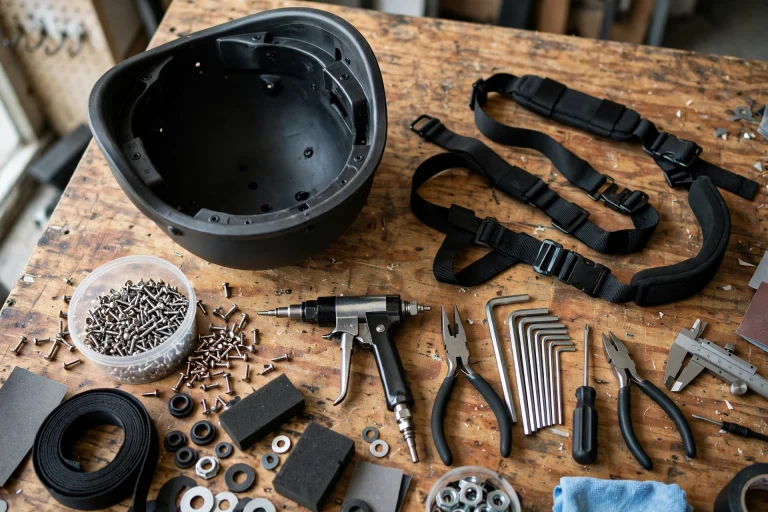
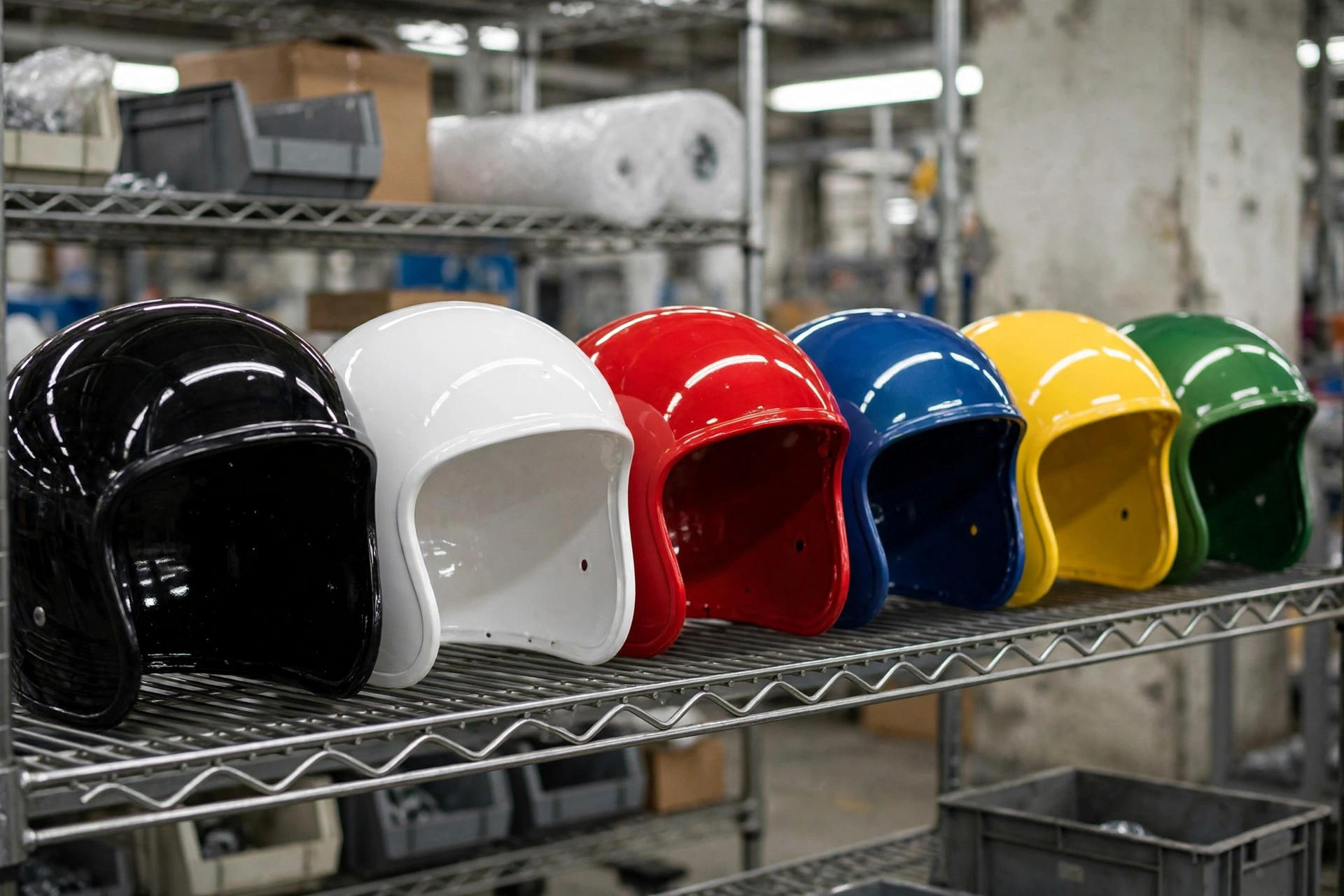
To make a helmet shell, ABS pellets are heated until they soften, then injected or pressed into a mould shaped like the helmet. Once cooled, the shell holds its form. Because the process is fast and repeatable, makers can produce large numbers of identical shells, which keeps costs down and quality consistent.
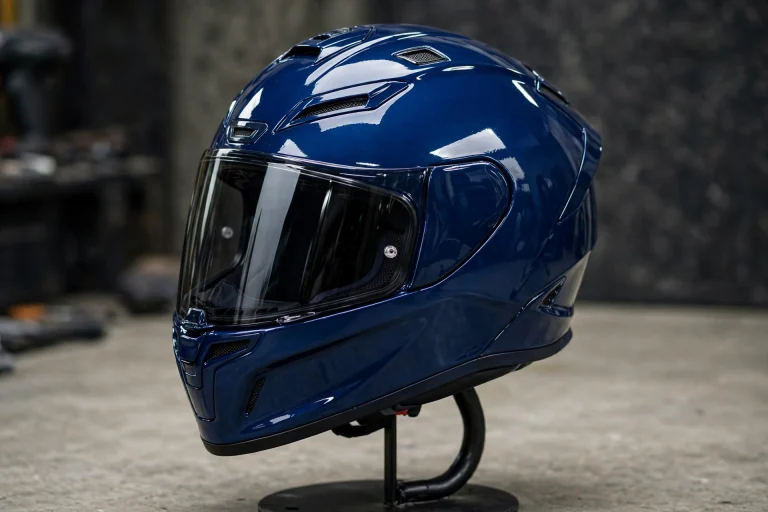
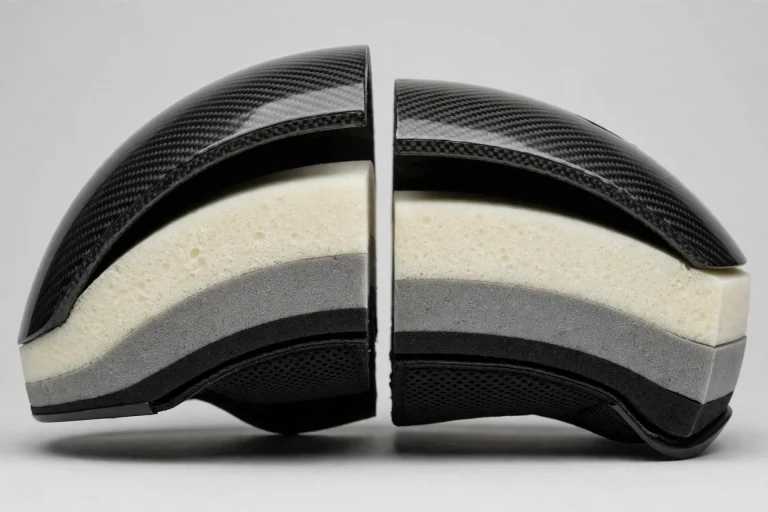
The finished shell is usually painted or finished with a clear coat, which protects the plastic and gives the helmet its colour and graphics. The shell is then fitted with a foam liner, straps and padding to complete the helmet.
What Are the Strengths of an ABS Helmet Shell?
The biggest strength of ABS is its toughness for its price. An ABS shell can take knocks, scrapes and everyday bumps without cracking easily, which suits helmets that get used hard and stored roughly. It resists dents better than some brittle plastics, and a scuffed ABS shell often still looks presentable.
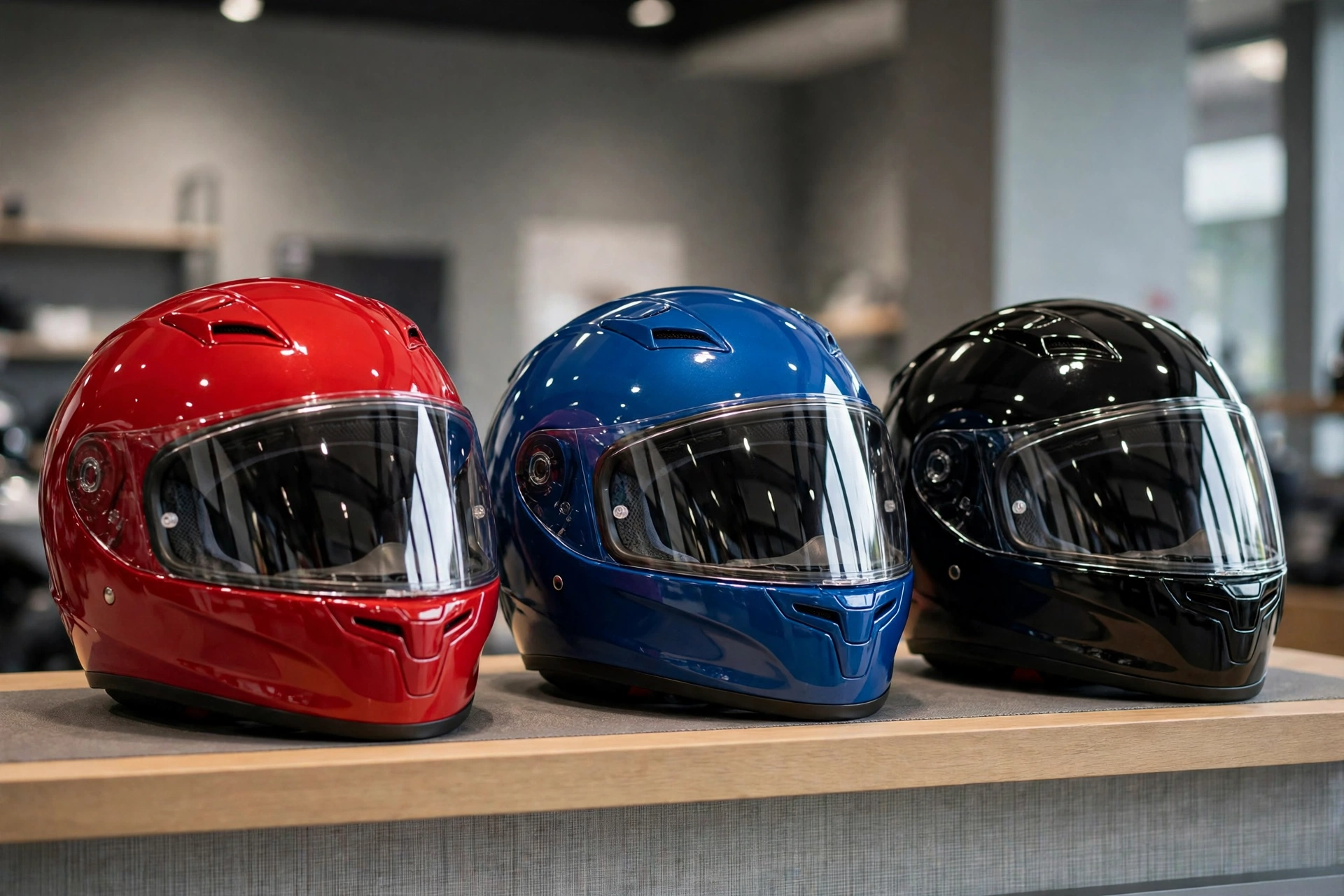
ABS is also easy to shape. Makers can mould it into smooth curves, vents and ridges with consistent results, which is why ABS shells often have clean, polished finishes. The material takes paint well, so it suits the bright colours and detailed graphics many riders want.
Another practical advantage is weight. ABS is heavier than carbon fibre, but a well-designed ABS shell is not heavy in absolute terms, and for many riders the difference is barely noticeable. For a first helmet or a helmet used for short trips, the weight trade-off is often a fair one.
What Are the Limits of ABS?
ABS has real limits, and it is honest to name them. The material can become more brittle in very cold weather, and it can soften if it is left in strong heat, such as inside a car on a hot day. Neither effect is likely to ruin a helmet in normal use, but both are reasons to store a helmet away from extremes of temperature.
ABS is also affected by some solvents and chemicals. Petrol, strong cleaning products and some adhesives can damage the surface or weaken the plastic. That is why makers warn against cleaning a helmet with harsh chemicals or sticking things to the shell with strong glues.
Compared with composite shells made from fibreglass, carbon fibre or aramid, an ABS shell is generally heavier for the same level of strength, and it may need to be thicker to reach the same stiffness. In practice this means high-end helmets often use composites, while ABS suits helmets where cost and durability matter more than minimum weight.
How Does ABS Compare with Other Shell Materials?
Against fibreglass, ABS is usually cheaper and easier to mould, but fibreglass can produce a lighter shell with similar strength. Against carbon fibre, ABS is far cheaper and tougher against everyday knocks, but carbon fibre is lighter and stiffer. Against polycarbonate, another common moulded plastic, ABS is similar in many ways, and makers choose between them based on cost, finish and the design they want.
The comparison that matters most is not between materials in the abstract but between finished helmets. A well-made ABS helmet that fits you and meets a recognised safety standard can protect you well. A poorly made composite helmet that does not fit is a worse choice, whatever its shell is made from. If you are learning about helmet technology, reading about what MIPS is for helmets can help you understand a feature that works inside the shell, whatever material the shell is made of.
When you compare helmets, look at the whole package: the standard it meets, the liner, the fit, the weight and the ventilation, not just the shell material on the label.
How Should You Look After an ABS Helmet Shell?
Looking after an ABS shell is straightforward. Clean it with mild soap and water and a soft cloth, and dry it away from direct heat. Avoid solvents, petrol and abrasive cleaners, which can dull or damage the surface. Do not stick heavy mounts or accessories to the shell with strong adhesives unless the maker says it is safe to do so.
Store the helmet in a cool, dry place, out of direct sunlight, and keep it in a helmet bag if you have one. Do not hang it on a mirror or handlebar by its strap for long periods, and do not leave it in a hot car. Heat and sunlight are the two things most likely to age an ABS shell before its time.
Check the shell regularly for cracks, deep scratches or dents. A surface scuff is cosmetic, but a crack through the shell means the helmet should be replaced. After any significant impact, replace the helmet even if the shell looks fine, because damage to the liner inside may not be visible.
Frequently Asked Questions
Q: Is an ABS helmet shell safe?
A: In general terms, yes. Many helmets with ABS shells meet recognised safety standards. Safety depends on the whole helmet, including the liner and the fit, not on the shell material alone.
Q: Does ABS get weaker in the sun?
A: ABS can age faster with long exposure to strong sunlight and heat. Storing your helmet out of direct sun and away from hot places helps it last longer.
Q: Can I paint an ABS helmet shell?
A: It is best not to. Paints and solvents can affect the plastic, and painting over the shell may hide damage. If you want a different colour, it is safer to buy a helmet in that colour.

Olivia
Writer at Helmet Today, covering helmet reviews, fit and riding safety.