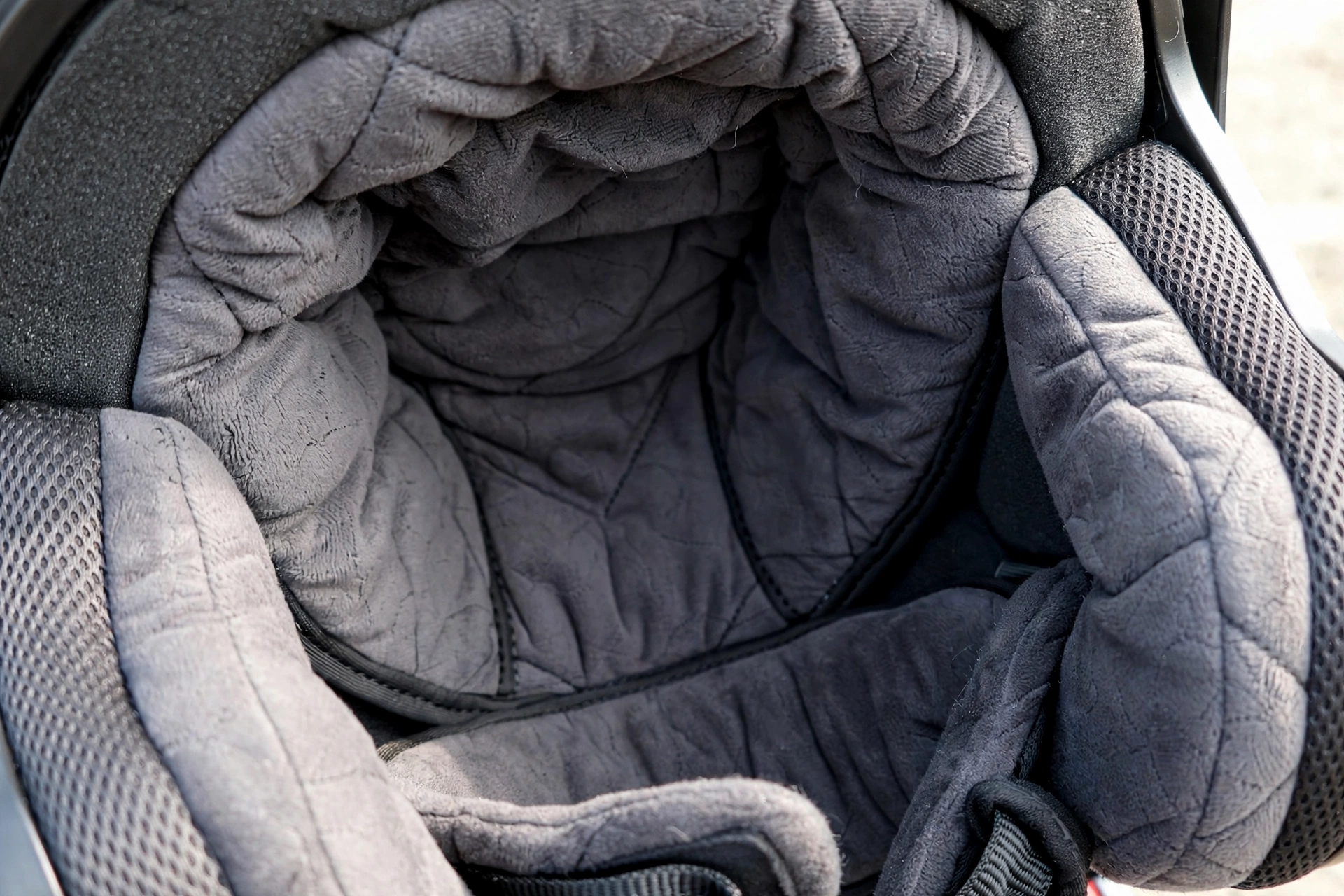
A helmet’s comfort liner is usually made from soft, breathable fabrics over a thin layer of foam, and its job is to make the helmet comfortable, manage sweat, and help the helmet sit snugly on your head. It is the part of the helmet that touches your skin, and it is quite different from the hard foam liner that absorbs impacts. The comfort liner is about fit and feel, not crash protection.
Comfort liners vary between helmets: some are simple fabric pads, others are shaped, removable and washable. This guide explains what they are made of, what each material does, and how to look after them.
What Is the Comfort Liner?
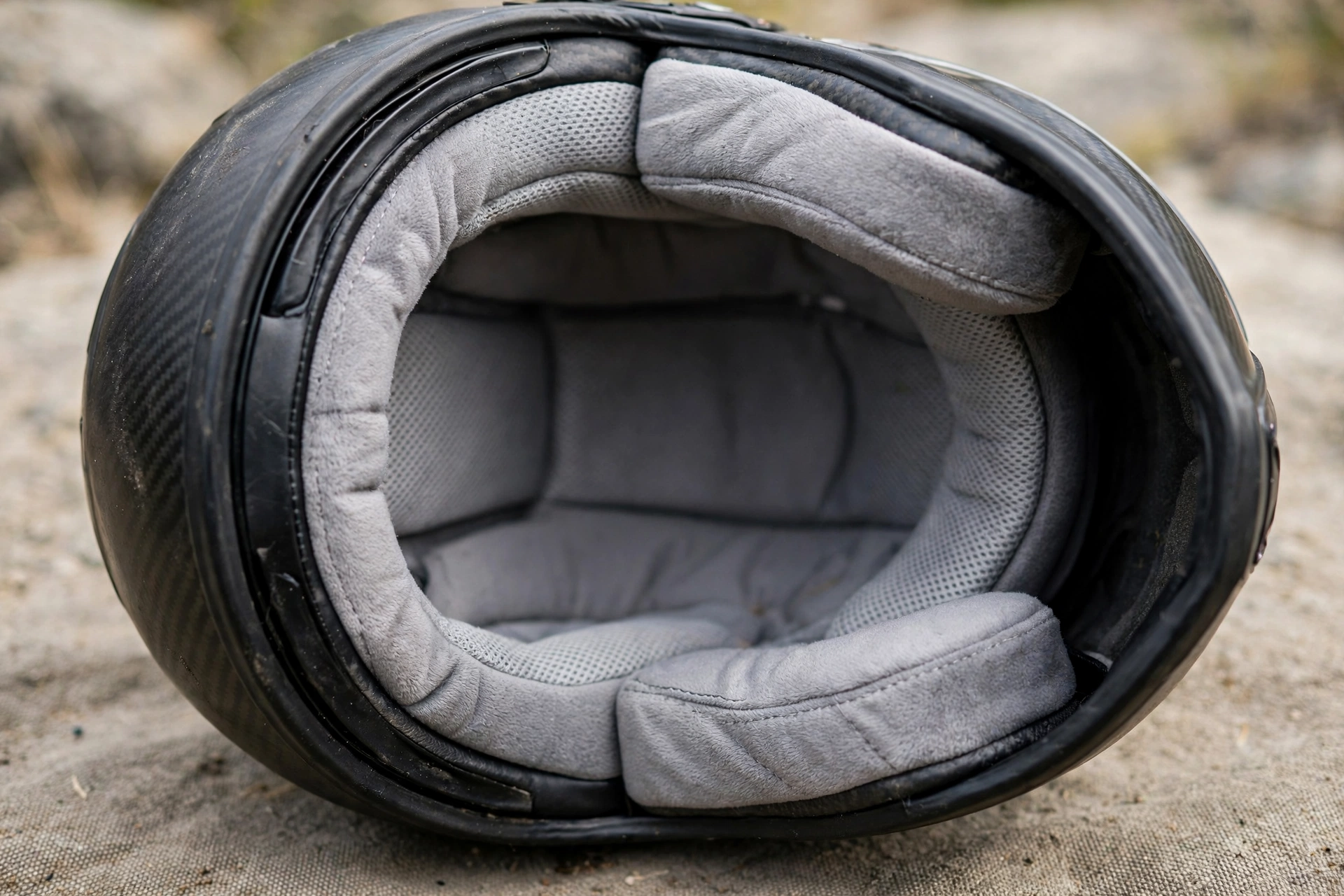
The comfort liner sits between the impact-absorbing foam liner and your head. It is made of soft pads and fabric that cover the inside of the helmet, usually around the crown, the forehead, the cheeks and the back of the head. In a full face helmet, the cheek pads are part of the comfort liner too.
Its jobs are practical. It cushions the hard foam so the helmet feels comfortable, it absorbs sweat, it reduces friction against your skin, and it helps fill the small gaps between your head and the foam so the helmet fits snugly. Without it, a helmet would feel hard, slippery and unpleasant to wear.
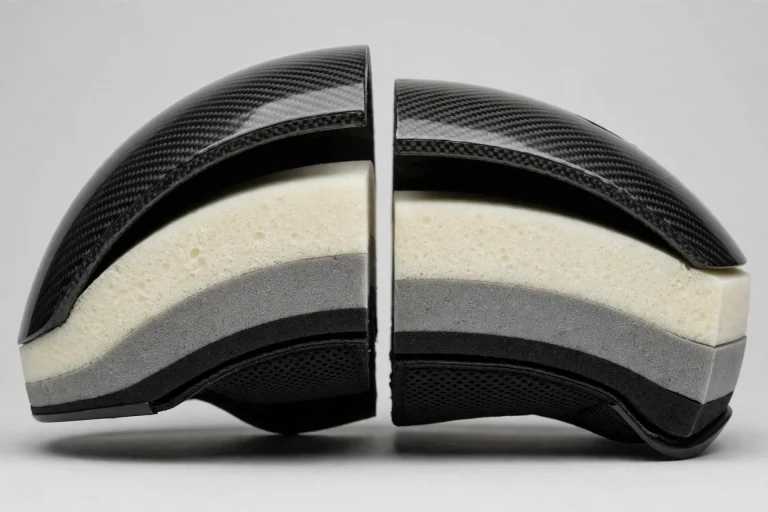
The comfort liner is not the same as the impact liner, which is the thick EPS or EPP foam that absorbs energy in a crash. The comfort liner is thin and soft, and it does not play a direct role in absorbing impact forces.
What Fabrics Are Comfort Liners Made From?
Most comfort liners use synthetic fabrics, often polyester or a polyester blend, sometimes with a small amount of elastane for stretch. Polyester is popular because it is light, dries quickly, resists mildew and can be made into soft, smooth fabrics that feel good against the skin.
Some liners use mesh fabrics, which allow air to flow through and help sweat evaporate. Mesh is common in the crown area, where heat builds up, and in helmets designed for hot weather. Other liners use a suede-like fabric, sometimes called microsuede, which feels soft and grips the skin gently to help the helmet stay in place.
Natural fabrics such as cotton appear less often, because cotton absorbs moisture and dries slowly, which can leave the liner damp and uncomfortable. Some makers use bamboo-based fabrics, which are marketed as soft and breathable, but polyester blends remain the most common choice.
What Is Inside the Fabric?
Under the fabric, the comfort liner usually has a thin layer of open-cell foam, a soft, springy foam with tiny holes that let air and moisture pass through. This foam gives the liner its shape and cushioning, and it helps the liner press gently against your head.
The foam is thin, usually only a few millimetres, and it is not the same as the thick impact foam underneath it. Its job is comfort, not protection. In some helmets, the foam is shaped into separate pads that can be moved or swapped for different thicknesses to fine-tune the fit.
Cheek pads in full face helmets often have a slightly firmer foam, because they need to hold the cheeks and help keep the helmet stable. Some cheek pads are available in different thicknesses, so you can adjust the fit without changing the helmet size.
Why Are Some Comfort Liners Removable?
Many modern helmets have removable comfort liners, held in place by press studs, hook-and-loop fasteners or a simple friction fit. Removable liners can be taken out and washed, which keeps the helmet fresh and hygienic, especially if you ride often or sweat a lot.
Washing is straightforward: hand-wash the liner in mild soap and water, rinse well, and let it air-dry away from direct heat. Do not use strong detergents or a tumble dryer, which can damage the fabric and the foam. Check the maker’s guidance for your helmet, because some liners have specific washing instructions.
Removable liners also let you replace a worn liner without replacing the whole helmet. If the fabric is torn or the foam has gone flat, a new liner can make the helmet feel like new. Spare liners and cheek pads are available for many helmet models.
How Does the Comfort Liner Affect Fit?
The comfort liner plays a real role in fit. Because it fills the space between your head and the hard foam, its thickness and shape decide how snug the helmet feels. A liner that is too thick can make a helmet feel tight, while a liner that has gone flat with age can make it feel loose.
If a helmet feels slightly loose, a thicker liner or thicker cheek pads may fix it, and if it feels slightly tight, a thinner liner may help. But a liner change cannot fix a helmet that is the wrong size: if the shell is too big or too small, no liner will make it fit properly.
Age changes a liner too. Over time, the foam inside the liner compresses and the fabric stretches, so a liner that once felt snug can start to feel loose. If your helmet has become looser without any change in size, a fresh liner may restore the fit. This is one of the cheapest ways to improve an older helmet, and it is worth trying before you buy a replacement. A new liner can make a familiar helmet feel comfortable again.
Sweat also takes a toll. Salt and moisture break down the fabric and foam over time, which is why regular washing matters. A liner that is washed and dried properly will last longer and stay more comfortable than one that is left damp after every ride.
When you try on a helmet, pay attention to how the liner feels. It should press evenly all around your head, with no hard spots or gaps, and it should not pinch your forehead or cheeks. If you are learning about helmet technology, reading about what MIPS is for helmets can help you understand a feature that may sit under the comfort liner inside your helmet.
Frequently Asked Questions
Q: Can I wash my helmet’s comfort liner?
A: In general terms, yes, if it is removable. Hand-wash it in mild soap and water and air-dry it. If it is not removable, wipe it with a damp cloth and mild soap.
Q: Does the comfort liner protect me in a crash?
A: Not directly. Crash protection comes from the shell and the impact foam liner. The comfort liner helps the helmet fit and stay in place, which supports protection indirectly.
Q: How often should I replace a comfort liner?
A: Replace it when the fabric is torn, the foam has gone flat, or it no longer feels snug. A fresh liner can improve comfort and fit without the cost of a new helmet.

Olivia
Writer at Helmet Today, covering helmet reviews, fit and riding safety.