Helmet vents are designed without weakening the shell by placing the openings where the shell is least loaded, reinforcing the edges around each vent, and shaping the foam liner so the air channels do not remove too much protective material. A vent is, by definition, a hole in the shell, so the maker’s job is to gain airflow without giving up the strength the shell needs. The answer is careful placement, reinforcement and testing.
Good ventilation makes a helmet far more comfortable, especially in warm weather or during hard effort. This guide explains how vents are placed, how they are reinforced, and how the liner works with them.
Where Are Vents Placed on a Helmet?
Vents are usually placed at the front of the helmet, where air hits as you move forward, and at the back, where warm air can escape. The front vents scoop air in, the air flows over the head through channels in the foam, and the rear vents let it out. This flow is what keeps your head cool.
The crown, the top of the helmet, is the area that most often takes an impact, so makers are careful about how much material they remove there. Vents on the crown are often smaller or placed slightly to the sides, where the load is lower. Large openings are more common at the front and back, where the shell is less heavily loaded in a typical fall.
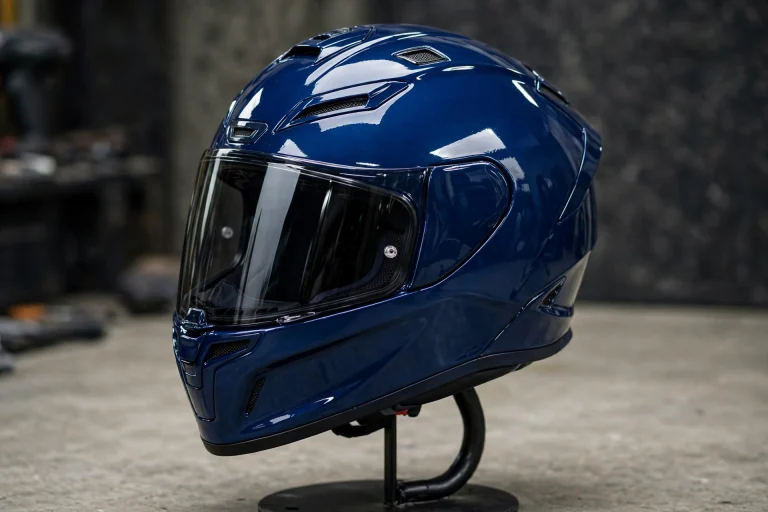
The number and size of vents vary with the helmet’s purpose. A road cycling helmet may have many large vents, because cooling matters most and the risks are different from those of a motorcycle helmet, which may have fewer, smaller vents that can be opened and closed.
How Are Vent Edges Reinforced?
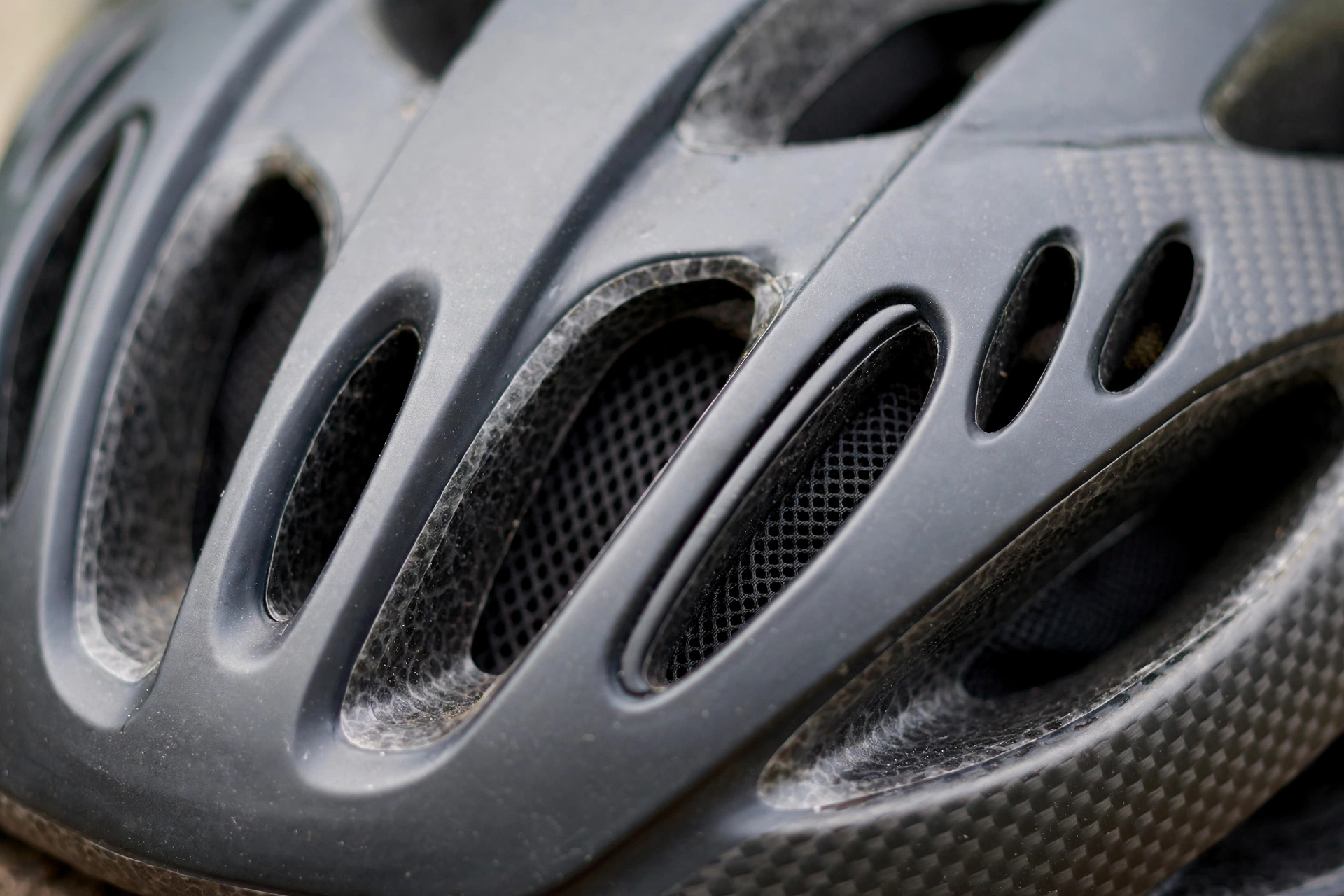
Every vent is a weak point unless it is reinforced, so makers strengthen the shell around each opening. In a composite shell, extra layers of fibre may be laid around the vent to carry the load past the hole. In a moulded plastic shell, the edge of the vent may be thickened or shaped into a rib that adds stiffness.
The shape of the vent matters too. Rounded openings spread stress more evenly than sharp corners, which can concentrate force and start a crack. That is why most helmet vents have smooth, rounded edges rather than square corners.
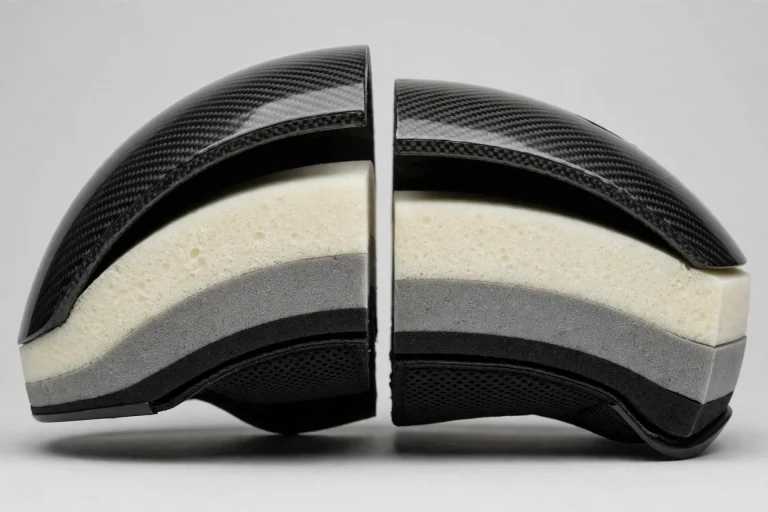
In an in-mould helmet, the thin shell and the foam are bonded together in the mould, so the vent is shaped through both at once. The bond around the vent helps the shell and foam act as one piece, which keeps the area around the opening strong.
How Does the Foam Liner Work with the Vents?
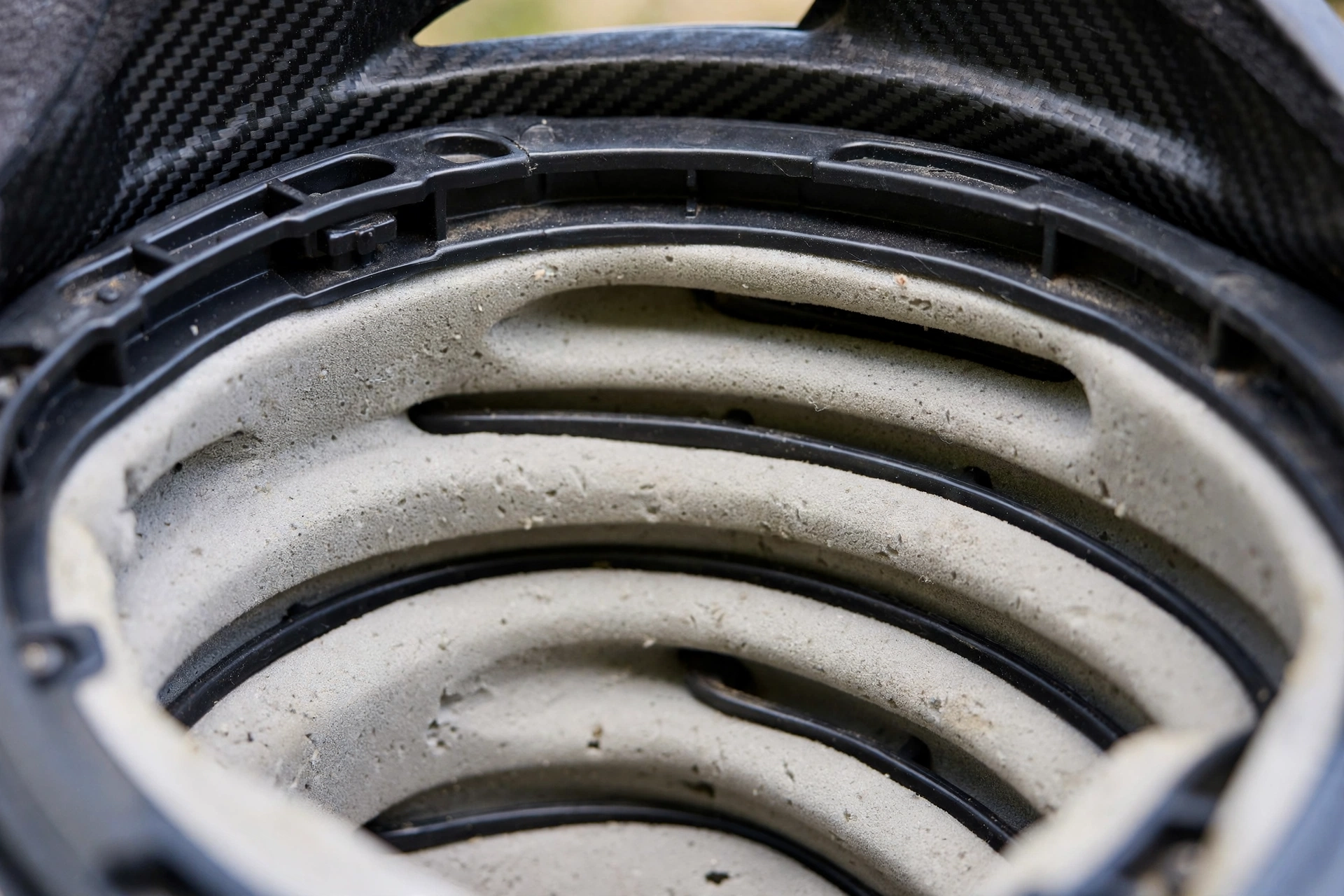
The foam liner is not a solid block. It has channels moulded into it that line up with the vents in the shell, so air can flow from the front vents, over the head, and out through the rear vents. These channels are part of the design, not an afterthought.
The liner’s channels are placed where they remove the least protective material. The foam is thickest where impacts are most likely, and the channels run between the thicker sections rather than through them. This keeps the liner’s ability to absorb energy while still allowing air to move.
Some helmets use a separate internal channel system, with a mesh or a shaped insert that guides the air. Others rely on the shape of the foam alone. Either way, the airflow is planned alongside the protection, not added after the helmet is designed.
Do More Vents Mean a Weaker Helmet?
Not necessarily. A helmet with many vents can still meet the same safety standard as one with few, provided the vents are placed well and the shell is reinforced around them. The standard tests the finished helmet, vents and all, so a helmet that passes has shown it can protect despite its openings.
What matters is the design, not the count. A helmet with a few large, poorly placed vents could be weaker than one with many small, well-placed ones. The maker’s testing, and the standard the helmet meets, are better guides than counting vents.
That said, there is a balance. A helmet designed for maximum airflow, such as a road cycling helmet, accepts some trade-offs in shell coverage that a motorcycle helmet does not. The risks are different, and the designs reflect that.
Winter riding shows the other side of the balance. In cold weather, too much airflow can chill your head, which is why many helmets have vents that can be opened and closed. Closing the front vents in winter keeps warm air inside, while opening them in summer lets heat escape. A helmet with adjustable vents gives you control over this trade-off, so you can match the airflow to the weather rather than living with a fixed amount all year.
Rain is another factor. Open vents can let rain in, which is why some helmets have internal channels that guide water away from the head, and why some riders use a rain cover over the helmet. A well-designed vent system keeps the air moving without letting in more water than it needs to.
What Should You Check When You Buy a Vented Helmet?
Look at the vents and the shell around them. The edges should be smooth and well finished, with no cracks or rough spots. The shell should feel solid around each vent, not thin or flexible. If you can see the foam through the vent, check that it looks neat and undamaged.
Try the helmet on and feel the airflow if you can. Some helmets have vents that can be opened and closed, which is useful in changing weather. If you ride in winter, closable vents help keep your head warm, while in summer you will want them wide open.
If you are learning about helmet technology, reading about what MIPS is for helmets can help you understand another feature that may be listed on the box of your next helmet.
Frequently Asked Questions
Q: Do vents make a helmet less safe?
A: In general terms, no. Vents are placed and reinforced so the helmet still meets its safety standard. A helmet with vents that has passed its standard tests is designed to protect despite the openings.
Q: Why do some helmets have vents that open and close?
A: Closable vents let you control airflow for the weather. Open them in warm conditions for cooling, and close them in cold or wet conditions to keep your head warm and dry.
Q: Can I add extra vents to my helmet?
A: No. Drilling or cutting vents into a helmet will weaken the shell and the liner, and it may void the helmet’s certification. Buy a helmet with the ventilation you need.

Olivia
Writer at Helmet Today, covering helmet reviews, fit and riding safety.