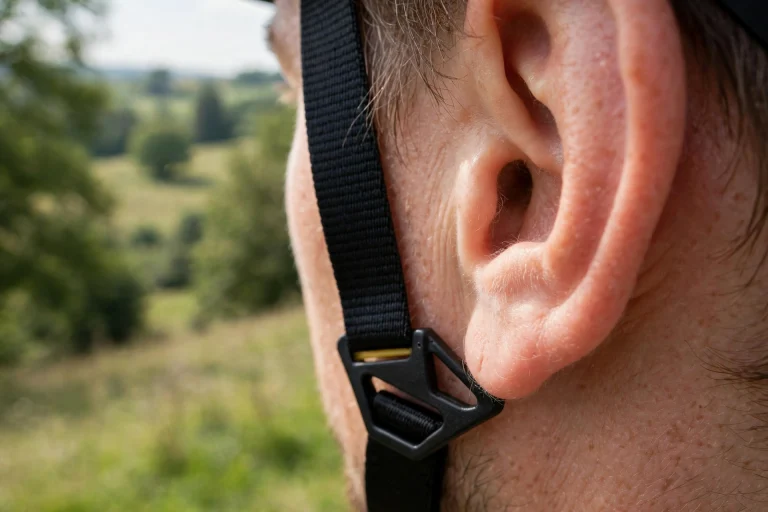
To stop a helmet pressing on hearing aids, start by fitting the helmet with your aids in place, then adjust the retention dial, swap to thinner ear pads, and reroute the straps so nothing sits on top of the aid. Most pressure problems come from a helmet that was fitted without the aids in, or from padding that sits flat against the ear where the aid needs room. In general terms, a small change in fit often fixes the problem without buying a new helmet.
Pressure on hearing aids is more than an annoyance. It can cause soreness, whistling feedback, and aids that shift out of place mid-ride. This guide walks through the fixes in order, from the quickest adjustments to the point where a different helmet is the right answer.
Why Does a Helmet Press on Hearing Aids?
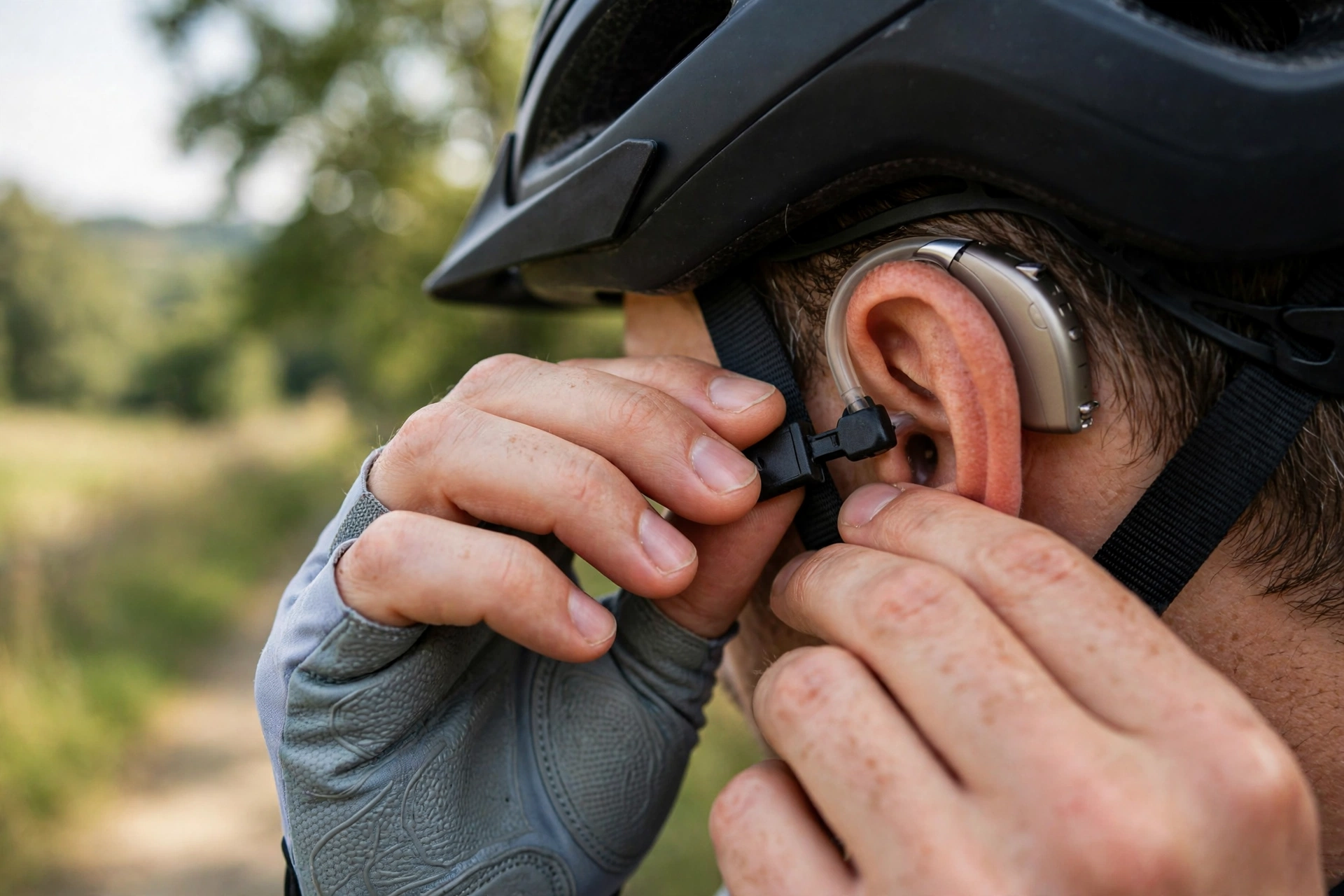
Behind-the-ear hearing aids sit in a small case behind the ear, with a tube or wire running into the ear canal. That case sticks out from the head by a few millimetres — just enough for a helmet’s padding or shell edge to press on it. When the helmet is pulled down, the padding can squeeze the aid against the skull, and the pressure builds over the course of a ride.
The retention system can add to the problem. A dial or cradle at the back of the helmet tightens the fit by pulling the helmet snug around the head, and if that cradle sits at the same height as the aid, it can press the aid even harder. Straps can cause trouble too: a strap that crosses over the aid pushes it with every head movement.
Sometimes the cause is simply size. A helmet that is slightly too small has no spare room anywhere, so the ears are the first place to feel it. A helmet that is the right size but the wrong shape can do the same thing — a long, narrow shell on a rounder head squeezes the sides, and the aids sit exactly where the squeeze is worst.
How Do You Adjust the Fit to Relieve Pressure?
Start with the aids in place and the helmet on. Loosen the retention dial a quarter-turn at a time and feel whether the pressure eases. The helmet should still feel snug and stable — if it starts rocking when you shake your head, you have gone too far. The aim is a fit that holds the helmet without squeezing the aids.
Next, look at the straps. The strap divider — the small plastic piece where the front and rear straps meet — should sit just below the ear, not on it. Slide it until both straps pass in front of and behind the ear, clear of the aid.
Then check how the helmet sits. It should sit level, low enough to cover the forehead, without tilting forward onto the aids. If the helmet tilts back, the front edge can dig in; if it tilts forward, the rear padding presses on the ears. Adjust the cradle height if your helmet allows it, and re-check the pressure after each change.
Can Thinner Pads or Ear Pockets Fix the Problem?
Yes, in many cases. The comfort padding around the ears is often the part pressing on the aid, and swapping it for thinner pads — or removing the ear pads entirely if the maker allows it — can create the space the aid needs. Many helmets come with spare pads in different thicknesses, and some have removable ear pads designed for exactly this kind of adjustment.
Some helmets have built-in ear pockets: recessed areas in the padding around the ear that leave room for a hearing aid or a speaker. If your helmet has them, make sure the aid sits inside the pocket rather than on top of the padding around it. If it does not, a helmet with ear pockets is worth trying when you next buy.
Only change the soft comfort padding, and only in ways the maker allows. Never cut or carve the hard impact liner underneath, because that foam is part of the helmet’s protection. If you are unsure whether a pad can be removed, check the helmet’s manual or ask the shop — a wrong cut can weaken the helmet without any visible sign.
When Is a Different Helmet the Right Answer?
If adjustments and thinner pads do not fix the pressure, the helmet’s shape may simply not suit your head and your aids together. Helmets vary in shape as well as size: some are long and narrow, some are rounder, and a rounder shell may give your ears more room even in the same size. Try several shapes with your aids in place before deciding.
A helmet one size up can also help, as long as the retention system can take up the extra room. A larger shell with the dial tightened gives more space around the ears without making the helmet loose overall. But do not go up a size if the helmet rocks or slides — a loose helmet protects less well, and that trade-off is not worth it. If you are comparing helmet features, reading about what MIPS is for helmets can help you understand one of the liner systems you may see, since some liners change how the helmet sits against the head.
Talk to your hearing care professional as well. They can check whether the aid itself is the problem — a aid that sits further out than it should, or a tube that is too long, can make helmet pressure worse. A small refit of the aid sometimes solves what looks like a helmet problem.
How Do You Stop Pressure on Long Rides?
On long rides, even a small pressure point becomes painful, so prevention matters. Before a long ride, do a ten-minute test: wear the helmet with the aids in, walk around, and see whether any soreness starts. If it does, adjust the fit before you set off, not halfway through the ride.
Take short breaks and lift the helmet slightly at stops to let the pressure off. A quick lift of the front edge for a few seconds can be enough to ease sore ears without removing the helmet fully. Keep the aids dry too: sweat pooling around the aids makes skin sorer faster, so a helmet with good airflow helps, and a thin sweatband under the helmet can catch sweat before it reaches the ears. When you do remove the helmet, lift it straight up, slowly, with one hand steadying the aids.
Frequently Asked Questions
Q: Will loosening my helmet stop it pressing on my hearing aids?
A: Loosening the retention dial a little can help, but the helmet must still feel snug and stable. If it rocks when you shake your head, it is too loose — try thinner ear pads or a different helmet shape instead.
Q: Can I cut the padding to make room for my hearing aids?
A: You can only remove or swap soft comfort padding where the maker allows it. Never cut the hard impact liner, because that foam is part of the helmet’s protection.
Q: Do I need a special helmet for hearing aids?
A: Not necessarily. Many standard helmets work well once the fit is adjusted. Look for ear pockets, removable ear pads, and a retention system you can adjust — and always try the helmet on with your aids in place.

Olivia
Writer at Helmet Today, covering helmet reviews, fit and riding safety.