To stop helmet straps rubbing your ears, adjust the strap dividers so the straps pass in front of and behind the ear — not over it — then soften stiff webbing, and check the helmet’s fit so the straps are not being pulled tight to hold a loose shell in place. Strap rub is one of the most common helmet complaints, and it is also one of the easiest to fix. In most cases the straps are simply in the wrong place, and a minute of adjustment solves it.
Rubbing straps cause sore, red ears on short rides and raw skin on long ones. They can also distract you enough to spoil a ride. This guide explains why straps rub, how to position them, and what to do when adjustment alone is not enough.
Why Do Helmet Straps Rub Your Ears?
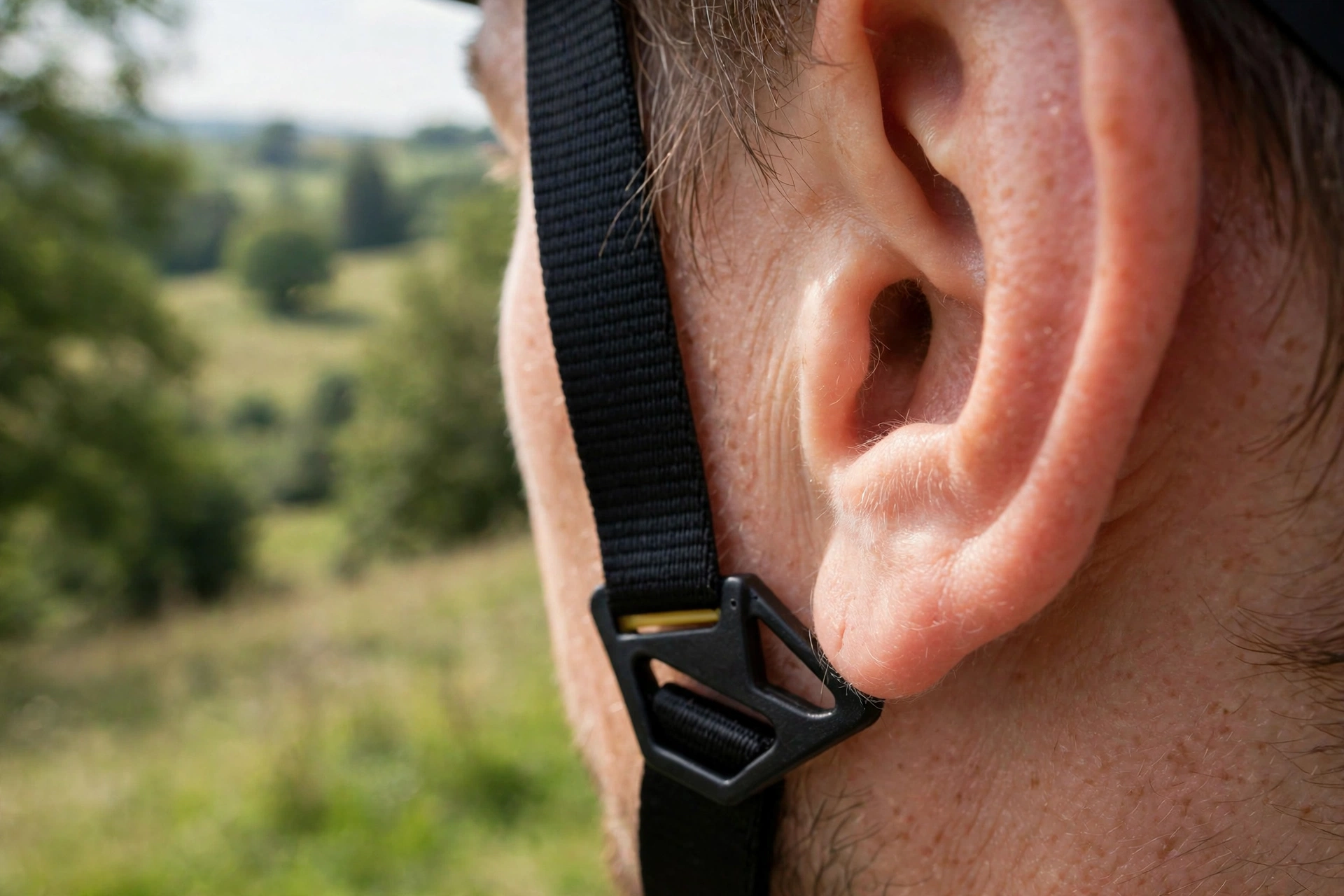
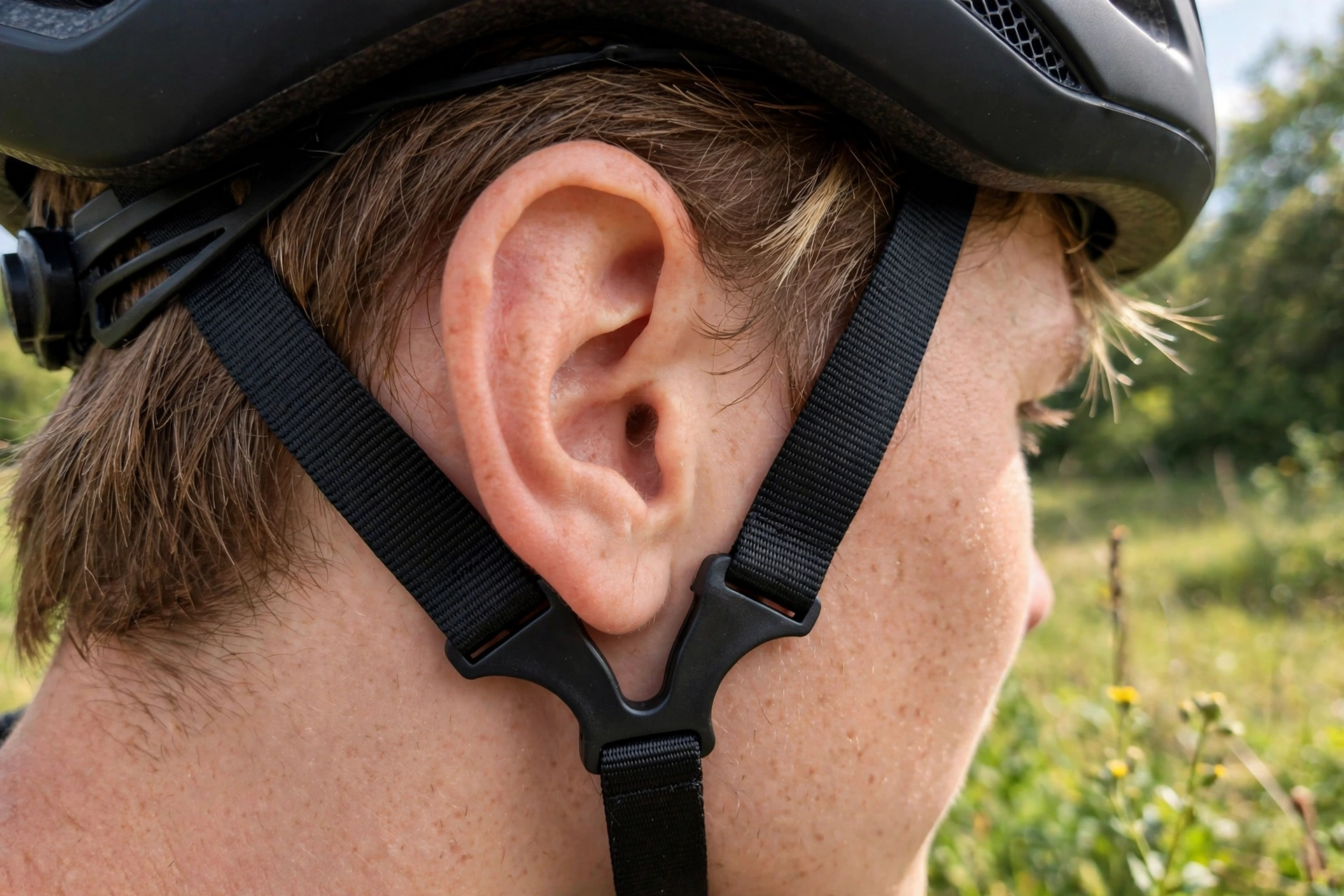
Helmet straps form a Y-shape on each side of the head: one strap runs in front of the ear, one runs behind it, and they meet at a small plastic divider below the earlobe before joining into the chin strap. When that divider sits in the right place, the straps clear the ear entirely. When it sits too high, too low, or too far forward, a strap crosses the ear and rubs with every pedal stroke and head movement.
Stiff new webbing makes the problem worse. Fresh straps are often flat and rigid, with sharp edges that catch the skin, especially behind the ear where the skin is thin. Sweat and salt make it worse still: dried sweat stiffens the webbing and irritates skin that is already sore from rubbing.
A loose helmet can also be the hidden cause. If the shell rocks or slides, the straps move with it, and the wearer tightens the chin strap to compensate — which pulls the straps harder against the ears. In that case the rubbing is a symptom of a poor fit, not the real problem.
How Do You Position the Straps Correctly?
Put the helmet on, do up the chin strap snugly, and look in a mirror. The divider on each side should sit just below the earlobe, with the front strap running from the helmet to the divider in front of the ear and the rear strap running behind it. Neither strap should touch the ear itself.
To adjust, slide the divider up or down along the straps until both straps sit flat and clear of the ear. Most dividers slide with a firm push; some have a small lock or button. Make the same adjustment on both sides, and check that the straps lie flat rather than twisted — a twisted strap has a hard edge that rubs far more than a flat one.
Then check the chin strap. It should be snug enough that you can fit two fingers between the strap and your chin, but not so tight that it pulls the helmet down or drags the dividers out of position. Shake your head and nod: the straps should stay where you put them, and the dividers should not creep up towards the ears.
Can You Soften Stiff Helmet Straps?
Yes. New webbing softens with use, but you can speed the process up. Wash the straps in warm water with a little mild soap, then rinse and air-dry them. This removes the factory stiffness and any dried sweat, and the webbing usually feels noticeably softer afterwards. Do not use harsh detergents or bleach, and do not put the helmet in a washing machine.
Some riders run the straps through their fingers a few times to work the fibres, or fold and flex the webbing to break the stiffness. A small amount of fabric softener on a cloth, wiped along the strap, can help too — but keep it off the helmet’s liner and pads, and let the straps dry fully before riding.
If the strap edges are the problem, strap covers can help. These are soft sleeves that slide over the webbing where it touches the skin, and they are sold for cycling and motorcycle helmets. They add a little bulk, so check that they do not push the divider out of position, but for many riders they end the rubbing entirely.
What If the Straps Still Rub After Adjusting?
First, check the helmet’s fit. If the shell rocks side to side or slides forward, the straps will move and rub no matter where the dividers sit. Fix the fit first — adjust the retention dial, try thicker pads, or try a different shell shape — and the strap problem may disappear with it.
Next, look at the strap layout. Some helmets have fixed dividers that cannot be moved far, or straps that are sewn in a position that suits one head shape better than another. If your helmet’s dividers cannot be positioned clear of your ears, a different helmet with adjustable dividers may be the answer. If you are comparing helmet features, reading about what MIPS is for helmets can help you understand one of the liner systems you may see, since some liners change how the straps attach and sit.
Consider the shape of your ears and the length of your hair as well. Long hair under the straps can drag and pull, and tucking it up or wearing a thin skull cap can keep the straps flat against the skin. Ears that stick out slightly are more likely to catch a strap, so the divider position matters even more — take the time to get it exactly right.
How Do You Keep Straps Comfortable on Long Rides?
On long rides, even a well-positioned strap can start to rub as sweat builds up and skin gets tender. A quick rinse of the straps after each ride keeps them soft and salt-free, and a thin layer of chamois cream or petroleum jelly behind the ears can protect the skin on very long days — though it should not be a substitute for correct adjustment.
Check the dividers at the start of every long ride. They can creep during a ride, especially if the straps get wet, so a quick check before you set off is worth the few seconds it takes. If a divider keeps slipping, a tiny piece of tape around the strap above it can hold it in place — a common trick among long-distance riders.
Finally, replace straps that are frayed, stiff beyond softening, or damaged. Frayed webbing has rough edges that rub far more than smooth webbing, and damaged straps may not hold in a fall. Most makers sell replacement strap sets, and a fresh set often feels like a new helmet.
Frequently Asked Questions
Q: Where should the helmet strap divider sit?
A: Just below the earlobe, with the front strap passing in front of the ear and the rear strap behind it. Neither strap should touch the ear itself.
Q: Why do my helmet straps rub only on long rides?
A: Sweat, salt, and hours of small movements add up. Rinse the straps after rides to keep them soft, check the dividers before long rides, and consider strap covers if the rubbing persists.
Q: Can I cut helmet straps shorter to stop them rubbing?
A: Do not cut the straps. Shortening them changes how the helmet is held and can weaken the webbing. Adjust the dividers and soften the straps instead — and check the helmet’s fit first.

Olivia
Writer at Helmet Today, covering helmet reviews, fit and riding safety.