Yes, in general terms, you can wear a beanie under a bike helmet safely — as long as the beanie is thin, close-fitting, and the helmet still fits properly over it. A thin skull cap or liner beanie keeps your head and ears warm on cold rides without changing how the helmet sits. A thick, bulky beanie is a different story: it lifts the helmet, loosens the fit, and can change how the helmet behaves in a fall.
Winter riding is miserable with a cold head, so the temptation to pile on layers is real. The rule is simple: the helmet must fit the same with the beanie on as it does without it. This guide explains how to choose the right beanie, check the fit, and know when to use a different solution.
Why Can a Beanie Under a Helmet Be a Problem?
A helmet protects you by sitting snugly against your head, so that in a fall it stays in place and spreads the force across the shell and liner. Anything bulky between the helmet and your head changes that contact. A thick beanie lifts the helmet up and away from the skull, which can leave the forehead exposed and let the helmet shift more easily.
A bulky beanie also changes the fit in ways that are hard to see. The helmet may feel snug because the beanie is compressed, but the beanie itself can slide against the helmet or against your hair. In a fall, the helmet needs to grip the head; a slippery layer in between can let it rotate or slip off.
There is a comfort issue too. A thick beanie bunches up under the helmet, presses on the ears, and can make the retention system dig in. It can also trap sweat, which then cools and makes you colder — the opposite of what you wanted from the extra layer.
What Kind of Beanie Works Under a Bike Helmet?
Look for a thin skull cap or liner beanie made for wearing under a helmet, rather than a general winter beanie. Helmet liners are usually made from thin, stretchy material that sits flat against the head, covers the ears, and has no bulky seams or folds. They add warmth without adding much thickness.
Merino wool and thin synthetic liners both work well. Merino stays warm when damp and does not itch most people; synthetics dry faster and are often cheaper. Either is fine — what matters is that the material is thin, smooth, and close-fitting. Avoid beanies with a folded brim, a pom-pom, or a thick ribbed cuff, because those create lumps under the helmet.
Some riders prefer a balaclava-style liner that covers the neck as well as the head, which is useful on very cold days. The same rule applies: it must be thin and flat, with no bunched fabric at the back of the neck where the retention cradle sits.
How Do You Check the Fit with a Beanie On?
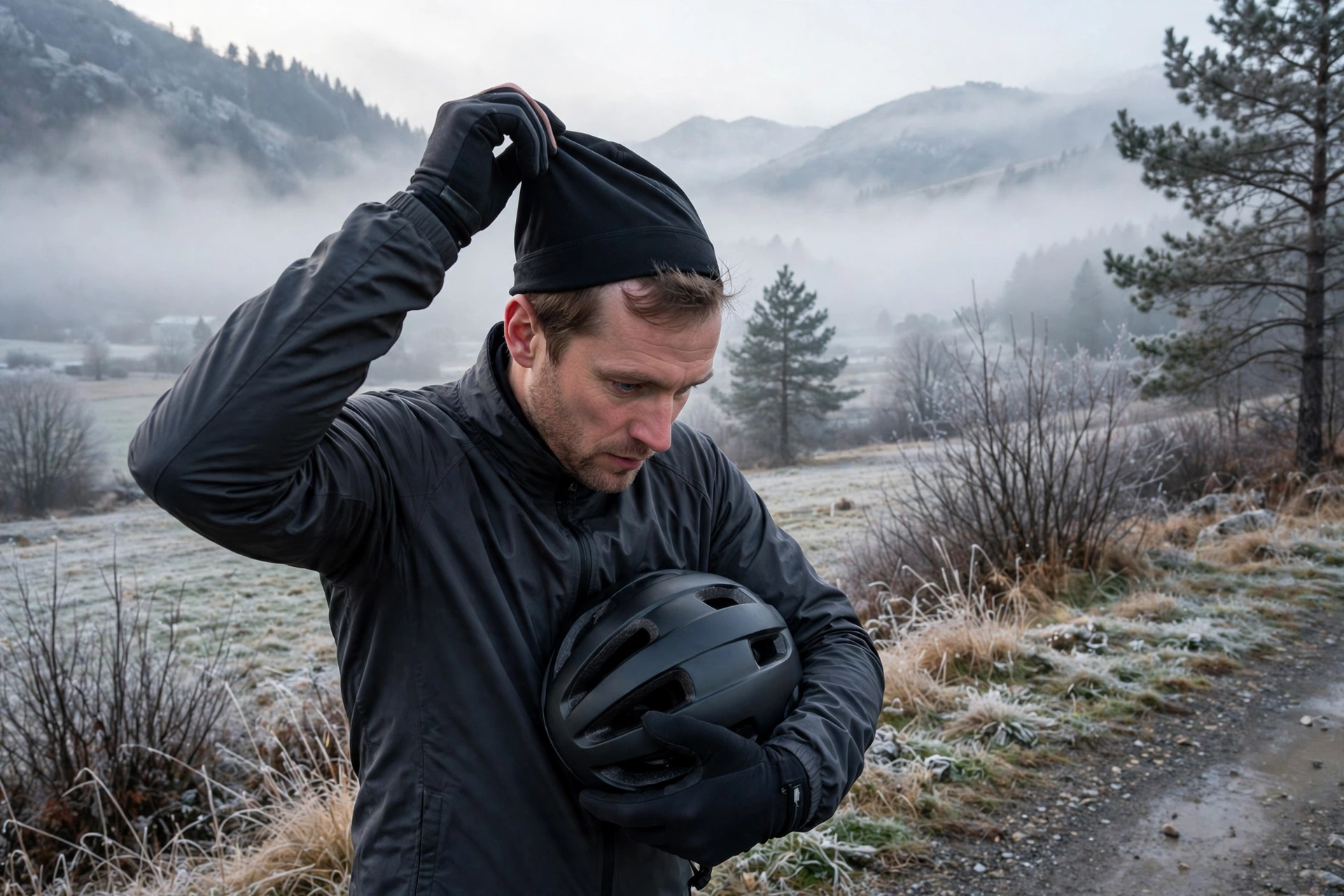
Put the beanie on first, smooth it flat, and then put the helmet on over it. The helmet should sit level, low enough to cover the forehead, with the front edge about two fingers above the eyebrows — the same position as without the beanie. If the helmet sits noticeably higher, the beanie is too thick.
Do the usual fit checks with the beanie in place: shake your head side to side, nod up and down, and try to twist the helmet with your hands. It should stay put and move the skin on your forehead rather than sliding freely. Then do up the strap and check that the retention dial still takes up the fit properly, without being at its loosest or tightest extreme.
Take the beanie off and check the fit again without it. If the helmet is loose without the beanie, you have a problem: a helmet that only fits with a thick layer underneath is a helmet that fits poorly. The helmet should fit well on its own, and the beanie should be a thin extra, not a fit solution.
When Should You Use Something Else Instead?
On very cold days, a thin beanie may not be enough, and that is when purpose-made cold-weather gear is the better answer. A winter cycling helmet with a built-in liner and fewer vents keeps you warm without any layer underneath. Helmet covers that fit over the outside of the helmet block wind and rain while leaving the fit inside unchanged.
Ear covers that attach to the helmet, rather than sitting under it, are another option. They keep the ears warm without adding bulk between the helmet and the head. Some helmets have ear flaps that clip on for winter, which do the same job.
If you ride in the cold often, consider a helmet one size up for winter, with thicker pads to take up the room in summer. That is a bigger investment, but it keeps the fit right in both seasons. If you are comparing helmet features, reading about what MIPS is for helmets can help you understand one of the liner systems you may see, since some liners leave more room for a thin cap than others.
How Do You Stay Warm Without Compromising the Fit?
Warmth on a winter ride comes from the whole outfit, not just the head. A good jacket, gloves, and shoe covers matter more than a thick beanie, and they do not affect your helmet. A neck warmer or buff that sits below the helmet keeps draughts out without adding bulk under the shell.
Keep the beanie dry. A sweaty beanie cools fast when you stop, so carry a spare thin liner on long rides and swap it at a cafe stop if needed. A dry head is a warm head, and a thin liner dries faster than a thick one.
Finally, remember that vents matter in winter too. A helmet with vents you can close keeps warmth in on cold days and lets you open them up when you warm up on a climb. Closing the vents often does more for warmth than adding a thicker layer underneath.
Frequently Asked Questions
Q: Can I wear a normal winter beanie under my bike helmet?
A: In general terms, no — a normal winter beanie is usually too thick and lifts the helmet. Use a thin skull cap or helmet liner designed to sit flat under a helmet.
Q: Does a beanie under a helmet make it less safe?
A: A thin, close-fitting liner should not change the fit enough to matter. A thick beanie can lift the helmet and let it shift, which can reduce protection — so check the fit with the beanie on.
Q: What is the warmest safe option for winter riding?
A: A winter helmet with a built-in liner and closable vents, or a helmet cover over your normal helmet, keeps you warm without adding bulk between the helmet and your head.

Olivia
Writer at Helmet Today, covering helmet reviews, fit and riding safety.