MIPS began in Sweden in the 1990s, when a neurosurgeon and a researcher at the Royal Institute of Technology studied how the brain is injured in angled impacts — and realised that most helmets were designed for a kind of crash that rarely happens. Their work led to the Multi-directional Impact Protection System: a low-friction layer inside the helmet that lets the shell move slightly relative to the head, reducing the rotational forces passed to the brain. It is now one of the most widely used helmet technologies in the world.
This guide traces the research behind MIPS, how the system works, and how it changed helmet design across many sports.
What Problem Were the MIPS Researchers Trying to Solve?
The research began with a simple observation. In the laboratory, helmets were tested by dropping them straight down onto a flat surface — a vertical impact with no sideways motion. But in real life, a cyclist or skier who falls usually hits the ground at an angle, with forward speed as well as downward speed, and the head twists as it strikes.
That twisting matters. The brain is soft tissue inside a hard skull, and when the head rotates suddenly, the brain can twist and stretch inside the skull. Researchers had known for some time that this rotational motion could cause serious injury, but helmets were not designed to manage it — they were designed to absorb a straight-line impact, and rotation was largely ignored.
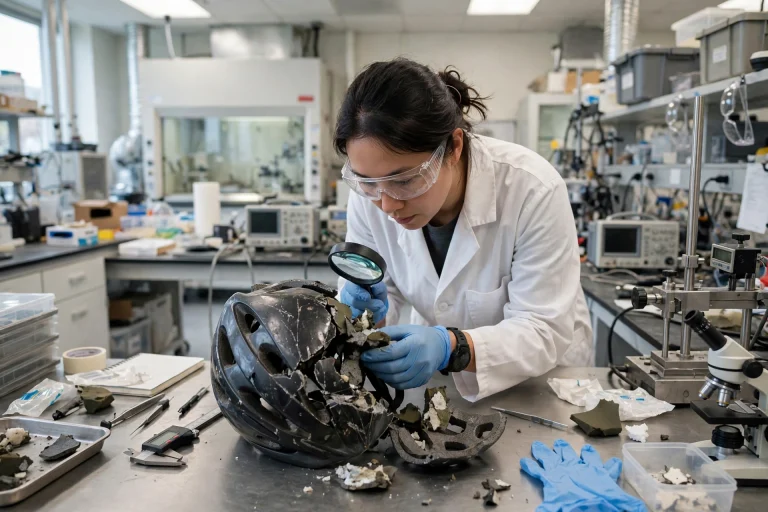
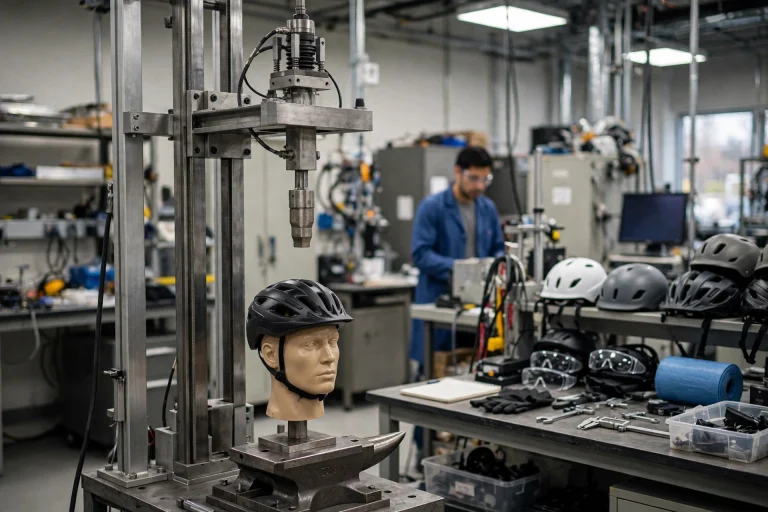
The Swedish team set out to measure what actually happens in an angled impact. They built a test rig that could drop a helmeted head form at an angle, and they measured the rotational forces inside. The results confirmed their suspicion: angled impacts produced large rotational forces, and a standard helmet did little to reduce them.
How Did the Slip-Plane Idea Develop?
The team’s answer was inspired by the brain’s own protection. The brain is surrounded by cerebrospinal fluid, which lets it move slightly inside the skull rather than being rigidly fixed. The researchers reasoned that a helmet could work the same way: a layer that lets the shell slide a small amount relative to the head, absorbing some of the rotational energy before it reaches the brain.
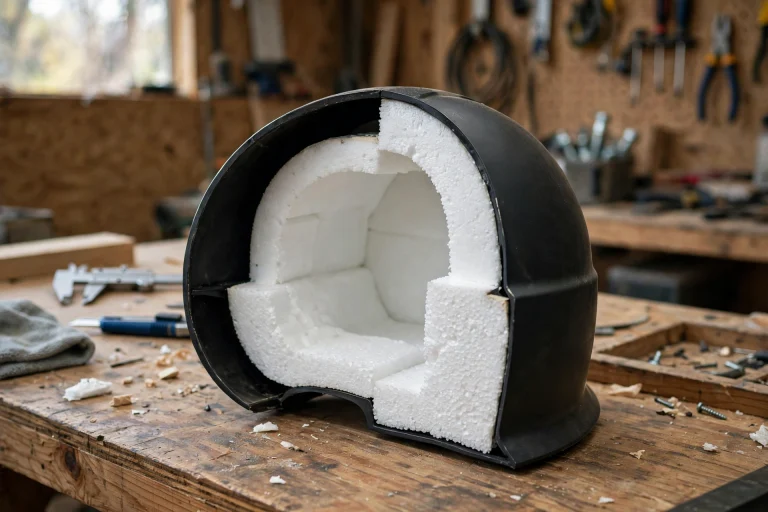
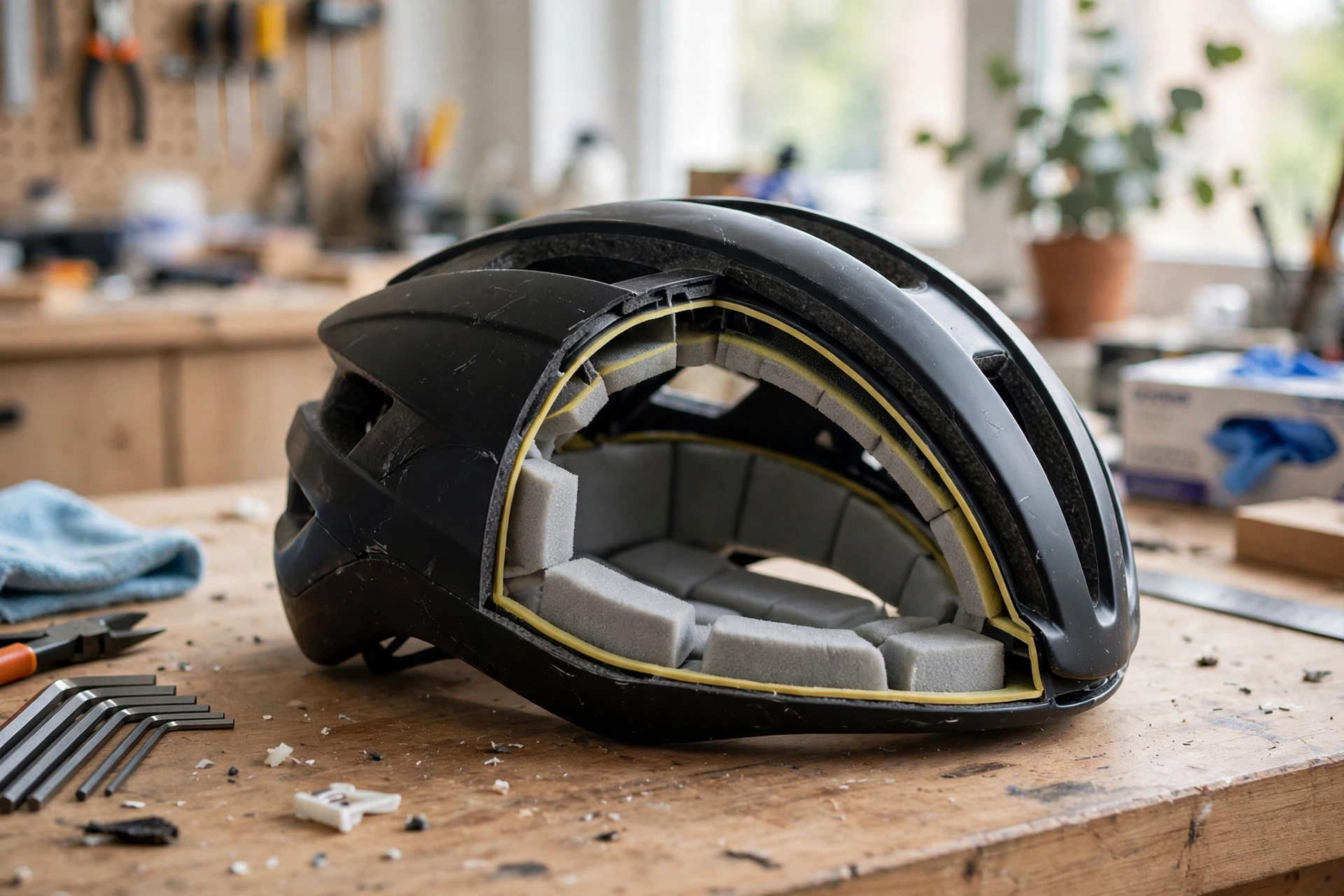
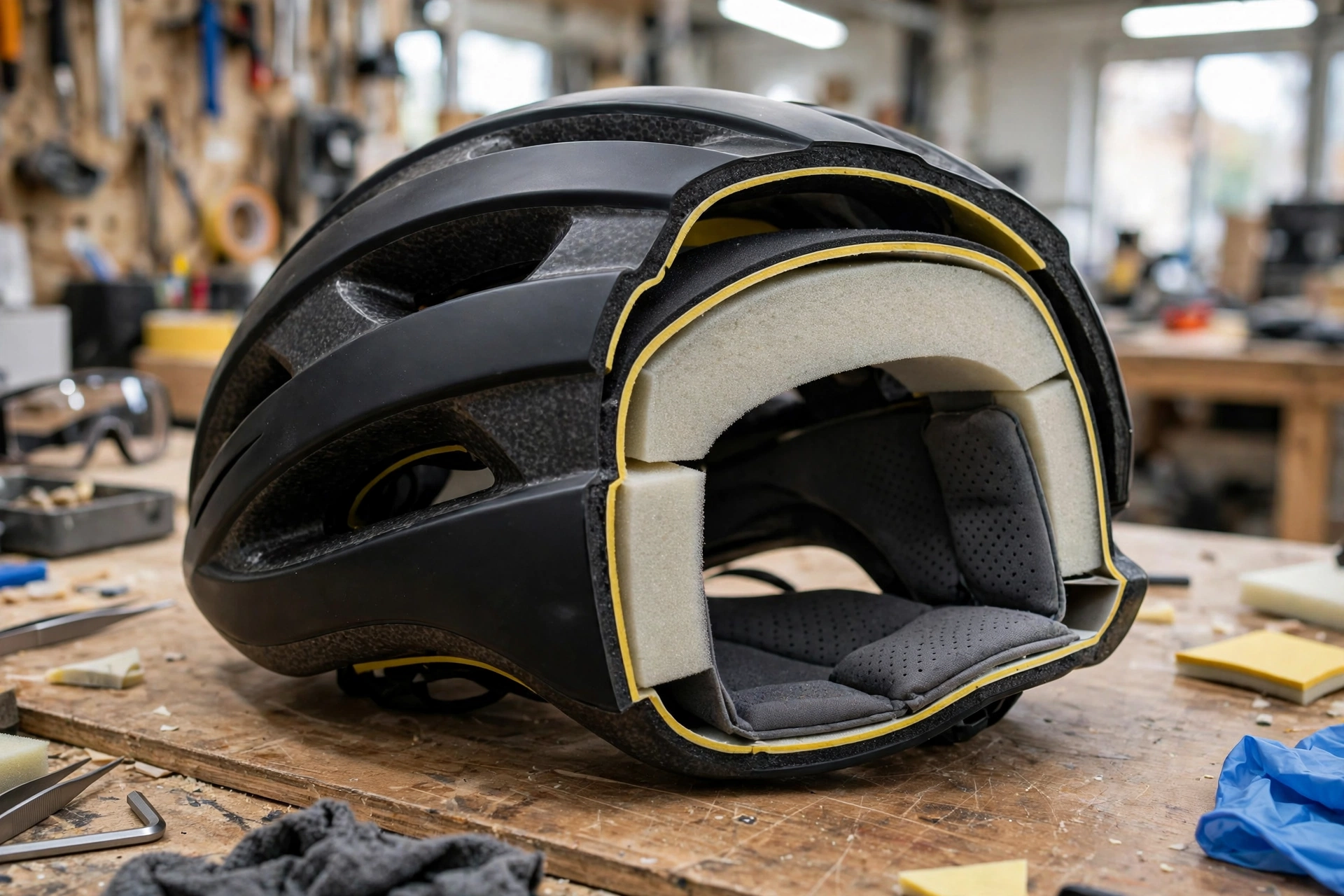
That idea became the slip-plane liner: a thin, low-friction layer between the helmet’s shell and its padding. On an angled impact, the shell can rotate a few millimetres relative to the head, and that small movement reduces the twisting force. The system does not replace the foam liner — it works alongside it, handling rotation while the foam handles the straight-line impact.
The first MIPS helmets appeared in the early 2000s, in cycling and equestrian helmets. Adoption was slow at first, because the system added cost and complexity, and because the existing standards did not test for rotation. But as independent testing began to measure rotational performance, helmets with MIPS consistently performed better, and more makers adopted it.
How Did MIPS Change Helmet Design?
MIPS changed helmet design by making rotation a design problem, not an afterthought. Once makers accepted that angled impacts mattered, they began designing liners, shells, and fit systems with rotation in mind. Some developed their own slip-plane systems; others licensed MIPS itself. Either way, the idea that a helmet should manage twisting as well as impact became mainstream.
It also changed testing. Standards bodies and independent test programmes began adding angled impact tests, which measure rotational forces directly. Those tests gave buyers a way to compare helmets on rotation, and they pushed the whole industry to improve. A helmet that performed well in a straight drop but poorly at an angle could no longer hide behind a pass mark.
The research also influenced other fields. The same understanding of rotational injury now shapes the design of helmets for motorcycling, skiing, climbing, and American football, and it has fed into research on concussion in sport more broadly. If you want a fuller explanation of the system itself, reading about what MIPS is for helmets explains how the slip-plane layer works in a helmet you can buy today.
What Has Research Found Since MIPS?
Research into rotational impact has continued since MIPS was introduced, and it has added detail to the original picture. Researchers have found that the direction and speed of the rotation matter, that different parts of the brain are vulnerable to different kinds of motion, and that the duration of the impact matters as much as its size. Each finding refines the design of the next generation of liners.
Other approaches to the same problem have appeared. Some makers use liners made from materials that shear or deform under rotation, rather than a separate slip plane. Others use structures inside the foam that collapse in a controlled way. The details differ, but the aim is the same: reduce the rotational force that reaches the brain.
There is also more research into what happens after the impact. Sensors in helmets now record the size and direction of real crashes, and that data feeds back into laboratory testing. The result is a cycle: research improves the helmet, the helmet collects better data, and the data improves the research.
Why Does the MIPS Story Matter?
The MIPS story matters because it shows how a helmet technology actually develops. It did not start with a product idea, but with a research question: why do people get hurt in crashes that their helmets should have protected them from? The answer led to a test, the test led to a design, and the design led to a product.
It also matters because it changed what riders expect from a helmet. A generation ago, a helmet was judged by its weight and its looks. Today, many riders ask whether it manages rotational forces, and that question exists because of the Swedish research of the 1990s.
The work is not finished. Rotational injury is still not fully understood, and no helmet can prevent every head injury. But the history of MIPS shows that helmet design improves when research asks the right question — and that the right question is usually found by studying real crashes, not by repeating the laboratory test that came before.
Frequently Asked Questions
Q: Who invented MIPS?
A: MIPS grew from research in Sweden in the 1990s by a neurosurgeon and a researcher at the Royal Institute of Technology, who studied how the brain is injured in angled impacts and developed the slip-plane liner in response.
Q: Does MIPS replace the foam liner in a helmet?
A: No. MIPS is a thin low-friction layer that works alongside the foam liner — the foam absorbs the straight-line impact, while the slip plane reduces rotational forces.
Q: Is MIPS only used in cycling helmets?
A: No. MIPS and similar slip-plane systems are now used in helmets for cycling, skiing, motorcycling, climbing, equestrian sports, and American football, among others.

Olivia
Writer at Helmet Today, covering helmet reviews, fit and riding safety.