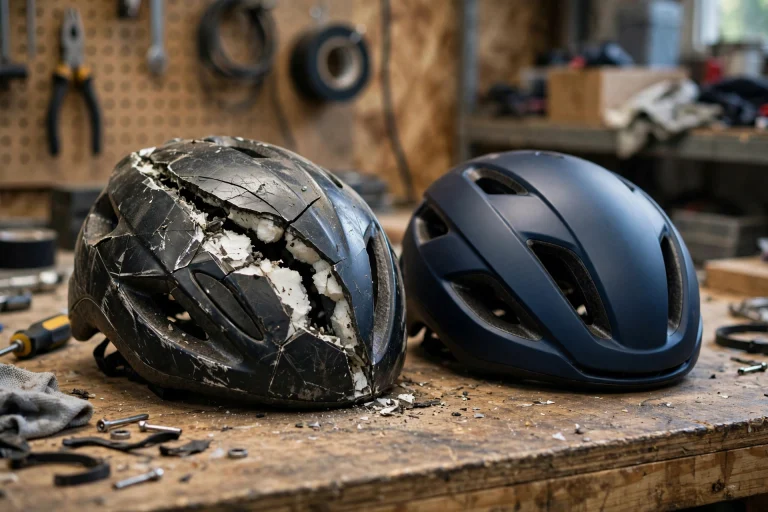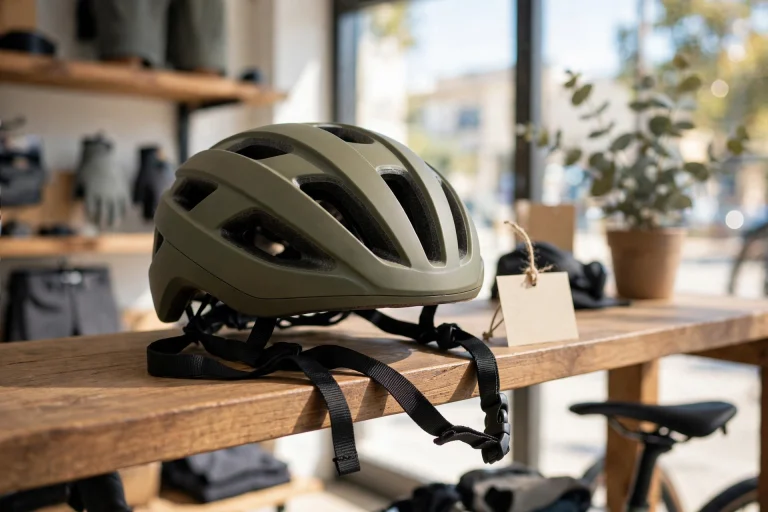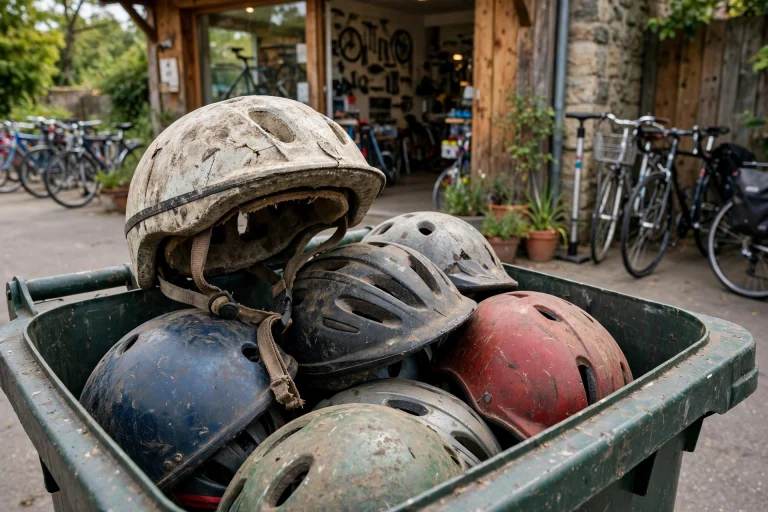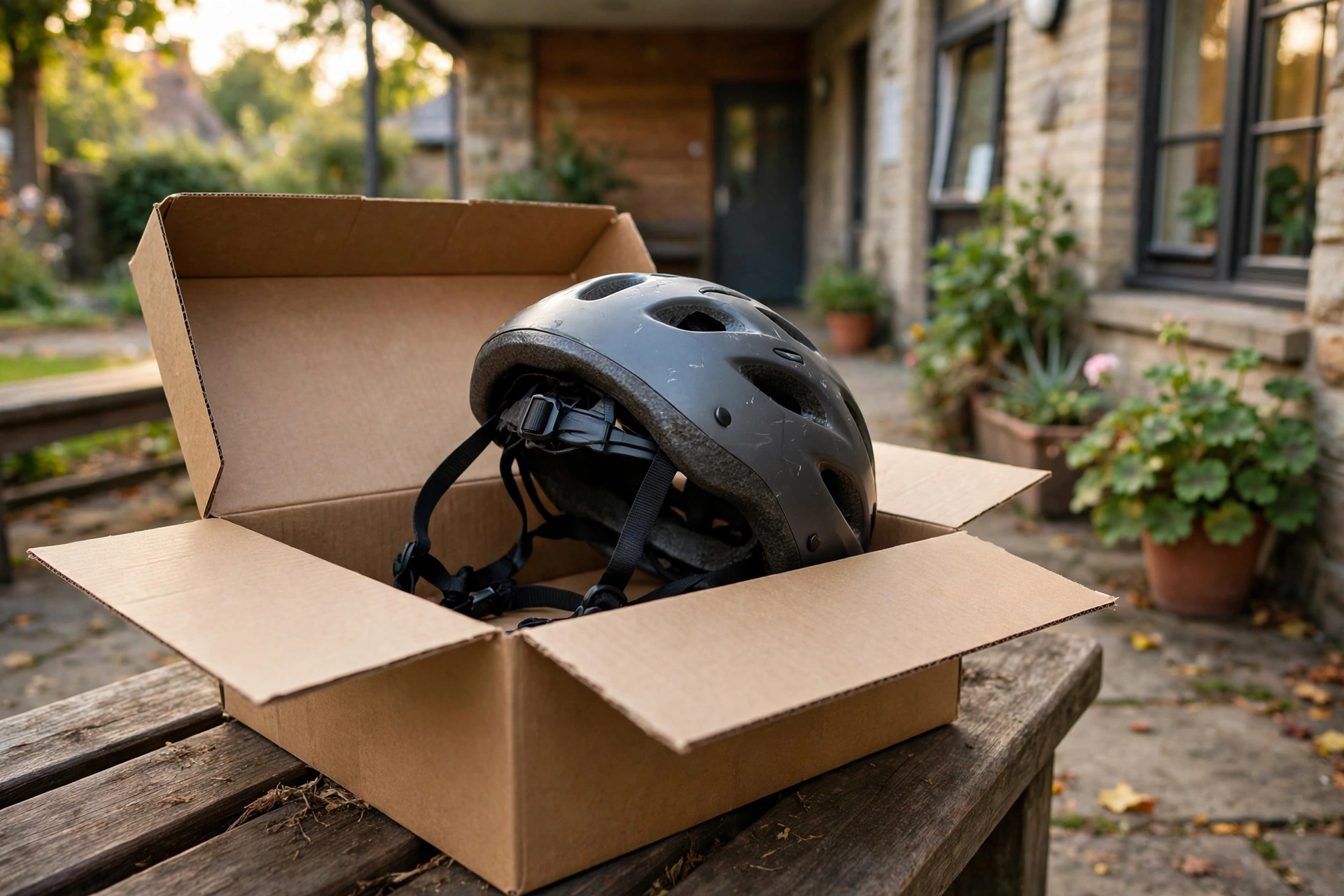
In general terms, you can donate a used helmet — but only if it is in good, undamaged condition, has not been in a crash, and is still within its service life. A helmet that has taken a hard knock, has cracked foam, a frayed strap, or missing pads should not be passed on to anyone. Donating a damaged helmet can put the next rider at risk, because hidden damage is impossible to see from the outside.
Many riders have a spare helmet gathering dust after an upgrade or a change of sport. If it is genuinely sound, donating it can help someone who cannot afford a new one. This guide explains how to judge whether your helmet is safe to donate, where to take it, and what to do when it is not fit to pass on.
When Is a Used Helmet Safe to Donate?
A helmet is safe to donate only when you are confident it has never been in a crash or a hard drop, and when its condition is still sound. Check the shell for cracks, deep scratches, or dents. Press the foam liner gently all over and feel for soft spots, crumbling, or areas that feel different from the rest. Look at the straps for fraying, the buckle for smooth operation, and the pads for wear or smell.
Age matters too. Most makers suggest replacing a helmet after several years of regular use, because foam ages with heat, sunlight, and sweat even without a crash. If your helmet is past the maker’s suggested service life, or you do not know how old it is, it is safer not to donate it. A helmet that has sat in a hot garage for years may look fine while its foam has quietly weakened.
The honest test is simple: would you happily wear this helmet yourself on a fast ride? If the answer is yes, it is probably fit to donate. If you hesitate for any reason — a fall you half-remember, a crack you are not sure about, a strap that slips — do not pass it on. The next rider cannot see what you cannot remember.
Where Can You Donate a Used Helmet?
Some cycling clubs, youth programmes, and community bike schemes accept used helmets in good condition, because they need spares for beginners and for children who outgrow helmets quickly. Schools, scout groups, and skate parks sometimes run helmet collections too. It is worth asking locally before assuming nobody wants one.
Charity shops are more mixed. Many will not take helmets because they cannot verify the helmet’s history, and a shop that accepts one may not be able to check it properly. If you offer a helmet to a charity shop, be upfront about its age, its history, and any knocks it has had. Honesty protects the next rider and the charity.
Some helmet makers and retailers run take-back or trade-in schemes, though these are usually aimed at recycling rather than reuse. If no local group will take your helmet, a take-back scheme is a better route than the bin. And if you are passing a helmet to a friend or family member directly, tell them its full history — including any falls — so they can make an informed choice.
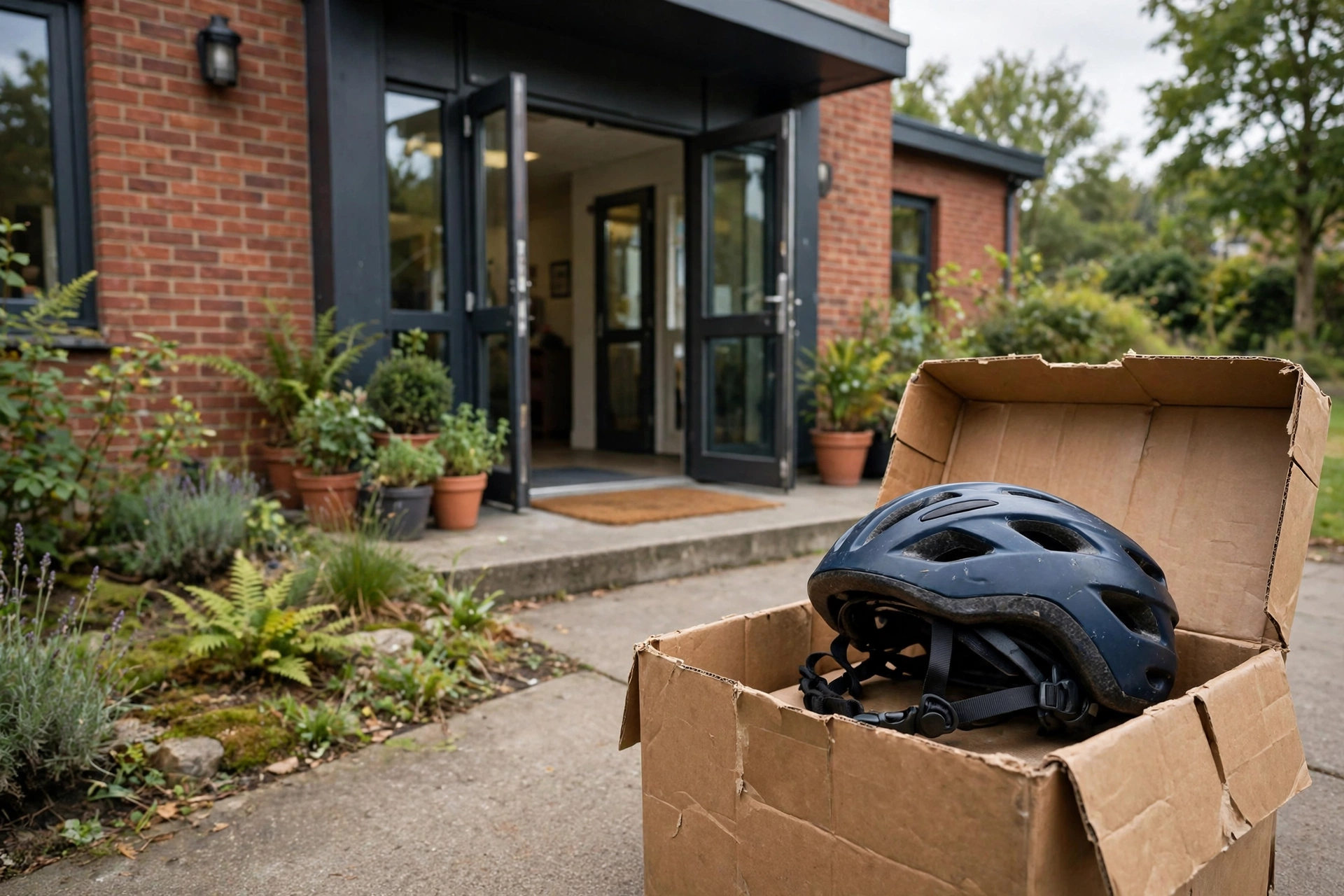
What Should You Tell the Next Rider?
When you donate a helmet, pass on everything you know about it. That includes how old it is, how often it was used, whether it was ever dropped or crashed, and how it was stored. A helmet that lived in a cool cupboard is in better shape than one that spent summers in a hot car, and the next rider deserves to know which it was.
Include any spare pads, the original box, or the instruction leaflet if you still have them. Spare pads matter because worn pads are one of the most common reasons a donated helmet gets thrown away. If the helmet has a size label, make sure it is still readable — a helmet donated without a size is hard to match to a rider.
It is also worth explaining how the helmet should fit. A donated helmet that is the wrong size is no use, however good its condition. If you are giving it to a parent for a child, remind them to check the fit properly: level on the head, snug without pressure points, and with the strap fastened snugly under the chin.
What If Your Helmet Is Not Fit to Donate?
A helmet that has been in a crash, has visible damage, or is past its service life should not be donated, sold, or given away. The safest option is to dispose of it so nobody else can pick it up and use it. Some riders cut the straps before throwing a damaged helmet away, which stops it being reused by mistake.
Check whether the maker runs a recycling or take-back scheme. Some schemes accept damaged helmets and separate the shell, foam, and straps for recycling. If no scheme is available, check your local waste guidance — in general terms, helmets are not accepted in ordinary household recycling because they mix several materials, but some areas have specialist collection points.
Throwing a damaged helmet away feels wasteful, and it is. But the waste of a helmet is far smaller than the cost of an injury caused by a helmet that could not protect its rider. If you are unsure whether your helmet is safe, the cautious choice is to retire it. If you are learning how helmets protect your head, reading about what MIPS is for helmets can help you understand what the foam and liner inside are actually doing.
How Can You Make Your Next Helmet Last Longer?
The best way to reduce helmet waste is to make the helmet you have last its full service life. Store it somewhere cool and dry, out of direct sunlight, and away from chemicals such as solvents or strong cleaners. Wash removable pads regularly and let them air-dry, rather than leaving sweat to build up inside the helmet.
Handle the helmet gently. Dropping it onto concrete from waist height can damage the foam even when the shell looks fine, so treat it as safety equipment rather than luggage. Carry it in a bag or by its straps, and do not stack heavy items on top of it.
Finally, buy the right helmet for the riding you actually do, in the right size, so you are not tempted to replace it early. A helmet that fits well and suits your sport is one you will keep wearing — and keeping a helmet in use for its full life is the simplest form of reuse there is.
Frequently Asked Questions
Q: Can I donate a helmet that was in a minor crash?
A: In general terms, no. Even a minor crash can crush the foam inside without leaving a visible mark, and the next rider cannot check for that damage. Retire a crashed helmet instead of donating it.
Q: Do charity shops accept used helmets?
A: Some do and some do not, because they cannot verify a helmet’s history. Ask first, and be honest about the helmet’s age and any knocks it has had. A community bike scheme may be a better option.
Q: Is it safe to buy a donated helmet for a child?
A: It can be, if you know the helmet’s history, it fits the child properly, and it is undamaged and within its service life. If any of those points is uncertain, a new helmet is the safer choice for a child.

Olivia
Writer at Helmet Today, covering helmet reviews, fit and riding safety.