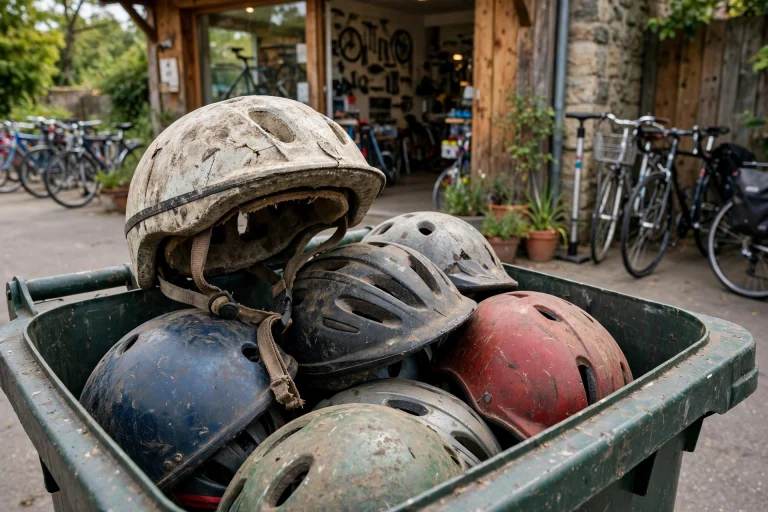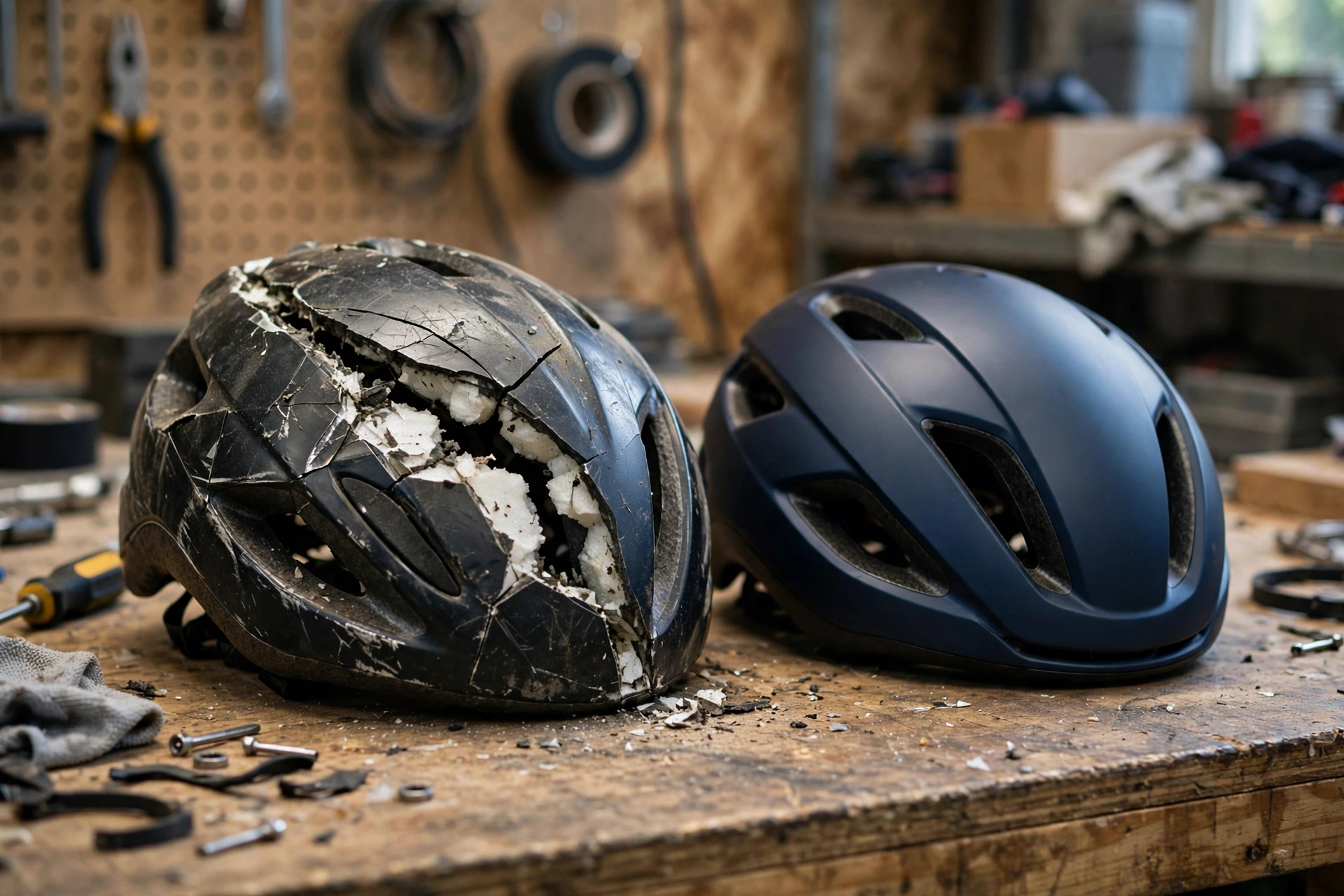
In general terms, small comfort parts of a helmet — pads, visors, straps, and buckles — can often be repaired or replaced, but the shell and foam liner can never be repaired once they are damaged. That distinction is the key to the whole question. A helmet is safety equipment, and its protective parts work by deforming once in an impact. Once that has happened, no repair can restore them.
This guide explains what can be fixed, what must be replaced, and how to decide between a repair and a new helmet. Getting the decision right saves money when a repair is safe — and saves you from a false sense of security when it is not.
What Can Be Repaired on a Helmet?
Removable pads are the most commonly replaced part. If pads are worn thin, torn, or have lost their shape, new pads can restore comfort and fit. Most makers sell spare pads for current models, and they usually clip or press into place in a few minutes. Replacing pads is a repair in the best sense: it fixes a real problem without touching the helmet’s protection.
Visors, peaks, and vent covers can also be replaced when they are scratched, cracked, or lost. These are accessory parts that do not absorb impact, so a new visor on an otherwise sound helmet is a sensible repair. The same applies to strap adjusters and buckles, provided the replacement is the right size and made for your helmet model.
Loose screws and fixings can be tightened or replaced, and a rattling vent cover can often be refitted. These are small jobs, but they matter: a helmet that rattles or feels loose is a helmet you will not want to wear, and a helmet you do not wear protects no one.
What Can Never Be Repaired?
The foam liner can never be repaired. Its job is to crush on impact and absorb energy, and once it has been crushed — by a crash, a hard drop, or years of compression — it cannot be restored. Gluing, filling, or patching foam does not return its protective ability. A helmet with a damaged liner must be replaced, not repaired.
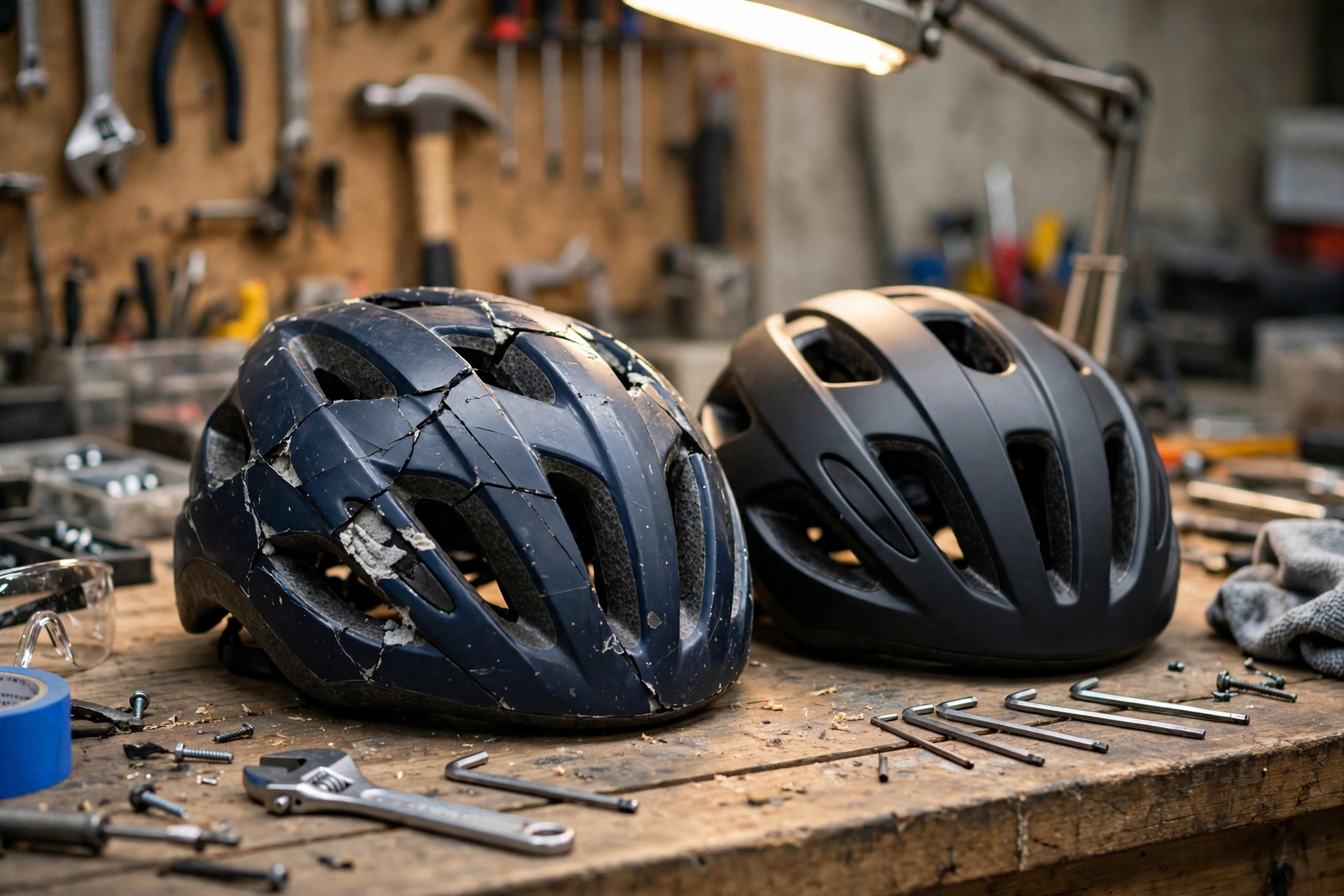
The shell cannot be repaired either. A cracked shell has lost its ability to spread an impact, and no glue or filler can restore it. Even a shell that looks intact after a crash may have hidden damage, which is why a crashed helmet should be replaced even when the shell looks fine. Deep scratches that go through the shell’s outer layer are also a sign the helmet is finished.
Straps that are frayed through, or stitched into the shell in a way that cannot be replaced, are also a reason to replace the helmet. A strap is the part that keeps the helmet on your head in a crash, and a weakened strap can fail when it matters most. If the strap cannot be replaced safely, the helmet cannot be saved.
How Do You Decide Between Repair and Replacement?
Ask three questions. First, has the helmet been in a crash or a hard drop? If yes, replace it — no repair can undo impact damage. Second, is the damage to a protective part (shell or foam) or a comfort part (pads, visor, strap)? Protective damage means replacement; comfort damage may mean repair. Third, is the helmet within its service life? A helmet past the maker’s suggested life should be replaced, even if a repair seems possible.
Cost matters too, but it should not be the only factor. A set of new pads is cheap and clearly worth doing. A new visor is usually worth it. But if the repairs add up to a large share of a new helmet’s price, and the helmet is already old, a new helmet may be the better choice — it will come with a full service life ahead of it and a warranty.
Check whether the maker offers a crash replacement scheme. Some makers sell a replacement helmet at a reduced price after a crash, which makes the decision easier. If such a scheme exists for your helmet, it is worth using — it is designed for exactly this situation.
Can a Professional Repair a Helmet?
In general terms, no reputable repairer will attempt to fix a damaged shell or foam liner, because there is no reliable way to test whether the repair has worked. A helmet is not like a bicycle frame, where a repair can be inspected and tested. The protective parts are hidden inside the helmet, and their condition can only be judged by the certification test — which destroys the helmet.
What a professional can do is fit replacement parts: pads, visors, straps, and buckles supplied by the maker. A bike shop can often do this for you, and it is worth asking if you are unsure how a part fits. But if a shop offers to glue a cracked shell or fill a damaged liner, walk away — that is not a repair, it is a risk.
If you are unsure whether your helmet can be saved, the safest step is to ask the maker. Describe the damage honestly, including any crash, and follow their advice. If they say replace it, replace it. A maker’s guidance is based on how the helmet was designed and tested, and it is more reliable than a guess.
What Should You Do with a Helmet That Cannot Be Repaired?
Retire it properly. Cut the straps off and damage the foam liner so nobody can pick the helmet up and wear it by mistake. Then dispose of it through a maker take-back scheme, a retailer collection, or your local waste service. A helmet that cannot be repaired should never be sold or given away, even if the damage is not visible.
Before you throw it away, salvage any parts that can be reused. Pads, visors, and buckles in good condition can be kept as spares for another helmet of the same model. That is a better use of them than landfill, and it may keep a second helmet in use for longer.
When you buy the replacement, think about what would make it last. A helmet with replaceable pads, a maker that sells spares, and a design that suits your riding will be easier to maintain and less likely to need early replacement. If you want to understand the safety features to look for in the new helmet, reading about what MIPS is for helmets is a useful place to start.
Frequently Asked Questions
Q: Can a cracked helmet shell be glued back together?
A: No. Glue cannot restore a shell’s ability to spread an impact, and a glued shell may fail without warning. A helmet with a cracked shell must be replaced.
Q: Is it worth replacing pads on an old helmet?
A: Yes, if the shell and foam are sound and the helmet is within its service life. New pads restore comfort and fit. But pads cannot fix a damaged shell or crushed foam.
Q: How do I know if my helmet needs replacing or just a repair?
A: Check whether the damage is to a protective part or a comfort part. Shell or foam damage means replacement; worn pads, a scratched visor, or a loose fixing may mean a repair. When in doubt, ask the maker.

Olivia
Writer at Helmet Today, covering helmet reviews, fit and riding safety.