Plant-based foams in helmets are impact liners made partly from chemicals drawn from plants, most often castor oil, instead of entirely from petroleum. They work the same way as conventional EPS foam: the foam crushes on impact and absorbs energy. In general terms, they are designed to meet the same safety standards, and the certification label inside the helmet is what confirms that.
These foams appear in a growing number of cycling, snow, and skate helmets. Makers present them as a lower-carbon choice, and for riders who care about the footprint of their kit, they are worth understanding. This guide explains what plant-based foams are made from, how they perform, and what to check before you buy.
What Are Plant-Based Helmet Foams Made From?
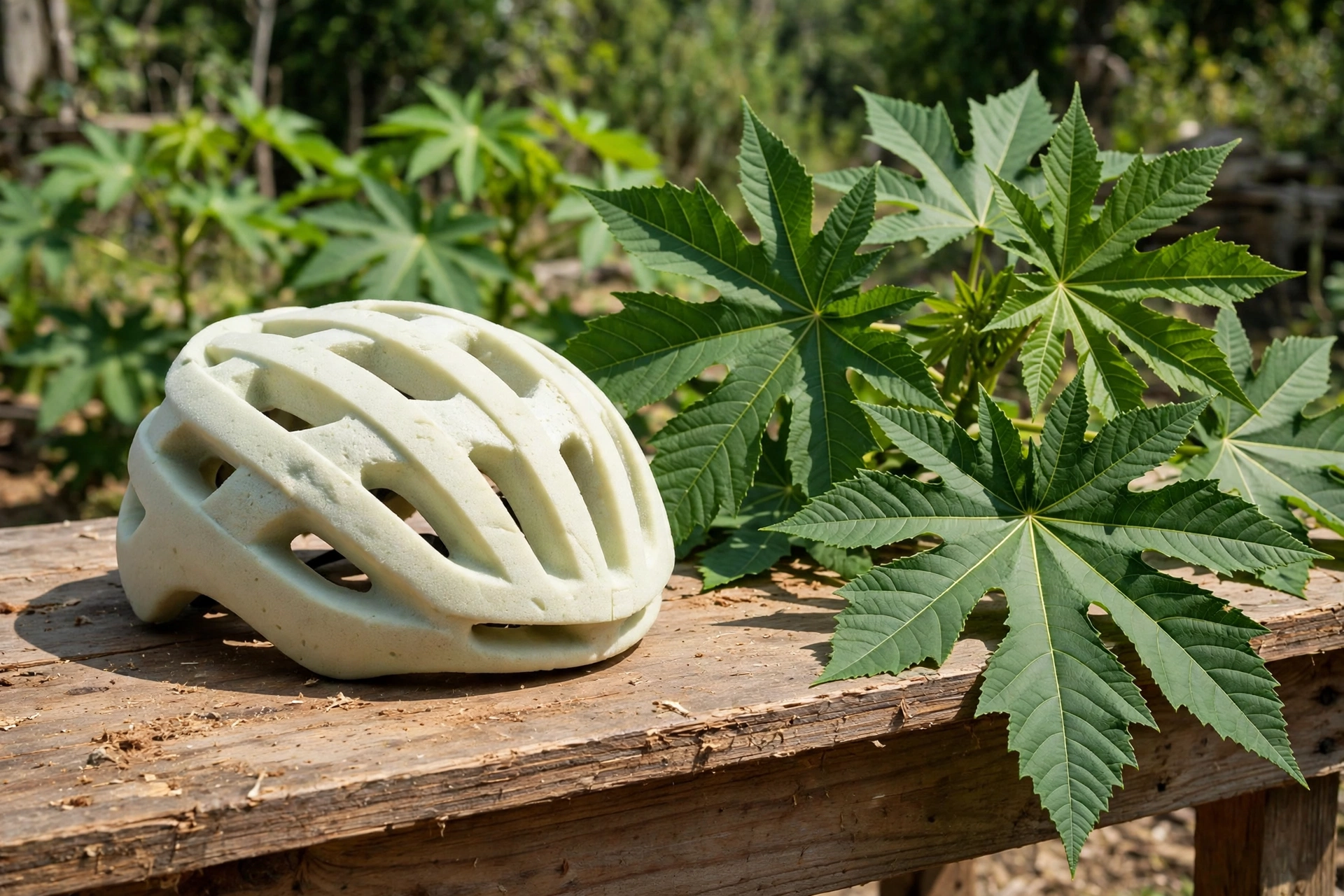
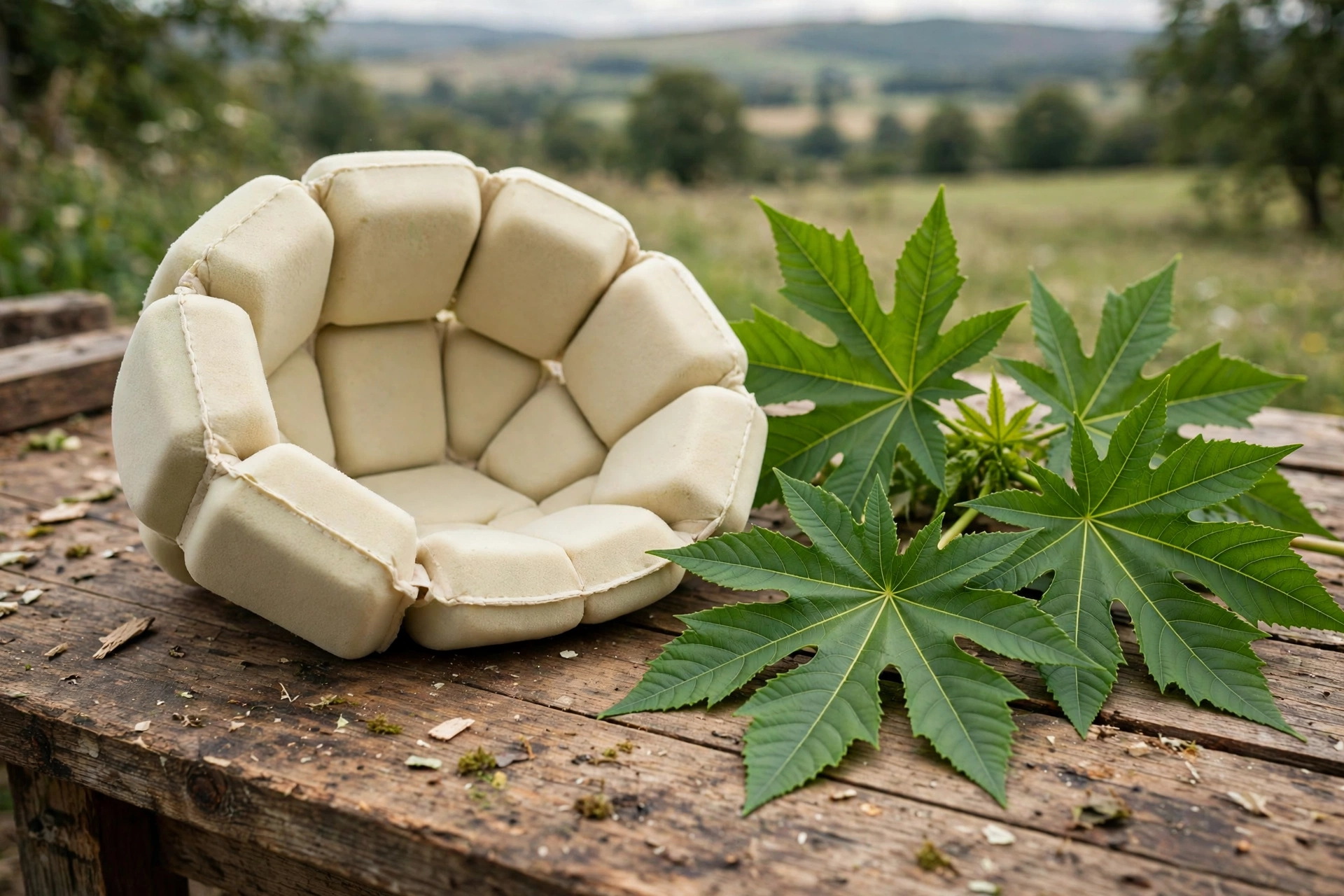
Most plant-based helmet foams start with castor oil, pressed from the seeds of the castor plant. The oil is processed into a polyol, one of the two main ingredients in polyurethane foam. That polyol is then combined with other chemicals to make a foam that can be moulded into a helmet liner. Some foams also use soy oil or sugar cane derivatives, but castor oil is the most common source.
It is important to know that “plant-based” rarely means the whole foam comes from plants. In general terms, only part of the foam’s ingredients are plant-derived — the rest are still conventional chemicals. Makers sometimes publish the bio-based percentage, which may be anywhere from a small share to roughly half. Without that number, the label tells you the direction of travel, not the distance.
Castor plants have one practical advantage as a crop: they can grow on land that is not well suited to food crops, and they need relatively little water compared with some other industrial crops. That does not make the foam automatically greener — farming still uses land, fertiliser, and transport — but it is part of why makers chose castor oil over food crops such as corn or soy.
How Do Plant-Based Foams Perform in a Crash?
In general terms, plant-based foams are engineered to behave like conventional EPS foam in an impact: they crush progressively, spreading the force over time rather than passing it straight to your head. The test that matters is the certification test for your sport, and a helmet with a plant-based liner must pass the same test as one with a conventional liner to be sold for that sport.
There is no reliable evidence that a certified plant-based foam protects worse than a certified conventional foam. What varies between helmets is the density of the foam, the thickness of the liner, and how the liner is shaped — and those factors matter far more than whether the raw material grew in a field.
One thing to watch is that plant-based foam is sometimes used in multi-density liners, where softer and firmer foam are combined in different zones. That design is about managing different kinds of impact, and it appears in conventional helmets too. If a maker claims its plant-based foam gives extra protection, ask what test or standard supports the claim, and be wary of any claim that cannot be tied to a published result.
Do Plant-Based Foams Last as Long as Conventional Foam?
In general terms, plant-based foams are designed for a similar service life to conventional EPS foam, which makers usually describe as several years of regular use. Like all foam, they age: heat, sunlight, sweat, and repeated small knocks gradually change the foam’s structure. A helmet stored in a hot car or left in strong sun will age faster, whatever its foam is made from.
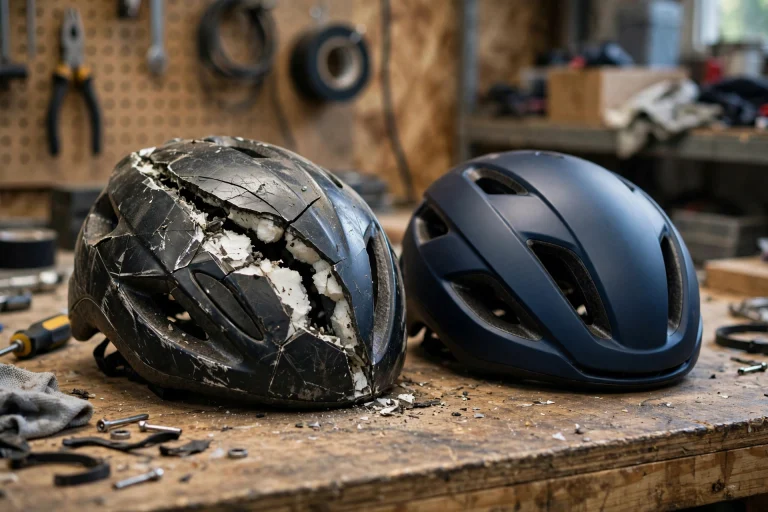
The practical advice is the same for both kinds of foam. Replace the helmet after a hard impact, even if you cannot see damage, because the foam may have crushed internally. Replace it when the fit loosens, the pads wear out, or the maker says its service life has passed. And store it somewhere cool and dry, out of direct sunlight, to slow the ageing process.
Are Plant-Based Foams Better for the Environment?
The honest answer is that they are probably better in some ways and uncertain in others. Growing the raw material captures carbon while the plants grow, and it reduces the amount of oil needed to make the foam. Those are real benefits, and they are the reason makers invest in this technology.
On the other side, farming uses land, water, fertiliser, and fuel for harvesting and transport. The chemicals used to turn plant oil into foam are similar to those used for conventional foam, so much of the manufacturing footprint is the same. A full comparison would need a lifecycle study of the specific foam, and makers do not always publish one. Without that study, the safest statement is that plant-based foam is a step in a lower-carbon direction, not a proven transformation.
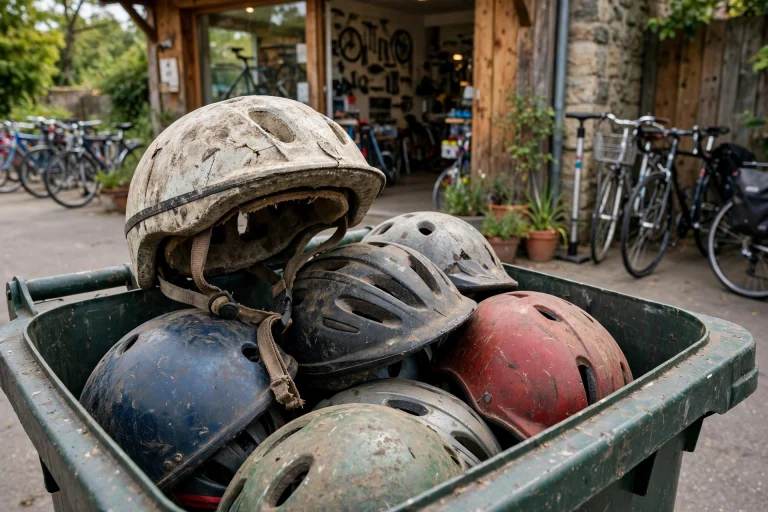
There is also the question of what happens at the end of the helmet’s life. A plant-based foam liner is not compostable once it is glued into a helmet with straps, a shell, and buckles. It goes through the same disposal route as a conventional helmet. If reducing waste matters to you, the maker’s take-back or recycling scheme may matter more than the foam’s origin.
What Should You Check Before Buying a Helmet with Plant-Based Foam?
Check the certification label first. The label inside the helmet tells you which standard it meets and for which sport it is intended. A plant-based foam is only as good as the helmet it is built into, and the label is the independent check on that.
Next, look for the bio-based percentage and for what it covers. A liner that is 30 percent plant-derived is a different claim from a helmet described simply as “plant-based”. Makers that publish the number are giving you something you can compare; makers that do not are asking you to take the claim on trust. If you want to understand the safety features that sit alongside the foam, reading about what MIPS is for helmets can help you judge the whole package, not just the liner.
Finally, try the helmet on. Fit, ventilation, and comfort decide whether you will actually wear it, and a helmet you wear every ride protects you far more than a greener helmet that stays at home. The foam’s origin is a secondary choice — a good one to make, but only after the safety and fit boxes are ticked.
Frequently Asked Questions
Q: Is a helmet with plant-based foam safer than a regular helmet?
A: In general terms, no — and no worse either. Both must pass the same certification test for your sport. Safety depends on the liner’s density, thickness, and shape, not on whether the foam’s raw material came from a plant.
Q: Can plant-based helmet foam be recycled?
A: Not easily through normal recycling. The foam is bonded to the shell, straps, and buckles, so it usually needs a specialist take-back scheme. Ask the maker or check local guidance before disposing of the helmet.
Q: Do plant-based foams feel different to wear?
A: In general terms, no. Most riders cannot tell a plant-based liner from a conventional one by feel. Weight, ventilation, and padding shape make a much bigger difference to comfort than the foam’s origin.

Olivia
Writer at Helmet Today, covering helmet reviews, fit and riding safety.